Damage Restoration in Williamson County, IL
- Damage Restoration Services Overview
- Common Damage Restoration Issues in Williamson County, Illinois
- Neighborhoods We Serve in Williamson County
- Seasonal Damage Patterns in Williamson County
- Housing Characteristics & Restoration Considerations
- Environmental Conditions & Damage Implications
- Sewer Backups and Basement Flooding in Marion and Herrin
Damage Restoration Services Overview
Williamson County sits in the heart of Southern Illinois, where humid summers, clay-heavy soils, and aging housing stock in Marion, Herrin, and Johnston City combine to create restoration challenges you won't find further north. Properties here contend with flash flooding off saturated ground, backed-up sanitary lines in older neighborhoods, and the year-round humidity that pushes microbial growth long after visible water disappears.
Restoration work in the county spans a connected set of disciplines, each governed by industry standards including IICRC S500 for water and S520 for mold:
- Water Damage Restoration - extraction, structural drying, and returning materials to acceptable equilibrium moisture content
- Flooded Basement Recovery - pumping, sump failure response, and drying below-grade assemblies
- Sewage Cleanup - Category 3 contamination removal, antimicrobial treatment, and safe disposal of porous materials
- Fire Damage Restoration - structural stabilization, debris removal, and content recovery
- Smoke Damage Restoration - soot removal, thermal fogging, and odor neutralization within HVAC systems
- Mold Removal - containment, negative air pressure, HEPA filtration, and moisture source correction
The benefit for county residents is straightforward: faster mitigation limits secondary damage, protects indoor air quality, and produces the moisture logs and photo documentation insurance carriers expect.
Common Damage Restoration Issues in Williamson County, Illinois
Local geography drives most losses. Williamson County's dense clay subsoil sheds rainfall rather than absorbing it, pushing water toward foundation walls and basement window wells during heavy Midwest storm cells.
Frequent Causes of Loss
- Spring thunderstorm runoff overwhelming sump pits and perimeter drains
- Aging municipal sewer laterals in older Marion and Herrin neighborhoods that surcharge during downpours
- Frozen or burst supply lines in unheated crawl spaces during January cold snaps
- Water heater and washing machine hose failures - a leading cause of finished-basement flooding
- Kitchen grease fires and space heater incidents that generate widespread smoke and soot travel
- Lake Egypt and Crab Orchard area properties with high groundwater pressure against foundation walls
Warning Signs Worth Acting On
- Musty odors in basements or closets that intensify after rain
- Peeling paint, bubbling drywall tape, or cupping hardwood planks
- Efflorescence - white mineral crusting - on block foundation walls
- Slow drains or gurgling fixtures signaling a partial sewer blockage
- Persistent smoke odor returning on humid days after a small fire
- Visible staining at rim joists, sill plates, or HVAC return chases
Ignoring early indicators allows Category 1 clean water to degrade into Category 2 or 3 conditions, which changes the entire remediation scope and increases the volume of material that cannot be salvaged.
Neighborhoods We Serve in Williamson County
Coverage extends across the county's cities, villages, and unincorporated stretches:
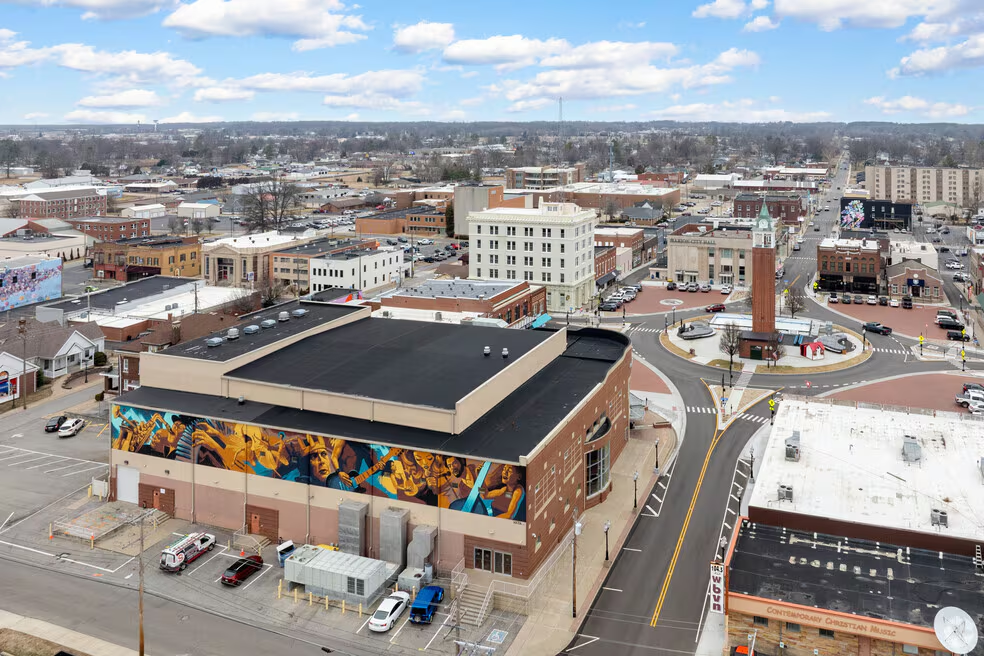
- Marion - downtown business district, Tower Square Plaza area, Ray Fosse Park neighborhoods, and newer subdivisions near Route 13
- Herrin - historic districts and surrounding residential blocks
- Johnston City and Carterville - including properties near John A. Logan College
- Energy, Crainville, Colp, Cambria, Hurst, Bush, Pittsburg, and Freeman Spur
- Creal Springs and Spillertown
- Lakefront and rural properties around Crab Orchard Lake, Lake of Egypt, and the Crab Orchard National Wildlife Refuge boundary
Neighboring service reaches into Jackson, Franklin, and Saline County communities where storm systems and sewer infrastructure share the same regional characteristics.
Seasonal Damage Patterns in Williamson County
Winter (December - February)
- Pipe freezes and ruptures in crawl spaces, garages, and exterior wall cavities
- Peak fire and smoke damage from furnaces, wood stoves, and supplemental heaters
- Ice damming on lower-slope roofs after freeze-thaw cycles
Spring (March - May)
- Highest volume of flooded basements as saturated clay soils reject additional rainfall
- Sewage backups when combined and aging lines surcharge during multi-inch rain events
- Sump pump burnout from continuous cycling
Summer (June - August)
- Mold growth accelerates as dew points climb into the 70s
- Derecho and severe wind events opening roofs to wind-driven rain
- Condensation damage from oversized or short-cycling air conditioning
Fall (September - November)
- Clogged gutters and downspouts redirecting water to foundations
- Chimney and flue-related fire losses as heating systems restart
- Ideal window for moisture inspections and drainage corrections before winter
Housing Characteristics & Restoration Considerations
Williamson County's housing stock is a mix of pre-1950 coal-era homes, mid-century ranches, and post-1990 subdivisions. Each construction era responds differently to water, fire, and microbial damage.
Older Homes (Pre-1980)
- Concrete block or stone foundations that wick moisture through mortar joints
- Plaster-over-lath walls that hold water far longer than modern drywall
- Balloon framing that lets smoke and soot travel vertically between floors
- Possible asbestos-containing materials in floor tile, mastic, and pipe wrap - testing is required before selective demolition under Illinois EPA protocols
- Lead-based paint considerations affecting containment and worker protection
Mid-Century and Newer Construction
- Finished basements with carpet, pad, and paneling that rarely survive Category 3 water
- Engineered wood subfloors and OSB sheathing prone to irreversible swelling
- Tighter building envelopes that trap moisture and concentrate smoke odor
- Slab-on-grade sections where water migrates laterally beneath flooring
- Vinyl and laminate flooring that traps vapor against subfloor assemblies
What This Means for Restoration Planning
- Moisture mapping identifies hidden water in wall cavities and beneath flooring before equipment placement
- Cavity drying systems and injectidry setups protect plaster and hardwood where full removal is avoidable
- Containment barriers keep soot and spores out of unaffected living space
- HVAC ductwork is inspected and cleaned to stop odor and spore recirculation
- Drying logs record readings until materials reach documented equilibrium moisture content
Environmental Conditions & Damage Implications
Southern Illinois sits in a humid subtropical zone, and that climate profile shapes nearly every restoration decision made in Williamson County.
Climate and Humidity
- Summer relative humidity frequently exceeds 70 percent, keeping materials near the moisture threshold where mold colonizes
- Annual precipitation runs well above the national average, with intense convective storms concentrating rainfall in short windows
- Winter freeze-thaw cycling stresses foundations, service lines, and exterior masonry
Soil and Groundwater
- Dense silty clay and fragipan layers restrict percolation, producing perched water tables against foundation walls
- Legacy coal mining across the county contributes to localized subsidence and foundation cracking that becomes a water entry point
- Shallow water tables near Crab Orchard Lake and Lake of Egypt increase hydrostatic pressure on basements
Air and Water Quality Factors
- Rural septic systems and older sanitary laterals raise the likelihood of Category 3 contamination during backups
- Pollen and agricultural particulate loads mean HEPA filtration serves double duty during remediation
- Smoke residues bond aggressively to surfaces in humid conditions, requiring proper cleaning agents rather than dry wiping
Practical Implications
- Dehumidification capacity is calculated for regional dew points, not generic averages
- Antimicrobial application follows extraction on any Category 2 or 3 loss
- Post-remediation verification confirms conditions before reconstruction begins
Sewer Backups and Basement Flooding in Marion and Herrin
Few losses disrupt a household faster than sewage entering a finished basement. In Williamson County's older municipal corridors, heavy rainfall can push flow beyond lateral capacity, sending contaminated water back through floor drains, laundry standpipes, and basement fixtures.
Why Backups Concentrate Here
- Clay tile and cast iron laterals installed decades ago, now cracked or root-intruded
- Downspouts and sump discharge illegally tied into sanitary lines in some older properties
- Low-lying lots where basement elevation sits below the street main
- Clay soils that saturate quickly, sending infiltration into the sewer system
The Response Sequence
- Safety assessment - power isolation, PPE, and confirmation that the source has stopped
- Documentation - photographs of all affected areas plus initial moisture readings logged with date and time stamps
- Bulk extraction - high-volume removal of standing water before evaporative drying begins
- Selective demolition - removal of carpet, pad, drywall bottom courses, and other porous materials that contacted Category 3 water, with suspect materials tested before disturbance
- Cleaning and antimicrobial treatment - detergent cleaning of all salvageable surfaces followed by EPA-registered products
- Structural drying - air movers and dehumidifiers positioned by psychrometric calculation, with daily readings recorded
- Verification and rebuild - moisture targets confirmed before insulation, drywall, and flooring return
Reducing Future Risk
- Install a backwater valve on the sanitary lateral
- Add a battery-backup or water-powered secondary sump pump
- Scope the lateral with a camera to locate root intrusion and offsets
- Extend downspouts a minimum of six feet from foundation walls
- Store belongings on shelving rather than directly on basement floors
Documented mitigation also strengthens claims - carriers in Illinois routinely request drying logs, moisture maps, and material disposal records when reviewing sewage and flood losses.