
Damage Restoration in Bloomington, IL
- Damage Restoration Services Overview
- Common Damage Restoration Issues in Bloomington, Illinois
- Neighborhoods We Serve in Bloomington
- Seasonal Damage Patterns in Bloomington
- Housing Characteristics & Restoration Considerations
- Environmental Conditions & Damage Implications
- Advanced Drying and Contamination Control for Central Illinois Basements
Damage Restoration Services Overview
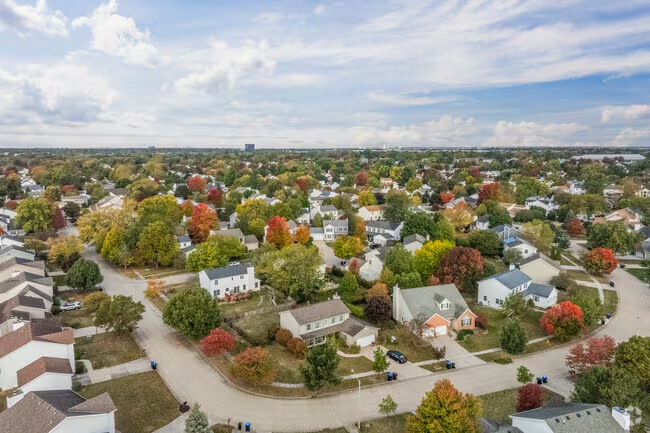
Bloomington sits on some of the flattest, densest prairie soil in North America - ground that drains so slowly that a single two-inch rainfall can push water sideways into basements rather than down through the clay. That geological reality, combined with a housing stock that spans more than a century, keeps restoration crews busy across McLean County year-round.
Property owners here face a broad spectrum of emergencies, and a single event often triggers several at once. A basement backup, for example, rarely stops at standing water - it brings contamination and, days later, microbial growth behind the drywall.
- Water Damage Restoration - extraction, structural drying, and moisture mapping after supply line breaks, appliance failures, roof leaks, and storm intrusion.
- Flooded Basement - pump-out, sump system evaluation, and drying of below-grade finished and unfinished spaces.
- Sewage Cleanup - containment, removal of contaminated materials, and antimicrobial treatment following main line backups.
- Fire Damage Restoration - stabilization, debris removal, content handling, and reconstruction after kitchen, electrical, and chimney fires.
- Smoke Damage Restoration - soot removal, thermal fogging, HVAC cleaning, and odor neutralization in areas the flames never touched.
- Mold Removal - containment barriers, HEPA filtration, material removal, and moisture-source correction.
Fast, documented response protects the structure, the contents, and the insurance claim behind them.
Common Damage Restoration Issues in Bloomington, Illinois
Central Illinois weather swings hard, and Bloomington properties absorb those swings through their foundations, roofs, and sewer laterals. The city's older neighborhoods carry combined or aging sanitary lines that surcharge during heavy rain, while newer subdivisions on former farmland deal with high water tables and settling soils.
What Triggers Emergency Calls Here
- Straight-line winds and microbursts stripping shingles and toppling limbs from the mature tree canopy, opening roofs to water intrusion.
- Sanitary sewer surcharge pushing wastewater up floor drains in older east-side and west-side homes.
- Frozen and burst supply lines in unheated crawl spaces, garages, and vacant rental units near the Illinois State University corridor.
- Sump pump failures during spring thunderstorm clusters, especially where discharge lines freeze or clog.
- Kitchen grease fires and space heater incidents in multi-unit student housing.
- Chimney and flue fires in century-old homes with original masonry.
Warning Signs Worth Acting On
- Musty odors in basements or first-floor closets that intensify after rain.
- Efflorescence - white chalky residue - on foundation walls.
- Slow floor drains or gurgling toilets when the washer discharges.
- Cupping hardwood, bubbling paint, or tape seams releasing on ceilings.
- Persistent smoke odor that returns on humid days after a small fire.
- Unexplained allergy symptoms that improve when occupants leave the house.
Summer occupancy gaps in student rentals mean leaks can run for weeks before anyone notices - a common reason minor water damage becomes a full mold remediation project.
Neighborhoods We Serve in Bloomington
Response covers the full city footprint plus the surrounding McLean County communities that share its weather and infrastructure.
- Founders' Grove and the Franklin Square Historic District - century-old homes with stone foundations and original plaster.
- White Place and Dimmitt's Grove - established streets with heavy tree canopy and older sewer laterals.
- Eagle Crest, Fox Creek, and Grove at Kickapoo Creek - newer construction with deep basements and engineered drainage.
- Hawthorne, Ireland Grove Road corridor, and Southeast Bloomington - mixed-era subdivisions.
- Downtown Bloomington - commercial buildings, upper-floor apartments, and shared plumbing stacks.
- Normal and the ISU campus area - dense rental housing and Greek residences.
- Surrounding communities - Towanda, Hudson, Downs, Heyworth, Le Roy, and Danvers.
Familiarity with each area's building age, drainage behavior, and access constraints shortens the gap between the first call and the first piece of equipment on site.
Seasonal Damage Patterns in Bloomington
Restoration demand in McLean County follows a predictable rhythm shaped by freeze cycles, prairie thunderstorms, and humidity.
- December through February - burst pipes, ice damming along north-facing eaves, and furnace puffback events that spread soot through ductwork. Vacant properties over winter break are especially vulnerable.
- March and April - thaw combines with early rains to saturate clay soil, driving flooded basement calls and sump pump overload.
- May through July - peak severe weather. Derechos, microbursts, and hail open roofs; heavy downpours surcharge sanitary lines and trigger sewage cleanup work.
- July and August - dew points climb into the seventies, and mold growth accelerates in basements, crawl spaces, and unoccupied student rentals.
- September and October - remnant tropical moisture brings prolonged rain; first heating-system startups reveal smoke and odor issues.
- November - early hard freezes catch unwinterized hose bibs and irrigation lines; fireplace and space heater fires begin climbing.
Anticipating each window allows property owners to schedule preventive work - sump testing, gutter clearing, dryer vent cleaning - before the season turns.
Housing Characteristics & Restoration Considerations
Bloomington's building inventory ranges from pre-1900 Victorians near Franklin Park to subdivisions completed within the last decade on the city's east and south edges. Each era responds differently to water, fire, and microbial contamination.
Older Homes (pre-1950)
- Stone, brick, or early poured foundations that wick moisture and hold it in porous mortar.
- Lath-and-plaster walls that must be dried slowly or removed in sections to preserve original detail.
- Balloon framing that lets smoke and soot travel from a basement fire straight to the attic.
- Clay tile sewer laterals prone to root intrusion and offset joints - a frequent source of sewage backups.
- Knob-and-tube remnants and undersized panels that complicate fire-cause investigation.
Mid-Century and Ranch Housing (1950s-1980s)
- Block foundations with finished basement paneling that traps water behind the surface.
- Original galvanized supply lines nearing end of life.
- Limited attic ventilation contributing to condensation and mold on sheathing.
Newer Construction (1990s-present)
- Deeper poured basements with drain tile and sump systems - effective until power fails.
- Tight building envelopes that hold humidity and smoke odor longer.
- Engineered joists and OSB subfloor that lose strength quickly under sustained saturation.
Restoration plans are built around these differences, matching drying strategy, containment, and reconstruction methods to the way each structure was actually assembled.
Environmental Conditions & Damage Implications
Bloomington's environment shapes both how damage occurs and how long recovery takes. The city averages roughly 37 inches of precipitation annually, much of it delivered in intense warm-season bursts that overwhelm surface drainage.
Soil and Groundwater
- Drummer and Flanagan silty clay loams dominate - fertile prairie soils with low permeability.
- Clay expands when wet and shrinks in drought, stressing foundation walls and opening entry paths for hydrostatic water.
- Flat terrain and shallow slope near Sugar Creek and Kickapoo Creek slow runoff and raise the local water table.
Climate and Humidity
- Summer dew points regularly exceed 68°F, creating indoor conditions where mold colonizes damp material within 24 to 48 hours.
- Winter temperatures below zero drive deep frost that reaches unprotected plumbing.
- Wide daily swings in spring and fall cause condensation on cool basement surfaces and ductwork.
Water and Air Quality Factors
- Municipal water sourced from Lake Bloomington and Evergreen Lake carries moderate hardness that scales fixtures and stresses supply connections.
- Seasonal agricultural activity contributes particulates and odors that complicate post-fire air quality readings.
- Sewage backups in this region often involve high organic load, requiring category three protocols and full removal of porous materials.
Accounting for these conditions means drying targets, dehumidification capacity, and clearance testing are set for Bloomington's actual environment rather than a generic standard.
Advanced Drying and Contamination Control for Central Illinois Basements
Below-grade space is where most Bloomington restoration projects begin and where the most technical work happens. Clay soil holds water against foundation walls long after the storm passes, so surface extraction alone leaves moisture in block cores, sill plates, and concrete slabs that will feed mold weeks later.
The Modern Process
- Assessment and hazard control - electrical isolation, category determination for the water source, and documentation for the insurance file.
- Extraction - truck-mounted and submersible pumping, followed by weighted extraction tools that pull water from carpet cushion and cove base.
- Moisture mapping - thermal imaging cameras and penetrating meters identify migration paths behind paneling and under stair landings.
- Containment - negative-pressure barriers with HEPA air scrubbers where sewage or existing mold is present.
- Controlled drying - low-grain refrigerant and desiccant dehumidifiers paired with axial movers, plus injection drying for wall cavities and hardwood systems.
- Selective demolition - flood cuts above the waterline, removal of saturated insulation, and disposal of porous contaminated materials.
- Antimicrobial application and verification - EPA-registered products followed by daily moisture readings until materials reach documented dry standard.
- Reconstruction - drywall, flooring, trim, and finish work returning the space to pre-loss condition.
Equipment That Makes the Difference
- Thermal imaging for non-destructive detection of hidden saturation.
- Remote sensor networks that log temperature, humidity, and grains per pound throughout the drying chamber.
- Hydroxyl generators and ozone chambers for smoke and sewage odor at the molecular level.
- Ultrasonic cleaning systems for restoring soot-affected contents and hardware.
- HEPA vacuums and negative air machines sized to the containment volume.
The same equipment set supports fire and smoke work, since post-extinguishment water and airborne soot demand identical control over airflow, filtration, and moisture.





