Damage Restoration in Lebanon County, PA
- Damage Restoration Services Overview
- Common Damage Restoration Issues in Lebanon County, Pennsylvania
- Neighborhoods We Serve in Lebanon County
- Seasonal Damage Patterns in Lebanon County
- Housing Characteristics & Restoration Considerations
- Environmental Conditions & Damage Implications
- Emergency Response and Insurance Documentation for Lebanon County Property Owners
Damage Restoration Services Overview
Few things upend daily life faster than water pouring through a ceiling, smoke staining every wall of a family room, or the smell of sewage rising from a basement floor drain. Property damage in Lebanon County rarely announces itself, and the hours immediately after discovery shape how much of your home or business can be saved.
Restoration work in this region covers a connected set of services, each addressing a different type of loss:
- Water Damage Restoration - extraction, structural drying, and moisture mapping after burst pipes, appliance failures, or roof leaks
- Flooded Basement Cleanup - pumping standing water, drying foundation walls, and salvaging stored belongings
- Sewage Cleanup - containment, removal of contaminated materials, and antimicrobial treatment of Category 3 losses
- Fire Damage Restoration - debris removal, structural stabilization, soot cleaning, and reconstruction
- Smoke Damage Restoration - odor neutralization, HVAC cleaning, and content restoration
- Mold Removal - containment barriers, HEPA filtration, material removal, and correcting the moisture source
Local providers such as SERVPRO of Lebanon County, Compleat Restorations, Recoup Property Services, Keystone Restorations, and Dry Run Restoration maintain around-the-clock emergency response with IICRC-certified technicians. The benefit for county residents is straightforward: faster arrival, direct documentation for insurance carriers, and repairs completed by crews who know how local homes are built.
Common Damage Restoration Issues in Lebanon County, Pennsylvania
Lebanon County sits in the Lebanon Valley between South Mountain and the Blue Mountain ridge, drained by the Swatara and Quittapahilla Creeks. That geography, combined with a housing stock that spans two centuries, produces predictable damage patterns.
Frequent Causes of Loss
- Frozen and burst supply lines in unheated crawl spaces, garages, and older stone basements
- Swatara Creek and Quittapahilla Creek overflow during heavy rain events and tropical remnants
- Sump pump failure during power outages caused by summer thunderstorms
- Municipal sewer backups in older Lebanon City and Palmyra neighborhoods with combined lines
- Kitchen grease fires and chimney fires in homes heated with wood stoves or coal furnaces
- Space heater and electrical fires in farmhouses with outdated wiring
- Hidden mold behind finished basement paneling and beneath vinyl flooring
Warning Signs Worth Acting On
- Efflorescence - white chalky residue - on basement block or stone foundation walls
- Cupping or darkening along hardwood seams, often the first visible sign of subfloor saturation
- Musty odor that intensifies when the HVAC system cycles on
- Slow floor drains, gurgling toilets, or backup during heavy rainfall
- Yellow-brown staining on ceilings near bathrooms or roof valleys
- Soot filming on window glass, lampshades, or the tops of door casings after a small fire
- Persistent allergy symptoms that improve when occupants leave the property
Ignoring any of these tends to convert a contained problem into a multi-room project, since water migrates laterally through framing and smoke residue bonds permanently to surfaces within days.
Neighborhoods We Serve in Lebanon County
Coverage extends across the entire county, from the city core out to the farm districts along the Berks and Lancaster lines.
- Lebanon City - including Cornwall Road corridor, North Lebanon, South Lebanon, and the downtown historic blocks
- Palmyra and North Londonderry - dense residential streets near Route 422
- Annville and Cleona - college-area rentals and older village homes
- Myerstown, Richland, and Newmanstown - eastern boroughs along the Tulpehocken watershed
- Jonestown, Fredericksburg, and Union Township - northern communities near Swatara State Park
- Cornwall, Mount Gretna, and Colebrook - wooded properties and seasonal cottages
- Schaefferstown, Womelsdorf edge, Campbelltown, and Bellegrove
Rural response also includes farmsteads throughout Bethel, Swatara, and Heidelberg Townships, where long driveways and well-and-septic systems require equipment and expertise beyond standard suburban work.
Seasonal Damage Patterns in Lebanon County
Winter (December - February)
- Frozen pipe bursts during hard freezes, especially in vacant or partially heated structures
- Ice damming on low-slope roofs and older farmhouse additions
- Heating-related fires from furnaces, wood stoves, and portable heaters
- Smoke damage from puffback events when oil burners misfire
Spring (March - May)
- Snowmelt combined with rain saturating soil and overwhelming sump systems
- Flooded basements in low-lying areas near the Quittapahilla and Swatara
- Sewer backups when groundwater infiltrates aging clay laterals
- First mold blooms as temperatures rise above damp winter materials
Summer (June - August)
- Severe thunderstorms with wind-driven rain and power loss disabling pumps
- Air conditioning condensate line clogs flooding closets and ceilings
- Peak mold growth season with humidity regularly above 70 percent
- Tropical storm remnants bringing multi-inch rainfall totals
Fall (September - November)
- Chimney fires as wood stoves and fireplaces return to service
- Clogged gutters redirecting roof runoff against foundations
- Hurricane-remnant flooding in September and early October
- Pre-winter mold discovery during seasonal storage and cleaning
Housing Characteristics & Restoration Considerations
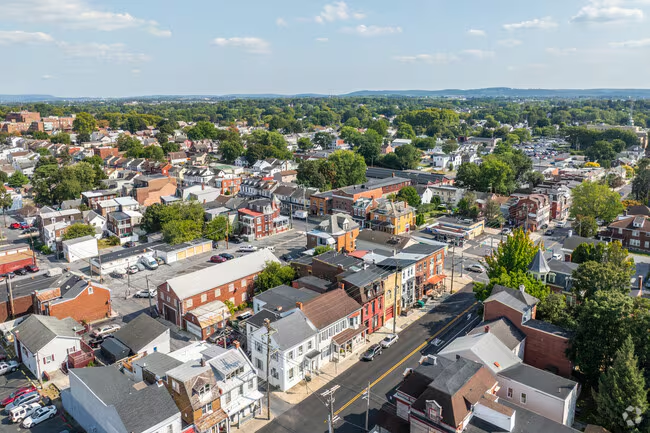
Lebanon County housing is notably older than the national average, with a large share of homes built before 1960 and a meaningful cluster of eighteenth and nineteenth century stone and brick farmhouses. Construction type dictates almost every restoration decision made on site.
Common Construction Types and Their Challenges
- Stone and rubble foundations - highly porous, wick groundwater, and hold moisture long after visible water is gone; require extended drying and often dehumidification at low grain depression
- Brick rowhomes in Lebanon City - shared party walls transmit water and smoke odor between units, so containment must account for neighboring properties
- Balloon-framed farmhouses - open wall cavities let water travel from attic to sill plate and let smoke rise unimpeded through multiple floors
- Plaster and lath walls - absorb water rapidly and may need controlled removal rather than surface drying
- Post-1990 vinyl-sided developments in Palmyra, Cornwall, and Campbelltown - drywall, engineered flooring, and finished basements that are quick to dry but quick to grow mold
- Bank barns and outbuildings converted to living or storage space with minimal insulation and vapor control
Materials That Change the Scope
- Asbestos-containing floor tile, pipe wrap, and plaster in pre-1980 homes, requiring testing before demolition
- Lead paint layers disturbed during fire cleanup or water-damaged surface removal
- Knob-and-tube wiring that must be de-energized before any wet work begins
- Original hardwood, chestnut trim, and millwork worth in-place drying and refinishing rather than replacement
Crews familiar with these details preserve historic character while still meeting current drying and sanitation standards.
Environmental Conditions & Damage Implications
The Lebanon Valley has a humid continental climate with roughly 42 to 45 inches of annual precipitation, hot muggy summers, and freeze-thaw winters. Those conditions drive both the frequency and the severity of restoration losses.
Climate Factors
- Summer dew points in the upper 60s keep indoor humidity elevated, accelerating mold colonization on damp drywall within 24 to 48 hours
- Repeated freeze-thaw cycles crack foundation mortar and widen entry paths for groundwater
- Winter heating dries indoor air, which pulls smoke odor deeper into porous contents after a fire
Soil and Geology
- Limestone bedrock across much of the valley produces karst features, sinkholes, and unpredictable groundwater movement near foundations
- Clay-heavy soils in parts of the county hold water against basement walls and slow natural drainage
- Shallow water tables in floodplain areas near Swatara Creek keep hydrostatic pressure on slabs year-round
Water and Air Considerations
- Hard, mineral-rich well water common in rural townships shortens water heater and supply line lifespan
- Agricultural runoff and livestock operations mean floodwater in farm areas often carries biological contamination and is treated as Category 3
- Seasonal pollen and agricultural dust load HVAC systems, which then redistribute mold spores and soot particles throughout a structure
- Septic systems in outlying townships back up during saturated ground conditions, creating sewage cleanup emergencies
Restoration plans built around these realities include moisture barriers, targeted antimicrobial application, and post-remediation verification rather than surface-level cleaning.
Emergency Response and Insurance Documentation for Lebanon County Property Owners
What happens in the first several hours determines whether a loss stays contained or spreads through an entire structure. Local restoration companies operate 24/7 precisely because water migration and smoke bonding do not pause overnight.
What to Do Before Crews Arrive
- Confirm the property is safe to occupy - leave immediately if there is structural damage, active electrical hazard, or sewage contamination
- Shut off the water main or the affected fixture supply valve
- Cut power to flooded areas at the breaker panel if it can be reached safely and dry
- Call your restoration provider, then notify your insurance carrier and open a claim number
- Photograph and video every affected room, wall, floor, and damaged item before anything is moved
- Move undamaged contents and valuables to a dry, unaffected area if it is safe to do so
- Avoid running the HVAC system after a fire or suspected mold discovery, since it spreads contaminants
The Standard Restoration Sequence
- Emergency contact and dispatch of a response crew
- Inspection with moisture meters, thermal imaging, and damage assessment
- Containment of the affected zone and extraction or debris removal
- Structural drying with air movers and commercial dehumidifiers, monitored daily
- Cleaning, antimicrobial treatment, soot removal, and deodorization
- Reconstruction of removed materials and final walkthrough
Working With Your Insurer
- Keep all receipts for temporary lodging, fans, and emergency supplies
- Request daily moisture logs and drying charts from your restoration crew - adjusters rely on them
- Understand that standard homeowners policies typically exclude surface flooding, which requires separate flood coverage in Swatara and Quittapahilla floodplain areas
- Ask whether your provider bills the carrier directly to reduce out-of-pocket coordination
- Do not dispose of damaged materials until they have been documented and released
Firms including SERVPRO of Lebanon County, Compleat Restorations, Keystone Restorations, Recoup Property Services, and Dry Run Restoration maintain the certifications and documentation practices adjusters expect, which keeps claims moving while your property dries.