
Damage Restoration in Hoquiam, WA
- Damage Restoration Services Overview
- Common Damage Restoration Issues in Hoquiam, Washington
- Neighborhoods We Serve in Hoquiam
- Seasonal Damage Patterns in Hoquiam
- Housing Characteristics & Restoration Considerations
- Environmental Conditions & Damage Implications
- Drying Standards and Clearance Verification in a Coastal Climate
Damage Restoration Services Overview
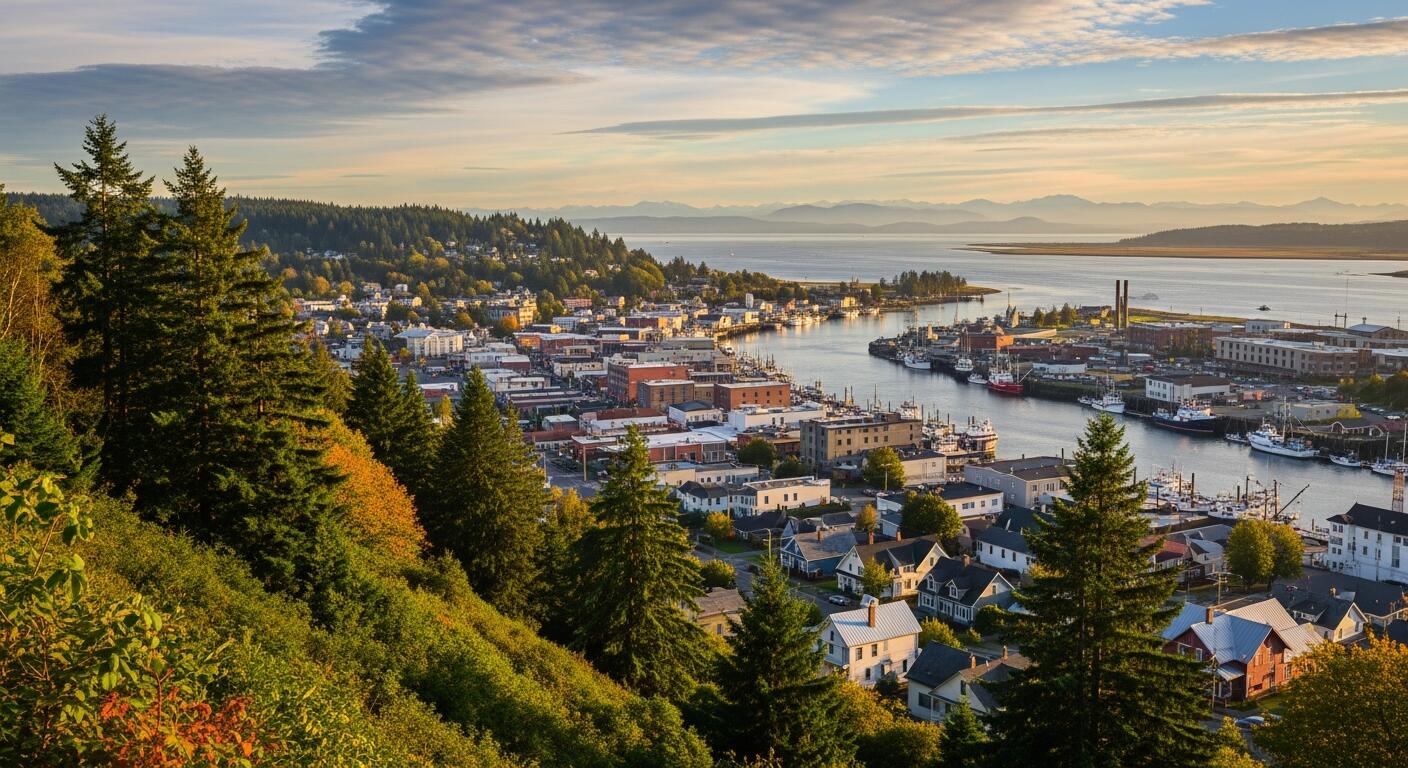
Hoquiam sits where the Hoquiam River meets Grays Harbor, and that location shapes nearly every restoration job in town. With more than 80 inches of annual rainfall, tidal-influenced flooding, and a housing stock built largely during the timber-boom era, local buildings absorb moisture pressure that most of Washington never experiences.
Our teams respond 24/7 across Hoquiam with extraction and structural drying equipment sized to the loss, then monitor daily until documented dry standards are met. Services include:
- Water damage restoration - roof leaks, supply line failures, storm intrusion, and appliance overflows, dried to IICRC S500 methodology
- Flooded basement recovery - extraction, contents handling, and drying of below-grade spaces influenced by high water tables
- Sewage cleanup - Category 3 handling with containment, antimicrobial application, and removal of unsalvageable porous materials
- Fire damage restoration - stabilization, debris removal, structural cleaning, and rebuild coordination
- Smoke damage restoration - soot removal from framing and finishes, HVAC cleaning, and odor neutralization
- Mold removal - remediation to IICRC S520 with clearance verification before sign-off
The benefit for Hoquiam property owners is straightforward: faster stabilization, less demolition, and documentation that supports the insurance claim from first contact through final clearance.
Common Damage Restoration Issues in Hoquiam, Washington
Persistent moisture is the single largest driver of restoration work here, and it rarely announces itself with a dramatic event. Slow saturation of crawlspaces, attics, and wall cavities often does more cumulative damage than a burst pipe.
Local Causes We See Most
- Coastal storms driving rain horizontally into siding, window flashing, and older exterior trim
- Tidal surge and river backwater pushing contaminated water into low-lying basements and crawlspaces
- Sanitary sewer surcharge during heavy rain events, sending Category 3 water into floor drains and basement fixtures
- Failed or missing crawlspace vapor barriers allowing ground moisture to migrate into subfloors and joists
- Attic condensation from blocked soffit vents and bathroom fans terminating inside the roof cavity
- Wood stove, chimney, and space heater fires during cold, wet months, with smoke traveling through balloon-frame wall cavities
Warning Signs Worth Acting On
- Musty odor that intensifies after a rainy stretch or when the furnace runs
- Cupping or darkening at the edges of hardwood and laminate flooring
- Blistered paint, staining, or soft plaster at baseboards and around window casings
- Condensation on ductwork or rusting fasteners visible in the crawlspace
- Gurgling drains or slow fixtures during storm periods, an early sewer backup indicator
- Lingering smoke odor weeks after a small kitchen or heating fire, signaling soot residue in concealed cavities
Early response limits the amount of material that has to be removed, which matters enormously in homes with original plaster and old-growth framing worth preserving.
Neighborhoods We Serve in Hoquiam
We cover all of Hoquiam and the surrounding Grays Harbor County communities, with crews familiar with the drainage and elevation quirks of each area.
- Downtown Hoquiam and the riverfront district - older commercial buildings, basements, and mixed-use structures near the waterline
- North Hoquiam and the hillside residential streets - timber-era homes with daylight basements and steep-lot drainage concerns
- West Hoquiam and Emerson Avenue corridor - established single-family neighborhoods with mature trees and aging sewer laterals
- Lincoln Street and Simpson Avenue areas - dense residential blocks with shared alley drainage
- Grays Harbor County surroundings - Aberdeen, Cosmopolis, Central Park, Ocean Shores, Westport, Montesano, Elma, and Copalis Beach
Response times stay short across the harbor area because equipment is staged regionally rather than dispatched from outside the county.
Seasonal Damage Patterns in Hoquiam
Hoquiam's calendar is defined by a long wet season and a short drying window, and restoration demand follows it closely.
- November through February - peak storm season. Roof intrusion, flooded basements, tidal surge events, and sewer backups cluster here. Heating-related fire and smoke damage also rises with wood stove and furnace use.
- March through May - saturated soils stay high while temperatures climb. Mold growth accelerates in crawlspaces and behind wall assemblies that stayed damp all winter.
- June through August - the driest stretch. Ideal window for crawlspace vapor barrier replacement, attic ventilation correction, and proactive mold remediation with clearance testing.
- September and October - first significant rains reveal summer-deferred roof and gutter problems. Water damage calls climb sharply, and smoke odor complaints return as heating systems fire up after months idle.
Marine humidity never fully drops away, so mold pressure runs year-round. Even in August, an unconditioned crawlspace can hold enough relative humidity to sustain growth on untreated framing.
Housing Characteristics & Restoration Considerations
A large share of Hoquiam's homes date to the early 1900s timber boom, and those assemblies respond to water very differently than modern construction. Aggressive demolition is often the wrong first move.
Construction Features That Shape Our Approach
- Original lath and plaster - holds moisture longer than drywall but is frequently salvageable with controlled drying and cavity ventilation
- Balloon-frame walls - open stud bays run floor to attic, allowing water, smoke, and odor to travel vertically through the structure
- Old-growth fir framing - dense and durable, worth drying in place rather than replacing when moisture readings support it
- Vented crawlspaces with dirt floors - common source of chronic humidity, wood rot, and recurring mold
- Cast iron and clay sewer laterals - prone to root intrusion and cracking, a frequent cause of basement sewage backups
- Daylight and partial basements on sloped lots - susceptible to hydrostatic pressure and seepage during extended rain
How That Changes the Work
- We map moisture with meters and thermal imaging before cutting anything, so removal is limited to materials that cannot be dried.
- Cavity drying systems and injection drying are used to preserve plaster, trim, and original flooring.
- Containment is built early in fire and sewage losses to stop contaminants from migrating through open stud bays.
- Pre-1980 materials are treated as presumed asbestos or lead-containing until testing says otherwise, with appropriate handling protocols.
Environmental Conditions & Damage Implications
The coastal environment around Grays Harbor keeps building assemblies under moisture load nearly every month of the year, which changes both how damage develops and how drying has to be managed.
Conditions That Drive Restoration Outcomes
- Rainfall exceeding 80 inches annually - roof, flashing, and siding defects fail quickly rather than slowly
- High marine relative humidity - outdoor air is often too damp to use for drying, so dehumidification carries the load instead of ventilation
- Mild temperatures year-round - no hard freeze to slow microbial activity, so mold pressure is continuous
- Elevated water table and tidal influence - below-grade spaces face hydrostatic pressure and slower natural drainage
- Alluvial and silty soils near the river - poor percolation around foundations, and floodwater that carries sediment and biological contaminants
- Salt-laden coastal air - accelerates corrosion on fasteners, ductwork, and electrical components exposed during a loss
Practical Effects on Each Service
- Structural drying relies on closed-system dehumidification, monitored daily against documented targets
- Flood and surge water is treated as Category 3 by default given river, tidal, and sewer influence
- Sewage losses require full removal of porous materials, HEPA filtration, and antimicrobial treatment of remaining substrates
- Smoke odor lingers longer in humid conditions, so thermal fogging or hydroxyl treatment often follows source removal
- Mold remediation includes moisture-source correction, because clearing growth without fixing humidity guarantees a return visit
Drying Standards and Clearance Verification in a Coastal Climate
Documented verification separates a finished restoration from a job that simply looks dry. In Hoquiam, where ambient humidity works against every drying effort, that verification carries more weight than almost anywhere else in the state.
Our Process from Call to Clearance
- Emergency response and safety assessment - power, structural stability, and water category are established before work begins.
- Source control - the leak, backup, or intrusion point is stopped or isolated so drying has a chance to succeed.
- Moisture mapping - penetrating and non-penetrating meters plus thermal imaging define the true affected area, including concealed cavities in balloon-framed walls.
- Extraction and controlled demolition - standing water removed, unsalvageable porous materials cut back to defined boundaries under containment when contamination is present.
- Structural drying - air movers and dehumidifiers sized to the affected volume, with cavity and injection drying used to preserve plaster and original finishes.
- Daily monitoring - readings logged against dry standards taken from unaffected reference materials in the same building.
- Clearance and reconstruction - for mold work, remediation is verified before sign-off under IICRC S520; water losses close out against S500 criteria.
Insurance Coordination
- Photo documentation, moisture logs, and scope notes assembled from day one
- Direct communication with adjusters to reduce back-and-forth for homeowners
- Clear separation of mitigation, remediation, and rebuild scopes for cleaner claim handling
- Detailed records supporting both homeowner and flood policy submissions
For crawlspaces and attics - the two areas where Hoquiam's climate does the most quiet damage - we confirm moisture levels, correct ventilation or vapor barrier deficiencies, and verify the space is clean and dry before restoration finishes.





