
Damage Restoration in Tamaqua, PA
- Damage Restoration Services Overview
- Common Damage Restoration Issues in Tamaqua, Pennsylvania
- Neighborhoods We Serve in Tamaqua
- Seasonal Damage Patterns in Tamaqua
- Housing Characteristics & Restoration Considerations
- Environmental Conditions & Damage Implications
- Emergency Response and the Insurance Process in Schuylkill County
Damage Restoration Services Overview
Water that sits for a few extra hours rarely stays a simple cleanup job. Moisture wicks into framing, insulation holds it, and within a couple of days mold colonies begin feeding on drywall paper and wood. Smoke residues behave the same way - acidic soot etches metal, glass, and finishes permanently if left in place. For Tamaqua property owners, the difference between a contained repair and a gutted room usually comes down to how fast the response starts.
Our team covers the full spectrum of disaster recovery for homes and businesses across Schuylkill County:
- Water Damage Restoration - extraction, structural drying, and repair after burst pipes, appliance failures, and storm intrusion
- Flooded Basement Cleanup - pump-out, content removal, sanitizing, and dehumidification of below-grade spaces
- Sewage Cleanup - containment and decontamination of Category 3 black water from backups and line failures
- Fire Damage Restoration - board-up, debris removal, structural cleaning, and rebuild coordination
- Smoke Damage Restoration - soot removal, thermal fogging, HVAC cleaning, and odor neutralization
- Mold Removal - inspection, containment, HEPA filtration, and remediation of affected materials
Key benefits for Tamaqua residents include a guaranteed 2-hour emergency response, IICRC-certified technicians, advanced drying equipment, eco-friendly cleaning products, and thorough documentation for the insurance process.
Common Damage Restoration Issues in Tamaqua, Pennsylvania
Tamaqua sits in the Panther Creek valley along the Little Schuylkill River, where steep terrain funnels runoff straight toward foundations. That geography, combined with an older housing stock, drives most of the calls we receive.
Frequent Causes of Damage
- Freeze-thaw pipe bursts in uninsulated crawl spaces, porch walls, and unheated second-floor bathrooms
- Hillside runoff overwhelming window wells, stairwells, and stone foundation joints during heavy rain
- Combined and aging sewer laterals that surcharge during downpours, pushing waste back into floor drains
- Sump pump failures during power outages from summer thunderstorms and winter ice events
- Chimney and flue fires in homes still using wood stoves, coal stoves, and older oil furnaces
- Kitchen grease fires that spread smoke and soot through open stairwells in narrow rowhomes
Warning Signs Worth Acting On
- A persistent earthy or musty smell in the basement, closets, or behind furniture
- Efflorescence, chalky white staining, or bubbling paint on foundation walls
- Floor drains that gurgle when the washing machine drains
- Cupping hardwood, soft baseboards, or tile that sounds hollow underfoot
- Yellow-brown ceiling rings that reappear after being painted over
- Smoke odor that returns on humid days long after a small fire was cleaned up
Any of these signals hidden moisture or residue that surface cleaning will not resolve.
Neighborhoods We Serve in Tamaqua
Our crews respond throughout the borough and the surrounding Schuylkill County communities, with technicians familiar with local street layouts, older sewer infrastructure, and hillside drainage patterns.
- Downtown Tamaqua and the Broad Street business corridor
- The Heights and the West Broad hillside neighborhoods
- Dutch Hill and East End residential blocks
- Owl Creek and the reservoir area
- Hometown, Tuscarora, and Barnesville
- Coaldale, Lansford, and Summit Hill along the Panther Valley
- New Ringgold, Andreas, and McAdoo
We also serve Pottsville, Schuylkill Haven, and all Schuylkill County communities, with commercial response available for churches, storefronts, apartment buildings, and municipal facilities.
Seasonal Damage Patterns in Tamaqua
Winter (December - February)
- Frozen and burst supply lines during single-digit cold snaps
- Ice damming on low-slope and older slate roofs, causing ceiling water damage
- Heating-related fires from wood stoves, space heaters, and clogged flues
- Smoke damage from puffbacks when oil furnaces misfire
Spring (March - May)
- Snowmelt plus rain producing flooded basements along the Little Schuylkill
- Sewage backups when saturated ground overloads lateral lines
- First mold growth of the year as basements warm and humidity climbs
Summer (June - August)
- Thunderstorm downbursts driving water through windows and roof seams
- Sump pump overload and power-outage flooding
- Peak mold season, with condensation on cool foundation walls
- Air conditioning condensate line clogs soaking ceilings and closets
Fall (September - November)
- Remnants of tropical systems delivering heavy multi-day rainfall
- Clogged gutters from leaf fall redirecting water to foundations
- Chimney fires as heating systems restart without inspection
Housing Characteristics & Restoration Considerations
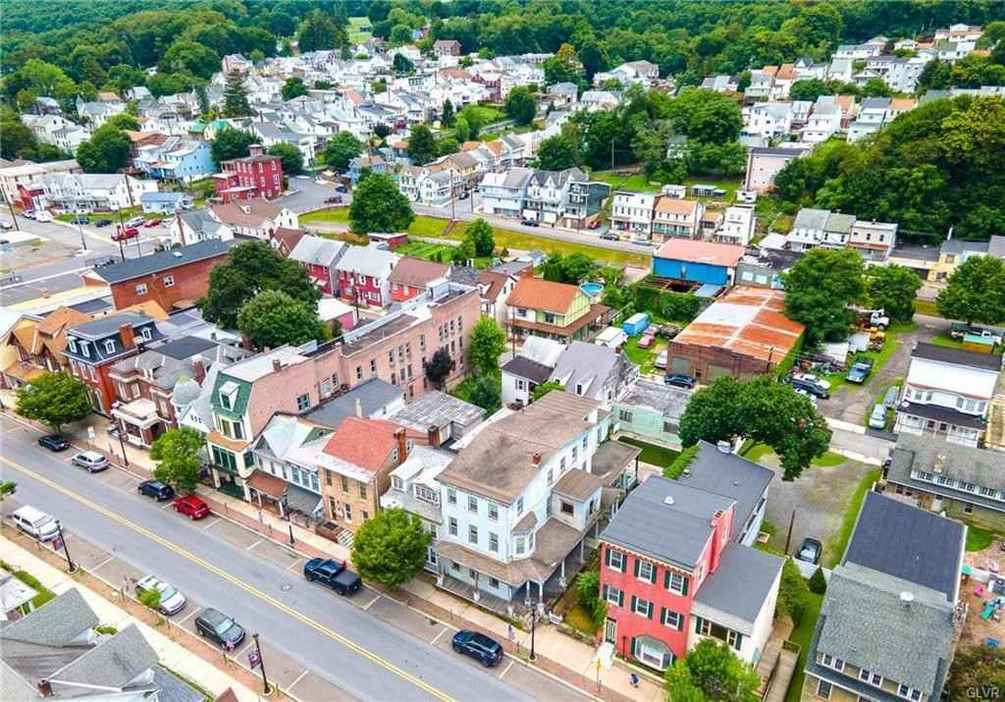
Tamaqua grew up around the anthracite industry, and much of its housing stock reflects that era. A large share of homes predate 1940, and many predate 1900.
Common Construction Types
- Brick and frame rowhomes with shared party walls that let water and smoke migrate between units
- Stone and rubble foundations that are porous and hold moisture against joists
- Balloon-framed walls with open stud cavities running floor to attic - a fast path for fire, smoke, and water
- Plaster and lath interiors that absorb water and hold odor differently than modern drywall
- Slate and low-slope roofs prone to ice dam leaks at valleys and flashing
- Post-1970 ranches and split-levels in outlying areas with finished basements and carpeting
How This Shapes Restoration Work
- Moisture mapping with thermal imaging before any demolition, since stone and plaster hide saturation well
- Cavity drying with injection systems rather than removing historic plaster wherever possible
- Negative-air containment when disturbing materials in homes that may contain asbestos or lead paint
- Duct and chimney cleaning after fires, because balloon framing carries smoke into every level
- Antimicrobial treatment of stone and masonry after sewage exposure, since porous surfaces retain contaminants
- Coordination with neighbors in attached rowhomes when water or smoke crosses party walls
Environmental Conditions & Damage Implications
Tamaqua's climate and geology both work against drying out a wet building on its own.
Climate Factors
- Roughly 45 inches of annual precipitation, plus meaningful winter snowfall
- Humid summers with dew points that keep basements near mold-friendly conditions for months
- Repeated freeze-thaw cycles that widen foundation cracks and mortar joints season after season
- Valley cold-air pooling that keeps below-grade spaces cool and condensation-prone
Soil, Water, and Air Conditions
- Shallow bedrock and clay-heavy soils that shed water sideways toward foundations instead of absorbing it
- Legacy mining influence on local groundwater and drainage, including iron-rich seepage that stains and corrodes
- Steep grades that concentrate stormwater in low-lying blocks
- Older combined sewer segments that raise backup risk during intense rain
What This Means for Your Property
- Passive air drying rarely works here - commercial dehumidifiers and air movers are needed to reach dry standard
- Mold remediation should include humidity control recommendations, not just material removal
- Sewage cleanup requires full disinfection because groundwater and waste often mix in basement flooding
- Smoke odor lingers longer in humid conditions, making hydroxyl or ozone treatment part of many fire jobs
- Post-restoration moisture verification protects against repeat growth during the next humid stretch
Emergency Response and the Insurance Process in Schuylkill County
When a pipe lets go at 2 a.m. or a stove fire fills a rowhome with smoke, the first several hours determine how much can be saved. Our guaranteed 2-hour emergency response across Tamaqua and the Panther Valley means extraction and containment begin before secondary damage sets in.
What Happens When You Call
- Dispatch and arrival - a certified crew is routed to your address with extraction and drying equipment on board
- Safety and source control - utilities checked, water source stopped, fire-damaged structures secured and boarded
- Inspection and moisture mapping - thermal cameras and meters identify hidden saturation in walls, subfloors, and cavities
- Extraction and stabilization - standing water pumped out, sewage contained, unsalvageable materials removed under containment
- Drying and treatment - air movers, dehumidifiers, HEPA filtration, and eco-friendly antimicrobial application
- Cleaning and deodorizing - soot removal, content cleaning, duct work, and odor neutralization
- Repair and reconstruction - drywall, flooring, paint, and finish work returning the space to pre-loss condition
Documentation That Supports Your Claim
- Photo and video records of conditions before work begins
- Daily moisture readings and equipment logs showing progress toward dry standard
- Detailed scope of work and material inventories for adjusters
- Direct communication with your carrier to reduce back-and-forth
- Final verification readings confirming the structure is dry and treated
What You Can Do Before We Arrive
- Shut off the water main if the source is a plumbing failure
- Stay out of flooded areas where outlets or panels may be energized
- Avoid contact with any sewage-affected water or surfaces
- Do not wipe soot from walls - dry residue smears and sets permanently
- Photograph what you safely can and set aside valuables from wet flooring
Call our 24/7 line the moment damage is discovered, and a crew will be on the way to your Tamaqua property.





