
Damage Restoration in Pottsville, PA
- Damage Restoration Services Overview
- Common Damage Restoration Issues in Pottsville, Pennsylvania
- Neighborhoods We Serve in Pottsville
- Seasonal Damage Patterns in Pottsville
- Housing Characteristics & Restoration Considerations
- Environmental Conditions & Damage Implications
- 24/7 Emergency Response Across Schuylkill County
Damage Restoration Services Overview
When water pours through a basement wall or smoke settles into every room of a Pottsville home, knowing that trained restoration crews are minutes away changes everything. Professional restoration turns a chaotic situation into a managed process with clear steps, documented results, and a property returned to safe, livable condition.
Pottsville homeowners and business operators have access to a full range of emergency and remediation services:
- Water Damage Restoration - extraction, structural drying, moisture mapping, and humidity control after pipe breaks, roof leaks, or appliance failures
- Flooded Basement Cleanup - pump-outs, saturated material removal, and drying of below-grade spaces common in Schuylkill County housing stock
- Sewage Cleanup - containment, removal of contaminated materials, antimicrobial treatment, and safe disposal after backups
- Fire Damage Restoration - board-up, debris removal, soot cleaning, and structural reconstruction
- Smoke Damage Restoration - odor neutralization, HVAC cleaning, contents cleaning, and surface treatment
- Mold Removal - containment barriers, HEPA filtration, affected material removal, and moisture source correction
The benefits go beyond appearance. Fast, methodical work limits secondary damage, protects indoor air quality, supports insurance documentation, and helps families return to normal routines sooner.
Common Damage Restoration Issues in Pottsville, Pennsylvania
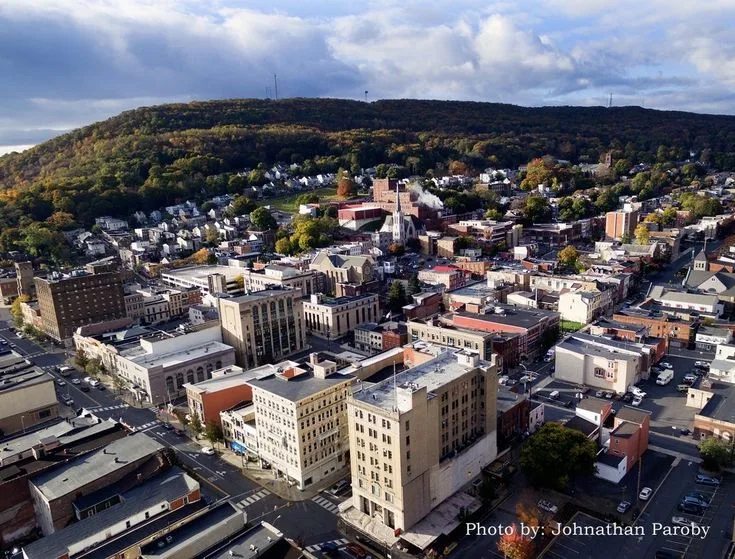
Pottsville sits in the Schuylkill River valley amid steep hillsides and former anthracite mining land - a combination that channels stormwater downhill toward older neighborhoods and their basements.
Local Causes of Property Damage
- Heavy rain and remnants of tropical systems overwhelming hillside drainage and street storm inlets
- Aging combined sewer laterals in older sections of the city, leading to backups during downpours
- Stone and block foundations that weep during saturated ground conditions
- Frozen and burst supply lines in unheated basements, crawlspaces, and vacant upper floors of converted row homes
- Chimney, woodstove, and space heater fires during long heating seasons
- Mine subsidence and settling that opens foundation cracks where groundwater enters
Warning Signs Worth Acting On
- Musty odors in basements, closets, or behind finished basement paneling
- Efflorescence, chalky white residue, or bubbling paint on foundation walls
- Slow floor drains or gurgling fixtures - often the first hint of a sewer backup
- Staining on ceilings below bathrooms or along shared row home walls
- Persistent smoke odor that returns on humid days after a small kitchen or furnace fire
- Warped baseboards, cupping hardwood, or soft drywall near exterior walls
Catching these signals early narrows the scope of work, keeps mold from spreading through wall cavities, and reduces the amount of material that must be removed and rebuilt.
Neighborhoods We Serve in Pottsville
Restoration crews respond throughout the city and across surrounding Schuylkill County communities, adapting to the mix of hillside row homes, valley-floor blocks, and newer developments.
- Downtown Pottsville - Centre Street corridor, commercial storefronts, and upper-floor apartments
- Fairview and Yorkville - hillside residential streets with steep drainage runoff
- The Heights and Bunker Hill - older brick and frame homes with deep basements
- Greenwood Hill and Mount Hope - established neighborhoods near the ridgelines
- Forest Hills and Sharp Mountain areas - properties exposed to wind and storm damage
Service also extends to nearby Saint Clair, Port Carbon, Palo Alto, Mechanicsville, Cressona, Schuylkill Haven, Minersville, Orwigsburg, New Philadelphia, and Frackville - keeping response times short across Route 61, Route 209, and Interstate 81 corridors.
Seasonal Damage Patterns in Pottsville
Restoration needs shift predictably with the Schuylkill County calendar, and knowing the pattern helps property owners prepare rather than react.
- January - February: Frozen and burst pipes drive water damage calls; heating equipment, chimney, and space heater fires peak; ice damming pushes meltwater into upper walls.
- March - April: Snowmelt combined with spring rain saturates hillside soils, producing flooded basements and sump pump failures; sewer backups rise as systems reach capacity.
- May - June: Warming, damp conditions activate mold growth in basements that stayed wet through spring; storm-related roof leaks begin.
- July - August: Thunderstorms and tropical remnants bring flash flooding, wind damage, and lightning-related fires; high humidity accelerates mold colonization.
- September - October: Late-season tropical systems and leaf-clogged gutters cause overflow water intrusion along foundations.
- November - December: Heating systems restart, releasing smoke odors from dirty furnaces; cooking fires increase during holiday gatherings; first freezes stress plumbing.
Housing Characteristics & Restoration Considerations
Pottsville's housing stock is among the oldest in Pennsylvania, with a large share of homes built during the anthracite boom of the late 1800s and early 1900s. That heritage shapes every restoration plan.
Common Construction Features
- Attached and semi-attached brick row homes with shared party walls
- Stone, brick, or early poured foundations with limited waterproofing
- Plaster-and-lath interior walls that hold moisture longer than modern drywall
- Balloon framing that allows smoke, heat, and moisture to travel between floors
- Coal-era chimneys, some repurposed for modern furnaces
- Layered flooring - hardwood over subfloor with vinyl or carpet added later
How This Affects Restoration Work
- Water and flooded basements: Porous stone and masonry require longer drying cycles, injection drying, and careful monitoring rather than surface-level fans.
- Sewage cleanup: Old cast iron and clay laterals mean contamination can reach cavities behind finished basement walls, so containment and full material removal often apply.
- Fire and smoke: Shared walls in row homes let smoke migrate to neighboring units, so odor treatment frequently extends beyond the origin property.
- Mold removal: Plaster, old insulation, and wood framing benefit from HEPA filtration and controlled demolition to avoid spreading spores.
Crews experienced with historic construction protect original trim, stairwells, and masonry wherever salvage is realistic, keeping reconstruction consistent with the character of the block.
Environmental Conditions & Damage Implications
Pottsville's climate and geology create conditions that make moisture problems persistent and mold growth likely without professional drying.
Climate and Moisture
- Roughly 45 inches of annual precipitation, distributed across all four seasons
- Humid summers with dew points that keep basements damp well into September
- Freeze-thaw cycling from December through March that widens foundation cracks
- Significant snowfall in ridge-adjacent neighborhoods, adding meltwater load in spring
Soil, Water, and Air Factors
- Shallow bedrock and clay-heavy soils slow infiltration, pushing runoff toward foundation walls instead of down through the ground.
- Legacy mining ground can create irregular settlement and unexpected water pathways beneath older properties.
- Iron and mineral content in groundwater leaves staining on masonry and can complicate cleaning after basement flooding.
- Valley air stagnation traps smoke odors indoors after fires, requiring hydroxyl or ozone treatment plus HVAC cleaning.
- Steep terrain concentrates stormwater on downhill properties, even those far from the Schuylkill River floodplain.
Because of these conditions, effective restoration pairs immediate extraction with long-term moisture control - dehumidification, grading and gutter recommendations, sump system checks, and follow-up moisture readings that confirm a structure is dry before rebuilding starts.
24/7 Emergency Response Across Schuylkill County
Water spreads through a Pottsville row home in minutes, soot becomes acidic and etches surfaces within hours, and mold can begin colonizing damp materials in a day or two. Response speed is the single largest factor in how much of a property can be saved.
What Fast Response Prevents
- Migration of clean water into wall cavities where it becomes a contamination and mold problem
- Permanent staining of fixtures, metals, and finishes from settled soot and smoke residue
- Spread of sewage bacteria into adjoining rooms and HVAC returns
- Buckled hardwood, delaminated subfloors, and collapsed plaster ceilings
- Odor absorption into upholstery, clothing, and porous building materials
How an Emergency Call Unfolds
- Immediate dispatch - crews mobilize around the clock, with extraction and drying equipment loaded and ready.
- Safety and stabilization - power hazards addressed, structures assessed, and board-up or tarping applied after fire or storm damage.
- Damage assessment - moisture meters, thermal imaging, and contamination categorization determine scope.
- Extraction and containment - standing water pumped out, affected zones isolated with negative air pressure where contamination or mold is present.
- Drying and cleaning - air movers, dehumidifiers, HEPA filtration, soot removal, and antimicrobial application run on a monitored schedule.
- Contents care - salvageable belongings cleaned, deodorized, and inventoried for insurance documentation.
- Reconstruction - drywall, plaster patching, flooring, trim, and painting return the space to pre-loss condition.
Local crews familiar with Pottsville's hillside streets, narrow alleys, and attached housing arrive prepared for tight access and shared-wall complications - which keeps a middle-of-the-night emergency from turning into weeks of avoidable damage.





