
Damage Restoration in South Williamsport, PA
- Damage Restoration Services Overview
- Common Damage Restoration Issues in South Williamsport, Pennsylvania
- Neighborhoods We Serve in South Williamsport
- Seasonal Damage Patterns in South Williamsport
- Housing Characteristics & Restoration Considerations
- Environmental Conditions & Damage Implications
- Susquehanna Flooding, Sewer Backups, and the Documentation That Protects Your Claim
Damage Restoration Services Overview
Standing in a basement filled with water at 2 a.m., or walking back into a smoke-stained kitchen the morning after a fire, ranks among the hardest moments a South Williamsport property owner can face. The damage rarely stops at what you can see - moisture wicks into framing, soot settles into HVAC ductwork, and contaminated water soaks into subfloor materials within hours.
Restoration work in this Lycoming County borough covers a connected set of services, each addressing a different stage or type of loss:
- Water Damage Restoration - extraction, structural drying, and moisture mapping after burst pipes, appliance failures, and roof leaks
- Flooded Basement - pumping standing water, drying block and stone foundation walls, and salvaging stored belongings
- Sewage Cleanup - removal of Category 3 contaminated water, antimicrobial treatment, and safe disposal of porous materials
- Fire Damage Restoration - debris removal, structural stabilization, and content cleaning after flame and heat damage
- Smoke Damage Restoration - soot removal from surfaces, odor neutralization, and duct cleaning
- Mold Removal - containment, air filtration, and removal of colonized building materials
The benefit of treating these as one continuous discipline is simple: fire losses create water damage from suppression efforts, and untreated water losses become mold problems. Handling them under a single, documented plan protects both your structure and your insurance claim.
Common Damage Restoration Issues in South Williamsport, Pennsylvania
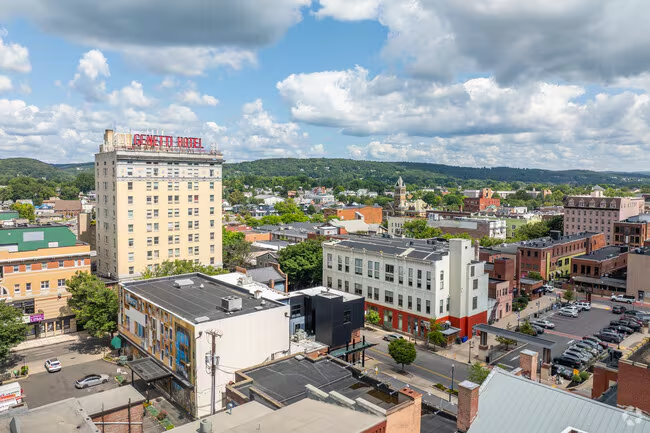
South Williamsport sits on the south bank of the West Branch Susquehanna River, tucked between the water and the ridgeline of Bald Eagle Mountain. That geography shapes nearly every restoration call in the borough.
Local Factors Driving Damage
- River proximity and the levee system - properties near Sylvan Dell Road and the flats along the river face high groundwater and hydrostatic pressure against foundation walls
- Mountain runoff - stormwater sheets down from Bald Eagle Mountain toward lower streets, overwhelming yard drains and window wells
- Aging municipal lines - older clay and cast-iron laterals crack or clog, backing sewage into floor drains and basement fixtures
- Sump pump failure - power outages during summer thunderstorms leave pumps dead exactly when they're needed
- Heating-season fires - wood stoves, space heaters, and chimney creosote account for many cold-weather fire and smoke losses
Warning Signs Worth Acting On
- Efflorescence - chalky white mineral deposits - on block foundation walls
- A musty odor that intensifies when the HVAC system cycles on
- Gurgling floor drains or slow basement fixtures after heavy rain
- Cupping or crowning hardwood on first floors above damp crawl spaces
- Yellow-brown staining bleeding through ceiling paint weeks after a fire
- Rust at the base of water heaters, furnaces, or washing machine connections
Catching any of these early narrows the scope of work dramatically and often keeps a water issue from turning into a mold remediation project.
Neighborhoods We Serve in South Williamsport
Restoration crews respond throughout the borough and the surrounding Lycoming County communities, including:
- Central South Williamsport - the older residential grid around Main Street, Southern Avenue, and the Mountain Avenue corridor
- The Little League area - homes and businesses near Lamade Stadium, the World Series complex, and Route 15
- Sylvan Dell and the river flats - low-lying parcels most exposed to groundwater and flood events
- Bald Eagle Mountain slope properties - hillside homes dealing with runoff and retaining wall seepage
- Duboistown and Armstrong Township - adjacent communities sharing the same river-and-ridge conditions
- Montoursville, Montgomery, and Hughesville - nearby boroughs served on the same response routes
- Williamsport city neighborhoods - across the Market Street and Maynard Street bridges
Familiarity with local street drainage, older sewer laterals, and borough permitting keeps mobilization quick and paperwork accurate.
Seasonal Damage Patterns in South Williamsport
Damage in the West Branch valley follows a fairly predictable annual rhythm. Knowing what's coming helps homeowners prepare instead of react.
- January - February: Frozen and burst supply lines in unheated crawl spaces and exterior walls; ice damming along north-facing roof edges; peak season for heating-related fire and smoke damage
- March - April: Snowmelt combined with spring rain raises the water table, producing the year's heaviest volume of flooded basement calls and sewer backups
- May - June: Residual moisture from spring flooding fuels mold growth behind drywall and under carpet padding
- July - August: Severe thunderstorms bring power outages, sump pump failures, wind-driven rain intrusion, and occasional lightning-strike fires
- September - October: Tropical system remnants track up the Susquehanna corridor, causing riverine and stormwater flooding
- November - December: Chimney and flue fires resume as wood stoves fire up; holiday cooking and decorative lighting add kitchen and electrical fire risk
Late summer humidity deserves special attention - basements that felt dry in May can register elevated moisture readings by August without any new water event.
Housing Characteristics & Restoration Considerations
South Williamsport's housing stock skews older than the national average, with a heavy concentration of homes built between the 1890s and the 1950s alongside postwar ranches and later infill construction. That mix creates specific restoration challenges.
Construction Types and What They Mean
- Stone and rubble foundations - common in pre-1920 homes; porous, absorbent, and slow to dry, often requiring extended dehumidification cycles
- Concrete block basements - hollow cores trap water invisibly and need drilled weep holes or cavity drying equipment
- Balloon-frame walls - open stud bays let water travel downward and smoke travel upward through multiple floors
- Plaster and wood lath - holds moisture far longer than drywall and absorbs smoke odor deep into the lath
- Original hardwood over plank subfloor - salvageable with in-place drying if addressed quickly
- Finished basement rec rooms - wood paneling, carpet, and framed walls added over block create hidden mold reservoirs
Materials That Change the Scope
- Pre-1980 homes may contain asbestos in floor tile, mastic, or pipe wrap - testing precedes demolition
- Lead paint on trim and window sashes requires containment practices during fire cleanup
- Knob-and-tube or early cloth-sheathed wiring must be de-energized and evaluated before drying equipment is placed
- Cast-iron and clay sewer laterals should be camera-inspected after any backup to confirm the cause
Older homes reward patience. Aggressive demolition destroys salvageable original material, while careful moisture mapping and controlled drying often preserve it.
Environmental Conditions & Damage Implications
The borough's climate and soil conditions directly influence how quickly damage spreads and how long drying takes.
Climate
- Humid continental pattern with cold winters and warm, humid summers
- Roughly 40 inches of annual precipitation, distributed fairly evenly across the year
- Repeated freeze-thaw cycling that opens cracks in foundations, masonry, and mortar joints
- Summer dew points frequently in the 60s, which slows evaporation and sustains mold activity in basements
Soil and Groundwater
- River-valley alluvial soils with silt and clay layers that hold water against foundations
- Shallow bedrock on the Bald Eagle Mountain slope, forcing runoff laterally toward homes rather than downward
- Seasonally high water table in low-lying sections, pressurizing basement slabs and cove joints
What This Means for Restoration
- Structural drying requires dehumidification sized for high ambient humidity, not just air movement
- Sewage cleanup demands full antimicrobial treatment because contaminated water penetrates porous masonry quickly
- Mold remediation includes negative-air containment to prevent spore migration through open stud bays
- Smoke odor from wood-burning appliances bonds strongly in cold, dry winter air and typically needs thermal fogging or hydroxyl treatment
- Post-drying moisture verification protects against callbacks once summer humidity returns
Susquehanna Flooding, Sewer Backups, and the Documentation That Protects Your Claim
South Williamsport carries a long institutional memory of flooding - Agnes in 1972 reshaped how the entire valley thinks about water. The levee protects a great deal, but interior drainage, storm sewer surcharge, and lateral backups still put water in basements when the river runs high and the ground is saturated.
Why Backups Happen Here
- Storm sewers reach capacity during intense rainfall, pushing water back through floor drains
- Tree roots infiltrate joints in older clay laterals, creating partial blockages that fail under heavy flow
- Sump discharge lines that terminate too close to the foundation recirculate the same water
- Backwater valves are absent or seized in many older homes
A Methodical Response Sequence
- Safety assessment - electrical shutoff, gas check, and structural stability review before entry
- Category and class determination - identifying whether water is clean, gray, or sewage-contaminated, which dictates everything downstream
- Extraction - truck-mounted or portable pumping of standing water
- Controlled demolition - removal of contaminated porous materials only where moisture readings and contamination justify it
- Antimicrobial application - treatment of all affected framing, masonry, and slab surfaces
- Structural drying - air movers and low-grain refrigerant dehumidifiers placed according to load calculations, with daily moisture logs
- Verification - meter readings on framing, subfloor, and block confirming return to dry standard before rebuild
Documentation That Matters
- Time-stamped photos of pre-existing conditions and every stage of work
- Daily psychrometric readings showing temperature, relative humidity, and grains per pound
- Moisture maps identifying affected square footage room by room
- Itemized scope written in the estimating format adjusters expect
- Clear separation of flood-related loss from sewer backup loss, since coverage differs
Thorough records shorten claim disputes and give you proof that the property was returned to a dry, sanitary, and habitable condition.





