
Damage Restoration in New Castle, PA
- Damage Restoration Services Overview
- Common Damage Restoration Issues in New Castle, Pennsylvania
- Neighborhoods We Serve in New Castle
- Seasonal Damage Patterns in New Castle
- Housing Characteristics & Restoration Considerations
- Environmental Conditions & Damage Implications
- Basement Backups, Sump Failures, and Insurance Documentation in New Castle
Damage Restoration Services Overview
What would you do if you walked downstairs tomorrow morning and found four inches of water covering your basement floor? For homeowners and business owners across New Castle, that scenario is more common than most people expect - and how quickly you respond often determines whether you face a cleanup or a rebuild.
Restoration work covers a wide range of emergencies, and each one demands its own equipment, training, and sequence of steps:
- Water Damage Restoration - extraction, structural drying, and moisture mapping after burst pipes, appliance failures, or roof leaks
- Flooded Basement - pump-out, contents handling, and drying of foundation walls and slabs common in older Lawrence County homes
- Sewage Cleanup - removal of Category 3 contaminated water, antimicrobial treatment, and safe disposal of porous materials
- Fire Damage Restoration - debris removal, soot cleaning, structural stabilization, and reconstruction
- Smoke Damage Restoration - odor neutralization, HVAC decontamination, and surface cleaning in rooms the flames never touched
- Mold Removal - containment, air filtration, material removal, and correction of the moisture source
The benefit for New Castle property owners is straightforward: faster drying means fewer materials thrown away, lower repair costs, and a shorter disruption to daily life. Certified technicians document everything for insurance carriers, so claims move forward while the work is underway.
Common Damage Restoration Issues in New Castle, Pennsylvania
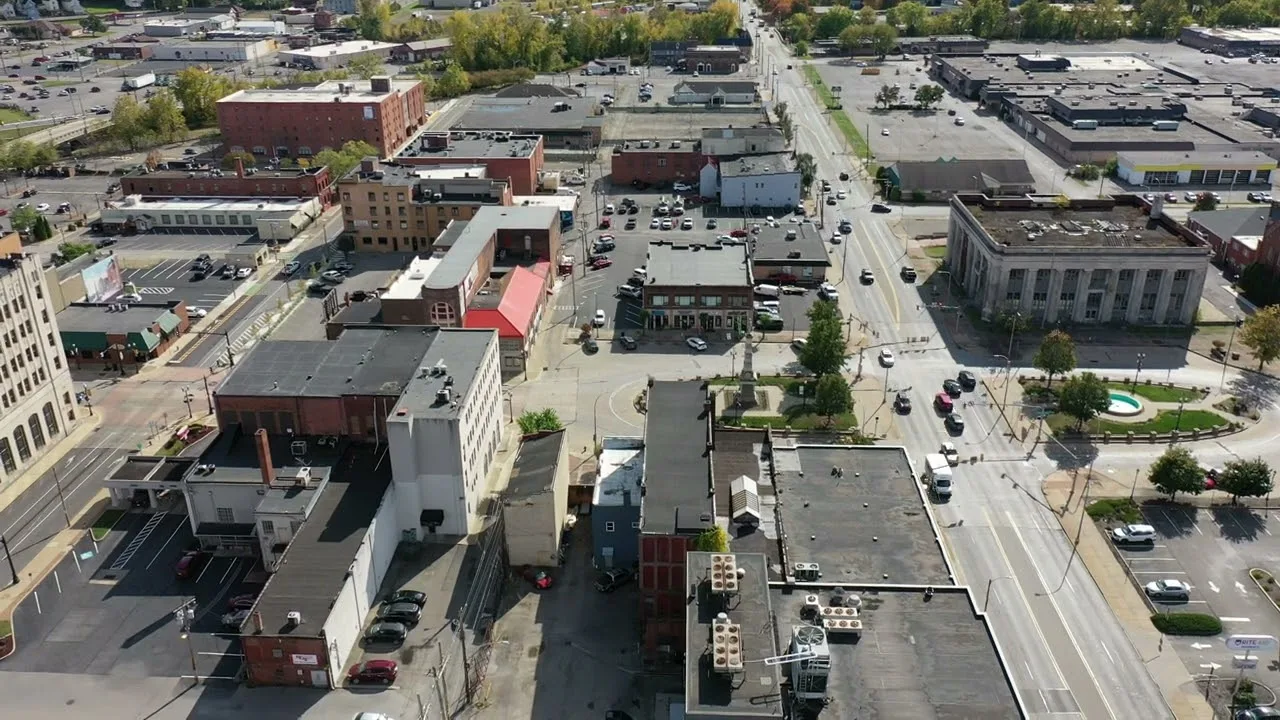
New Castle sits where the Shenango River and Neshannock Creek meet, and that geography shapes the restoration calls that come in year after year. Add a housing stock built largely during the tin plate and steel boom, and the pattern becomes predictable.
Local Causes of Property Damage
- River and creek flooding along low-lying areas near the Shenango, Neshannock, and Mahoning waterways
- Aging clay and cast iron sewer laterals that crack, allowing root intrusion and backups into basements
- Combined storm and sanitary systems that surcharge during heavy summer downpours
- Frozen and burst supply lines in uninsulated crawl spaces and porch walls during January cold snaps
- Ice damming on low-pitch roofs, pushing meltwater behind fascia and into ceiling cavities
- Chimney flue and wood stove fires in century-old homes with original masonry
- Electrical fires traced to knob-and-tube or early cloth-sheathed wiring never fully replaced
Warning Signs Worth Acting On
- Musty odor in the basement or first-floor closets, even when floors look dry
- Efflorescence - white powdery residue - on block foundation walls
- Gurgling floor drains or slow-draining laundry tubs before a storm
- Staining on ceiling drywall near exterior walls after a thaw
- Persistent smoke odor that returns on humid days after a small kitchen or furnace fire
- Peeling paint, cupped hardwood, or visible mold at baseboards
Any of these signals a moisture or contamination source that will not resolve on its own.
Neighborhoods We Serve in New Castle
Crews respond throughout the city and the surrounding Lawrence County communities, including:
- Downtown New Castle and the East Side business district
- North Hill and the Highland Avenue corridor
- Mahoningtown and the West Side
- South New Castle Borough and Croton
- Neshannock Township and the Wilmington Road area
- Shenango Township, Union Township, and Hickory Township
- West Pittsburg, Wampum, and Ellwood City
- New Wilmington, Volant, Pulaski, and Bessemer
- Rural properties along State Route 18, 108, and 224
Coverage extends to residential streets, apartment buildings, churches, schools, and commercial properties near the Route 422 and Interstate 376 corridors. Knowing local road access, township permitting, and which streets sit in flood-prone bottoms helps crews stage equipment quickly rather than losing time on logistics.
Seasonal Damage Patterns in New Castle
- December through February - Frozen pipe breaks peak. Furnace and space heater fires increase, along with smoke damage from improperly vented wood stoves. Ice dams begin forming on north-facing roof slopes.
- March and April - Snowmelt combined with spring rain saturates the ground, driving flooded basement calls and hydrostatic seepage through block walls. Sewer backups rise as systems surcharge.
- May through July - Thunderstorms bring wind-driven rain, roof leaks, and sump pump failures during power outages. Rising humidity accelerates mold growth in spaces that never fully dried out from spring.
- August and September - Mold removal requests reach their annual high. Remnants of tropical systems moving inland occasionally drop several inches of rain in a single event.
- October and November - Heating systems restart, and the first burn of the season often reveals creosote buildup, cracked heat exchangers, and puff-back soot from oil furnaces.
Scheduling a sump pump test in early spring and a chimney inspection in early fall heads off two of the most common emergency calls in the area.
Housing Characteristics & Restoration Considerations
New Castle's housing stock skews older than the national average, with a large share of homes built between 1900 and 1950 during the city's industrial expansion. That age directly shapes how restoration work is planned.
Construction Features That Affect Restoration
- Stone and unreinforced block foundations - porous and prone to lateral seepage, requiring longer drying cycles and often interior drainage correction after a flooded basement
- Balloon-framed walls - open stud cavities that let water travel between floors and give smoke a direct path from basement to attic
- Plaster over wood lath - holds moisture far longer than drywall and traps soot in surface pores, calling for specialty cleaning rather than simple wiping
- Original hardwood over subfloor planking - salvageable with targeted drying mats when addressed early, but prone to cupping and crowning if left saturated
- Coal chute openings and old cisterns - hidden entry points for groundwater and pests
- Asbestos-containing floor tile, pipe wrap, and mastic - requires testing before demolition in pre-1980 structures
- Lead-based paint - triggers RRP-compliant work practices during fire and water repairs
What This Means for the Work
- Moisture meters and thermal imaging are used before any material is removed, so demolition stays limited to what is genuinely wet
- Sewage cleanup in older basements usually includes removing porous storage contents and treating the slab and lower wall surfaces
- Mold remediation frequently uncovers legacy problems behind paneling added in the 1960s and 1970s
- Fire reconstruction may involve matching trim profiles and plaster textures no longer stocked commercially
Environmental Conditions & Damage Implications
Lawrence County has a humid continental climate - cold winters, warm and muggy summers, and roughly 40 inches of annual precipitation spread fairly evenly across the year. Those conditions influence every stage of restoration.
Climate and Moisture
- Summer dew points regularly climb into the 60s, so open windows alone will never dry a wet basement - dehumidification with monitored psychrometric readings is required
- Winter freeze-thaw cycles crack foundation mortar and driveway drainage, creating new water entry points each spring
- Snowpack from lake-effect bands off Lake Erie adds meltwater load in late winter
Soil and Groundwater
- Glacial till and clay-heavy soils drain slowly, holding water against foundation walls after storms
- Shallow water tables in river-bottom neighborhoods keep sump systems cycling much of the year
- Legacy industrial fill in some parcels means soil disturbance during exterior repairs deserves caution
Air Quality and Contamination
- Regional particulate levels rise during summer inversions, which can worsen respiratory symptoms already aggravated by mold spores indoors
- HEPA air scrubbers and negative-pressure containment keep spores and soot from migrating into unaffected rooms
- Sewage backups introduce bacteria and endotoxins that demand antimicrobial application and disposal of affected porous goods
- Smoke residue interacting with humid air produces acidic films that etch metal, glass, and appliance finishes if cleaning is delayed
Basement Backups, Sump Failures, and Insurance Documentation in New Castle
Few calls generate more confusion for local homeowners than a basement that fills with water overnight. The source matters enormously - for the cleanup method, for the health risk, and for how the claim is handled.
Identifying the Water Category
- Clean water - a broken supply line or water heater failure. Materials are often salvageable with prompt extraction and drying.
- Gray water - washing machine discharge, dishwasher overflow, or seepage through a foundation wall. Requires antimicrobial treatment and selective removal.
- Black water - sanitary sewer backup or river floodwater. Contaminated materials such as carpet, pad, drywall, and cardboard storage are removed and disposed of, not dried in place.
Why Sump Systems Fail Here
- Power outages during the same thunderstorms that create peak demand
- Float switches jammed by sediment from clay-heavy groundwater
- Discharge lines frozen at the exterior termination during winter thaws
- Undersized single pumps in homes with high water tables and no battery backup
- Check valves that fail, allowing water to cycle back into the pit
Documentation That Supports Your Claim
- Photographs of standing water and affected contents before anything is moved
- Daily moisture readings logged by room and material type
- Equipment placement records showing air movers and dehumidifiers in use
- A written scope separating emergency mitigation from reconstruction
- Notes on whether a sewer backup endorsement or separate flood policy applies
Restoration teams working in New Castle regularly coordinate directly with adjusters, which spares homeowners from translating technical drying data themselves. Keeping a copy of your policy declarations page and knowing whether you carry water backup coverage puts you in a far stronger position the moment the pump stops working.





