Damage Restoration in Hernando County, FL
- Damage Restoration Services Overview
- Common Damage Restoration Issues in Hernando County, Florida
- Neighborhoods We Serve in Hernando County
- Seasonal Damage Patterns in Hernando County
- Housing Characteristics & Restoration Considerations
- Environmental Conditions & Damage Implications
- What to Expect During Hurricane Season Restoration in Hernando County
Damage Restoration Services Overview
Water spreads through a Hernando County home faster than most owners expect - drywall wicks moisture upward within hours, and microbial growth can begin in a day or two under Florida humidity. Acting quickly protects framing, flooring, and indoor air quality, and it keeps a manageable loss from becoming a gut-and-rebuild project.
Restoration crews serving Brooksville, Spring Hill, and the surrounding communities handle the full range of property emergencies:
- Water Damage Restoration - emergency extraction, structural drying, moisture mapping, and repairs after roof leaks, burst supply lines, and storm intrusion.
- Flooded Basement - pump-out and drying for below-grade rooms, sunken living areas, crawl spaces, and stem-wall foundations that trap standing water.
- Sewage Cleanup - safe removal of contaminated water from septic backups and drain line failures, followed by antimicrobial treatment.
- Fire Damage Restoration - board-up, debris removal, structural cleaning, and reconstruction after kitchen, electrical, or lightning-related fires.
- Smoke Damage Restoration - soot removal from surfaces and HVAC systems, odor neutralization, and contents cleaning.
- Mold Removal - containment, source correction, affected material removal, and air scrubbing.
The benefit for local property owners is straightforward: one team coordinates assessment, mitigation, documentation for the insurance claim, and rebuild - so nothing falls through the cracks while you are focused on your family or your business.
Common Damage Restoration Issues in Hernando County, Florida
Geography drives most losses here. Hernando County sits inland but at low elevation, so Gulf Coast storm systems push heavy rain and wind well past the coastline into Brooksville, Spring Hill, and the rural stretches in between - and Florida remains one of the ten states most affected by flooding.
Recurring Causes of Loss
- Tropical storms, hurricanes, and occasional tornadoes tearing shingles loose and driving rain into attics
- Sheet flow and poor drainage across flat, sandy terrain that pools against slab foundations
- Septic system backups during saturated ground conditions, sending contaminated water into tubs and floor drains
- Failed water heaters, supply lines, and refrigerator connections in older Spring Hill homes
- Air conditioning condensate lines clogging and overflowing during long cooling seasons
- Lightning strikes and electrical faults igniting attic or wall-cavity fires
- Grease and cooking fires that leave soot and odor throughout the HVAC system
Warning Signs Worth Investigating
- Musty odors in closets, near baseboards, or when the air handler cycles on
- Bubbling paint, cupping laminate, or discolored ceiling tiles
- Persistent condensation on interior walls or around vents
- Slow drains and gurgling toilets that suggest a septic or lateral line problem
- Soot film returning to walls after cleaning - a sign smoke residue is still in the ductwork
- Allergy-like symptoms that improve when occupants leave the house
Early investigation is far cheaper than demolition. A moisture meter reading behind a baseboard takes minutes; replacing a subfloor takes weeks.
Neighborhoods We Serve in Hernando County
Response crews cover the county from the Gulf shoreline to the eastern ranch land, including:
- Brooksville - historic districts with older wood-frame homes plus newer subdivisions off Cortez Boulevard
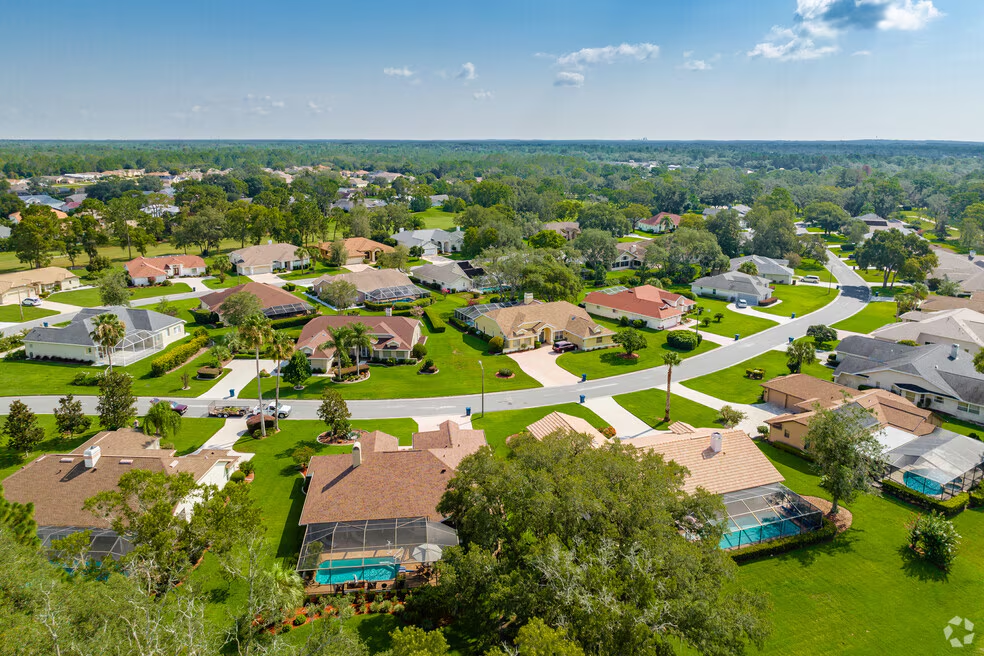
- Spring Hill - the county's largest population center, dominated by 1970s-2000s concrete block slab homes
- Weeki Wachee and Weeki Wachee Gardens - waterfront and canal-adjacent properties with high flood exposure
- Hernando Beach - coastal stilt homes, canal frontage, and surge-prone ground levels
- Ridge Manor and Ridge Manor West - properties near the Withlacoochee floodplain
- Masaryktown, Istachatta, Nobleton, and Lake Lindsey - rural parcels served largely by wells and septic systems
- Bayport, Pine Island, and Timber Pines - retirement and seasonal communities where absentee losses go undetected longer
Neighboring Pasco and Citrus County properties along the county lines are covered as well, since storm systems rarely respect jurisdictional boundaries.
Seasonal Damage Patterns in Hernando County
Restoration demand here follows a predictable rhythm tied to the subtropical climate.
- January - March (dry season): Fire and smoke damage peaks as space heaters, fireplaces, and holiday cooking see heavy use. Cooler, drier air makes this the best window for planned mold remediation and duct cleaning.
- April - May: Brush fire risk climbs across dry rural pasture and pine stands, bringing smoke odor complaints even to homes never touched by flame. Plumbing repairs and roof inspections are ideal now.
- June - August: Daily convective thunderstorms drive roof leaks, lightning fires, and AC condensate overflows. Humidity above 80 percent means mold growth accelerates in any wet material.
- September - October (hurricane peak): Tropical systems produce the year's heaviest volume - flooded lower levels, sewage backups from saturated drain fields, wind-driven rain, and widespread structural drying needs.
- November - December: Latent damage surfaces. Storm moisture hidden in wall cavities finally shows as staining and odor, and seasonal residents returning north find unattended leaks.
Housing Characteristics & Restoration Considerations
Construction style dictates drying strategy, and Hernando County has three broad housing eras that each behave differently when saturated.
Concrete Block on Slab (1970s - 2000s)
- Most common in Spring Hill and the county's larger subdivisions
- Moisture migrates under vinyl and laminate flooring and wicks up drywall from the slab
- Furring strips behind drywall create hidden cavities that trap water and grow mold unseen
- Requires cavity drying with injection systems rather than simple surface fans
Older Wood-Frame and Historic Homes (Brooksville and rural areas)
- Crawl spaces and pier foundations that hold standing water after flooding
- Plaster, shiplap, and original hardwood need slower, controlled drying to avoid warping
- Older wiring and single-wall construction raise both fire risk and smoke penetration
Coastal and Elevated Homes (Hernando Beach, Bayport)
- Ground-level enclosures and garages flood first during surge events
- Saltwater intrusion demands corrosion-conscious cleaning and material removal
Newer Builds and Manufactured Housing
- Tighter envelopes hold humidity and smoke odor longer once contaminated
- Manufactured home underbellies and belly wrap retain water and require removal rather than drying in place
- Attached lanais, sunken family rooms, and finished lower levels function as the local equivalent of a flooded basement
Documenting materials and pre-loss conditions during the first visit keeps repairs consistent with what was actually there.
Environmental Conditions & Damage Implications
Hernando County's environment works against drying and in favor of microbial growth almost year-round.
- Humidity: Average relative humidity frequently sits between 70 and 90 percent. Open windows do not dry a structure here - they add moisture. Sealed containment with commercial dehumidification is the only reliable approach.
- Rainfall: The county receives roughly 50-plus inches annually, heavily concentrated in the summer months, producing repeated saturation events.
- Karst geology: Limestone bedrock, springs, and sinkhole activity mean groundwater sits close to the surface. Sandy soils drain quickly at the surface but the water table can rise fast, pushing moisture through slabs and into crawl spaces.
- Septic and well systems: Widespread in rural areas. Saturated drain fields back up into homes, creating Category 3 sewage losses that require personal protective equipment, controlled demolition of porous materials, and antimicrobial treatment rather than simple cleaning.
- Air quality: Pollen loads, brush fire smoke drift, and airborne mold spores compound one another. After a fire, soot particles bond with humid air and settle into fabrics and HVAC systems, which is why odor returns without proper duct treatment.
- Vegetation and tree cover: Live oaks and pines shed limbs onto roofs during storms, opening the building envelope to rain intrusion.
These conditions explain why local drying plans run longer and use more equipment than the same loss would require in a drier climate.
What to Expect During Hurricane Season Restoration in Hernando County
When a tropical system moves through, hundreds of Hernando County properties need help at once - so knowing the process and getting straight answers matters more than ever.
The Response Sequence
- Emergency contact and triage: Crews operate 24/7. Safety hazards, active water intrusion, and occupied homes are prioritized.
- On-site assessment: Technicians use moisture meters and thermal imaging to map how far water traveled, classify the water category, and identify smoke or soot spread.
- Stabilization: Board-up, tarping, extraction, and pumping out flooded lower levels stop further loss immediately.
- Controlled demolition: Non-salvageable drywall, insulation, carpet pad, and sewage-contaminated porous materials are removed and documented.
- Structural drying: Air movers and dehumidifiers run until daily moisture readings confirm materials have returned to normal levels.
- Cleaning and treatment: Antimicrobial application, soot removal, HVAC cleaning, contents cleaning, and odor neutralization.
- Reconstruction: Drywall, flooring, paint, cabinetry, and finish work to return the property to pre-loss condition.
Transparency You Should Expect
- Photo and moisture-reading documentation at every stage, shared with you and your insurance carrier
- A written scope explaining what is being removed, what is being dried in place, and why
- Daily progress updates during the drying phase, including equipment counts and readings
- Clear separation between mitigation work and rebuild work so the claim is easy to follow
- Direct answers about which contents can be restored versus what should be inventoried as a loss
Preparing before the season helps: photograph rooms and valuables, keep your policy and agent contact accessible, know where your water shutoff is, and clear gutters and drainage paths around the foundation. When a storm does hit, that preparation shortens every step that follows.