
Damage Restoration in Brooksville, FL
- Damage Restoration Services Overview
- Common Damage Restoration Issues in Brooksville, Florida
- Neighborhoods We Serve in Brooksville
- Seasonal Damage Patterns in Brooksville
- Housing Characteristics & Restoration Considerations
- Environmental Conditions & Damage Implications
- Storm Response and Insurance Documentation for Hernando County Properties
Damage Restoration Services Overview
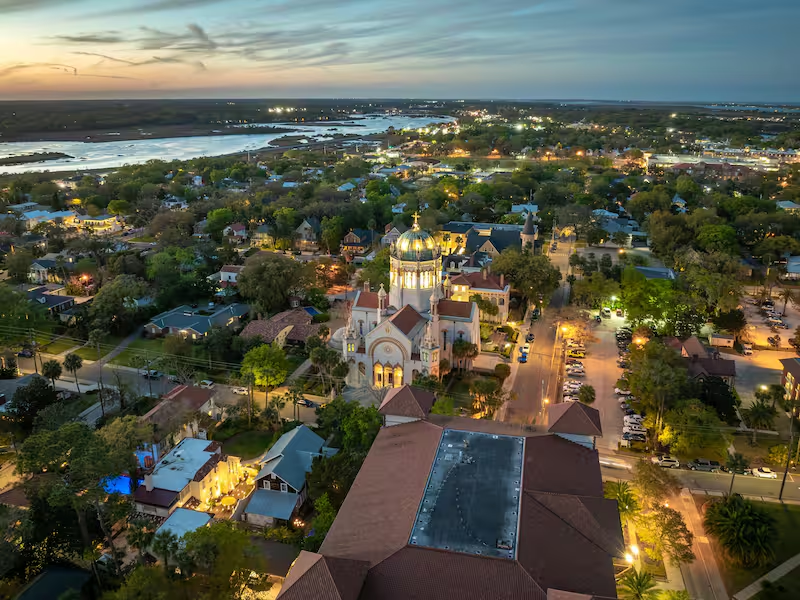
Hernando County sits atop one of Florida's most active karst limestone belts - the same geology that feeds Weeki Wachee Springs also means groundwater can rise, shift, and find its way into structures in ways flat coastal towns never experience. For Brooksville property owners, that translates into water intrusion patterns that surprise even longtime residents.
Restoration here covers a wide range of emergencies, and each one demands a different technical approach:
- Water Damage Restoration - extraction, moisture mapping, and documented structural drying after pipe failures, roof leaks, and appliance breaks.
- Flooded Basement - pump-outs and drying for below-grade rooms, crawl spaces, and sunken slabs where standing water lingers.
- Sewage Cleanup - containment and biohazard remediation after septic backups, lift station failures, and drain line overflows.
- Fire Damage Restoration - board-up, debris removal, structural cleaning, and reconstruction of fire-affected areas.
- Smoke Damage Restoration - soot removal from walls, ceilings, contents, and HVAC systems, plus odor neutralization.
- Mold Removal - containment, controlled removal, and correction of the moisture source feeding the growth.
Key benefits for Brooksville residents include 24/7 emergency response, IICRC-certified technicians, commercial-grade drying equipment, and thorough documentation for insurance claims. Fast action limits secondary damage - and in a humid subtropical climate, the window between a wet floor and a mold problem is short.
Common Damage Restoration Issues in Brooksville, Florida
Brooksville's geography, housing age, and weather patterns combine to create recurring restoration scenarios across Hernando County.
Frequent Causes of Damage
- Summer thunderstorms and tropical systems pushing wind-driven rain past aging roof flashing and soffits
- Poor drainage on rural acreage where sheet flow collects against foundations unnoticed for days
- Sinkhole and settlement activity that cracks slabs, separates plumbing joints, and opens paths for groundwater
- Septic system saturation during heavy rainfall, leading to backups into tubs, showers, and floor drains
- Aging galvanized and polybutylene supply lines in mid-century homes
- Electrical faults, kitchen fires, and lightning strikes that leave smoke residue throughout a structure
- Chronic condensation around undersized or oversized HVAC systems feeding hidden mold colonies
Warning Signs Worth Acting On
- Musty odors that intensify when the air handler cycles on
- Baseboards that feel soft, cupped flooring, or tile that sounds hollow underfoot
- Staining on ceilings near roof valleys, skylights, and plumbing vents
- Gurgling drains or slow fixtures - often the first hint of a failing septic field
- Soot film on window glass, lampshades, or return air vents after a small kitchen fire
- Persistent allergy symptoms that ease when occupants leave the property
Because Brooksville's clay-and-sand soil layers hold moisture unevenly, water damage in one room often originates several rooms away. Moisture meters and thermal imaging locate the true source rather than the visible symptom.
Neighborhoods We Serve in Brooksville
Response covers Brooksville proper and the surrounding Hernando County communities:
- Historic Downtown Brooksville and the Broad Street corridor
- Hernando Park and nearby low-lying residential blocks
- The Cortez Boulevard commercial district and adjacent business parks
- Southern Hills Plantation and other golf-course communities
- Hill 'n Dale, Brookridge, and High Point
- Ridge Manor and properties bordering Withlacoochee State Forest
- Masaryktown, Istachatta, and Nobleton
- Spring Lake and rural acreage along Croom Rital Road
- Surrounding areas including Spring Hill, Weeki Wachee, and Dade City
Rural parcels with long driveways, septic systems, and well water get the same rapid attention as in-town addresses - crews arrive with truck-mounted extraction, generators, and portable power for properties where utilities are down after a storm.
Seasonal Damage Patterns in Brooksville
Late Spring (April - May)
- Dry-season brush fire risk near forested parcels, producing smoke damage even without direct flame contact
- First humidity spike revives dormant mold from winter leaks
Summer (June - September)
- Peak thunderstorm and hurricane activity - roof leaks, wind-driven rain, and flooded lower levels
- Saturated drain fields causing septic and sewage backups
- Lightning strikes leading to attic and electrical fires
- Highest dew points of the year accelerate mold growth within days of any water intrusion
Fall (October - November)
- Late-season tropical systems still track across the Gulf into Hernando County
- Post-storm mold discoveries as homeowners reopen closed-up rooms
Winter (December - March)
- Occasional freeze events crack exposed hose bibs, irrigation lines, and uninsulated pipes in older homes
- Increased heating and fireplace use raises fire and smoke damage calls
- Cooler nights create condensation in attics and crawl spaces
Every season carries its own risk profile, which is why emergency crews stay staffed year-round rather than scaling up only during hurricane season.
Housing Characteristics & Restoration Considerations
Brooksville's building stock spans well over a century, and each construction era responds differently to water, fire, and mold.
Historic District Homes (pre-1940s)
- Craftsman and Florida vernacular framing with wood lath, plaster, and heart pine flooring
- Raised pier foundations and crawl spaces that trap humid air
- Original materials absorb moisture slowly and release it even more slowly - drying requires patience and continuous monitoring
- Balloon framing lets smoke and soot travel between floors through wall cavities
Mid-Century and 1970s-1990s Homes
- Concrete block with stucco, slab-on-grade foundations
- Sunken living rooms and below-grade additions that act as collection points during flooding
- Aging supply lines, cast iron drains, and original ductwork prone to hidden mold
- Vinyl flooring over slab can trap moisture, delaying visible signs for weeks
Newer Subdivisions and Rural Builds
- Tighter envelopes and engineered materials that hold humidity when ventilation fails
- Manufactured and modular homes with belly wrap that retains water after floods
- Larger lots with private septic and well systems, raising sewage cleanup complexity
Restoration planning accounts for these differences: plaster walls may be salvageable where modern drywall is not, block construction wicks moisture upward through the wall base, and slab homes need targeted subfloor drying rather than surface fans alone.
Environmental Conditions & Damage Implications
Climate
- Humid subtropical conditions with summer dew points regularly in the low to mid-70s
- Annual rainfall concentrated in short, intense summer storm bursts
- Indoor relative humidity that climbs quickly when air conditioning fails during outages
Elevated humidity means mold spores present in every Florida structure only need a moisture event to colonize. Dehumidification is not an add-on here - it is the core of every drying plan.
Soil and Geology
- Karst limestone beneath sandy and clay-rich surface soils
- Sinkhole-prone areas where subsurface voids alter drainage paths
- Rolling terrain that channels runoff toward low points rather than dispersing it
- Perched water tables that push moisture up through slab cracks and crawl space floors
Water Conditions
- Spring-fed waterways and a high regional water table limiting how quickly ground absorbs storm runoff
- Many rural properties on wells and septic - flooding can contaminate both, upgrading a water loss to a category three sewage cleanup
- Mineral-heavy well water leaves residue that complicates surface cleaning after fire and smoke events
Air Quality
- Seasonal pollen and prescribed burn smoke drifting from surrounding forest lands
- Soot particles that bond to surfaces faster in high humidity, making prompt smoke damage response important
- HVAC systems that recirculate contaminants throughout a home until ducts are cleaned
Storm Response and Insurance Documentation for Hernando County Properties
When a Gulf system pushes inland across Hernando County, restoration becomes a race against humidity, contamination, and claim deadlines. Knowing what happens in the first hours makes the difference between a manageable repair and a gut renovation.
The Emergency Response Sequence
- Call intake and dispatch - crews mobilize 24/7 with extraction trucks, generators, and containment supplies.
- Safety assessment - electrical hazards, structural instability, and contamination category are evaluated before anyone enters.
- Emergency mitigation - board-up, roof tarping, and standing water extraction stop damage from spreading.
- Moisture mapping - thermal imaging and penetrating meters record wet materials behind walls, under cabinets, and beneath flooring.
- Structural drying - air movers and commercial dehumidifiers run on a monitored schedule with daily readings.
- Remediation - sewage decontamination, mold containment, soot cleaning, and odor treatment as the loss requires.
- Reconstruction - drywall, flooring, trim, and finishes returned to pre-loss condition.
What Strong Documentation Includes
- Photographs of affected areas before any material is removed
- Daily moisture readings logged by room and material type
- Equipment placement records showing dehumidifier and air mover counts
- Category and class determination for water losses, which drives what can be dried versus removed
- Written scope of work aligned with standard insurance estimating platforms
- Air sampling results where mold remediation is involved
Commercial Considerations
Businesses along Cortez Boulevard and around the courthouse square cannot afford extended closures. Phased drying, after-hours work, and temporary containment barriers allow portions of a building to stay operational while restoration continues elsewhere. Coordination with property managers, adjusters, and tenants keeps everyone working from the same timeline.





