
Damage Restoration in Waynesboro, PA
- Damage Restoration Services Overview
- Common Damage Restoration Issues in Waynesboro, Pennsylvania
- Neighborhoods We Serve in Waynesboro
- Seasonal Damage Patterns in Waynesboro
- Housing Characteristics & Restoration Considerations
- Environmental Conditions & Damage Implications
- Emergency Response Timelines for Waynesboro Homes
Damage Restoration Services Overview
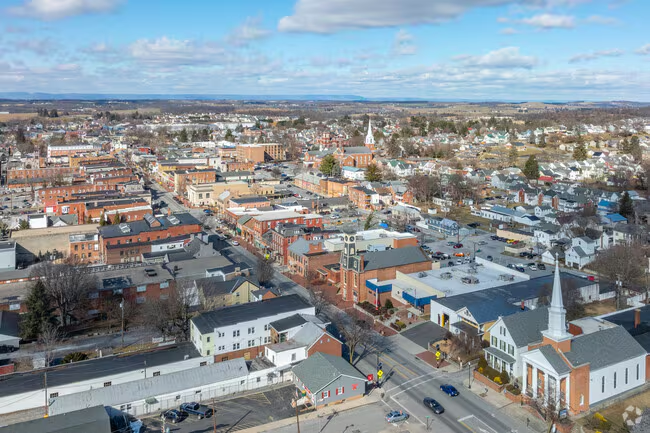
You come downstairs on a February morning in a Waynesboro rowhouse-style single-family home, and the basement stairs end in three inches of standing water. A galvanized supply line let go overnight, and now the furnace pad, the storage shelves, and the bottom of the drywall are all soaking. That scenario plays out in Franklin County homes every winter - and the response in the first few hours shapes how much of the structure survives.
Restoration in Waynesboro covers a connected set of losses, not just one:
- Water damage restoration - supply line breaks, appliance failures, roof leaks, and storm intrusion
- Flooded basement cleanup - groundwater seepage, sump pump failure, and street-side stormwater backup
- Sewage cleanup - cast-iron drain offsets and main line backups in older borough neighborhoods
- Fire damage restoration - kitchen fires, chimney and flue fires, electrical faults in original wiring
- Smoke damage restoration - soot residue, staining, and odor that travels far past the burn area
- Mold removal - growth in stone foundations, crawl spaces, and behind plaster walls
The benefit to homeowners here is straightforward: one dispatch number, one crew network, and documentation formatted for your insurance adjuster - so drying, cleaning, and rebuild decisions happen on the same timeline instead of in fragments.
Common Damage Restoration Issues in Waynesboro, Pennsylvania
Waynesboro's housing stock tells you what will fail. Blocks of late-1800s and early-1900s single-family homes built for factory workers share the same plumbing, roofing, and electrical vintages - which means the same losses repeat street to street.
Recurring Failure Patterns
- Cast-iron drain offsets - joints separate or corrode through, releasing wastewater into basements and wall cavities
- Galvanized supply line pinholes - interior corrosion produces slow leaks behind plaster before a sudden rupture
- Slate roof ice dams - meltwater backs up under slate and stains ceilings on the top floor
- Original knob-and-tube or early branch circuits - overloaded runs remain a leading ignition source in older borough homes
- Stone and rubble foundations - permanently damp, ideal for mold colonization on joists and stored contents
Warning Signs Worth Acting On
- A musty smell that intensifies when the HVAC blower runs
- Efflorescence - white powdery residue - on basement stone or block
- Slow floor drains or gurgling fixtures after heavy rain, a classic pre-backup signal
- Cupping hardwood or bubbling paint along an exterior wall base
- Persistent smoke odor after a minor cooking fire, indicating soot in ductwork or insulation
- Water staining that changes shape or darkens between storms
Summer thunderstorms rolling off South Mountain, winter freeze-thaw cycles, and spring saturation each trigger a different one of these patterns.
Neighborhoods We Serve in Waynesboro
Crews cover the borough and the surrounding Franklin County townships, with attention to how each area's housing age changes the approach.
- Downtown Waynesboro and the Main Street corridor - dense older stock, shared party walls, mixed commercial ground floors
- North and South Church Street neighborhoods - classic workers' housing with stone foundations and cast-iron drains
- East End and the Fairview Avenue area - mid-century additions layered onto older cores
- Wayne Heights and Waynecastle - suburban-era homes with finished basements and sump systems
- Quincy, Mont Alto, and Rouzerville - properties near South Mountain runoff and wooded lots
- Zullinger, Ringgold, and State Line - rural parcels with wells, septic systems, and outbuildings
- Blue Ridge Summit and the Pen Mar area - elevation-driven ice and wind exposure
Greencastle, Chambersburg, and nearby Maryland border communities fall inside the same dispatch radius.
Seasonal Damage Patterns in Waynesboro
Loss types cycle predictably through the year in south-central Pennsylvania.
- December through February - frozen and burst supply lines, ice dams under slate roofs, chimney and space heater fires, and smoke damage from wood stoves running hard
- March - freeze-thaw releases foundation seepage; frost-heaved drain lines begin backing up
- April and May - saturated ground and steady rain produce flooded basements and sump pump overload; mold colonies restart after winter dormancy
- June through August - severe thunderstorms bring wind-driven rain, roof breaches, and lightning-related fires; humidity above the mid-60s drives basement and crawl space mold
- September and October - tropical remnants track up the Appalachians, causing flash flooding and sewer surcharge in older combined systems
- November - first heating cycles ignite dust and debris in long-dormant flues, producing smoke and odor calls
Two windows generate the highest call volume here: the first hard freeze after a mild stretch, and the first multi-inch rain event following a dry spell, when clogged gutters and dormant sump pumps fail simultaneously.
Housing Characteristics & Restoration Considerations
The borough grew around manufacturing, and the housing built for that workforce still forms most of the older neighborhoods. Restoration methods have to match those materials.
What Crews Encounter
- Plaster over wood lath - holds water far longer than drywall and needs targeted cavity drying rather than blanket removal
- Stone, rubble, and early block foundations - porous, wicking, and prone to lateral seepage during wet seasons
- Balloon framing - open stud bays let water travel floors downward and let smoke travel floors upward
- Slate and standing-seam metal roofs - specialized tarp-up techniques so emergency work does not break more slate
- Cast-iron and clay drain lines - vulnerable to root intrusion and offset joints that release Category 3 water
- Layered flooring histories - hardwood over subfloor over linoleum, each layer trapping moisture differently
How That Shapes the Work
- Moisture mapping before demolition, since plaster hides saturation that meters find and eyes miss
- Controlled cavity drying with injection systems to preserve original trim and plaster where possible
- Containment during mold removal so spores do not travel open framing bays into living space
- Soot testing across multiple floors after fire, because balloon framing carries smoke well beyond the origin room
- Lead-safe and asbestos-aware handling protocols on pre-1978 finishes and pipe insulation
Environmental Conditions & Damage Implications
Waynesboro sits in the Cumberland Valley at the base of South Mountain, and that position drives both water volume and drying difficulty.
Climate and Water
- Roughly 40 inches of annual precipitation, distributed across all four seasons with summer thunderstorm peaks
- Summer dew points regularly in the 60s and 70s, which slows evaporation and keeps basements above mold thresholds
- Dozens of freeze-thaw cycles each winter, opening foundation cracks and stressing supply lines in unheated crawl spaces
- Mountain runoff feeding Antietam Creek tributaries, raising groundwater tables quickly after storms
Soil and Subsurface
- Limestone and karst geology in parts of the valley - fast infiltration, sinkhole potential, and unpredictable water routing
- Clay-heavy fill against many older foundations, holding hydrostatic pressure against stone walls
- Shallow bedrock on higher ground, pushing water sideways toward basement walls rather than down
Restoration Implications
- Dehumidification loads run higher here than the equipment charts suggest, particularly in July and August
- Basement drying often requires sealing and negative pressure, not just air movers, because moisture keeps re-entering through masonry
- Smoke odor lingers longer in humid conditions, making thermal fogging or hydroxyl treatment more common
- Well-water properties in the townships need separate handling when sewage cleanup involves potential cross-contamination
Emergency Response Timelines for Waynesboro Homes
Damage escalates on a clock. Water migrates through plaster within hours, sewage contamination spreads bacteria immediately, and mold can establish on damp organic material in a day or two under summer humidity. Smoke residue turns acidic and begins etching metal, glass, and finishes almost as soon as the fire is out. Speed is the single largest factor in whether original woodwork, flooring, and framing get saved or replaced.
How the First Response Sequence Runs
- Triage - stabilize the most acute exposure, whether that is active water, electrical hazard, or contaminated standing waste
- Envelope secure - tarp roofs, board windows and doors, and stop ongoing intrusion before interior work starts
- Water and debris removal - extract standing water and haul out unsalvageable, unsafe materials
- Drying - place air movers and dehumidifiers, then monitor moisture readings daily until materials reach dry standard
- Documentation - photo logs, moisture records, and a written scope formatted for your adjuster
What Homeowners Can Do Before Crews Arrive
- Shut off the main water valve if a supply line failed - most Waynesboro basements have it near the street-side wall
- Kill power to affected circuits at the panel if water is near outlets or the furnace
- Stay out of any space with sewage until it has been assessed - Category 3 water carries real health risk
- Photograph everything before moving items, which strengthens your claim
- Move contents upward and away from wet areas only if it is safe to do so
- Resist scrubbing soot - improper cleaning drives residue deeper into porous surfaces
Because the same crews work the borough and surrounding townships regularly, they arrive already knowing the plumbing vintages, foundation types, and roof materials common to your block - which shortens the diagnostic step and gets equipment running sooner.





