
Damage Restoration in Chambersburg, PA
- Damage Restoration Services Overview
- Common Damage Restoration Issues in Chambersburg, Pennsylvania
- Neighborhoods We Serve in Chambersburg
- Seasonal Damage Patterns in Chambersburg
- Housing Characteristics & Restoration Considerations
- Environmental Conditions & Damage Implications
- From Emergency Call to Final Rebuild in Franklin County
Damage Restoration Services Overview
Water that sits for a weekend in a Chambersburg basement rarely stays a simple cleanup job. Within days, drywall wicks moisture upward, subfloors swell, framing lumber absorbs water, and mold colonies establish themselves inside wall cavities where no fan can reach. Fire and smoke behave the same way - acidic soot keeps etching metal, glass, and finishes long after the flames are out, and odor molecules migrate into HVAC ductwork and insulation.
Restoration work in Franklin County covers a connected set of emergencies, and most property losses involve more than one at a time:
- Water damage restoration - burst supply lines, failed water heaters, roof leaks, appliance overflows, and storm intrusion
- Flooded basement recovery - sump pump failures, hydrostatic pressure through block foundations, window well backups
- Sewage cleanup - main line backups, septic surcharge, and Category 3 contamination requiring containment and disinfection
- Fire damage restoration - structural stabilization, board-up, debris removal, and content pack-out
- Smoke damage restoration - soot removal, thermal fogging, ozone or hydroxyl treatment, duct cleaning
- Mold removal - containment, HEPA filtration, antimicrobial treatment, and rebuilding of affected assemblies
Acting quickly limits demolition, protects indoor air quality, keeps insurance documentation clean, and preserves the value of homes across Chambersburg's older and newer housing stock alike.
Common Damage Restoration Issues in Chambersburg, Pennsylvania
Chambersburg sits in the Cumberland Valley with the Conococheague Creek and its tributaries running through and around town. That geography, combined with limestone bedrock and a mix of housing built from the 1800s through the 2020s, produces recognizable damage patterns.
Local causes property owners see most
- Conococheague Creek and Falling Spring Branch overflow after prolonged rain or tropical remnants moving up the Appalachians
- Saturated clay-over-limestone soils pushing groundwater against foundation walls
- Combined stormwater loading on municipal sewer laterals, causing backups into floor drains
- Aging cast iron and clay sewer laterals in older borough neighborhoods, prone to root intrusion and collapse
- Frozen and burst pipes in unheated crawl spaces, garages, and porch walls during January cold snaps
- Ice dams on low-slope and older slate or standing-seam roofs
- Kitchen fires, wood stove and fireplace fires, and space heater incidents during heating season
- Lightning strikes and downed limbs during summer thunderstorms
Warning signs worth investigating
- Musty odor in the basement, especially strongest near the sill plate or under stairs
- Efflorescence, chalky white staining, or peeling paint on block foundation walls
- Cupped hardwood, soft spots in vinyl flooring, or tack strips pulling loose
- Gurgling floor drains or slow toilets after heavy rainfall
- Yellow-brown ceiling rings that reappear after being painted over
- Persistent smoke odor that returns on humid days after a small kitchen or chimney fire
- Allergy or asthma symptoms that improve when occupants leave the house
Neighborhoods We Serve in Chambersburg
Restoration crews respond throughout the borough and the surrounding townships of Franklin County, including:
- Downtown Chambersburg and the Memorial Square historic district
- The Wilson College area and North Second Street corridor
- South Main Street, Grant Street, and the older borough residential blocks
- Guilford Township, Hamilton Township, and Greene Township
- Scotland, Fayetteville, Marion, and Culbertson
- Norlo Park and Penn Hall vicinity
- Newer subdivisions off Wayne Avenue, Lincoln Way East, and Falling Spring Road
- Nearby communities including Shippensburg, Greencastle, Waynesboro, Mont Alto, and Saint Thomas
Coverage extends along the Interstate 81 corridor and the U.S. 30 Lincoln Highway route, which matters when storms hit multiple townships at once and staging equipment near affected clusters shortens response time for water extraction, sewage decontamination, and structural drying.
Seasonal Damage Patterns in Chambersburg
Winter (December - February)
- Frozen and burst pipes in exterior walls, crawl spaces, and vacant properties
- Ice dams forcing meltwater under shingles and into ceilings
- Peak season for heating-related fire and smoke damage from furnaces, chimneys, and space heaters
Spring (March - May)
- Snowmelt plus spring rain overwhelming sump pumps and flooding basements
- Sewer backups when saturated ground infiltrates aging laterals
- First mold blooms as temperatures rise on surfaces that stayed damp all winter
Summer (June - August)
- Severe thunderstorms, wind-driven rain, and lightning-caused fires
- High humidity accelerating mold growth in basements and closed-up vacation homes
- Air conditioning condensate line clogs producing slow, hidden ceiling leaks
Fall (September - November)
- Tropical storm remnants delivering multi-inch rainfall totals and creek flooding
- Clogged gutters and downspouts directing water against foundations
- Chimney and flue fires as wood stoves and fireplaces return to service
Housing Characteristics & Restoration Considerations
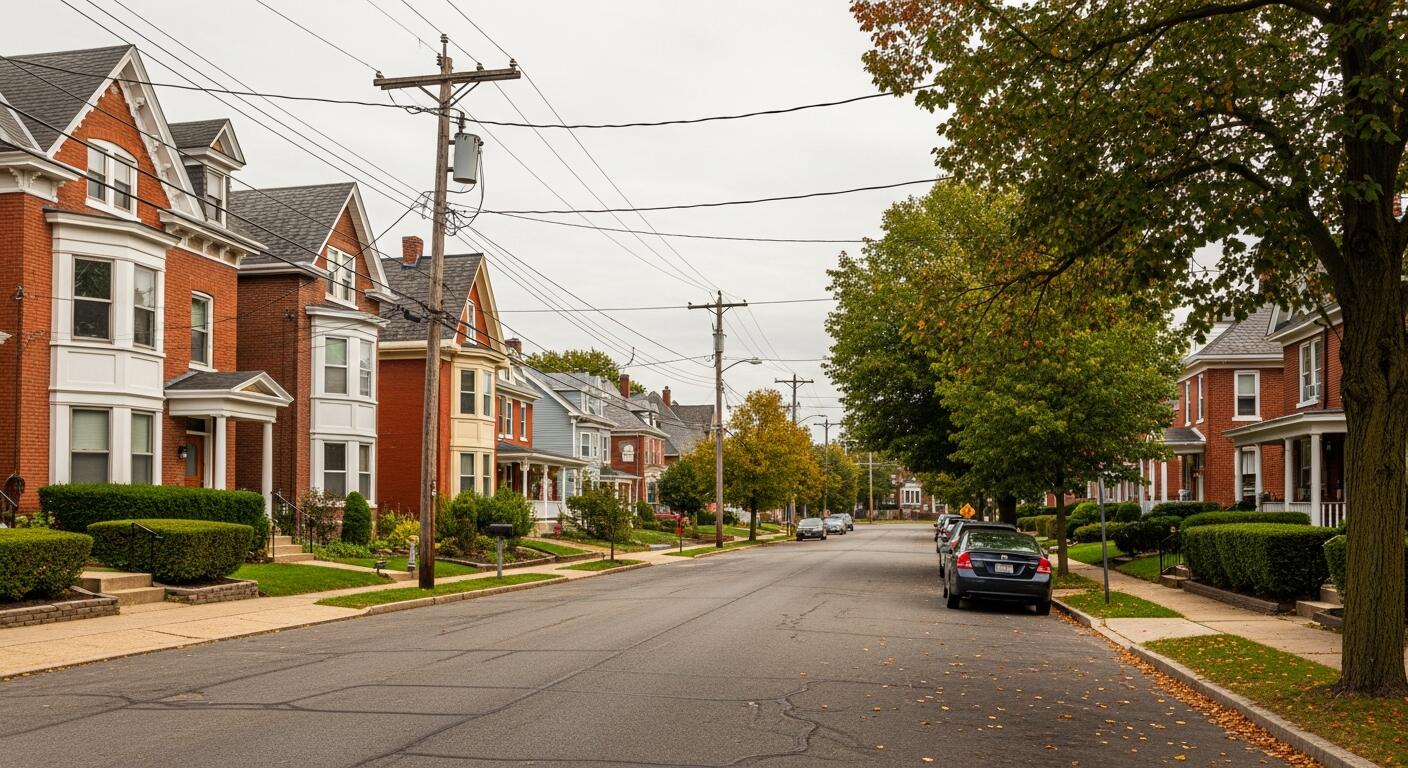
Chambersburg's housing stock spans more than two centuries, and construction era drives nearly every restoration decision made on site.
Older borough homes (pre-1940)
- Brick and stone masonry with plaster over wood lath - plaster holds water and must be probed, not assumed dry
- Balloon framing that lets water and smoke travel vertically between floors without obstruction
- Stone or rubble foundations with dirt or thin slab floors, difficult to seal against groundwater
- Knob-and-tube remnants and undersized panels requiring electrical assessment before equipment setup
- Potential asbestos in pipe wrap, floor tile, and mastic, plus lead paint - both demand testing before demolition
Mid-century housing (1940s - 1970s)
- Poured concrete or block basements with finished rec rooms - paneling and carpet trap moisture
- Cast iron and galvanized plumbing nearing the end of service life
- Original ductwork that spreads soot and mold spores building-wide
Newer construction (1980s - present)
- Tight building envelopes that hold humidity when ventilation fails
- Engineered wood I-joists and OSB subfloor that lose strength quickly when saturated
- Finished basements with drywall, insulation, and egress windows requiring flood cuts and cavity drying
- Vinyl siding and housewrap that can conceal wall-cavity moisture from view
Each of these details changes moisture mapping, containment layout, and the scope of controlled demolition.
Environmental Conditions & Damage Implications
The Cumberland Valley climate keeps restoration work busy in every season. Chambersburg averages roughly 40 inches of precipitation annually with warm, humid summers and freeze-thaw winters - conditions that favor both structural water intrusion and biological growth.
Climate factors
- Summer dew points frequently in the 60s and 70s, pushing indoor relative humidity above the 60 percent threshold where mold thrives
- Repeated freeze-thaw cycles that crack mortar joints, foundation parging, and exterior spigots
- Occasional remnant tropical systems dropping several inches of rain in a single event
Soil, water, and geology
- Limestone bedrock and karst features that create unpredictable groundwater movement and sinkhole-related drainage issues
- Silt-loam and clay-influenced soils with slow percolation, raising hydrostatic pressure on basement walls
- Hard, mineral-rich well and municipal water that leaves scale on plumbing and shortens water heater life
- Rural properties on septic systems where saturated drain fields cause indoor sewage surcharge
Air quality implications
- Valley terrain can trap smoke and particulates, prolonging odor issues after a fire
- Agricultural dust and seasonal pollen add load to HVAC systems already stressed by soot or spores
- Radon is common in Franklin County - basement waterproofing and mold remediation should account for existing mitigation systems
These conditions make dehumidification targets, containment design, and post-remediation verification testing central to any lasting repair.
From Emergency Call to Final Rebuild in Franklin County
The most costly mistake after a loss is treating extraction, drying, cleaning, and reconstruction as four separate projects handled by four separate contractors. A single-source approach keeps moisture readings, photographs, and scope documentation in one file - which matters when a Chambersburg homeowner files with their carrier.
How a complete restoration project unfolds
- Emergency response - 24/7 dispatch, source shutoff, board-up, roof tarping, and safety assessment for electrical and structural hazards
- Inspection and documentation - moisture meters, thermal imaging, and category and class determination for water losses; soot and char mapping for fire losses
- Containment and extraction - negative-air containment for sewage and mold, truck-mounted extraction, and removal of unsalvageable materials
- Decontamination - antimicrobial application, HEPA vacuuming, and disinfection of every surface contacted by Category 3 water
- Structural drying - air movers, low-grain refrigerant dehumidifiers, injection drying for wall cavities, and daily moisture logging until dry standard is met
- Soot and odor treatment - dry sponge and chemical soot removal, duct cleaning, sealing of charred framing, and hydroxyl or ozone deodorization
- Contents handling - inventory, pack-out, cleaning, deodorization, and storage of salvageable belongings
- Clearance verification - third-party air and surface sampling after mold remediation
- Reconstruction - insulation, drywall, flooring, trim, paint, and cabinetry returning the property to pre-loss condition
What comprehensive service means for you
- Direct communication with your insurance adjuster and Xactimate-format estimates
- Coordination with plumbers, electricians, and Franklin County permitting when structural work is required
- Preventive recommendations - sump pump backups, backwater valves, grading corrections, and dehumidification strategy
- One point of contact from the first phone call through the final walkthrough





