
Damage Restoration in Uniontown, PA
- Damage Restoration Services Overview
- Common Damage Restoration Issues in Uniontown, Pennsylvania
- Neighborhoods We Serve in Uniontown
- Seasonal Damage Patterns in Uniontown
- Housing Characteristics & Restoration Considerations
- Environmental Conditions & Damage Implications
- Insurance Documentation and the Fayette County Claims Process
Damage Restoration Services Overview
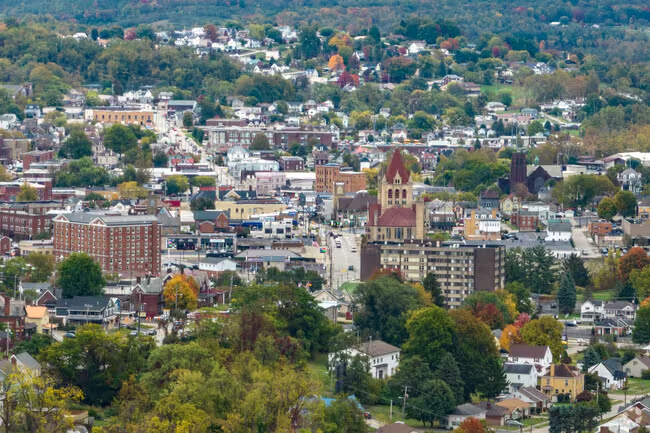
Water spreads through drywall, subfloor, and insulation within minutes, and smoke residues begin etching into surfaces within hours. In Uniontown, where storm systems roll off the Laurel Highlands and older housing stock sits on aging plumbing and sewer lines, the window between a manageable loss and a major reconstruction project is short.
Our restoration teams serve Fayette County property owners around the clock with a full range of mitigation and rebuild services:
- Water Damage Restoration - extraction, structural drying, moisture mapping, and documentation for insurance claims
- Flooded Basement Cleanup - pump-out, content removal, sanitizing, and dehumidification of below-grade spaces
- Sewage Cleanup - containment and disinfection of Category 3 contamination from backups and line failures
- Fire Damage Restoration - board-up, debris removal, soot cleaning, and structural repair
- Smoke Damage Restoration - odor neutralization, HVAC cleaning, and treatment of porous materials
- Mold Removal - containment barriers, HEPA filtration, antimicrobial treatment, and moisture source correction
Key benefits for Uniontown residents include faster drying that protects hardwood and plaster, reduced secondary mold growth, thorough odor removal rather than masking, and detailed photo and moisture-reading records that support your insurance claim from first call through final walkthrough.
Common Damage Restoration Issues in Uniontown, Pennsylvania
Sitting at the base of Chestnut Ridge in the heart of Fayette County, Uniontown catches heavy convective storms, mountain runoff, and sharp freeze-thaw swings that stress buildings year after year.
Frequent Causes of Loss
- Burst supply lines and split copper in uninsulated crawl spaces and basement rim joists during January and February cold snaps
- Tornado, hail, and straight-line wind damage that opens roofs and lets storm water into attics and upper floors
- Stormwater surcharge overwhelming combined and aging sewer laterals, pushing wastewater into basement floor drains
- Failed sump pumps and clogged foundation drains along hillside lots where runoff concentrates
- Chimney, flue, and space-heater fires in older homes still using original masonry chimneys
- Kitchen grease fires that spread oily soot through open floor plans and duct systems
- Hidden mold behind finished basement paneling, under vinyl flooring, and inside wall cavities near plumbing chases
Warning Signs to Watch For
- Musty odor that intensifies after rain or when the HVAC system cycles on
- Efflorescence, white powder, or dark staining on block foundation walls
- Buckling baseboards, cupping hardwood, or bubbling paint near exterior walls
- Gurgling drains or slow toilets, often the first hint of a sewer line obstruction
- Yellow-brown ceiling rings after wind-driven rain events
- Lingering smoke smell weeks after a small fire, indicating residue trapped in insulation or ductwork
Any one of these signals warrants inspection before the damage moves from surface materials into framing and mechanical systems.
Neighborhoods We Serve in Uniontown
Our crews cover the city and the surrounding Fayette County communities, with response routes planned around Route 40, Route 51, and Route 119.
- Downtown Uniontown and the West Main Street corridor
- East End, South Union Township, and North Union Township
- Hopwood, Lemont Furnace, and Oliver
- Hutchinson, Grindstone, and Republic
- Fairchance, Smithfield, and Point Marion
- Connellsville, Dunbar, and Vanderbilt
- Markleysburg, Farmington, and the Ohiopyle area
- Masontown, Brownsville, and the surrounding river communities
Whether the call comes from a century-old brick home near the courthouse, a ranch in a postwar subdivision, or a mountain property near Chalk Hill, our equipment and technicians are staged locally so travel time never delays extraction or board-up.
Seasonal Damage Patterns in Uniontown
Each season brings its own dominant loss type across Fayette County:
- December through February - frozen and burst pipes, ice damming along north-facing roof edges, and a spike in heating-related fire and smoke damage from furnaces, wood stoves, and portable heaters.
- March and April - snowmelt combined with spring rain saturates soil, driving groundwater through foundation cracks and producing the year's heaviest volume of flooded basement calls and sump pump failures.
- May through August - severe thunderstorms, hail, and tornado activity cause roof breaches and wind-driven water intrusion, while humid conditions make mold colonization rapid in any wet cavity.
- Late summer - intense downpours overload storm and sanitary systems, leading to sewage backups through basement drains.
- September and October - remnants of tropical systems bring prolonged rainfall; this is also when chimneys fire up before annual inspection, raising flue fire risk.
- November - the first hard freeze catches unwinterized hose bibs, vacant properties, and outbuildings.
Scheduling gutter cleaning, sump pump testing, and chimney sweeping ahead of these peaks prevents a large share of the emergencies we respond to.
Housing Characteristics & Restoration Considerations
Uniontown's building stock reflects its coal and coke era boom, with a large share of homes built before 1940 and another wave from the postwar decades. That age profile shapes every restoration decision.
Common Construction Features
- Brick and stone exteriors with lath-and-plaster interior walls that hold moisture far longer than modern drywall
- Fieldstone or unsealed concrete block foundations prone to seepage and lateral water entry
- Unfinished or partially finished basements used for storage, laundry, and mechanical equipment
- Balloon-framed walls in older homes, which allow smoke, heat, and water to travel vertically between floors unchecked
- Original cast iron and galvanized drain lines nearing the end of service life
- Knob-and-tube or early cloth-wrapped wiring in unrenovated attics, a persistent fire risk
- Layered flooring - hardwood beneath vinyl beneath carpet - trapping moisture between assemblies
How This Affects Restoration Work
- Plaster drying requires injection systems and longer dehumidification cycles rather than simple air movement
- Pre-1980 materials are tested for asbestos and lead before demolition or aggressive cleaning
- Sewage losses in stone basements often mean removing porous storage contents and treating masonry directly
- Smoke residue must be chased through wall cavities and old chase openings, not just cleaned from visible surfaces
- Mold remediation frequently pairs with foundation drainage or grading corrections to stop recurrence
Newer subdivisions in North and South Union Township present different issues - engineered wood subfloors, finished basement drywall, and tight envelopes that hold humidity once water enters.
Environmental Conditions & Damage Implications
Uniontown's position on the western slope of the Allegheny Mountains creates a humid continental climate with roughly 40 to 45 inches of annual precipitation and substantial winter snowfall on higher ground.
Local Conditions That Influence Damage
- Clay-heavy and shale-derived soils - these drain slowly, hold water against foundation walls, and expand when saturated, increasing hydrostatic pressure and basement seepage
- Steep terrain - hillside runoff concentrates at the base of slopes, so downhill properties absorb water from neighboring lots
- Summer humidity - indoor relative humidity commonly climbs past 60 percent, the threshold where mold colonizes damp materials within 24 to 48 hours
- Mine subsidence and legacy coal activity - shifting ground can crack foundations and sewer laterals, creating slow leaks and infiltration points
- Hard, mineral-rich water - scale buildup shortens the life of water heaters, valves, and supply lines, a common source of sudden interior flooding
- Wood smoke and seasonal inversions - valley air can trap particulates, worsening indoor air quality after a fire and making thorough HVAC cleaning necessary
Practical Implications
- Drying plans account for outdoor dew point, since bringing humid summer air indoors slows rather than speeds the process
- Basement remediation includes exterior grading and downspout review, not just interior cleanup
- Post-fire air scrubbing runs longer in tight, low-ventilation homes typical of the area
- Moisture verification with meters and thermal imaging confirms structures are dry before rebuild begins
Insurance Documentation and the Fayette County Claims Process
Most Uniontown property owners face their first significant claim during a restoration emergency, and how the loss is documented in the first hours often determines how smoothly the claim proceeds.
What Thorough Documentation Includes
- Time-stamped photos and video of all affected areas before any material is removed
- Initial and daily moisture readings for each affected room, logged by material type
- Thermal imaging showing the full extent of water migration behind walls and under flooring
- Written scope of work identifying every affected assembly, from subfloor to insulation
- Contents inventory listing salvageable, restorable, and non-salvageable items
- Air quality and spore sampling records where mold is present
- Equipment logs showing dehumidifier and air mover placement and run time
How the Process Typically Unfolds
- Call for emergency response and, separately, report the loss to your carrier to open a claim number.
- Stop the source if it is safe - shut off the main water valve or kill power to affected circuits.
- Our crew arrives, secures the property with board-up or tarping if needed, and begins extraction while documenting conditions.
- We share the initial scope, photos, and readings with your adjuster so mitigation is not delayed by paperwork.
- Drying and cleaning proceed with daily monitoring; readings are added to the claim file as work progresses.
- Once drying goals are verified, we provide a rebuild scope covering flooring, drywall, paint, and cabinetry.
Coverage Points Worth Reviewing Now
- Standard policies generally exclude surface flooding - separate flood coverage is worth discussing for low-lying and creek-adjacent properties
- Sewer and drain backup coverage is usually an endorsement, not automatic
- Mold coverage is frequently capped, which makes fast drying financially meaningful
- Sudden and accidental discharge from plumbing is typically covered; long-term seepage often is not
Reviewing these details before storm season puts you in a stronger position when an emergency call becomes necessary.





