
Damage Restoration in Connellsville, PA
- Damage Restoration Services Overview
- Common Damage Restoration Issues in Connellsville, Pennsylvania
- Neighborhoods We Serve in Connellsville
- Seasonal Damage Patterns in Connellsville
- Seasonal Damage Patterns in Connellsville
- Housing Characteristics & Restoration Considerations
- Environmental Conditions & Damage Implications
- Working Through Insurance Claims After Connellsville Property Damage
Damage Restoration Services Overview
You wake up to a humming sound in the basement, walk downstairs, and find three inches of water covering the floor where the washer stands. Or you smell something acrid in the kitchen hours after a small stovetop flare-up. In Connellsville, these moments happen year-round, and what you do in the first few hours shapes how much of your home can be saved.
Full-service restoration in the Connellsville area covers the entire spectrum of property emergencies:
- Water Damage Restoration - extraction, structural drying, and moisture mapping after pipe breaks, appliance failures, and roof leaks
- Flooded Basement - pump-out, content removal, and drying of foundation walls and slab floors
- Sewage Cleanup - safe removal of contaminated water, disinfection, and disposal of porous materials
- Fire Damage Restoration - debris removal, board-up, structural cleaning, and rebuild coordination
- Smoke Damage Restoration - soot removal from surfaces and HVAC systems plus odor neutralization
- Mold Removal - containment, air filtration, material removal, and treatment of affected cavities
The benefit for Connellsville homeowners is straightforward: faster drying means fewer materials thrown away, less mold growth behind walls, and a clearer path through the insurance claim with documentation gathered from the very first walkthrough.
Common Damage Restoration Issues in Connellsville, Pennsylvania
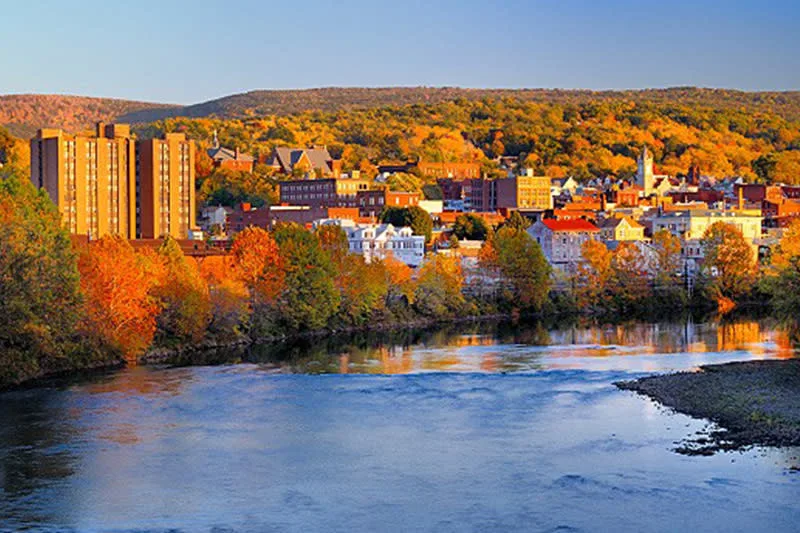
Connellsville sits along the Youghiogheny River in the Laurel Highlands, and that geography drives most of the damage calls in Fayette County. River-adjacent lots, steep hillside runoff, and aging municipal infrastructure combine in ways that flat inland towns never experience.
Local Causes We See Repeatedly
- Youghiogheny River rise - spring snowmelt from the highlands pushes groundwater up through basement floors and foundation cracks
- Hillside runoff - properties below sloped terrain take on surface water that overwhelms grading and window wells
- Combined sewer backups - heavy rain overloads older lines, forcing sewage back through floor drains and basement toilets
- Frozen and burst pipes - uninsulated lines in unheated crawl spaces and stone basements split during January cold snaps
- Chimney and flue fires - wood stoves and older fireplaces still heat many homes here
- Space heater and wiring fires - knob-and-tube or early branch circuits in century-old houses overheat under modern loads
Warning Signs Worth Acting On
- Efflorescence, the white chalky residue, on block or stone foundation walls
- A musty odor that intensifies when the furnace or AC cycles on
- Buckled baseboard, cupped hardwood, or bubbling paint near the floor line
- Gurgling floor drains during heavy rainfall
- Yellow-brown staining on ceilings below bathrooms or roof valleys
- Soot film on window glass or a persistent smoke smell that returns on humid days
Catching any of these early usually keeps a small drying job from turning into demolition and mold remediation.
Neighborhoods We Serve in Connellsville
Restoration crews reach properties throughout the city and the surrounding Fayette and Westmoreland County communities, including:
- Downtown Connellsville and the Crawford Avenue corridor
- East Side and the Snyder Street area
- South Connellsville and the riverfront blocks near the Great Allegheny Passage
- New Haven and West Side neighborhoods
- Bullskin, Connellsville, and Dunbar Townships
- Vanderbilt, Dawson, Everson, and Scottdale
- Normalville, Mill Run, and the Indian Creek Valley
- Mount Pleasant, Perryopolis, and Uniontown-area properties
Coverage extends to single-family homes, duplexes, rental properties, Crawford Avenue storefronts, churches, and light industrial buildings. Knowing the local street layout matters during storm events when multiple calls come in at once - crews can stage equipment efficiently rather than backtracking across the valley.
Seasonal Damage Patterns in Connellsville
Seasonal Damage Patterns in Connellsville
Each season brings a distinct mix of emergencies to the Youghiogheny valley.
- December through February - burst supply lines, ice dams along north-facing roof edges, chimney fires, and heating equipment fires. Smoke damage claims peak alongside furnace and wood stove use.
- March and April - snowmelt plus rain saturates hillside soil, producing the year's heaviest volume of flooded basement and groundwater intrusion calls.
- May through July - thunderstorm downpours overwhelm sewer lines, triggering sewage backups through floor drains. Wind-driven rain finds gaps in flashing and siding.
- July through September - high humidity keeps basements and crawl spaces damp, making this the strongest season for mold growth in previously wet materials.
- October and November - leaf-clogged gutters redirect water against foundations, and the first heating cycles ignite dust in dormant systems, producing smoke odor complaints.
Pattern awareness helps homeowners schedule preventive work in the quieter windows - sump pump testing in February, gutter clearing in November - rather than discovering problems during an emergency.
Housing Characteristics & Restoration Considerations
Connellsville grew during the coke and rail boom, and a large share of housing stock reflects that era. Many homes date from the late 1800s through the 1940s, with a second wave of postwar construction on the outskirts.
Construction Features That Shape Restoration Work
- Stone and brick foundations - porous mortar joints wick moisture, so drying requires longer dehumidification cycles than poured concrete
- Balloon-framed walls - open stud cavities let water and smoke travel vertically between floors, so inspection must extend well beyond the visible damage
- Plaster and wood lath - holds water far longer than drywall and often needs controlled cavity drying rather than replacement
- Original hardwood over subfloor - can frequently be saved with mat drying systems if extraction begins quickly
- Coal chutes and converted coal rooms - legacy soot residue complicates fire and smoke cleanup readings
- Knob-and-tube or early cloth wiring - a common ignition source and a safety concern during demolition
- Low-clearance crawl spaces - limit equipment placement and hide long-running leaks
What This Means for Your Project
- Moisture meters and thermal imaging map hidden water inside plaster and stud bays before any material is cut.
- Asbestos and lead-safe practices apply to pre-1978 finishes disturbed during removal.
- Older homes often need containment barriers to keep dust and odor out of unaffected rooms.
- Rebuild work may require matching trim profiles and plaster textures no longer stocked at retail.
Environmental Conditions & Damage Implications
Fayette County's humid continental climate delivers roughly 40 to 45 inches of precipitation annually, spread fairly evenly across the year with summer thunderstorm peaks. That steady moisture load, combined with valley terrain, sets the conditions for most restoration work here.
Conditions and Their Effects
- High summer humidity - indoor relative humidity above 60 percent lets mold colonize damp drywall and framing within days, so dehumidification is as important as extraction
- Clay-heavy and shale-derived soils - drain slowly and hold water against foundation walls, increasing hydrostatic pressure and basement seepage
- Valley cold air pooling - low-lying properties reach freezing temperatures sooner, raising burst-pipe risk in exposed plumbing
- Legacy industrial and mine drainage - groundwater in some areas carries mineral and iron content that stains materials and requires specific cleaning agents
- Aging combined sewer segments - increase the odds that basement flooding involves category three contaminated water rather than clean water
- Heavy tree canopy - shaded north-facing walls dry slowly and support surface mold on siding and interior perimeter walls
Practical response reflects those realities. Any basement water event near an older sewer line is treated as potentially contaminated until conditions confirm otherwise. Drying plans account for outdoor dew point, because opening windows on an August afternoon adds moisture rather than removing it. Post-remediation moisture readings and humidity logs verify the structure actually reached dry standard before reconstruction begins.
Working Through Insurance Claims After Connellsville Property Damage
The restoration itself is only half the challenge. Most Connellsville homeowners are simultaneously trying to understand what their policy covers, what documentation the adjuster wants, and whether the flooded basement they are staring at qualifies at all. Clear communication removes that uncertainty.
How the Process Typically Unfolds
- Inspection and scope - technicians assess affected areas, take moisture readings, and photograph conditions before anything is moved or removed.
- Plain-language explanation - you hear what is wet, what can be dried in place, what has to come out, and why, so you can make an informed decision.
- Documentation package - daily moisture logs, equipment placement records, photographs, and a written scope go to your carrier.
- Mitigation work - extraction, drying, sanitizing, soot removal, or containment proceeds while the claim is reviewed.
- Verification - final readings confirm the structure meets drying standards; air sampling may follow mold remediation.
- Restoration and rebuild - drywall, flooring, paint, and trim return the space to pre-loss condition.
Coverage Points Worth Understanding Locally
- Sudden pipe bursts and appliance failures are commonly covered; gradual seepage often is not
- Groundwater and river flooding generally requires separate flood insurance, which matters for properties near the Youghiogheny
- Sewer backup coverage is frequently an optional endorsement rather than standard
- Fire and smoke losses usually include additional living expense coverage during repairs
- Mold coverage is often capped, which makes prompt water mitigation financially significant
Transparency throughout matters more than any single service. You should always know what work is happening today, what happens tomorrow, and what the equipment in your home is actually accomplishing - no surprises when the final scope arrives.





