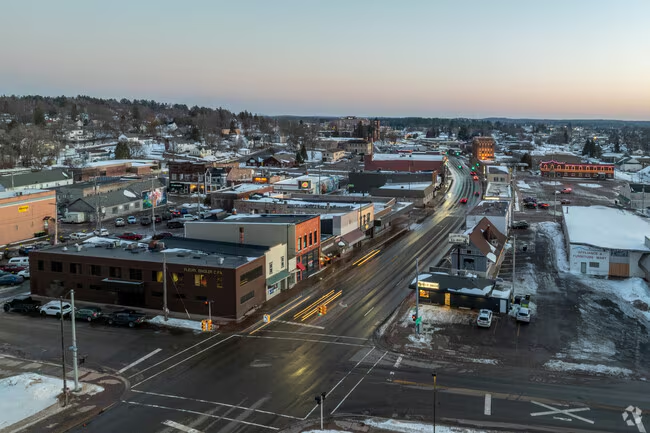
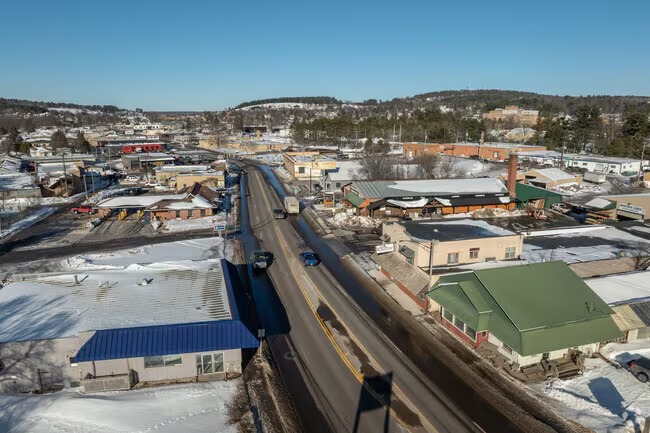
Damage Restoration in Dickinson County, MI
- Damage Restoration Services Overview
- Common Damage Restoration Issues in Dickinson County, Michigan
- Neighborhoods We Serve in Dickinson County
- Seasonal Damage Patterns in Dickinson County
- Housing Characteristics & Restoration Considerations
- Environmental Conditions & Damage Implications
- Advanced Drying and Restoration Technology for Upper Peninsula Homes
Damage Restoration Services Overview
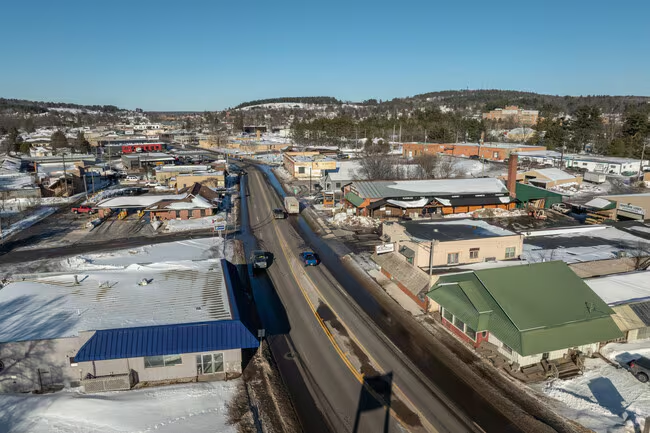
When water pours through a basement wall at 2 a.m. or smoke fills a kitchen after a wood stove flare-up, knowing that trained help is on the way changes everything. Professional restoration returns a property to a safe, dry, breathable condition - and it protects the belongings and structure that matter most to Dickinson County families.
Homeowners and business owners across the Iron Mountain area rely on a connected set of services that address damage from the first hour through final reconstruction:
- Water Damage Restoration - extraction, structural drying, and moisture mapping after burst pipes, appliance failures, and roof leaks.
- Flooded Basement Cleanup - sump pump failures, foundation seepage, and spring melt intrusion handled with truck-mounted extraction.
- Sewage Cleanup - safe removal of contaminated water, disposal of porous materials, and antimicrobial treatment of affected surfaces.
- Fire Damage Restoration - debris removal, soot cleaning, structural stabilization, and content recovery.
- Smoke Damage Restoration - odor neutralization, HVAC cleaning, and treatment of walls, textiles, and hidden cavities.
- Mold Removal - containment, controlled removal of colonized materials, and correction of the moisture source.
The benefit is simple: faster drying limits secondary damage, thorough documentation supports insurance claims, and proper containment keeps contaminants out of clean living space.
Common Damage Restoration Issues in Dickinson County, Michigan
Upper Peninsula weather is hard on buildings. Long freezes, heavy snow loads, and a fast spring thaw create damage patterns that show up year after year in Iron Mountain, Kingsford, and Norway.
Frequent Causes of Damage
- Frozen and burst supply lines in crawl spaces, garages, and exterior walls during extended sub-zero stretches.
- Ice dams forcing meltwater under shingles and into ceilings and wall cavities.
- Spring snowmelt and saturated ground pushing water through foundation cracks and window wells.
- Sump pump and backup failures during power outages caused by high winds and heavy wet snow.
- Sanitary sewer backups when older municipal lines and private laterals are overwhelmed or blocked by root intrusion.
- Wood stove, chimney, and space heater fires during the long heating season.
- Hidden mold growth in tightly sealed, poorly ventilated basements and attics.
Warning Signs Worth Acting On
- Musty or earthy odors that intensify when the furnace or dehumidifier runs
- Efflorescence, chalky white staining, or dampness along block foundation walls
- Bubbling paint, cupped flooring, or stained ceiling tiles below bathrooms
- Slow floor drains, gurgling fixtures, or recurring backups in the laundry area
- Lingering smoke odor that returns on humid days after a small kitchen or chimney fire
- Condensation on rim joists, ductwork, or basement windows
Not all damage is visible. Concealed moisture, compromised sheathing, and weakened framing can worsen quietly for weeks, which is why a documented inspection with moisture meters and thermal imaging is the first step of every project.
Neighborhoods We Serve in Dickinson County
Crews respond throughout the county and into the surrounding Menominee River corridor, covering both dense residential blocks and rural properties on private wells and septic systems.
- Iron Mountain - East Side, North Side, and the Carpenter Avenue and Stephenson Avenue corridors
- Kingsford - Woodward Avenue neighborhoods and post-war residential streets
- Norway and Vulcan - historic mining-era homes and nearby rural parcels
- Quinnesec and Breitung Township - riverside properties along the Menominee
- Felch, Foster City, and Metropolitan - rural homesteads, cabins, and outbuildings
- Sagola, Channing, and Randville - northern county properties along US-141
- Loretto, Waucedah, and Faithorn - eastern township communities
Neighboring service coverage extends toward Iron River, Crystal Falls, Florence and Niagara in Wisconsin, and the greater Marquette County region.
Seasonal Damage Patterns in Dickinson County
- December through February: Peak season for frozen pipe breaks, ice dam leaks, chimney and wood stove fires, and smoke odor complaints. Vacant seasonal cabins are especially vulnerable when heat fails.
- March through April: Snowmelt and frost heave drive flooded basements, foundation seepage, and sump pump overload. Saturated soils also stress septic fields and increase sewage backup calls.
- May through June: Rising humidity turns lingering spring moisture into active mold growth in basements, crawl spaces, and behind finished walls.
- July through August: Thunderstorms with high winds and flash flooding cause roof damage, wind-driven rain intrusion, and power outages that disable pumps. Air conditioning condensate lines and appliance hoses fail more often in this stretch.
- September through October: Heating systems restart, and the first burns of the season reveal creosote buildup and furnace puff-back that leaves soot across interior surfaces.
- November: Early hard freezes catch unwinterized hose bibs, irrigation lines, and camp plumbing before shutdown is complete.
Housing Characteristics & Restoration Considerations
Dickinson County's housing stock skews older than the state average, with many homes built during the mining and Ford-era Kingsford boom. That age shapes how each type of damage behaves.
Common Construction Types
- Early 1900s mining-era homes with balloon framing, plaster and lath, and fieldstone or brick foundations
- 1940s-1960s bungalows and ranches with poured or block basements and original cast iron drain lines
- Rural farmhouses and log structures with crawl spaces, additions, and mixed vintage materials
- Modern subdivisions in Breitung Township and Kingsford with finished basements and engineered flooring
How Age Affects Restoration
- Balloon framing lets water and smoke travel vertically between floors, so cavity drying and odor treatment must extend beyond the visible damage.
- Plaster holds moisture longer than drywall and requires slower, monitored drying to avoid cracking and delamination.
- Homes built before the late 1970s may contain asbestos-bearing materials and lead paint, requiring careful testing before demolition.
- Fieldstone and block foundations wick groundwater, making basement seepage and mold recurring issues without drainage correction.
- Aging cast iron and clay sewer laterals crack and collect roots, raising sewage backup risk.
- Historic log walls can be stabilized with custom-matched replacement logs and detailed repairs that respect both structure and appearance.
Insulated, sealed newer homes dry differently - they trap humidity, so dehumidification capacity matters more than open-air ventilation.
Environmental Conditions & Damage Implications
Local climate and ground conditions determine how quickly damage spreads and how drying is engineered.
- Heavy annual snowfall: Roof loading and ice damming push meltwater into attics, where trapped moisture feeds mold on sheathing.
- Deep frost depth: Frozen ground blocks infiltration during thaw, forcing surface water toward foundations and basement floors.
- Sandy and gravelly glacial soils with clay pockets: Drainage varies block by block, so seepage patterns differ even between neighboring properties.
- Iron-rich groundwater: Staining on carpet padding, concrete, and drywall requires specialized cleaning agents rather than standard extraction alone.
- Private wells and septic systems in rural townships: Backups can involve higher contamination risk and demand full category-three protocols.
- Wide temperature swings: Condensation forms on cold rim joists and ductwork, creating chronic mold conditions unrelated to any single leak.
- Wood heat and seasonal wildfire smoke: Fine particulate settles in HVAC systems and soft goods, leaving odor that returns without source removal.
Understanding these conditions lets technicians set realistic drying goals, choose the right containment, and correct the underlying cause instead of treating symptoms.
Advanced Drying and Restoration Technology for Upper Peninsula Homes
Cold-climate structures do not dry the way a textbook suggests. Low outdoor humidity in winter helps, but frozen materials, dense plaster, and tight modern envelopes require equipment matched to the situation rather than a standard fan-and-wait approach.
Our Restoration Process
- Thorough inspection using moisture meters, hygrometers, and thermal imaging to map every affected material, including hidden cavities.
- Water removal with truck-mounted and portable extraction units, plus submersible pumps for flooded basements.
- Controlled demolition of unsalvageable porous materials, especially after sewage contamination.
- Structural drying using low-grain refrigerant dehumidifiers, desiccant units for cold spaces, and air movers positioned by airflow calculation.
- Cleaning and sanitizing with antimicrobial application, HEPA vacuuming, and air scrubbing under negative pressure.
- Odor and soot treatment through dry-ice or soda blasting, thermal fogging, hydroxyl generation, and duct cleaning.
- Daily monitoring and documentation with logged readings until drying goals are verified.
- Reconstruction - drywall, flooring, trim, and finish work that returns the space to pre-loss condition.
Equipment That Makes a Difference Here
- Injectidry systems that push air into wall cavities and under hardwood without full removal
- Desiccant dehumidifiers that keep working in unheated basements and garages
- HEPA-filtered negative air machines for mold containment and post-fire particulate control
- Thermal imaging cameras that reveal moisture behind plaster and log walls
- Ultrasonic cleaning for salvageable contents and hard goods after fire or smoke exposure
The payoff for Dickinson County property owners is measurable: fewer materials torn out, less mold risk months later, cleaner indoor air, and a clear record of the work for insurance purposes.