
Damage Restoration in Kingsford, MI
- Damage Restoration Services Overview
- Common Damage Restoration Issues in Kingsford, Michigan
- Neighborhoods We Serve in Kingsford
- Seasonal Damage Patterns in Kingsford
- Housing Characteristics & Restoration Considerations
- Environmental Conditions & Damage Implications
- Insurance Documentation and IICRC Standards for Kingsford Property Owners
Damage Restoration Services Overview
Discovering water spreading across a basement floor or walking into a home filled with smoke is disorienting. In Kingsford, where winters are long and housing stock leans older, property damage rarely announces itself in advance.
Restoration work exists to stabilize a building quickly, then return it to a safe, dry, livable condition. The services most often needed across Dickinson County include:
- Water Damage Restoration - extraction, structural drying, moisture mapping, and monitoring of framing and subfloor materials
- Flooded Basement - pump-out, contents triage, sump and drain evaluation, and dehumidification of below-grade space
- Sewage Cleanup - containment and removal of Category 3 water, disposal of porous materials, and antimicrobial treatment
- Fire Damage Restoration - debris removal, board-up, soot and char cleaning, and coordination of structural repair
- Smoke Damage Restoration - odor neutralization, HVAC decontamination, and cleaning of surfaces that fire never touched
- Mold Removal - containment, HEPA filtration, removal of colonized material, and correction of the moisture source
Benefits for Kingsford residents are practical: less secondary damage, better insurance documentation, fewer lingering odors, and a healthier indoor environment through the heating season.
Common Damage Restoration Issues in Kingsford, Michigan
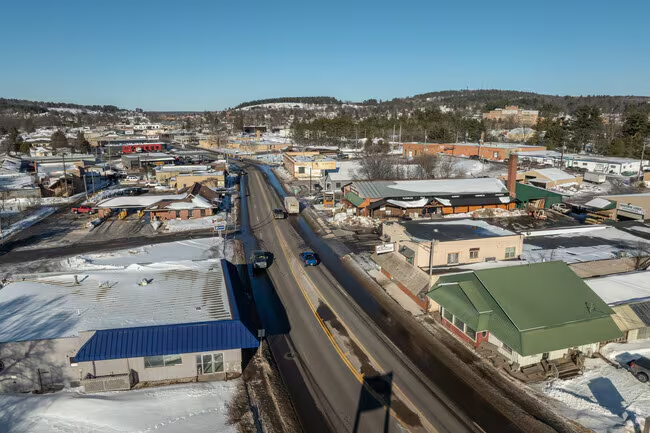
Kingsford sits along the Menominee River in the Upper Peninsula, where deep frost, heavy snow load, and spring melt create predictable stress points on residential structures.
Local causes we see repeatedly
- Frozen and burst supply lines in crawl spaces, exterior walls, and unheated garages during January and February cold snaps
- Snowmelt and saturated soil pushing groundwater through foundation cracks and cold joints in March and April
- Sump pump failure during power outages caused by wind, ice, or convective storms
- Sanitary line backups when infiltration overloads older lateral piping during heavy rain
- Ice dams forcing meltwater under shingles and into ceiling cavities and wall assemblies
- Heating-season fires tied to wood stoves, chimneys, space heaters, and aging electrical panels
- Hail and wind events that bruise asphalt shingles and open roof systems to water intrusion - post-hail roof inspection is worth scheduling after any significant storm
Warning signs worth acting on
- Musty odor in a basement or closet that intensifies after rain
- Efflorescence, staining, or peeling paint on foundation walls
- Cupped hardwood, soft drywall at the baseline, or tile that sounds hollow
- Slow floor drains or gurgling fixtures - an early sewage backup indicator
- Persistent smoke odor returning on humid days after a small kitchen or furnace fire
- Granule loss in gutters and dented soft metals following a hailstorm
Neighborhoods We Serve in Kingsford
Crews respond throughout Kingsford and the surrounding Dickinson County communities, covering both dense in-town blocks and outlying rural properties.
- Central Kingsford near Breitung Avenue and the Woodward Avenue corridor
- The Ford Addition and older mill-era residential blocks
- Neighborhoods surrounding Kingsford High School and Woodward Elementary
- Riverside areas near the Menominee River and Ford Airport vicinity
- Iron Mountain, including East Side and North Side neighborhoods
- Breitung Township, Quinnesec, and Norway
- Niagara and Aurora, Wisconsin, just across the state line
- Rural parcels along US-2 and M-95 with private wells and septic systems
Response planning accounts for travel distance, winter road conditions, and whether a property is on municipal sewer or a private septic field - both change the sewage cleanup approach.
Seasonal Damage Patterns in Kingsford
Winter (December - February)
- Burst pipes and supply line failures during subzero stretches
- Fire and smoke damage from heating appliances, chimneys, and dryer vents
- Ice dam leakage into attics and top-floor ceilings
Spring (March - May)
- Peak season for flooded basements as frost leaves the ground and snowpack melts
- Sewage backups when saturated soils overload sanitary lines
- Mold growth beginning in spaces that stayed damp through winter
Summer (June - August)
- Severe thunderstorms, hail, and wind-driven rain through roof and window openings
- Humidity-driven mold colonization in basements and crawl spaces
- Condensation on cold water lines and ductwork feeding hidden moisture
Fall (September - November)
- Roof leaks from clogged gutters and accumulated leaf debris
- First-use furnace and wood stove incidents producing smoke damage
- Pre-freeze window for foundation sealing and sump pump replacement
Housing Characteristics & Restoration Considerations
Kingsford grew around the Ford Motor Company plant in the 1920s, and much of the housing stock reflects that era plus postwar expansion. Older construction shapes nearly every restoration decision.
Common construction traits
- Wood-frame homes with dimensional lumber, plaster-and-lath, or early gypsum board
- Full basements with poured concrete or block foundations, often with floor drains
- Balloon framing in some pre-1940 houses, allowing fire and smoke to travel vertically
- Retrofitted insulation and vapor barriers that can trap moisture inside wall cavities
- Cast iron and clay sewer laterals prone to root intrusion and joint separation
How that affects the work
- Moisture mapping first - plaster and old subfloor assemblies hold water far longer than modern materials, so meters and thermal imaging guide demolition instead of guesswork.
- Cavity drying - injection drying and controlled airflow often preserve plaster walls and hardwood that would otherwise be removed.
- Hazardous material awareness - homes built before 1978 may contain lead paint, and pre-1980 flooring, mastic, and pipe wrap may contain asbestos. Testing precedes disturbance.
- Smoke pathway tracing - open stud bays and shared chases mean odor shows up in rooms far from the fire, so sealing and HVAC cleaning are part of the scope.
- Finished basement triage - carpet pad, paneling, and batt insulation exposed to Category 3 water are removed rather than dried.
Environmental Conditions & Damage Implications
The Upper Peninsula climate drives both the frequency and the difficulty of restoration work in Kingsford.
Climate factors
- Heavy annual snowfall producing substantial spring melt volume
- Deep frost penetration that heaves foundations and stresses buried utilities
- Humid summers pushing indoor relative humidity above the range where mold activates
- Repeated freeze-thaw cycling that widens masonry cracks season after season
Soil and groundwater
- Glacial sand, gravel, and clay lenses that perch water against foundation walls
- Proximity to the Menominee River raising water tables in low-lying parcels
- Frozen ground in early spring preventing infiltration and directing melt toward basements
Water and air quality implications
- Hard well water in rural areas accelerates scale buildup and appliance line failures
- Iron and mineral content can stain surfaces after a flood, complicating cleaning
- Tight, well-insulated homes hold smoke particulate and mold spores in circulation longer
- Wood heat is common regionally, contributing creosote-related fire risk and residual odor loads
These conditions mean drying targets are set against local dew point data, not generic assumptions, and dehumidification runs until documented moisture content matches an unaffected reference material in the same structure.
Insurance Documentation and IICRC Standards for Kingsford Property Owners
A restoration project in Michigan is usually two efforts running in parallel: physically stabilizing the building, and building a record an adjuster can act on. Both matter equally to the outcome.
Standards that guide the work
- IICRC S500 - Standard for Professional Water Damage Restoration, covering water categories, drying goals, and monitoring
- IICRC S520 - Standard for Professional Mold Remediation, covering containment, negative pressure, and clearance
- IICRC S700 - fire and smoke restoration practices, including soot classification and odor control sequencing
- Michigan Residential Code and Michigan Building Code - administered by the Bureau of Construction Codes within LARA, governing permitted structural repair and rebuild
How a documented project typically progresses
- Emergency stabilization - water shutoff, board-up, tarping, or temporary power so damage stops expanding.
- Assessment and classification - water category and class determined, affected materials identified, moisture readings recorded with photos.
- Mitigation - extraction, controlled demolition, containment for mold or sewage, and placement of drying equipment.
- Daily monitoring - readings logged until materials reach dry standard, giving the carrier a defensible record.
- Cleaning and deodorization - HEPA vacuuming, surface cleaning, sealing, and thermal or hydroxyl treatment where smoke odor persists.
- Rebuild - drywall, flooring, trim, paint, and any roofing scope, permitted as required by local code officials.
What helps your claim
- Photograph conditions before anything is moved or removed
- Keep damaged contents until the adjuster has viewed or released them
- Report the loss promptly and note the date the event occurred
- Request the moisture logs and scope documentation from your restoration contractor
Following a major hail event, a thorough post-hail roof inspection creates the same kind of evidence trail - identifying shingle bruising, soft metal denting, and flashing damage before the next rain turns a roofing claim into a water damage claim.





