Damage Restoration in Ionia County, MI
- Damage Restoration Services Overview
- Common Damage Restoration Issues in Ionia County, Michigan
- Neighborhoods We Serve in Ionia County
- Seasonal Damage Patterns in Ionia County
- Housing Characteristics & Restoration Considerations
- Environmental Conditions & Damage Implications
- Storm Response and Emergency Preparedness for Ionia County Property Owners
Damage Restoration Services Overview
What happens to a home in the hours after a sump pump quits, a grease fire flares, or a storm drives water under a foundation wall? In Ionia County, those first hours decide whether a property dries out cleanly or turns into a months-long rebuild.
Restoration work here covers the full range of emergencies that strike homes and businesses between the Grand River corridor and the county's rural townships. Certified crews stop the damage with industry-leading extraction, drying, and cleaning equipment, then restore and protect the structure.
- Water Damage Restoration - burst supply lines, failed water heaters, roof leaks, and appliance overflows extracted and dried to measurable standards.
- Flooded Basement - pump-outs, content handling, and structural drying for below-grade spaces after heavy rain or pump failure.
- Sewage Cleanup - contaminated water removal, disinfection, and disposal of unsalvageable porous materials.
- Fire Damage Restoration - stabilization, debris removal, soot cleaning, and coordination of reconstruction.
- Smoke Damage Restoration - odor neutralization, HVAC cleaning, and surface-specific residue removal.
- Mold Removal - containment, controlled removal, and moisture-source correction so growth does not return.
The benefit for county residents is simple: faster response means fewer materials thrown away, lower repair scope, and a quicker return to normal living and working conditions.
Common Damage Restoration Issues in Ionia County, Michigan
Ionia County sits in a landscape shaped by the Grand River, Flat River, and Prairie Creek, with clay-heavy soils that shed water slowly. That combination produces predictable damage patterns across the county's mix of farmsteads, village homes, and newer subdivisions.
Leading Causes We Respond To
- Spring snowmelt combined with frozen ground pushing groundwater against foundation walls
- Severe summer storm systems - the kind that have flattened corn into swirl patterns near Ionia and torn shingles and siding loose
- Sump pump failures during multi-inch rainfall events and power outages
- Sanitary line backups in older village systems and failing rural septic fields
- Frozen and split pipes in unheated crawl spaces, barns, and seasonal properties
- Heating-season fires from wood stoves, space heaters, chimneys, and overloaded circuits
- Hidden mold behind finished basement walls, under vinyl flooring, and in attics with blocked soffit vents
Warning Signs Worth Acting On
- Musty odor that grows stronger in humid weather or when the furnace runs
- Efflorescence, white chalky staining, or paint blistering on block foundation walls
- Floor tiles lifting, carpet tack strips rusting, or baseboards cupping
- Gurgling floor drains or slow basement fixtures after rain - an early backup indicator
- Soot film on window glass, lampshades, or return-air grilles after any small fire
- Persistent smoke odor that returns when humidity rises, signaling residue in porous materials
Ignoring any of these tends to convert a contained problem into a whole-room or whole-level project.
Neighborhoods We Serve in Ionia County
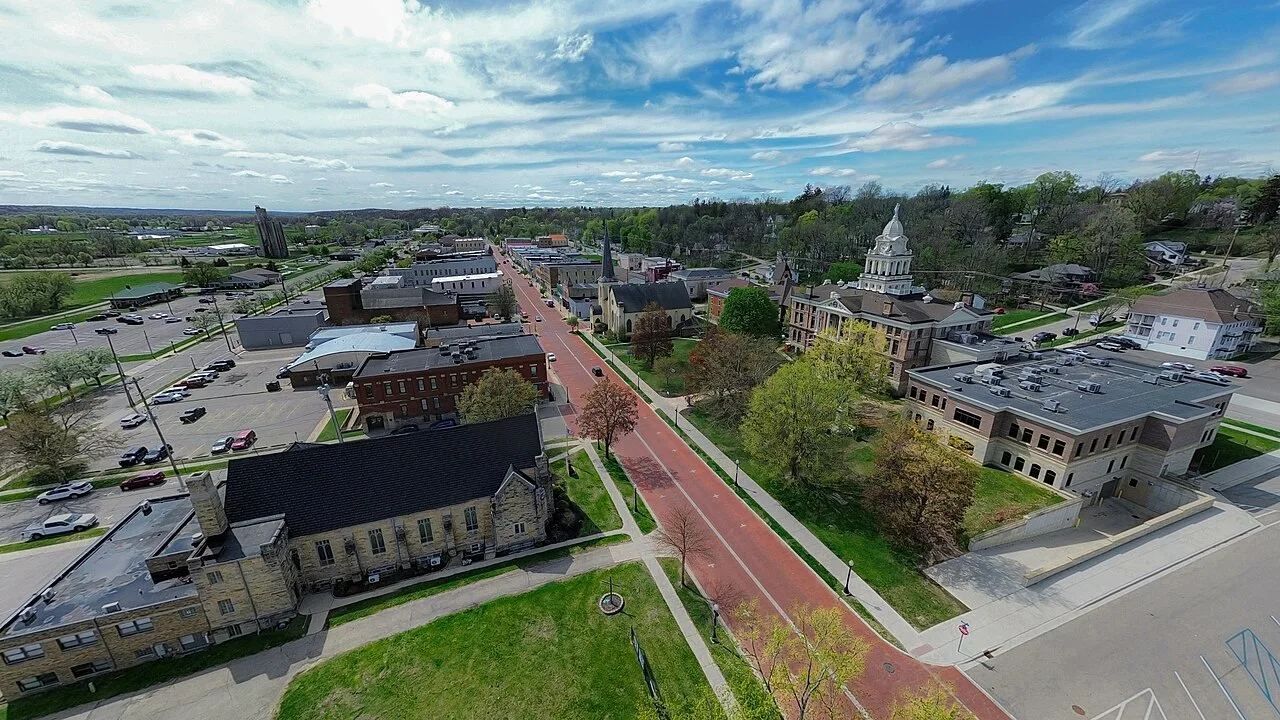
Response covers the entire county, from riverfront properties to open farmland well off the main routes.
- Ionia - historic downtown blocks, Dexter Street corridor, and surrounding residential neighborhoods
- Belding - Flat River-adjacent homes and older mill-era housing stock
- Portland - properties near the Grand and Looking Glass river confluence
- Saranac, Lyons, Muir, Clarksville, Hubbardston, Pewamo, Lake Odessa - village centers and nearby rural parcels
- Township areas - Berlin, Boston, Danby, Easton, Keene, Odessa, Orange, Orleans, Otisco, Ronald, Sebewa, and North Plains
Crews also work regularly along the I-96 and M-21 corridors, serving commercial buildings, schools, churches, agricultural operations, and multi-unit rentals. Familiarity with local road access, well and septic systems, and county building practices keeps mobilization quick day or night.
Seasonal Damage Patterns in Ionia County
Each season brings its own dominant failure mode, and knowing the calendar helps property owners prepare rather than react.
- December - February: frozen and burst pipes, ice damming along eaves, and the highest volume of fire and smoke damage calls from heating equipment, chimneys, and holiday cooking.
- March - April: snowmelt over still-frozen ground drives flooded basement calls; river and creek levels rise, and saturated soils overwhelm drain tile.
- May - June: thunderstorm season begins - wind-driven rain, roof damage, and power outages that disable sump pumps.
- July - August: peak humidity accelerates mold growth in basements and crawl spaces; severe storms with straight-line winds cause structural and water intrusion damage.
- September - October: heavy autumn rains stress aging sanitary lines and septic fields, increasing sewage cleanup needs.
- November: first hard freezes catch unwinterized hose bibs, seasonal cabins, and outbuildings.
Mold remediation requests trail water events by two to six weeks, which is why documented drying at the time of loss matters more than surface cleanup.
Housing Characteristics & Restoration Considerations
Ionia County housing spans well over a century of construction, and each era responds differently to water, fire, and smoke.
Common Building Types
- Pre-1940 farmhouses and village homes - stone or brick foundations, balloon framing, plaster on lath, and limited insulation
- Mid-century ranches - poured or block basements, finished rec rooms, original cast iron or clay sewer laterals
- 1980s - 2000s subdivisions - egress-window basements, engineered flooring, drywall throughout
- Manufactured and modular homes - crawl-space skirting and vapor barrier concerns
- Barns, pole buildings, and converted outbuildings - unconditioned spaces that hold moisture
How Age Shapes the Work
- Balloon-framed walls let fire, smoke, and odor travel vertically between floors, so inspection extends well beyond the visible burn area.
- Plaster holds moisture longer than drywall and requires different drying strategies and moisture-meter readings.
- Stone and rubble foundations wick groundwater continuously, making dehumidification and drainage correction essential parts of mold removal.
- Pre-1980 materials may contain asbestos or lead-based paint, requiring testing before demolition.
- Older sewer laterals with root intrusion raise the odds of category three water in basements, changing the removal scope.
- Finished basements with carpet, paneling, and insulated stud walls trap water behind the surface, so selective removal is often faster and cleaner than attempted in-place drying.
Environmental Conditions & Damage Implications
Local climate and ground conditions directly affect how quickly damage spreads and how drying is approached.
Climate Factors
- Roughly 33 - 36 inches of annual precipitation plus significant lake-effect-influenced snowfall
- Summer dew points frequently in the 65 - 70 degree range, pushing basement humidity past the level where mold colonizes within 24 - 48 hours
- Deep frost penetration that cracks foundation walls and stresses buried lines
- Convective storm season delivering high winds, hail, and short-duration heavy rainfall
Soil, Water, and Air
- Clay and clay-loam soils - low infiltration rates mean surface water pools against foundations rather than draining away
- Shallow water tables near the Grand and Flat River valleys keep hydrostatic pressure on basement walls year-round
- Hard well water throughout rural areas - mineral scale shortens the life of water heaters, softeners, and supply lines, a frequent source of interior flooding
- Rural septic systems in saturated ground back up more often during wet stretches, increasing sewage cleanup calls
- Agricultural dust and seasonal field burning add particulate load that combines with soot after a fire, complicating surface cleaning
These conditions shape equipment selection: more dehumidification capacity in humid months, negative-pressure containment for contaminated losses, and hydroxyl or ozone treatment for smoke odor that has settled into porous farmhouse materials.
Storm Response and Emergency Preparedness for Ionia County Property Owners
Ionia County sees the full menu of Michigan severe weather - straight-line winds that lay corn down in swirl patterns, hail, flash flooding along tributary creeks, and occasional tornado warnings. Storm events rarely produce one type of damage in isolation. A single system can pull shingles off, flood a basement, trip a lightning-related fire, and leave conditions ripe for mold within days.
What to Do in the First Hours
- Confirm the building is safe to enter - watch for downed lines, gas odor, and sagging ceilings holding water.
- Shut off power to affected areas at the panel before stepping into standing water.
- Stop the source where safely possible - main water valve, roof tarping, or pump isolation.
- Photograph and video everything before moving contents or removing materials.
- Call for professional extraction; standing water in clay-soil basements does not recede on its own.
- Move salvageable contents and documents to a dry, conditioned space.
- Notify the insurance carrier and keep a written log of every action taken.
Preparation That Pays Off
- Battery backup or water-powered backup sump pump, tested each spring and fall
- Backwater valve on the sanitary lateral for homes with a backup history
- Extended downspouts and regraded soil pushing water at least six feet from the foundation
- Annual chimney and wood stove inspection before the first cold snap
- Interlocked generator connection so pumps and furnaces run through outages
- A current photo inventory of contents stored off-site or in the cloud
Crews respond day or night across the county, arriving with extraction units, air movers, dehumidifiers, antimicrobial applications, and thermal imaging to locate moisture behind finished surfaces before it becomes a mold problem.