
Damage Restoration in Iron Mountain, MI
- Damage Restoration Services Overview
- Common Damage Restoration Issues in Iron Mountain, Michigan
- Neighborhoods We Serve in Iron Mountain
- Seasonal Damage Patterns in Iron Mountain
- Housing Characteristics & Restoration Considerations
- Environmental Conditions & Damage Implications
- Protecting Seasonal Cabins and Log Homes in the Northwoods
Damage Restoration Services Overview
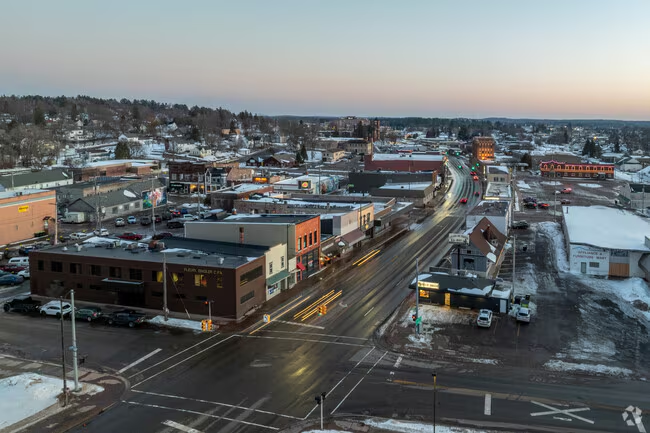
What happens to your home in the hours after a pipe splits during a January cold snap, or after a chimney fire fills every room with acrid smoke? In Iron Mountain, Michigan, the answer usually depends on how quickly trained restoration technicians arrive on site.
Flood Pros USA has provided quality water, fire, and smoke restoration along with mold remediation throughout the Iron Mountain area, working on everything from downtown apartments to Northwoods log cabins. The full range of services covers:
- Water Damage Restoration - extraction, structural drying, moisture mapping, and monitoring until materials return to normal readings
- Flooded Basement Cleanup - pump-out, sump troubleshooting, content removal, and sanitizing of concrete and block walls
- Sewage Cleanup - containment, removal of contaminated porous materials, antimicrobial treatment, and safe disposal
- Fire Damage Restoration - board-up, debris removal, soot removal, and structural cleaning of charred framing
- Smoke Damage Restoration - odor neutralization, HVAC cleaning, and treatment of walls, textiles, and hidden cavities
- Mold Removal - containment barriers, HEPA filtration, material removal, and moisture source correction
The benefit for Dickinson County property owners is straightforward: faster drying limits secondary damage, and thorough documentation supports insurance claims. Reach the local team at 424 S Stephenson Ave, Iron Mountain, MI 49801, or call (906) 448-0888.
Common Damage Restoration Issues in Iron Mountain, Michigan
Upper Peninsula weather is hard on buildings. Heavy rain, deep frost, and long snow seasons all create predictable failure points in Iron Mountain homes.
What Typically Triggers a Restoration Call
- Frozen and burst supply lines in uninsulated crawl spaces, garages, and cabin walls
- Spring snowmelt saturating soil around foundations, pushing water through block joints
- Sump pump failures during power outages caused by wind and ice storms
- Sanitary sewer backups when saturated ground overloads older municipal lines
- Ice dams along eaves forcing meltwater under shingles and into ceilings
- Wood stove, chimney, and space heater fires during extended heating months
- Hidden mold behind finished basement paneling and under vinyl flooring
Warning Signs Worth Acting On
- Musty odor that intensifies when the furnace or dehumidifier runs
- Efflorescence - white chalky residue - on basement block walls
- Staining or bubbling paint on upper-floor ceilings after a thaw
- Warped baseboards, cupping hardwood, or soft spots underfoot
- Lingering smoke smell weeks after a minor kitchen or furnace puffback
- Gurgling floor drains or slow-draining fixtures across the house
Log homes and cabins add their own concerns. Checkering, failed caulking, and settled log courses allow moisture into wall assemblies where it can feed rot and mold long before anything shows on interior surfaces. Detailed inspections that highlight trouble spots unique to the Iron Mountain area catch these problems while repairs are still limited in scope.
Neighborhoods We Serve in Iron Mountain
Crews respond across Iron Mountain and the wider Dickinson County region, including seasonal properties reached by county roads.
- Downtown Iron Mountain and the S Stephenson Ave corridor - older commercial buildings and upper-floor apartments
- East Kingsford and Kingsford - post-war neighborhoods with finished basements
- Quinnesec and Norway - mixed housing stock near the Menominee River
- Cornish Town and the North Side - historic homes with stone and block foundations
- Channing, Sagola, and Felch - rural properties on wells and septic systems
- Vulcan, Loretto, and Waucedah Township
- Iron Mountain Lake and area cabin communities - seasonal cottages and log homes
- Florence and Niagara, Wisconsin - just across the state line
Rural response includes properties without municipal sewer or reliable cell coverage, where septic backups and unattended freeze breaks are common calls.
Seasonal Damage Patterns in Iron Mountain
- December through February: Peak season for frozen pipe breaks, ice dams, and heating-related fires. Vacant cabins with lowered thermostats are especially vulnerable, and smoke damage from wood stoves and furnace puffbacks climbs sharply.
- March and April: Snowmelt season. Flooded basements dominate as frost-locked soil sheds runoff toward foundations. Sump pumps run continuously, and failures become obvious fast. Sewage backups rise as infiltration overwhelms lines.
- May and June: Spring rains keep basements damp. Mold growth accelerates in materials that stayed wet through the thaw but were never properly dried.
- July and August: Humidity peaks. Crawl spaces, closed cabins, and unconditioned basements develop surface mold. Severe thunderstorms bring wind-driven rain, roof leaks, and lightning-related fires.
- September and October: Cooling structures create condensation on cold surfaces. A good window for mold removal and moisture correction before heating season.
- November: First hard freezes expose unwinterized plumbing, hose bibs, and seasonal cabins closed without proper drain-down.
Housing Characteristics & Restoration Considerations
Iron Mountain's housing reflects its mining and lumber history. A large share of homes predate 1960, with construction methods that shape how restoration work is planned.
Common Construction Types
- Early 1900s frame homes - balloon framing, plaster and lath, stone or rubble foundations that wick moisture
- Kingsford-era company housing - compact footprints, low basements, original galvanized or cast iron plumbing
- Mid-century ranches - block foundations, finished basement rec rooms with paneling over furring strips
- Log homes and Northwoods cabins - solid log walls, chinking and caulk joints, seasonal occupancy
- Newer builds - poured foundations, tighter envelopes that trap moisture and smoke odor
How Age Affects the Work
- Plaster holds water differently than drywall and often dries in place with controlled airflow rather than removal
- Balloon-framed walls let smoke and fire travel between floors, so inspection extends well beyond the visible damage zone
- Stone foundations have voids that hide saturation, requiring cavity drying and moisture meters at multiple depths
- Finished basements built over concrete without vapor barriers are frequent mold sources after any flooding
- Older homes may contain asbestos-bearing floor tile, pipe wrap, or plaster - testing precedes demolition
- Log walls need patient drying; forced heat can check and split timber, so restoration plans account for the construction type
Every plan begins with a documented inspection and checklist so homeowners see exactly what is affected and why each step matters.
Environmental Conditions & Damage Implications
Local geology and climate directly influence how water moves through and around Iron Mountain properties.
Climate Factors
- Annual snowfall frequently exceeds five feet, producing heavy spring runoff loads
- Deep frost penetration drives freeze-thaw cracking in foundations and slabs
- Summer dew points regularly support mold growth in unconditioned spaces
- Long heating season increases exposure to combustion appliances and chimney issues
Soil and Water
- Glacial till, sandy loam, and shallow bedrock create uneven drainage across neighborhoods
- Clay lenses hold water against foundation walls after storms and melt events
- Shallow bedrock in some areas forces water laterally toward basements rather than downward
- Hard well water with iron content leaves staining and accelerates fixture corrosion
- Proximity to the Menominee River raises groundwater levels in low-lying parcels
Air Quality Considerations
- Tightly sealed winter homes concentrate smoke odor, VOCs from fire residue, and mold spores
- Wood heat is common, adding a baseline of soot in ductwork and on cold surfaces
- HEPA filtration and negative air machines are standard on mold and fire projects to keep contaminants from spreading
These conditions explain why drying alone rarely finishes a job here - correcting grading, sump discharge, ventilation, and vapor control keeps damage from repeating next season.
Protecting Seasonal Cabins and Log Homes in the Northwoods
Log homes and cabins are woven into the Iron Mountain lifestyle, and they also account for a steady share of restoration calls. Properties sitting empty for weeks at a time hide small failures until they become large ones - a slow supply line drip, a failed sump float, a chimney flue that never got swept.
Why Seasonal Properties Face Higher Risk
- No one is present to notice a leak, so water runs for days or weeks
- Lowered thermostats leave plumbing near freezing in exterior walls and crawl spaces
- Closed-up buildings trap humidity, feeding mold on log interiors and soft goods
- Wood stoves and fireplaces used intermittently accumulate creosote
- Rodent and insect activity opens pathways for moisture into log joints
A Practical Off-Season Routine
- Inspect before closing: Walk the exterior for failed caulk, checked logs, blocked gutters, and grade that slopes toward the structure.
- Winterize plumbing: Drain lines, blow out supply piping, and add antifreeze to traps if heat will be off.
- Verify backup systems: Test the sump pump, install a battery or water-powered backup, and confirm discharge lines are clear and pitched away.
- Control humidity: Leave a dehumidifier on a drain line or maintain minimum heat to keep interior surfaces above dew point.
- Service heating appliances: Have chimneys swept and furnaces inspected before the first burn.
- Arrange check-ins: A neighbor, caretaker, or remote temperature and water sensor shortens discovery time dramatically.
When Something Goes Wrong
Response on a seasonal property starts with stabilizing the structure - securing openings, restoring power safely, and removing standing water. Drying plans for log construction use moderate, sustained conditions rather than aggressive heat to avoid splitting timber. Contaminated water from sewage or septic backups is handled under containment with full removal of affected porous materials.
Documentation matters here too. Photos, moisture logs, and material inventories give absentee owners a clear record for insurers and for planning repairs before the next season begins.





