
Damage Restoration in Portage, WI
- Damage Restoration Services Overview
- Common Damage Restoration Issues in Portage, Wisconsin
- Neighborhoods We Serve in Portage
- Seasonal Damage Patterns in Portage
- Seasonal Damage Patterns in Portage
- Housing Characteristics & Restoration Considerations
- Environmental Conditions & Damage Implications
- Levee Living: Flood Preparedness and Full-Cycle Recovery in Portage
Damage Restoration Services Overview
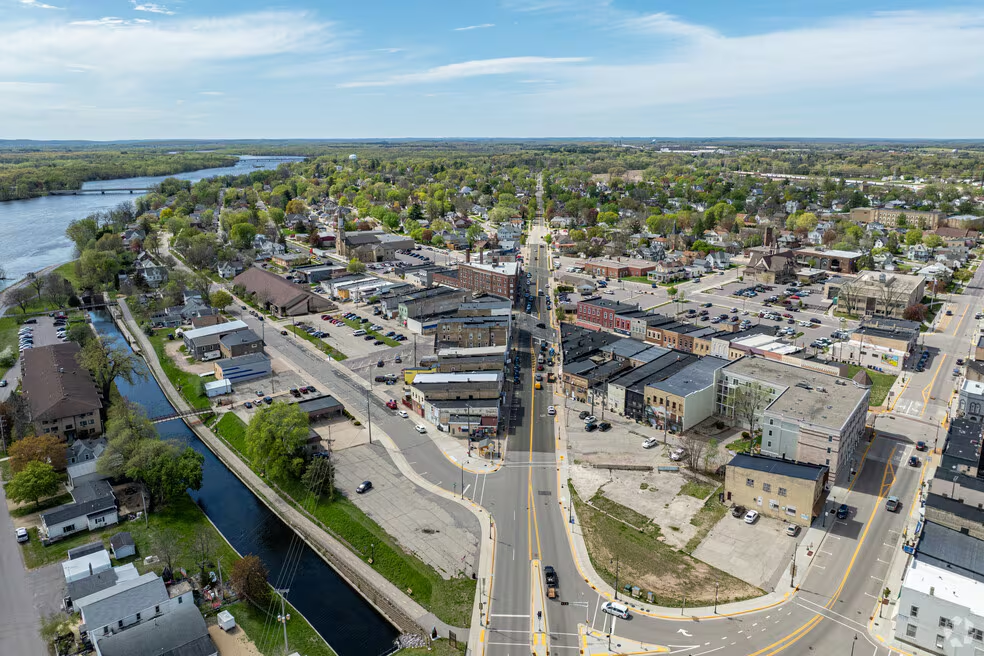
Portage sits at the historic portage between the Wisconsin and Fox Rivers - a location that shaped the city's history and still shapes its restoration needs today. High groundwater, aging levee-protected neighborhoods, and a housing stock full of century-old basements mean local property owners face water intrusion challenges that inland Wisconsin communities rarely see.
Restoration here covers the full spectrum of loss, from a burst supply line in a Cook Street apartment to a chimney fire in a farmhouse off County Highway F.
- Water Damage Restoration - extraction, structural drying, moisture mapping, and monitoring until materials return to normal readings
- Flooded Basement - pump-outs, sump failure response, saturated content handling, and subfloor drying
- Sewage Cleanup - containment and disinfection of Category 3 losses from backups and municipal line surcharge
- Fire Damage Restoration - stabilization, debris removal, soot cleaning, and structural rebuild coordination
- Smoke Damage Restoration - odor neutralization, HVAC decontamination, and content cleaning
- Mold Removal - containment, remediation, plus pre and post testing to verify results
The benefit for Portage residents is straightforward: faster stabilization limits secondary damage, protects irreplaceable belongings, and keeps a small loss from turning into a full gut-and-rebuild.
Common Damage Restoration Issues in Portage, Wisconsin
Geography drives most losses here. The Wisconsin River levee system, the Portage Canal corridor, and low-lying ground along Silver Lake all contribute to persistent moisture pressure on foundations.
Water and Basement Flooding Triggers
- Spring snowmelt combined with river-stage rises pushing groundwater against foundation walls
- Sump pump failures during power outages caused by summer thunderstorms
- Frozen and burst pipes in uninsulated crawl spaces and older stone basements
- Cracked lateral lines and root intrusion causing sewage backups into floor drains
- Failed water heaters, washing machine hoses, and ice-maker supply lines
Fire and Smoke Triggers
- Wood stoves and supplemental heaters running hard through long Wisconsin winters
- Creosote buildup in chimneys on older homes near downtown
- Overloaded circuits in houses with legacy knob-and-tube or early breaker panels
- Grease fires and outdoor burning that spreads to outbuildings on rural parcels
Warning Signs Worth Acting On
- Musty odor that intensifies after rain or when the furnace kicks on
- White chalky efflorescence or dark staining on block foundation walls
- Cupping hardwood, bubbling paint, or soft spots in drywall near the floor line
- Slow floor drains, gurgling toilets, or sewer odor in the basement
- Soot film on window glass, lampshades, or vent registers after a small fire
Neighborhoods We Serve in Portage
Coverage extends across the city and out into the surrounding Columbia County countryside.
- Downtown and the Cook Street corridor - historic commercial buildings and upper-story apartments
- Levee District and Wisconsin River frontage - properties most exposed to high-water events
- Silver Lake and Pauquette Park areas - established residential streets with mature trees and older sewer laterals
- East Portage and the Highway 33 corridor - mixed residential and light commercial
- North side subdivisions near the school campuses - newer builds with poured foundations
- Rural townships including Caledonia, Lewiston, Fort Winnebago, and Pacific
Service also reaches nearby communities such as Pardeeville, Wyocena, Poynette, Rio, Endeavor, Briggsville, Wisconsin Dells, Lake Delton, and Baraboo. Crews familiar with local street layouts, well-and-septic properties, and municipal utility contacts move faster when every hour counts.
Seasonal Damage Patterns in Portage
Seasonal Damage Patterns in Portage
- January - February: Peak frozen pipe season. Sub-zero stretches burst supply lines in exterior walls and unheated crawl spaces. Heating equipment and wood stove use drives fire and smoke calls.
- March - April: Snowmelt plus river rise equals flooded basements. Sump pumps run continuously, and failures are common. Saturated soil pushes water through foundation cracks.
- May - June: Heavy rainfall events overwhelm storm and sanitary systems, causing sewage backups through floor drains. Mold growth accelerates as humidity climbs.
- July - August: Thunderstorm outages knock out sump pumps. Humid air in cool basements creates condensation and widespread surface mold. Lightning strikes cause structure fires.
- September - October: Remediation and testing season. Homeowners discover summer mold growth while closing up for fall. Furnace startup releases dust and smoke odors.
- November - December: Ice dams back meltwater under shingles into ceilings and wall cavities. Holiday cooking and candle fires spike smoke damage claims.
Knowing the calendar helps property owners schedule preventive work - sump backup batteries in early spring, chimney inspections before the first cold snap.
Housing Characteristics & Restoration Considerations
Portage's housing stock spans more than 150 years, and the construction era of a home largely dictates how it responds to a loss.
Pre-1940 Homes
- Stone, rubble, or early block foundations that wick moisture and hide voids behind parging
- Plaster over wood lath, which holds water far longer than modern drywall
- Balloon framing that lets smoke and fire travel vertically through wall cavities
- Original hardwood floors worth specialized drying rather than replacement
Mid-Century Homes (1940s - 1970s)
- Poured or block basements often finished with wood paneling and carpet - prime mold habitat
- Cast iron and clay sewer laterals prone to cracking and root intrusion
- Possible asbestos-containing floor tile, mastic, and pipe wrap requiring careful handling
Newer Construction and Rural Properties
- Tighter building envelopes trap humidity when ventilation is inadequate
- Engineered wood subfloors and I-joists that delaminate quickly when saturated
- Farmhouses and outbuildings on private wells and septic, which changes sewage cleanup protocol
Restoration plans account for these differences - drying a plaster wall in a 1900 Victorian takes a different equipment setup than drying drywall in a 2015 ranch. Content handling also varies, since older homes frequently hold heirlooms, documents, and textiles that benefit from specialized cleaning rather than disposal.
Environmental Conditions & Damage Implications
Portage's environment creates a moisture load that few Wisconsin cities match.
Climate
- Roughly 32 - 35 inches of annual precipitation, with the heaviest totals in spring and early summer
- Summer dew points regularly in the 60s and 70s, keeping indoor relative humidity elevated
- Deep winter frost lines that stress foundations and buried plumbing
- Freeze-thaw cycling that widens foundation and slab cracks year after year
Water and Soil
- Sandy and loamy soils along the river plain that drain fast but also transmit groundwater quickly to foundation walls
- Shallow water tables in low-lying areas, keeping perimeter drains and sumps under constant load
- Hard, mineral-rich groundwater that leaves scale and complicates cleaning of fixtures and contents
- Agricultural runoff in surrounding townships, which raises contamination concerns when floodwater enters a structure
Air Quality Implications
- High seasonal humidity supports mold colonization within one to two days on damp cellulose materials
- Basement air pressure differences pull musty odors and spores into living space through stack effect
- Smoke residue bonds tightly to cool surfaces in winter, requiring solvent-based cleaning and thermal odor treatment
- Wildfire smoke drift during dry summers can compound existing indoor air problems
Controlling humidity is the foundation of every successful outcome. Dehumidification, air movement, and moisture monitoring are used on water losses, fire jobs, and mold projects alike, because materials that never fully dry will fail again.
Levee Living: Flood Preparedness and Full-Cycle Recovery in Portage
Portage residents live with the Wisconsin River levee as a fact of daily life. That reality shapes how properties should be prepared - and how recovery should be handled when water gets in anyway.
Preparation Steps That Reduce Loss
- Install a battery or water-powered backup sump pump and test it before spring melt.
- Add a backwater valve on the sewer lateral to block municipal surcharge during heavy rain.
- Elevate furnaces, water heaters, and electrical panels where basement flooding has occurred before.
- Move stored documents, photos, and textiles off basement floors and into sealed containers.
- Extend downspouts well past the foundation and regrade soil that has settled toward the house.
- Photograph finished basements and contents annually to simplify insurance documentation.
Start-to-Finish Recovery
A complete project runs well beyond pumping water out. Recovery is handled as one continuous process so no phase gets dropped between contractors.
- Emergency response - power safety check, water shutoff, extraction, and board-up or tarping after fire
- Assessment - moisture mapping with meters and thermal imaging, plus loss category determination for sewage events
- Containment - negative air machines, HEPA filtration, and poly barriers to protect unaffected rooms
- Cleaning - antimicrobial application, soot and smoke residue removal, HVAC duct decontamination, and odor neutralization
- Content services - pack-out, cleaning, deodorizing, and storage of salvageable belongings
- Structural drying - dehumidifiers and air movers with daily moisture readings logged until targets are met
- Verification - post-remediation mold testing and clearance documentation
- Reconstruction - drywall, flooring, trim, paint, and finish work to return the space to pre-loss condition
Insurance documentation runs alongside every phase, with photos, moisture logs, and itemized scopes prepared for adjusters. Emergency response is available around the clock, because a Portage basement can go from damp to submerged in a single night of river-driven groundwater.





