
Damage Restoration in Bloomsburg, PA
- Damage Restoration Services Overview
- Common Damage Restoration Issues in Bloomsburg, Pennsylvania
- Neighborhoods We Serve in Bloomsburg
- Seasonal Damage Patterns in Bloomsburg
- Housing Characteristics & Restoration Considerations
- Environmental Conditions & Damage Implications
- Susquehanna River Flooding and Basement Water: What Bloomsburg Property Owners Should Know
Damage Restoration Services Overview
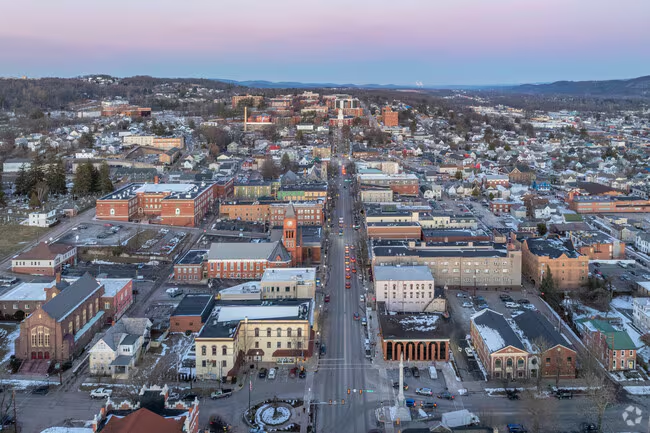
What would you do if you walked downstairs tomorrow morning and found three inches of water covering your basement floor? For property owners in Bloomsburg, that scenario is closer to reality than most people expect - the Susquehanna River Valley has a long memory when it comes to flooding, freezing pipes, and storm-driven leaks.
Restoration work covers far more than pumping out water. A complete response addresses structural drying, contamination, odor, and the hidden moisture that turns a small problem into a large one.
- Water Damage Restoration - extraction, structural drying, moisture mapping, and monitoring until materials reach dry standard
- Flooded Basement Cleanup - pump-out, content removal, sanitizing of concrete and block walls, dehumidification
- Sewage Cleanup - safe removal of contaminated water and porous materials, antimicrobial treatment, disinfection
- Fire Damage Restoration - debris removal, soot cleaning, salvage assessment, and rebuilding of damaged framing and finishes
- Smoke Damage Restoration - HVAC cleaning, thermal deodorization, and treatment of walls, textiles, and contents
- Mold Removal - containment, air filtration, removal of colonized materials, and correction of the moisture source
The benefit for Bloomsburg homeowners and business owners is straightforward: faster drying means fewer materials lost, less mold growth, and a smoother insurance claim.
Common Damage Restoration Issues in Bloomsburg, Pennsylvania
Bloomsburg sits in the heart of the Susquehanna River Valley, and geography shapes nearly every restoration call in Columbia County.
Local Causes of Damage
- River and creek flooding - properties near the Susquehanna, Fishing Creek, and low-lying downtown blocks face backwater and overland flooding during heavy rain events
- Frozen and burst pipes - subfreezing stretches from December through February split supply lines in crawl spaces, exterior walls, and unheated basements
- Sump pump failure - older pumps and power outages during storms leave basements defenseless
- Sewer and septic backups - saturated ground and overloaded municipal lines push contaminated water back through floor drains
- Furnace puffback - oil-fired heating systems misfire in early heating season, coating interiors in oily soot
- Storm and wind damage - downed limbs from mature street trees puncture roofs, creating slow leaks that feed mold
Warning Signs Worth Acting On
- Musty, earthy odors in a basement or closet that persist after cleaning
- Efflorescence, chalky white staining, or bubbling paint on foundation walls
- Ceiling stains that change shape or darken after rainfall
- Cupping hardwood, soft baseboards, or floor tiles lifting at the seams
- Gurgling floor drains or slow-draining fixtures on the lowest level
- Lingering smoke odor that returns on humid days after a small kitchen or furnace fire
Neighborhoods We Serve in Bloomsburg
Service covers the town proper and the surrounding communities throughout Columbia and Montour counties.
- Downtown Bloomsburg - Market Street, Main Street, and the historic district listed on the National Register
- Fair Grounds area - homes near the Bloomsburg Fairgrounds and the Route 11 corridor
- Turkey Hill - hillside properties dealing more with pipe freezes and roof leaks than river flooding
- University neighborhoods - student rentals and multi-unit properties near campus along Lightstreet Road and Penn Street
- Scott Township and Espy - river-adjacent residences with recurring basement water concerns
- Surrounding towns - Danville, Berwick, Catawissa, Orangeville, Millville, Lightstreet, Buckhorn, and Mifflinville
Both residential and commercial properties are covered, including rental portfolios, storefronts, churches, and small manufacturing facilities.
Seasonal Damage Patterns in Bloomsburg
Winter (December - February)
- Frozen and burst supply lines in crawl spaces and exterior walls
- Ice damming along north-facing roof edges pushing meltwater into ceilings
- Furnace puffback and chimney-related fire calls as heating systems run hard
Spring (March - May)
- Snowmelt plus spring rain raising the water table and flooding basements
- Sump pump overload and sewer backups during sustained storms
- First wave of mold growth from winter leaks that went unnoticed
Summer (June - August)
- High humidity feeding mold in basements, attics, and behind vinyl wallcoverings
- Severe thunderstorms with wind damage, downed trees, and roof punctures
- Air conditioning condensate line clogs causing slow ceiling leaks
Fall (September - November)
- Remnants of tropical systems tracking up the Susquehanna Valley
- Clogged gutters from heavy leaf fall directing water against foundations
- Early-season heating equipment fires and smoke odor complaints
Housing Characteristics & Restoration Considerations
Bloomsburg was settled in 1772 and incorporated in 1870, and the housing stock reflects that history. Many homes predate modern building codes, which changes how restoration has to be approached.
Common Construction Types
- Victorian and early 20th-century frame homes - plaster over wood lath, balloon framing, and multiple layers of flooring that trap moisture
- Brick rowhomes and downtown mixed-use buildings - shared walls that let water and smoke migrate between units
- Stone and block foundations - porous, unsealed, and prone to seepage during high-water periods
- Post-war ranches and split-levels - finished basements with drywall, carpet, and paneling that rarely survive a flood
- Rural farmhouses - septic systems, well water, and crawl spaces with exposed soil
How Age Affects the Work
- Plaster holds water longer than drywall and needs extended drying with careful monitoring rather than immediate demolition
- Balloon-framed wall cavities act as chimneys, carrying smoke and soot from a basement fire to the attic
- Homes built before the late 1970s may contain asbestos or lead paint, requiring testing before aggressive demolition
- Knob-and-tube or aging wiring raises fire risk and complicates water intrusion around electrical boxes
- Unsealed stone foundations often need drainage correction alongside mold removal, or the problem returns
Environmental Conditions & Damage Implications
Local climate and soil conditions influence how quickly damage spreads and how drying has to be handled.
Climate Factors
- Humid continental climate with roughly 40 inches of annual precipitation spread across all seasons
- Summer relative humidity regularly above 70 percent, slowing evaporation and encouraging mold
- Repeated freeze-thaw cycles that crack mortar joints, concrete, and exterior water lines
- Snowpack that melts fast during warm spells, sending runoff toward foundations
Soil, Water, and Air
- Valley soils - silt and clay-rich alluvial deposits near the river hold water and press against foundation walls
- Hillside runoff - properties below Turkey Hill and other slopes receive concentrated surface water during downpours
- High water table - shallow groundwater in low-lying areas causes seepage even without visible flooding
- Hard well water - mineral content contributes to pinhole leaks and scaling in older plumbing
- Radon and indoor air - central Pennsylvania basements need controlled negative pressure and HEPA filtration during mold and sewage work
Restoration Implications
- Dehumidification carries more of the drying load here than airflow alone, especially in summer
- Sewage and floodwater in silty soil leaves behind sediment that must be removed before disinfection
- Smoke particles bond tightly in humid conditions, making prompt soot cleaning more effective than delayed work
Susquehanna River Flooding and Basement Water: What Bloomsburg Property Owners Should Know
Few communities in Pennsylvania have a longer relationship with high water than Bloomsburg. The river bends around the southern edge of town, Fishing Creek runs down from the north, and heavy rain in the upper watershed shows up here hours later. Properties that have never flooded can take water when conditions line up.
Why Flood Water Is Treated Differently
- River flooding and sewer backups are categorized as contaminated water, not clean water
- Porous materials - carpet, pad, drywall below the waterline, insulation, particleboard - generally cannot be salvaged
- Silt and organic sediment must be physically removed before antimicrobial treatment does any good
- Mechanical systems that were submerged need evaluation before being energized
Typical Response Sequence
- Safety check - electrical hazards, structural concerns, and gas shutoff verification
- Water extraction using truck-mounted or portable pumps depending on access
- Removal of unsalvageable materials and flood-line demolition to expose wall cavities
- Cleaning and disinfection of framing, concrete, and block surfaces
- Placement of air movers and commercial dehumidifiers with daily moisture readings
- Verification that materials have reached dry standard before any rebuild begins
Steps That Reduce Future Damage
- Install a battery backup or water-powered secondary sump pump
- Add a backflow valve on the main sewer line if the property sits in a low-lying block
- Extend downspouts well away from the foundation and regrade settled soil
- Move HVAC equipment, water heaters, and electrical panels above the historical flood line where feasible
- Store keepsakes and documents on shelving rather than basement floors
- Photograph finished basements and contents annually for insurance documentation
Acting within the first day or two after water intrusion is what separates a drying job from a mold remediation project. Emergency response is available around the clock throughout Bloomsburg and the surrounding towns.





