
Damage Restoration in Berwick, PA
- Damage Restoration Services Overview
- Common Damage Restoration Issues in Berwick, Pennsylvania
- Neighborhoods We Serve in Berwick
- Seasonal Damage Patterns in Berwick
- Housing Characteristics & Restoration Considerations
- Environmental Conditions & Damage Implications
- Protecting Berwick Basements From Susquehanna Flooding and Sewer Backups
Damage Restoration Services Overview
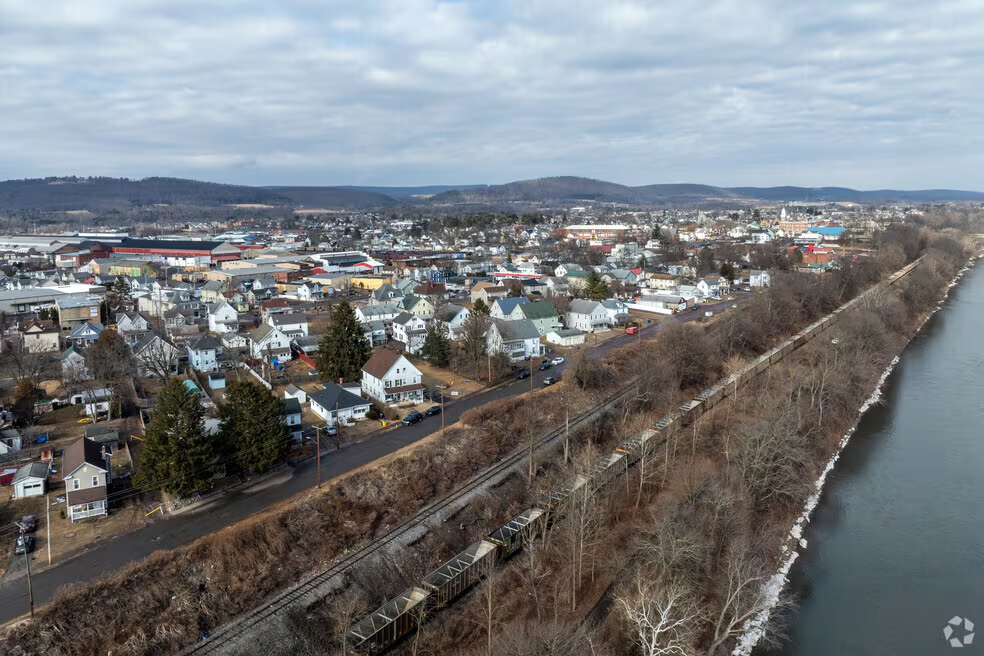
Berwick sits on the northern bank of the Susquehanna River, and flood modeling places the borough at moderate risk of flooding over the next 30 years - meaning a large share of the town's roughly 10,000 residents will face some form of water intrusion during their time here. Damage rarely announces itself politely, and the response window is short.
Restoration work covers far more than pumping out water. A complete response addresses structure, contents, air quality, and the hidden cavities where moisture and soot settle.
- Water Damage Restoration - extraction, structural drying, and moisture mapping after burst pipes, appliance failures, roof leaks, or river-driven flooding.
- Flooded Basement - sump pump failures, foundation seepage, and groundwater intrusion in Berwick's older stone and block cellars.
- Sewage Cleanup - removal of Category 3 contaminated water, disposal of porous materials, and antimicrobial treatment of affected surfaces.
- Fire Damage Restoration - debris removal, structural cleaning, deodorization, and reconstruction coordination.
- Smoke Damage Restoration - soot removal from walls, HVAC systems, textiles, and contents affected by protein, wet, or dry smoke residues.
- Mold Removal - containment, air filtration, affected material removal, and correction of the moisture source feeding growth.
Acting quickly limits secondary damage, protects belongings, and keeps a manageable problem from becoming a full gut-and-rebuild project.
Common Damage Restoration Issues in Berwick, Pennsylvania
Geography and housing age drive most of the calls in this part of Columbia County. The river, the hillsides, and a housing stock built largely before modern moisture control all play a role.
Local Factors Behind Damage Events
- Susquehanna flooding - spring snowmelt and tropical remnants push water into low-lying streets and riverside properties.
- Hillside runoff - properties north of the river channel receive surface water that overwhelms grading and window wells.
- Aging sewer laterals - clay and cast-iron lines crack over decades, causing backups into basement floor drains during heavy rain.
- Freeze-thaw cycles - January and February pipe bursts in uninsulated crawlspaces, porch walls, and vacant rentals.
- Heating equipment - furnaces, wood stoves, and space heaters account for a share of cold-weather fire and puffback incidents.
Warning Signs Worth Investigating
- A musty odor in the cellar that lingers after the dehumidifier runs.
- Efflorescence, chalky white staining, or bubbling paint along foundation walls.
- Floor drains that gurgle when a washing machine discharges.
- Ceiling stains that widen after each rainfall.
- Soot filming on window glass or a persistent smoky smell weeks after a small kitchen fire.
- Warped hardwood, cupping planks, or tile that has begun to loosen.
Any of these points to an active moisture or combustion residue issue that spreads quietly behind finished surfaces.
Neighborhoods We Serve in Berwick
Coverage extends across the borough and the surrounding townships along the Susquehanna corridor.
- Downtown Berwick - Market Street, Front Street, and the historic district near the Jackson Mansion and Carriage House.
- Riverside blocks - properties along the northern bank most exposed to high-water events.
- North Berwick and the Armory area - established residential streets with mature trees and older sewer laterals.
- West Berwick - dense rows of early-1900s homes with shared walls and shallow cellars.
- Briar Creek and Briar Creek Township - lakeside and rural properties on private wells and septic systems.
- Salem Township, Nescopeck, and Mifflinville - across and along the river, including farmland and light industrial sites.
- Foundryville, Beach Haven, and Shickshinny Valley - outlying communities with hillside drainage concerns.
Commercial clients across Columbia, Montour, and Sullivan Counties - retail, manufacturing, schools, and healthcare - receive the same round-the-clock response.
Seasonal Damage Patterns in Berwick
Restoration demand in Berwick follows a fairly predictable annual rhythm.
- January - February: Peak frozen and burst pipe season. Furnace puffbacks, chimney fires, and space heater incidents cluster here. Water damage from ice dams appears along north-facing roof edges.
- March - April: Snowmelt combined with spring rain raises the Susquehanna. Flooded basements, sump pump failures, and groundwater seepage dominate.
- May - June: Warming temperatures activate mold in cellars and crawlspaces that stayed damp through spring. Sewage backups follow intense thunderstorms.
- July - August: Humidity keeps indoor moisture high. Condensation-driven mold growth, air conditioning line leaks, and grilling-related fires increase.
- September - October: Tropical storm remnants track through the region, producing the most severe flood events on record for the valley. Wind-driven rain and roof damage follow.
- November - December: Heating systems restart, producing smoke damage and soot deposits. Cooking fires rise around the holidays, and early freezes begin stressing plumbing.
Housing Characteristics & Restoration Considerations
Berwick was settled in 1769 and grew rapidly during its manufacturing era, so much of the housing stock predates 1940. That history shapes every restoration plan.
Construction Types Found Locally
- Victorian and early-1900s frame homes - balloon framing creates open wall cavities that let water travel between floors and carry smoke vertically through a structure.
- Brick rowhomes and twins - shared party walls mean water or soot in one unit frequently affects the neighbor.
- Stone and rubble foundations - porous and irregular, they absorb groundwater and hold moisture long after standing water is removed.
- Post-war ranches and split-levels - block foundations with finished basements, often carpeted, where flooding damages both structure and contents.
- Rural farmhouses - dirt-floor crawlspaces and cellars that stay chronically humid.
How Age Affects the Work
- Hazardous materials screening - lead paint and asbestos in older plaster, flooring, and pipe wrap require careful handling before demolition.
- Plaster and lath drying - these assemblies hold water differently than drywall and need targeted airflow and monitoring rather than automatic removal.
- Hardwood salvage - specialty drying mats can often save original floors that would otherwise be torn out.
- Ductwork inspection - retrofitted HVAC in old homes traps soot and spores and needs cleaning after fire or mold events.
- Historic detail preservation - trim, newel posts, and built-ins are cleaned and restored where possible rather than replaced.
Environmental Conditions & Damage Implications
The Susquehanna Valley climate creates conditions that favor moisture problems year-round.
Climate and Moisture
- Humid continental pattern - cold winters, warm humid summers, and roughly 40 inches of annual precipitation spread fairly evenly across months.
- Summer dew points - regularly high enough that unconditioned basements sit above the 60 percent relative humidity threshold where mold colonizes.
- Freeze-thaw counts - dozens of cycles each winter crack mortar joints, foundation parging, and buried pipe.
- Snowpack - upstream accumulation in the northern watershed determines spring flood severity locally.
Soil, Water, and Air
- Alluvial floodplain soils near the river drain quickly but also transmit groundwater laterally into foundations during high-water periods.
- Clay-heavy hillside soils hold water against walls and increase hydrostatic pressure on basement slabs.
- River flood water is treated as contaminated - it carries agricultural runoff, fuel, and sewage, so affected porous materials are removed rather than dried.
- Well and septic properties in Briar Creek and Salem Township face additional contamination risk when flooding overwhelms drain fields.
- Indoor air quality after fire events is affected by fine soot particles that penetrate HVAC systems and settle in soft goods, requiring HEPA filtration and thermal fogging.
Every project starts with moisture readings and psychrometric measurements so drying targets match actual local conditions rather than assumptions.
Protecting Berwick Basements From Susquehanna Flooding and Sewer Backups
Basements take the first hit in almost every Berwick water event. Whether the source is the river, a hillside, or a backed-up municipal line, the response follows a disciplined sequence.
What Happens During a Flooded Basement Response
- Safety assessment - electrical shutoff, gas check, and confirmation of structural stability before anyone enters standing water.
- Water categorization - clean, gray, or black water determines whether materials can be dried or must be removed and disposed of.
- Extraction - submersible pumps and truck-mounted units remove standing water, followed by weighted extraction of saturated carpet and pad.
- Controlled demolition - flood cuts in drywall, removal of wet insulation, and detachment of base trim to open wall cavities.
- Antimicrobial application - required for any sewage or river water contact, applied to framing, slab, and masonry.
- Structural drying - air movers, LGR dehumidifiers, and daily moisture readings until materials reach dry standard.
- Contents handling - salvageable items cleaned or moved offsite; unsalvageable porous goods documented for insurance.
Steps Berwick Homeowners Can Take Before the Next Storm
- Install a backwater valve on the sewer lateral to block municipal backups.
- Add a battery backup or water-powered secondary sump pump - power outages and flooding arrive together.
- Extend downspouts at least six feet from the foundation and regrade soil away from walls.
- Move furnaces, water heaters, and electrical panels off the floor where feasible.
- Store irreplaceable documents and photos above the basement level in sealed containers.
- Photograph finished basement spaces annually to document pre-loss condition for claims.
- Have the sump pit, discharge line, and check valve inspected each spring before snowmelt.
Documentation matters as much as equipment. Detailed moisture logs, photographs, and material inventories support insurance claims and give property owners a clear record of the work performed.





