
Damage Restoration in Lehighton, PA
- Damage Restoration Services Overview
- Common Damage Restoration Issues in Lehighton, Pennsylvania
- Neighborhoods We Serve in Lehighton
- Seasonal Damage Patterns in Lehighton
- Housing Characteristics & Restoration Considerations
- Environmental Conditions & Damage Implications
- 24/7 Emergency Response and the Insurance Claim Process in Carbon County
Damage Restoration Services Overview
What would you do if you walked into your Lehighton home tomorrow morning and found two inches of water covering the basement floor? Property damage rarely announces itself, and the hours immediately after discovery shape how much of your home and belongings can be saved.
Restoration companies serving Carbon County handle a connected family of emergencies, and most properties eventually need more than one:
- Water Damage Restoration - extraction, structural drying, and moisture mapping after burst pipes, appliance failures, roof leaks, or storm intrusion.
- Flooded Basement - pump-out, sump system troubleshooting, and drying of foundation walls, framing, and stored contents.
- Sewage Cleanup - safe removal of contaminated water and materials, followed by antimicrobial treatment of affected surfaces.
- Fire Damage Restoration - debris removal, board-up, soot cleanup, and rebuilding of charred structural components.
- Smoke Damage Restoration - odor neutralization, HVAC cleaning, and treatment of porous materials that trap smoke residue.
- Mold Removal - containment, controlled removal of colonized materials, and correction of the moisture source feeding growth.
Key benefits for Lehighton residents include faster drying that limits secondary mold growth, documentation that supports insurance claims, and coordinated repair work so a single team carries a property from emergency response through reconstruction.
Common Damage Restoration Issues in Lehighton, Pennsylvania
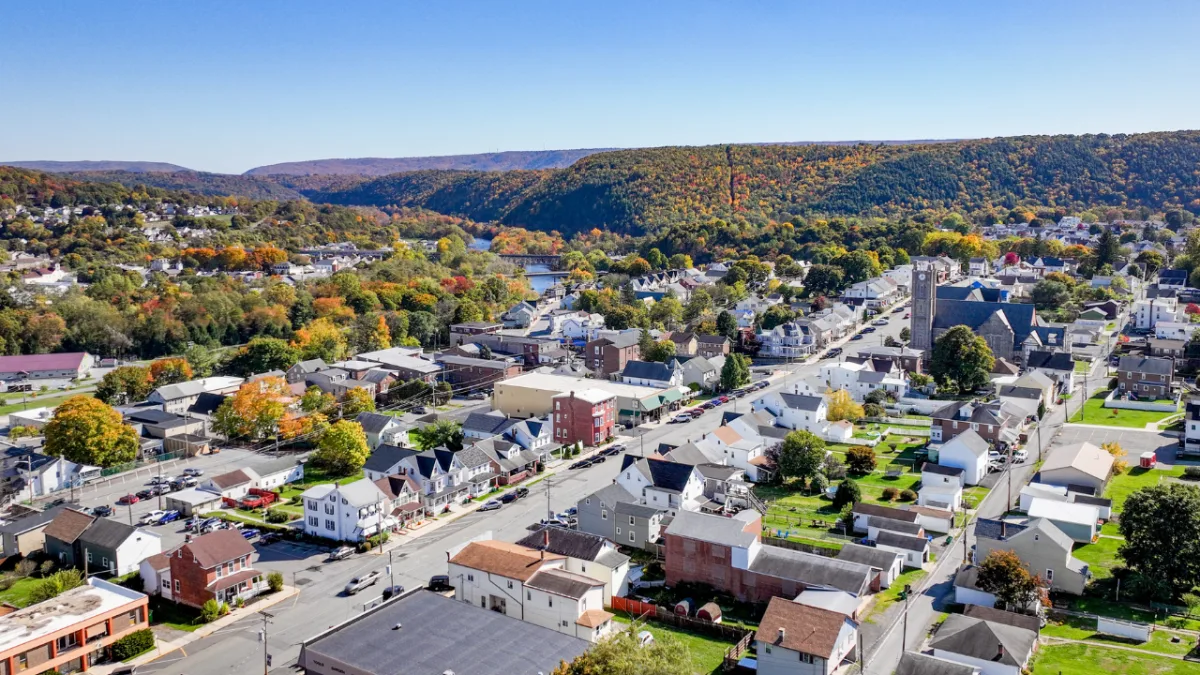
Lehighton sits along the Lehigh River in the Pocono foothills, where terrain, weather, and older housing stock combine to create predictable damage patterns. The area has logged several confirmed severe weather reports since mid-2024, and each round of heavy rain or wind tests aging roofs and drainage systems.
Local Factors That Trigger Damage
- Hillside runoff pushing stormwater toward foundations on sloped streets above the river valley.
- Combined and aging sewer laterals that back up during saturating rains, creating sewage cleanup emergencies.
- Freeze-thaw cycling that cracks foundation walls and splits supply lines in unheated crawl spaces.
- Wood stoves, pellet stoves, and supplemental heaters that account for a share of winter fire and smoke calls.
- Humid summer air feeding mold growth in stone-walled basements with limited ventilation.
Warning Signs Worth Acting On
- Efflorescence, white chalky streaks, or dark staining along basement block and stone walls.
- A musty odor that intensifies after rainfall or when the HVAC system cycles on.
- Floor tile lifting, baseboard swelling, or drywall that feels soft near the bottom edge.
- Slow drains and gurgling fixtures, often the first hint of a sewer line problem.
- Lingering smoke smell weeks after a minor kitchen or furnace puffback, signaling residue in ductwork.
- Visible rust on furnace bases, water heaters, or support columns sitting on damp slabs.
Neighborhoods We Serve in Lehighton
Restoration crews cover the borough and the surrounding Carbon County communities that share the same weather and infrastructure challenges.
- Downtown Lehighton - First through Eighth Street corridors with closely spaced older homes and commercial storefronts.
- North Lehighton and Packerton - riverside properties with elevated groundwater exposure.
- Mahoning Township - rural parcels on well water and private septic systems.
- Weissport and East Weissport - low-lying areas along the Lehigh where basement flooding is routine.
- Franklin Township and Parryville - hillside homes dealing with surface runoff.
- Jim Thorpe, Palmerton, Nesquehoning, and Bowmanstown - nearby boroughs with comparable housing age and terrain.
- Lehighton Area School District neighborhoods, plus Beaver Run and Long Run corridors.
Coverage extends along Route 209 and Route 443, keeping response times short throughout the valley.
Seasonal Damage Patterns in Lehighton
Damage calls in Carbon County follow the calendar closely, and knowing the pattern helps homeowners prepare before the phone call becomes necessary.
- December through February - frozen and burst pipes in crawl spaces and exterior walls, ice dams forcing meltwater under shingles, and heating-related fire and smoke incidents from stoves, chimneys, and furnace puffbacks.
- March and April - snowmelt combined with spring rain saturates hillside soil, driving flooded basement calls and overwhelming sump pumps and older sewer laterals.
- May and June - rising humidity activates dormant mold in basements and behind bathroom walls that never fully dried over winter.
- July and August - severe thunderstorms bring wind-driven rain, roof damage, lightning strikes, and flash flooding along creek drainages.
- September and October - tropical remnants moving up the Atlantic occasionally stall over the Poconos, producing the year's heaviest single-event rainfall totals.
- November - first heating cycles ignite dust in dormant furnaces and reveal chimney problems, a common start to fire and smoke damage season.
Housing Characteristics & Restoration Considerations
Much of Lehighton's housing predates World War II, with a heavy concentration of late-1800s and early-1900s construction built during the coal and railroad era. That age directly shapes restoration strategy.
Construction Types Found Locally
- Stone and rubble foundations - porous, absorbent, and slow to dry, requiring extended dehumidification after any basement flooding.
- Balloon-framed walls - open cavities that let water travel downward and fire and smoke travel upward between floors.
- Plaster over wood lath - holds moisture longer than drywall and absorbs smoke odor deep into the substrate.
- Brick and masonry rowhomes - shared walls that transfer water and smoke between attached units.
- Knob-and-tube or early wiring remnants - an ongoing fire risk in unrenovated attics and walls.
- Post-1980 developments in Mahoning and Franklin Townships with poured concrete foundations and finished basements vulnerable to costly flooring and drywall losses.
How Age Affects the Work
- Asbestos and lead paint testing may be needed before demolition in pre-1980 structures.
- Cast iron and clay sewer laterals fail more often, raising sewage cleanup frequency.
- Cellulose and horsehair plaster insulation must be removed rather than dried once contaminated.
- Original trim, stair parts, and hardwood flooring often justify specialty drying rather than replacement.
- Unsealed crawl spaces beneath older additions become persistent mold reservoirs unless encapsulated during repairs.
Environmental Conditions & Damage Implications
Lehighton's humid continental climate delivers roughly 45 to 50 inches of precipitation annually, spread across rain, snow, and ice - a workload that older drainage systems were never designed to carry.
Climate and Moisture
- Summer dew points frequently climb into the upper 60s, pushing basement humidity past the 60 percent threshold where mold colonizes drywall paper and stored cardboard.
- Winter temperatures drop into the teens and single digits, freezing exposed plumbing along exterior walls.
- Snowpack in the Pocono foothills melts into the Lehigh watershed, raising groundwater tables in spring.
Soil, Water, and Air
- Soil - shallow, rocky glacial till over shale bedrock sheds water laterally instead of absorbing it, sending runoff against foundation walls.
- Groundwater - hydrostatic pressure pushes moisture through stone foundations even without visible flooding.
- Well and septic systems - common in the townships, where saturated drain fields back up and create sewage contamination indoors.
- Air quality - valley topography traps wood smoke and inversion layers in winter, worsening indoor odor problems after any fire event.
- Radon - elevated across much of eastern Pennsylvania, making basement sealing and ventilation part of a smart restoration plan.
These conditions mean drying targets in Lehighton must account for naturally damp substrates rather than generic national benchmarks.
24/7 Emergency Response and the Insurance Claim Process in Carbon County
Damage does not wait for business hours, which is why local providers staff around-the-clock lines. The first 24 to 48 hours determine whether a water loss stays a water loss or becomes a mold remediation project.
What Happens After You Call
- Dispatch and arrival - a crew heads to your address with extraction equipment, moisture meters, and thermal imaging cameras.
- Safety assessment - electrical hazards, structural instability, and contamination category are identified before anyone enters.
- Water classification - clean water, gray water, or black water sewage determines whether materials can be dried or must be removed.
- Extraction and stabilization - standing water is pumped out and board-up or tarping protects openings after fire or storm damage.
- Structural drying - air movers and commercial dehumidifiers run with daily moisture readings logged for the file.
- Cleaning and deodorization - soot removal, antimicrobial application, HVAC cleaning, and hydroxyl or ozone treatment for smoke odor.
- Reconstruction - drywall, flooring, trim, and paint restore the space.
Working With Your Insurer
- Photograph everything before moving items, including serial numbers on damaged appliances.
- Report the claim promptly - most policies require notice without unreasonable delay.
- Save damaged materials until the adjuster approves disposal.
- Ask whether your policy includes sewer backup and sump pump failure endorsements, which standard homeowners coverage often excludes.
- Request the restoration company's daily moisture logs and equipment records, since adjusters rely on that documentation.
- Understand that flood damage from rising water typically requires separate NFIP coverage, relevant for properties near the Lehigh River and Mahoning Creek.
Choosing an IICRC-certified contractor who bills insurers directly reduces paperwork and keeps mitigation moving while the claim is still being reviewed.





