Damage Restoration in St. Martin Parish, LA
- Damage Restoration Services Overview
- Common Damage Restoration Issues in St. Martin Parish, Louisiana
- Neighborhoods We Serve in St. Martin Parish
- Seasonal Damage Patterns in St. Martin Parish
- Seasonal Damage Patterns in St. Martin Parish
- Housing Characteristics & Restoration Considerations
- Environmental Conditions & Damage Implications
- Emergency Response Along the Atchafalaya Basin and Bayou Teche
Damage Restoration Services Overview
Damage rarely stays contained. A slow pipe leak behind a wall in Breaux Bridge can turn into rotted framing and colonized drywall within days, and fire residue left on surfaces keeps etching metal, glass, and finishes long after the flames are out.
Delayed action drives up the scope of every repair. What starts as a drying job becomes a demolition job - and eventually a health concern for the people living in the house.
St. Martin Parish property owners rely on a connected set of restoration services that address damage at every stage:
- Water Damage Restoration - extraction, structural drying, and moisture mapping after leaks, appliance failures, storms, and roof intrusion
- Flooded Basement - pump-out, cleanup, and drying for below-grade areas, crawl spaces, and sunken slab rooms that collect standing water
- Sewage Cleanup - removal of contaminated material, antimicrobial treatment, and safe disposal after backups and septic failures
- Fire Damage Restoration - board-up, debris removal, structural cleaning, and rebuild coordination
- Smoke Damage Restoration - soot removal, odor neutralization, HVAC and duct cleaning, and content cleaning
- Mold Removal - containment, air filtration, affected material removal, and correction of the moisture source
The benefit of a single restoration team is continuity. Water problems create mold problems, and fire problems create water and smoke problems - handling them together keeps the property from being reopened again and again.
Common Damage Restoration Issues in St. Martin Parish, Louisiana
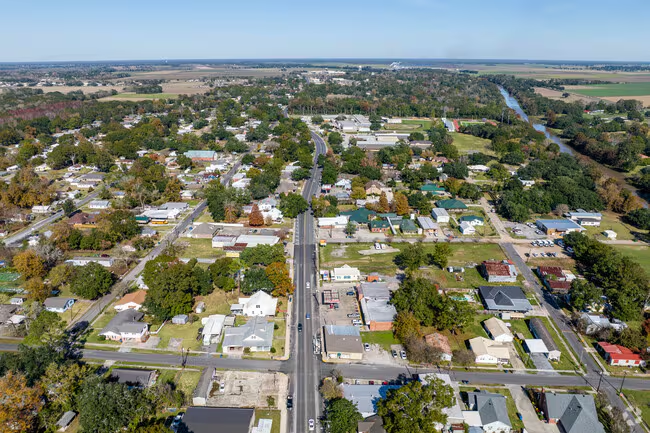
St. Martin Parish sits in a landscape shaped by water. The Atchafalaya Basin, Bayou Teche, and a high regional water table combine with heavy subtropical rainfall to keep moisture pressing against homes year-round.
Local Conditions That Trigger Damage
- Intense rainfall events that overwhelm yard drainage and low-lying driveways
- Backwater and rising water influenced by the Atchafalaya and surrounding bayou systems
- Tropical storms and hurricanes bringing wind-driven rain, roof breaches, and extended power loss
- Saturated clay soils that push groundwater toward slabs, crawl spaces, and below-grade rooms
- Septic systems and older municipal lines that surcharge when the ground is already full of water
- Electrical fires, kitchen fires, and lightning strikes during summer thunderstorm season
Warning Signs Worth Acting On
- Musty odor in closets, under cabinets, or near air returns
- Cupping or lifting wood flooring, and bubbling in vinyl plank seams
- Staining along baseboards, ceiling seams, or the bottom of drywall sheets
- Gurgling drains or a slow toilet, often the first hint of a sewage backup
- Persistent smoke odor that returns on humid days after a small fire
- Condensation on supply vents or unusually high indoor humidity
- Insulation sagging in a crawl space or attic
Any one of these signs points to moisture or residue that has already moved beyond what a household cleanup can reach. Documented inspection with moisture meters and thermal imaging shows the true boundary of the damage.
Neighborhoods We Serve in St. Martin Parish
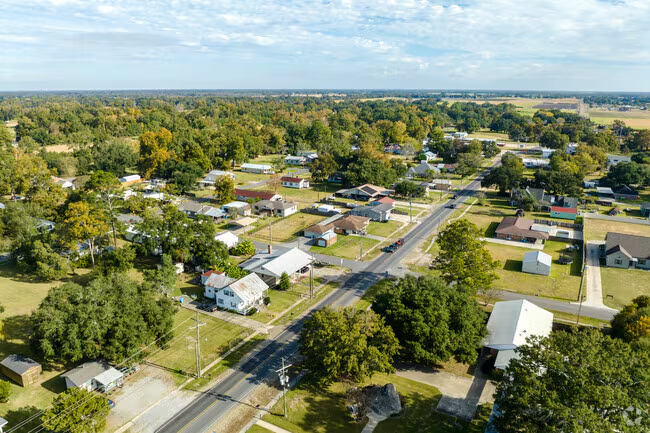
Coverage spans the parish's northern and southern halves, from Teche-side towns to rural properties along the basin.
- St. Martinville - historic downtown homes, Bayou Teche frontage, and surrounding residential streets
- Breaux Bridge - older cottages, newer subdivisions, and commercial corridors near I-10
- Parks and Cecilia - established neighborhoods and rural acreage on septic systems
- Henderson and Butte La Rose - camps, elevated homes, and properties directly exposed to Atchafalaya Basin water levels
- Arnaudville area - properties along the parish line near Bayou Fuselier
- Catahoula, Coteau Holmes, and Ruth - rural agricultural properties and outbuildings
Service also extends to adjacent communities in Iberia, Lafayette, and St. Landry parishes, including properties along the Louisiana Highway 31 and Highway 347 corridors.
Seasonal Damage Patterns in St. Martin Parish
Seasonal Damage Patterns in St. Martin Parish
Damage in this parish follows a predictable rhythm tied to rainfall, river stage, and temperature.
- January - February: Cold snaps bring burst and frozen pipes in uninsulated crawl spaces and exterior walls. Space heaters and fireplaces increase fire and smoke damage calls.
- March - April: Spring rain and rising Atchafalaya stages drive flooded basement, crawl space, and low-slab water intrusion. Sewage backups climb as saturated ground stresses septic fields.
- May - June: Warm, humid air paired with spring moisture produces the first heavy wave of mold growth behind walls and under flooring.
- July - August: Peak humidity, afternoon thunderstorms, and lightning strikes. Air conditioning condensate line clogs cause hidden ceiling and closet water damage.
- September - October: Hurricane and tropical system season. Roof breaches, wind-driven rain, storm surge influence, and extended outages that let mold take hold in unconditioned homes.
- November - December: Cooking fires, holiday lighting, and heating system startups increase fire and smoke restoration needs.
Mold removal, unlike the others, never truly leaves the calendar here - it simply accelerates whenever moisture and warmth line up.
Housing Characteristics & Restoration Considerations
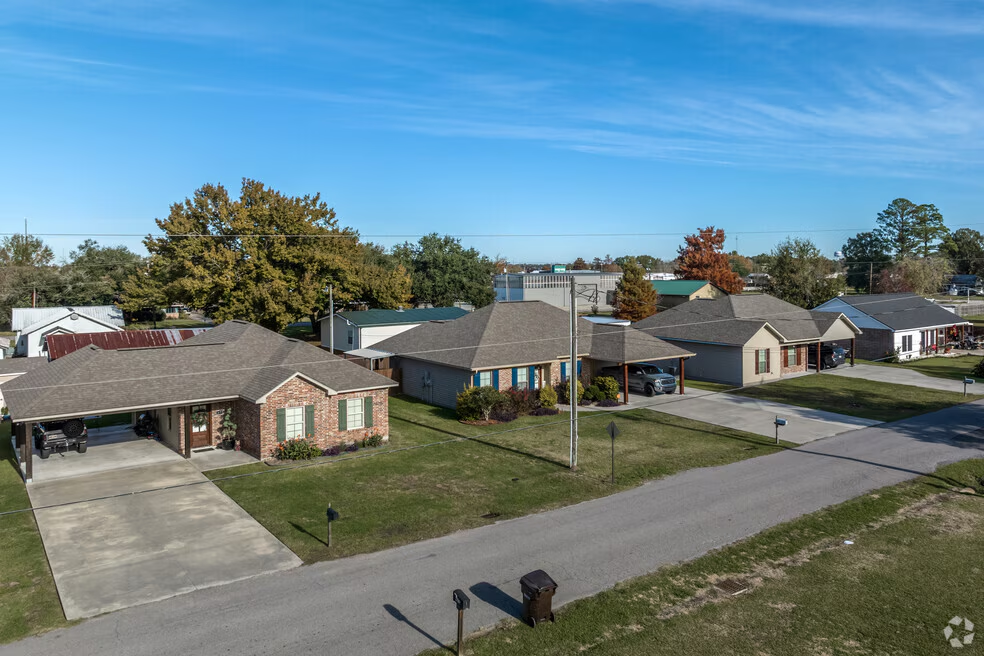
Housing stock in St. Martin Parish spans generations, and each construction era responds to water and fire differently.
Common Construction Types
- Historic Creole and Acadian-style homes in St. Martinville and Breaux Bridge with pier foundations, cypress framing, plaster walls, and original wood floors
- Mid-century ranch homes on slab with hardwood, sheet vinyl, and original single-pane windows
- 1980s - 2000s subdivision homes with slab foundations, carpet over pad, and vented attics
- Elevated camps and piling-built homes near Henderson and Butte La Rose
- Manufactured and modular housing on rural parcels with belly-board floor systems
How Construction Affects the Work
- Pier-and-beam homes hide water in crawl spaces where subfloor and joists absorb moisture before anyone notices upstairs
- Slab homes wick water laterally through carpet pad and into wall cavities, requiring wall base removal and cavity drying
- Plaster and lath in older homes holds moisture longer than modern drywall and needs slower, monitored drying
- Cypress and old-growth wood is often salvageable when dried promptly, which matters for historic properties
- Elevated camps flood at the substructure and utility level rather than the living floor, changing the extraction approach
- Manufactured home floor cavities trap water inside vapor barriers and usually require belly board opening
- Smoke travels through attic bypasses and duct runs, so fire and smoke work almost always includes HVAC cleaning
Environmental Conditions & Damage Implications
The environment around St. Martin Parish sets the terms for every restoration project here.
Climate and Air
- Humid subtropical climate with high dew points across most of the year
- Annual rainfall well above the national average, concentrated in spring and summer
- Long warm season that keeps indoor surfaces within the range mold spores prefer
- Abundant outdoor spore load from the basin, swamp cypress, and agricultural fields
Water and Soil
- Shallow water table that limits how quickly saturated ground can drain
- Heavy alluvial clay soils that swell, hold water, and direct it toward foundations
- Bayou and basin floodwater carrying silt, bacteria, agricultural runoff, and organic debris
- Rural septic systems that lose absorption capacity when the drain field is submerged
What This Means for Restoration
- Floodwater in this parish is treated as contaminated, which changes disposal, PPE, and antimicrobial protocols
- Dehumidification must be sized aggressively because outdoor air offers no drying assistance
- Drying targets are verified with meters rather than assumed from appearance
- Mold containment and negative air are standard practice, not optional add-ons
- Smoke odor rebounds in high humidity, so thermal fogging or hydroxyl treatment often follows surface cleaning
- Soil movement around slabs can reopen cracks, so drainage correction is discussed during the rebuild phase
Emergency Response Along the Atchafalaya Basin and Bayou Teche
Properties in Henderson, Butte La Rose, and along Bayou Teche live with water as a permanent neighbor. When a levee-side rain event, a backwater rise, or a hurricane band pushes water into a structure, the clock starts immediately.
Why Speed Changes the Outcome
- Contaminated water spreads bacteria across porous materials within the first hours
- Drywall wicks moisture vertically, expanding the demolition line by the foot
- Mold colonies can establish in warm, wet conditions faster than most homeowners expect
- Soot becomes acidic and permanently stains metal, tile grout, and appliance finishes
- Wet insulation loses R-value and sags, damaging ceilings from above
What Emergency Response Looks Like Here
- 24/7 dispatch - crews mobilize day or night, holidays included, across the parish and neighboring communities
- Safety and stabilization - power isolation, emergency board-up, roof tarping, and hazard assessment
- Inspection and documentation - moisture mapping, thermal imaging, and photo records for the insurance claim
- Extraction and removal - truck-mounted pumping, sewage material disposal, and controlled demolition of unsalvageable materials
- Drying and dehumidification - air movers and commercial dehumidifiers placed and monitored daily until readings hit target
- Cleaning and treatment - antimicrobial application, soot removal, content cleaning, duct cleaning, and odor neutralization
- Reconstruction - flooring, drywall, trim, paint, and finish work to return the property to pre-loss condition
What Property Owners Can Do First
- Shut off the water supply or breaker if it is safe to reach
- Keep everyone away from standing water that may be contaminated or energized
- Photograph conditions before moving anything
- Avoid running the HVAC system after a fire or a mold discovery
- Call for professional response before opening walls or attempting bleach treatment
IICRC-certified technicians follow recognized standards for water restoration, applied structural drying, and mold remediation, and coordinate directly with insurance carriers throughout the process.