Damage Restoration in St. Charles Parish, LA
- Damage Restoration Services Overview
- Common Damage Restoration Issues in St. Charles Parish, Louisiana
- Neighborhoods We Serve in St. Charles Parish
- Seasonal Damage Patterns in St. Charles Parish
- Housing Characteristics & Restoration Considerations
- Environmental Conditions & Damage Implications
- Hurricane Recovery and Start-to-Finish Restoration in St. Charles Parish
Damage Restoration Services Overview
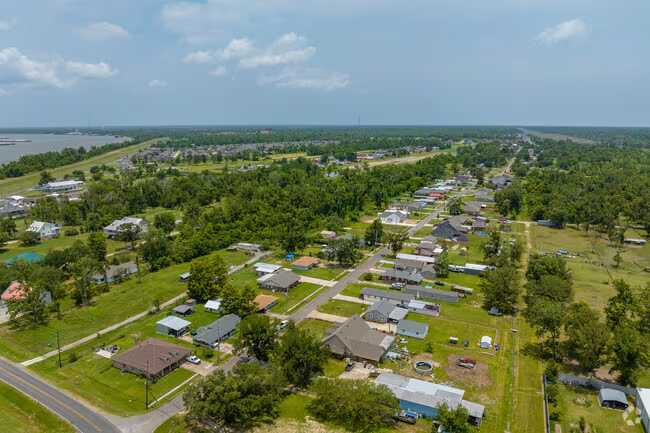
St. Charles Parish sits astride the Mississippi River at elevations ranging from roughly sea level to about +8 feet, with communities lining both the east and west banks. That geography - levees, pump systems, high water tables, and a subtropical climate - shapes nearly every restoration project here, from a slab-level flood in Luling to smoke residue drifting through a two-story home in Destrehan.
Restoration work in the parish covers a full range of property emergencies:
- Water Damage Restoration - extraction, structural drying, and moisture mapping after pipe breaks, appliance failures, roof leaks, and storm intrusion.
- Flooded Basement - pump-out and drying for below-grade areas, crawl spaces, sunken slabs, and elevated-home understories that trap standing water.
- Sewage Cleanup - safe removal of Category 3 contamination from backups, lift station overflows, and septic failures.
- Fire Damage Restoration - board-up, debris removal, structural cleaning, and rebuilding after kitchen, electrical, or lightning-related fires.
- Smoke Damage Restoration - soot removal, thermal fogging, HVAC decontamination, and odor neutralization.
- Mold Removal - containment, HEPA filtration, antimicrobial treatment, and material removal in Gulf Coast humidity.
Homeowners in Norco, Hahnville, Boutte, Ama, Paradis, and Des Allemands benefit from crews who understand parish drainage, elevated construction, and how quickly humid air turns a small leak into a mold problem.
Common Damage Restoration Issues in St. Charles Parish, Louisiana
Low elevation and heavy annual rainfall drive most property emergencies here. Hurricane Ida made that painfully clear - hundreds of homes were destroyed and much of the parish went without power for 21 days, leaving wet structures sitting in summer heat with no air conditioning.
Frequent Causes of Damage
- Tropical systems and squall lines pushing wind-driven rain past roof flashing, soffits, and window seals
- Pump station strain during heavy rainfall, backing water into yards and low-lying slabs
- Sanitary sewer surcharges that send wastewater into tubs, floor drains, and laundry rooms
- Slab plumbing failures in older pier-and-slab homes along River Road
- Generator misuse, candle fires, and overloaded circuits during extended outages
- Lightning strikes on tall trees and unprotected service panels
- Water heater and washing machine supply line ruptures
Warning Signs Worth Acting On
- Musty odor in closets, under stairs, or near exterior wall bases
- Cupping or darkening at the edges of wood and laminate flooring
- Persistent condensation on ductwork, registers, or interior windows
- Bubbling paint, chalky drywall seams, or soft baseboards
- Gurgling drains or slow toilets - often the first hint of a sewer issue
- Lingering smoke odor that returns when humidity rises, signaling soot still trapped in porous materials
- Visible growth behind furniture placed against exterior walls
Because ambient humidity rarely drops low enough to dry a structure passively, wet materials in St. Charles Parish need mechanical drying rather than open windows and fans.
Neighborhoods We Serve in St. Charles Parish
Coverage spans both river banks and the surrounding wetlands corridor:
- East Bank: Destrehan, Norco, St. Rose, New Sarpy, Montz, and the neighborhoods along Ormond Boulevard and River Road
- West Bank: Luling, Boutte, Hahnville, Ama, Paradis, Des Allemands, Killona, and Taft
- Industrial and commercial corridors: properties near the Hale Boggs Bridge, Airline Highway, US-90, and LA-52
- Surrounding areas: nearby portions of St. John the Baptist, Jefferson, and Lafourche parishes
Crews know how bridge closures, train crossings, and levee-road detours affect response routes - especially when a storm has both spans backed up. Whether the call comes from a subdivision in Ormond Estates, a raised camp near Bayou Des Allemands, or a business off Paul Maillard Road, the same rapid-response standards apply.
Seasonal Damage Patterns in St. Charles Parish
Spring (March - May)
- Severe thunderstorms, hail, and tornado-spawning squall lines
- Roof leaks and window intrusion after high wind events
- Mold growth accelerating as dew points climb
Summer (June - August)
- Peak humidity driving condensation and hidden growth in wall cavities
- Daily downpours overwhelming gutters and yard drainage
- AC drain pan overflows soaking ceilings and attic decking
- Early hurricane season activity
Fall (September - November)
- Highest tropical storm risk - flooding, wind damage, and prolonged outages
- Sewage backups following heavy rain and power loss at lift stations
- Generator-related fires and smoke damage during recovery periods
Winter (December - February)
- Hard freezes bursting exposed and uninsulated supply lines
- Space heater, fireplace, and holiday cooking fires
- Smoke odor concentrating in closed-up homes with limited ventilation
Housing Characteristics & Restoration Considerations
Housing stock across the parish ranges from mid-century River Road cottages to post-2000 subdivisions and elevated homes rebuilt after recent storms. Each construction style responds differently to water, fire, and mold.
Common Construction Types
- Slab-on-grade ranch homes: widespread in Luling, Boutte, and St. Rose - water spreads laterally under flooring and wicks up drywall fast
- Pier-and-beam and raised homes: common near bayous and in rebuilt areas - crawl spaces trap standing water and breed growth under floor systems
- Brick-veneer with wood framing: moisture can stay behind veneer long after interiors look dry
- Older cypress and shiplap construction: valuable materials that often can be dried and salvaged with careful methods
- Manufactured and modular homes: compressed-board flooring and vinyl-backed drywall rarely survive saturation
How This Affects Restoration
- Moisture mapping with thermal imaging and penetrating meters to find water beneath slabs and behind veneer
- Selective demolition - flood cuts, baseboard removal, and drilled weep holes - to reach trapped water without gutting more than needed
- Injection drying for hardwood, insulated cavities, and enclosed stairwells
- Crawl space encapsulation and vapor control to prevent recurring mold
- HVAC and duct assessment, since older systems distribute soot, spores, and odor parish-wide within a home
Homes with additions built over multiple decades often have mixed materials and hidden transitions where water pools unnoticed - a detail worth flagging during inspection.
Environmental Conditions & Damage Implications
The parish's environment works against drying almost year-round. Average relative humidity stays high, rainfall totals exceed 60 inches annually in many years, and soils are largely alluvial clay and organic wetland deposits that hold water rather than draining it.
Local Conditions That Shape Restoration Work
- High water table: groundwater sits close to the surface, so below-grade spaces and crawl spaces refill after pump-out unless drainage is addressed
- Expansive clay soils: shrink-swell cycles crack slabs and foundations, creating pathways for water and soil gas intrusion
- Subtropical humidity: mold colonies can establish within 24 to 48 hours on damp cellulose materials
- Industrial corridor air: refineries and plants along the river mean particulate and odor concerns are taken seriously during post-fire air scrubbing
- Brackish and river floodwater: storm surge and canal overflow carry silt, bacteria, and chemical residue, pushing cleanup into contaminated-water protocols
- Salt-laden air: accelerates corrosion on fasteners, HVAC coils, and electrical components after flooding
Practical Response Measures
- Treat storm and surge water as Category 3 until testing indicates otherwise
- Run LGR dehumidifiers sized to the actual cubic footage rather than relying on ventilation
- Apply EPA-registered antimicrobials to framing and subfloor after removal of unsalvageable materials
- Verify dryness with documented moisture readings before closing walls
- Address exterior grading, downspouts, and vapor barriers so the same area does not flood again
Hurricane Recovery and Start-to-Finish Restoration in St. Charles Parish
Storm recovery here rarely involves a single problem. Ida taught the parish that flooding, roof loss, sewage backup, power failure, and mold often stack on top of one another - and that a home left wet for three weeks without air conditioning needs far more than a water extraction visit. Effective restoration means one team managing the entire sequence, from the first tarp to the final coat of paint.
How a Complete Project Progresses
- Emergency contact and dispatch - 24/7 response to Destrehan, Ama, Norco, Luling, and surrounding communities
- Site safety assessment - electrical hazards, structural stability, contamination category, and air quality checks
- Stabilization - roof tarping, board-up, and standing water extraction with truck-mounted and portable units
- Contaminant removal - sewage cleanup, soot and char removal, and disposal of unsalvageable porous materials under containment
- Structural drying - air movers, LGR dehumidifiers, and daily documented moisture readings until targets are met
- Mold remediation - negative-pressure containment, HEPA filtration, antimicrobial application, and post-remediation verification
- Odor neutralization - hydroxyl or ozone treatment, thermal fogging, and full HVAC and duct cleaning
- Reconstruction - drywall, insulation, flooring, trim, cabinetry, and paint to return the property to pre-loss condition
What Sets Local Response Apart
- IICRC-certified technicians familiar with parish building practices and elevated construction
- Detailed photo and moisture documentation formatted for insurance adjusters
- Direct communication with carriers to reduce back-and-forth for homeowners
- Content pack-out and storage for salvageable furniture, documents, and keepsakes
- Prevention guidance - drainage corrections, backflow devices, and humidity control - so the next storm does less harm
Keeping mitigation and rebuild under one roof shortens the gap between demolition and restoration, which matters most when families are trying to get back into their homes.