
Damage Restoration in Minooka, IL
- Damage Restoration Services Overview
- Common Damage Restoration Issues in Minooka, Illinois
- Neighborhoods We Serve in Minooka
- Seasonal Damage Patterns in Minooka
- Seasonal Damage Patterns in Minooka
- Housing Characteristics & Restoration Considerations
- Environmental Conditions & Damage Implications
- Insurance Documentation and Clear Communication for Minooka Property Owners
Damage Restoration Services Overview
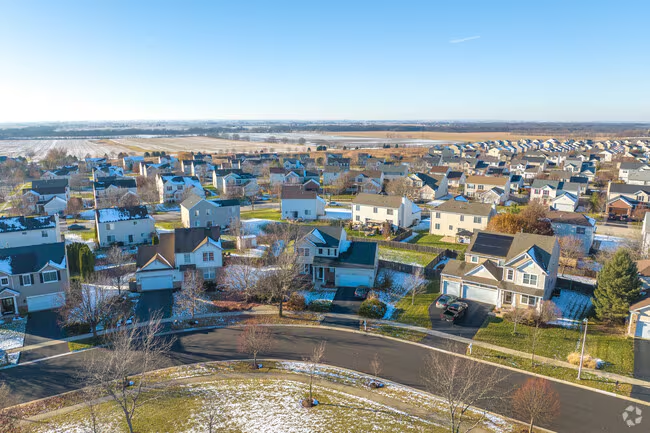
Minooka sits where Grundy, Will, and Kendall counties meet - a fast-growing village of newer subdivisions, older farmhouses, and light industrial property along the I-80 and Aux Sable Creek corridor. That mix creates restoration challenges that differ from block to block, from a finished basement in a 2005 subdivision to a century-old frame home near Mondamin Street.
Property owners here call on a full range of restoration work, including:
- Water Damage Restoration - extraction, structural drying, and moisture mapping after burst supply lines, appliance failures, and roof leaks
- Flooded Basement - pump-outs, sump failure response, and drying of finished lower levels, carpet pads, and drywall
- Sewage Cleanup - safe removal of contaminated water from backups, septic failures, and floor drain overflows
- Fire Damage Restoration - stabilization, debris removal, content pack-out, and reconstruction
- Smoke Damage Restoration - soot removal from surfaces, duct cleaning, and odor neutralization
- Mold Removal - containment, material removal, and correction of the moisture source feeding growth
The benefit of addressing these problems quickly is straightforward: faster drying limits secondary damage, reduces the amount of material that must be discarded, and shortens the time your household or tenants stay displaced. Documented moisture readings and clear scope notes also make insurance conversations far easier.
Common Damage Restoration Issues in Minooka, Illinois
Flat prairie ground, heavy clay soil, and intense summer thunderstorms combine to push water toward foundations rather than away from them. Add aging municipal and private sewer connections in the older sections of the village, and backups become a recurring problem.
Frequent causes of damage reported around Minooka:
- Sump pump failure or power loss during severe storms, leading to a flooded basement within hours
- Groundwater pressure through foundation cracks and cove joints after multi-inch rainfall events
- Sanitary sewer backups through floor drains and basement toilets during peak rain
- Frozen and burst pipes in unheated crawl spaces, garages, and slab-adjacent walls
- Water heater, washing machine, and refrigerator supply line failures
- Kitchen fires, chimney and wood stove fires, and electrical faults in older wiring
- Smoke and soot migration through HVAC returns into rooms untouched by flame
- Hidden mold behind finished basement walls, under vinyl plank flooring, and around window wells
Warning signs worth acting on immediately:
- A musty odor that strengthens when the furnace or air conditioner runs
- Efflorescence, chalky white staining, or bubbling paint along basement walls
- Floor drains that gurgle or drain slowly during rain
- Soft baseboards, cupping hardwood, or nail pops in ceilings below bathrooms
- Lingering smoke odor weeks after a small kitchen fire - a sign soot remains in ductwork and porous materials
Neighborhoods We Serve in Minooka
Restoration crews respond throughout the village and the surrounding rural and suburban stretches of three counties.
- Downtown Minooka and the older homes near Mondamin and Wabena Avenue
- Newer subdivisions south of Ridge Road and along Grand Ridge and Twin Oaks corridors
- Properties near Aux Sable Creek and the DuPage River tributaries
- Rural acreage and septic-served homes along Ridge, Brisbin, and Minooka Road
- Commercial and warehouse property near the I-80 interchange and Ridgeport corridor
Service also extends to neighboring communities including Morris, Channahon, Shorewood, Plainfield, Joliet, Oswego, Yorkville, Plano, Newark, Millbrook, Aurora, and Naperville, along with the broader Fox Valley from St. Charles and Geneva to Sugar Grove and North Aurora.
Seasonal Damage Patterns in Minooka
Seasonal Damage Patterns in Minooka
Damage calls in Grundy and Will County follow a predictable rhythm tied to Illinois weather.
- December - February: Frozen and burst pipes, ice dam leaks along north-facing eaves, and a spike in fire and smoke damage from furnaces, space heaters, fireplaces, and holiday cooking.
- March - April: Snowmelt over still-frozen clay soil saturates yards, producing seepage, sump overload, and the season's first wave of flooded basement calls.
- May - June: Severe thunderstorms and derecho-type wind events bring roof damage, power outages that idle sump pumps, and sewage backups when storm volume overwhelms drainage.
- July - August: High humidity turns small unresolved leaks into active mold growth, especially in basements and crawl spaces. Grilling and outbuilding fires increase.
- September - October: Heavy autumn rain, clogged gutters, and leaf-packed window wells redirect water into foundations.
- November: First hard freezes catch unwinterized hose bibs and irrigation lines, and heating systems restart with dust and soot pushed through ducts.
Scheduling gutter cleaning, sump testing, and dryer vent service ahead of each shift in season prevents a large share of these losses.
Housing Characteristics & Restoration Considerations
Minooka's housing stock splits roughly between pre-1970 homes clustered near the historic village core and a large volume of construction built from the late 1990s onward as the population expanded.
- Newer subdivision homes (1998 - present): Full basements, engineered lumber, drywall to the floor, and tightly sealed envelopes. They dry slower and trap humidity, so containment and dehumidification matter more than fans alone.
- Split-levels and ranches (1960s - 1980s): Lower-level living space at or below grade, often with original block foundations prone to cove seepage.
- Older farmhouses and village homes (pre-1950): Stone or block foundations, dirt or partial crawl spaces, plaster walls, balloon framing, and knob-and-tube remnants that let smoke and fire travel vertically inside wall cavities.
- Manufactured and modular homes: Limited cavity access and vinyl-backed insulation that traps moisture against the sheathing.
What this means for restoration work:
- Finished basements usually require flood cuts to remove saturated drywall and insulation rather than surface drying.
- Engineered flooring and MDF trim rarely survive Category 2 or 3 water and are removed to protect the subfloor.
- Plaster in older homes can often be dried and saved with targeted injection drying and careful monitoring.
- Homes on septic systems need the system evaluated before sewage cleanup is considered complete.
- Forced-air systems are inspected after any fire, since ductwork carries soot and odor into untouched rooms.
Environmental Conditions & Damage Implications
Minooka's environment shapes how quickly damage spreads and how long drying takes.
- Climate: Humid continental, with summer dew points regularly in the upper 60s and winter lows well below freezing. Both extremes stress building materials.
- Rainfall: Roughly 38 inches annually, often arriving in concentrated storm cells that dump one to three inches in a single afternoon.
- Soil: Dense glacial till and silty clay loam with slow percolation. Water perches against foundation walls instead of draining, raising hydrostatic pressure.
- Water table: Elevated near Aux Sable Creek and low-lying farmland, which keeps basement humidity high year-round.
- Groundwater hardness: Regional water is notably hard, contributing to scale buildup that shortens the life of water heaters and supply valves - a common leak source.
- Air quality: Agricultural dust, pollen, and I-80 corridor particulates load HVAC filters, and those loaded filters circulate mold spores and soot further once a loss occurs.
Practical implications: mold can colonize damp organic material within roughly 24 to 48 hours in a Minooka summer basement, so extraction and dehumidification start immediately. In winter, cold outdoor air holds little moisture, which helps drying but increases the risk of secondary freeze damage in rooms opened for restoration. Crews adjust equipment placement, containment, and air exchange based on measured indoor conditions rather than assumptions.
Insurance Documentation and Clear Communication for Minooka Property Owners
The most stressful part of a water, fire, or sewage loss is often not the damage itself - it is not knowing what is happening in your home or what your policy will actually cover. Detailed documentation and plain-language updates solve that.
What thorough documentation includes:
- Photo and video record of every affected room before any material is removed
- Moisture readings taken at marked locations and logged daily until dry standards are met
- Thermal imaging to show water migration behind walls and under flooring
- A written scope listing each item removed, dried, cleaned, or replaced
- Air sampling results and containment records for mold removal projects
- Category and classification notes for sewage cleanup, which insurers review closely
How the process typically unfolds:
- Emergency response - water extraction, board-up, tarping, or utility shutoff to stop ongoing loss
- Inspection and documentation shared directly with you and your adjuster
- Controlled demolition of unsalvageable materials with containment where contamination or mold is present
- Drying, cleaning, soot removal, deodorization, and antimicrobial application
- Daily monitoring with readings you can review
- Reconstruction - drywall, flooring, trim, paint, and cabinetry returned to pre-loss condition
Repair length depends on how much structural work is required. When no reconstruction is needed, drying and cleaning move quickly. When framing, subfloor, or wiring is affected, work is often phased so occupants return to safe portions of the property sooner. Ask for that phasing plan up front, and ask which items are being cleaned versus replaced - a reputable Minooka contractor will explain both without hesitation and coordinate directly with your carrier so you are not left translating restoration terminology on your own.





