
Damage Restoration in Taylorville, IL
- Damage Restoration Services Overview
- Common Damage Restoration Issues in Taylorville, Illinois
- Neighborhoods We Serve in Taylorville
- Seasonal Damage Patterns in Taylorville
- Housing Characteristics & Restoration Considerations
- Environmental Conditions & Damage Implications
- Storm Response and the Insurance Claim Process in Christian County
Damage Restoration Services Overview
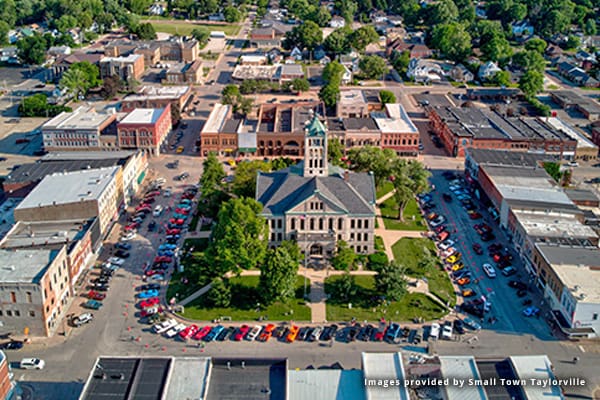
On December 1, 2018, an EF-3 tornado tore through Taylorville and left roughly 100 homes destroyed or severely damaged, with another 400 sustaining lesser damage in a single evening. That night reshaped how Christian County homeowners think about emergency response - and it proved that the difference between a repairable structure and a total loss often comes down to how fast water, smoke, and debris get handled.
Campbell Construction has been protecting Taylorville homes and businesses for over 25 years, and our restoration work covers the full range of property emergencies:
- Water Damage Restoration - burst supply lines, failed water heaters, roof leaks, and storm intrusion
- Flooded Basement cleanup - sump pump failures, hydrostatic seepage, and foundation wall infiltration
- Sewage Cleanup - sanitary backups, floor drain overflows, and Category 3 contamination
- Fire Damage Restoration - structural stabilization, debris removal, and rebuild coordination
- Smoke Damage Restoration - soot removal, odor neutralization, and HVAC decontamination
- Mold Removal - containment, remediation, and moisture-source correction
Benefits for Taylorville property owners include faster drying times, documented moisture readings for insurance, reduced secondary damage, and one accountable local crew from first extraction through final rebuild.
Common Damage Restoration Issues in Taylorville, Illinois
Taylorville and Christian County average more than 50 severe weather events per year - hail, straight-line winds, ice storms, and the occasional tornado. Each one creates a different restoration problem.
What Drives Damage Locally
- Wind and hail roof breaches - lifted shingles let rain reach decking, insulation, and ceilings for weeks before anyone notices
- Flat Central Illinois terrain - slow surface drainage pushes stormwater toward foundation walls and window wells
- Aging clay and cast-iron sewer laterals - root intrusion and heavy rain events trigger backups through basement floor drains
- Sump pump overload - spring downpours outrun undersized or aging pumps, especially during power outages
- Space heaters and aging wiring - a leading winter fire source in older Taylorville housing stock
- Grain dust, field burning, and rural brush fires - smoke odor infiltration even without direct flame damage
Warning Signs Worth Acting On
- Musty odor in basements, crawl spaces, or closets along exterior walls
- Ceiling stains that reappear after every heavy rain
- Efflorescence - white chalky residue - on block foundation walls
- Buckling hardwood, cupping laminate, or tack strips pulling loose from carpet edges
- Gurgling floor drains or slow tub drainage during storms
- Soot film on window glass, lampshades, or HVAC return grilles after a small kitchen or furnace fire
- Allergy symptoms that improve when occupants leave the house
Any of these signals moisture or contamination that is still active. Documentation and moisture mapping early in the process protects both the structure and the insurance claim.
Neighborhoods We Serve in Taylorville
Our crews know Taylorville's neighborhoods, housing stock, and local code requirements - not a franchise rep who drove in from out of state chasing storm work.
- Downtown Taylorville and the Courthouse Square district - older commercial buildings with shared walls and dated plumbing stacks
- North Taylorville - the corridor hardest hit by the 2018 tornado, with a mix of rebuilt and original homes
- West Side and Manners Park area - mature trees, established lots, and mid-century basements
- Lake Taylorville shoreline properties - seasonal cabins, walkout basements, and elevated humidity exposure
- South Taylorville and the Route 29 corridor
- Surrounding Christian County communities - Pana, Morrisonville, Kincaid, Edinburg, Stonington, Owaneco, Palmer, Assumption, and Tovey
- Nearby regional service - Springfield, Pawnee, Nokomis, and Hillsboro
Local dispatch matters when water is spreading. Being based in Central Illinois means shorter response windows and familiarity with each area's drainage quirks.
Seasonal Damage Patterns in Taylorville
- January - February: Frozen and burst supply lines in crawl spaces and unheated garages. Ice dams back meltwater under shingles into upper-floor ceilings. Furnace puff-backs and heating-related fires peak.
- March - April: Spring thaw plus saturated ground drives flooded basement calls. Sump pumps run continuously and fail. Sewer backups climb as combined runoff overwhelms lines.
- May - June: Peak severe storm and tornado season for Christian County. Hail and wind create roof breaches leading to water damage; lightning strikes cause structure fires.
- July - August: High heat and humidity turn small unaddressed leaks into active mold growth within days. Air conditioning condensate line clogs flood utility closets.
- September - October: Field burning and agricultural dust push smoke odor indoors. Fireplace and chimney reopening triggers first-use fires and smoke damage.
- November - December: Ice storms, downed limbs, and roof punctures. Holiday cooking fires and space heater incidents rise sharply.
Mold remediation demand trails every one of these events by two to six weeks - which is why drying verification matters more than surface appearance.
Housing Characteristics & Restoration Considerations
Taylorville's housing stock skews older than the Illinois average, with a large share of homes built between the 1900s and the 1970s. Construction era directly shapes how a restoration is scoped.
Common Local Construction Types
- Pre-1940 frame homes - balloon framing allows smoke and fire to travel vertically inside wall cavities, requiring cavity inspection rather than surface cleaning alone
- Concrete block and poured foundations - block walls wick moisture laterally and hold water in cores after basement flooding
- Mid-century ranches - plaster and lath walls that hold moisture longer than modern drywall and need controlled drying
- Post-2019 rebuilds - tighter envelopes from tornado reconstruction that trap humidity when ventilation fails
- Rural farmhouses and outbuildings - well systems, septic tanks, and crawl spaces with vapor barrier gaps
How Age Affects Each Service
- Older homes may contain asbestos in floor tile, pipe wrap, or plaster - testing precedes demolition
- Lead paint in pre-1978 homes changes containment protocol during fire and water demolition
- Cast-iron and clay sewer laterals raise the odds of Category 3 sewage backups
- Original knob-and-tube or aluminum branch wiring elevates fire risk and complicates rebuild
- Finished basements added over unsealed block walls are the single most common mold discovery site in Taylorville
- Multiple roof layers hide leak paths, delaying detection of active water intrusion
Environmental Conditions & Damage Implications
Central Illinois sits in a humid continental climate zone, and the local ground beneath Taylorville behaves in ways that directly affect basements and drying schedules.
Climate and Moisture Load
- Summer relative humidity frequently exceeds 70 percent, slowing evaporation and requiring commercial dehumidification rather than fans alone
- Annual precipitation in the 36-40 inch range, concentrated in spring storm bursts
- Freeze-thaw cycling that opens foundation cracks a little wider each winter
- Mold colonization can begin within 24 to 48 hours in unconditioned summer air
Soil and Water Conditions
- Heavy clay-rich prairie soils - poor percolation keeps stormwater sitting against foundation walls
- Expansive clay movement - seasonal shrink and swell stresses footings and creates seepage points
- Flat topography - limited natural runoff, making grading and downspout extension critical
- Hard, mineral-heavy water - scale buildup that shortens water heater and supply line life
- Proximity to Lake Taylorville and the South Fork Sangamon - elevated groundwater tables in nearby areas
Air Quality Factors
- Seasonal agricultural dust and pollen that combine with soot residue after a fire, making surfaces harder to clean
- Tight modern envelopes trapping smoke odor in insulation, ductwork, and soft goods
- Rural burn-off smoke drifting into HVAC intakes during fall
Storm Response and the Insurance Claim Process in Christian County
After a tornado, hail event, or ice storm, Taylorville homeowners face two problems at once: a damaged structure and a claim that has to be documented correctly. Handling both is where local experience pays off.
What Happens in the First 48 Hours
- Safety assessment - electrical, structural, and contamination hazards identified before anyone enters
- Emergency mitigation - board-up, roof tarping, and water extraction to stop the damage from spreading
- Moisture mapping - meters and thermal imaging locate hidden saturation behind walls and under flooring
- Photo and reading documentation - dated evidence your adjuster needs to approve scope
- Containment setup - negative air and barriers for sewage or suspected mold areas
- Drying and dehumidification - equipment placed and monitored daily until readings hit dry standard
Why Local Crews Handle Claims Better
- We work directly with Illinois adjusters and know what documentation gets approved without back-and-forth
- Our crews understand Taylorville code requirements and Christian County permitting
- We do not disappear after the check clears - we are here for the rebuild and any warranty follow-up
- Free inspections with no obligation, including hail damage that is invisible from ground level
- A+ BBB rating, accredited since 2000, with a 4.9 Google rating across 55+ verified reviews
Storm-chasing outfits roll into Central Illinois after every major event. Campbell Construction was already here - and will be here for the next one.
Get your free estimate - call (217) 271-1019.





