Damage Restoration in Walton County, GA
- Damage Restoration Services Overview
- Common Damage Restoration Issues in Walton County, Georgia
- Neighborhoods We Serve in Walton County
- Seasonal Damage Patterns in Walton County
- Housing Characteristics & Restoration Considerations
- Environmental Conditions & Damage Implications
- Category 3 Water and Septic Backups on Rural Walton County Properties
Damage Restoration Services Overview
What would you do if you walked into your Walton County home tonight and found two inches of water standing in the hallway? Property damage rarely announces itself in advance - a supply line lets go behind a washing machine, a septic line backs up into a crawl space, or a kitchen fire fills every room with smoke in minutes.
First In Restoration handles the full range of property damage across Walton County, GA, from the first emergency call through the final rebuild. Services include:
- Water Damage Restoration - extraction, structural drying and moisture mapping after burst pipes, appliance failures and ceiling leaks
- Flooded Basement cleanup - pump-out, dehumidification and treatment of finished and unfinished lower levels
- Sewage Cleanup - containment and disinfection of Category 3 contaminated water from septic and sewer backups
- Fire Damage Restoration - soot removal, structural cleaning and reconstruction of damaged framing and finishes
- Smoke Damage Restoration - odor neutralization, HVAC cleaning and content restoration
- Mold Removal - containment, controlled removal and correction of the moisture source feeding the growth
Homeowners, business owners and property managers in Loganville, Monroe, Social Circle and Walnut Grove benefit from local crews who understand county building stock, septic-served rural properties and Georgia's humid climate.
Common Damage Restoration Issues in Walton County, Georgia
Walton County sits in a humid subtropical zone with heavy clay soils, mature tree canopy and a mix of century-old homes and new subdivisions. That combination produces recognizable damage patterns.
Frequent Causes We Respond To
- Storm-driven water intrusion - wind-lifted shingles and clogged gutters push water into attics and wall cavities
- Basement and crawl space flooding - clay soil sheds water toward foundations rather than absorbing it
- Septic and sewer backups - saturated drain fields after prolonged rain force wastewater back into bathrooms and crawl spaces
- Well pump and pressure regulator failures - unchecked flow along Highway 11, Bold Springs Road and Etten Road properties
- Frozen and burst supply lines - uninsulated crawl space piping during January cold snaps
- Kitchen and electrical fires - older wiring in pre-1960 homes, plus space heater use in winter
Warning Signs Worth Acting On
- Musty odor in a closet, crawl space or lower level that never fully clears
- Discoloration or bubbling on plaster or drywall ceilings
- Buckling hardwood or lifting vinyl plank near appliances
- Slow drains throughout the house at the same time - often a septic issue, not a fixture issue
- Lingering smoke odor that returns when the HVAC system runs
- Unexplained increases in water usage with no visible leak
Early response limits how far moisture, soot residue and contamination travel through a structure.
Neighborhoods We Serve in Walton County
Crews cover the entire county, including its rural corridors and downtown districts:
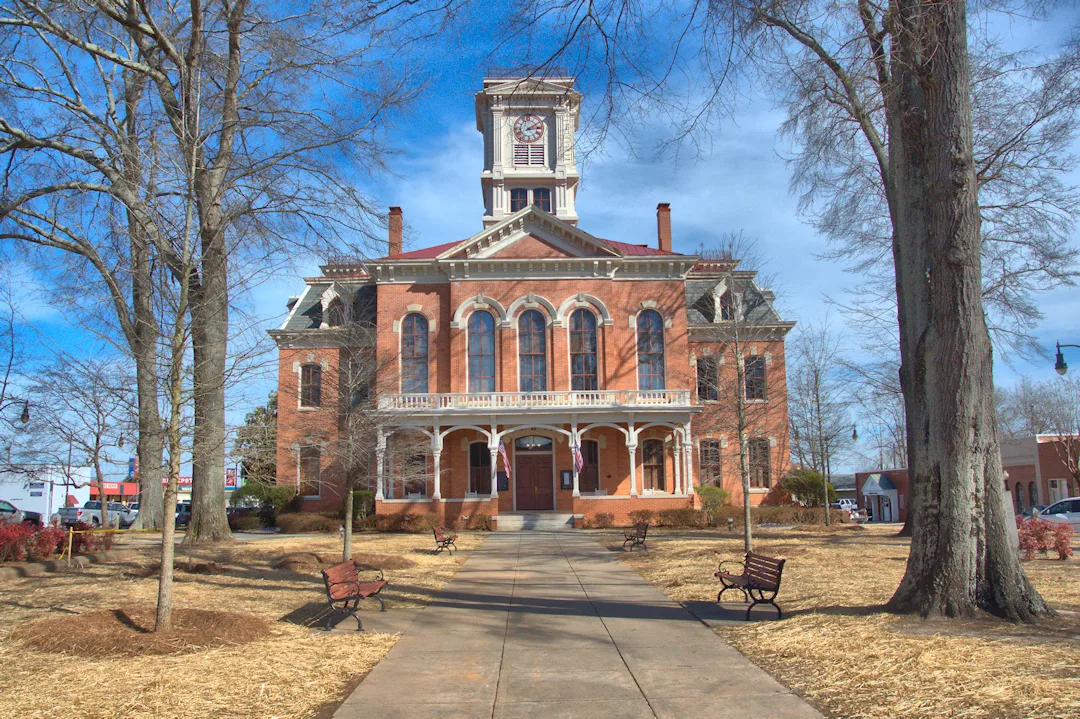
- Monroe - the courthouse square, historic district streets and surrounding residential neighborhoods
- Loganville - newer subdivisions and the Gwinnett County line corridor
- Social Circle - historic homes and the properties along the Newton County edge
- Walnut Grove - large-lot residential and septic-served properties
- Between Monroe and Social Circle - farmhouses and back-road properties on well water
- Highway 11, Bold Springs Road and Etten Road areas
- Jersey, Good Hope, Between and surrounding unincorporated communities
We also serve commercial clients around downtown Monroe's business district, where antique shops, restaurants and offices occupy older mixed-use buildings that require careful handling during water, smoke and mold work.
Seasonal Damage Patterns in Walton County
Winter (December - February)
- Burst pipes in crawl spaces and exterior walls during hard freezes
- Fire and smoke damage from heating equipment, fireplaces and space heaters
- Water damage discovered late in seasonal or vacant properties
Spring (March - May)
- Severe thunderstorms and tornado-season roof damage
- Flooded basements and crawl spaces from saturated clay soil
- Septic backups after multi-day rainfall events
Summer (June - August)
- Mold growth accelerated by high humidity and heavy air conditioning use
- Condensation damage around HVAC units, ductwork and drain pans
- Sudden downpour flooding at low-lying driveways and walkout basements
Fall (September - November)
- Tropical remnant rainfall moving inland across central Georgia
- Gutter clogs from leaf fall pushing water behind fascia and into soffits
- First-use furnace incidents producing smoke and soot residue
Mold remediation stays steady year-round in Walton County because indoor humidity rarely drops low enough to stop growth on its own.
Housing Characteristics & Restoration Considerations
Walton County housing spans well over a century of construction methods, and each type reacts differently to water, fire and mold.
Historic Monroe and Social Circle Homes
Many date from the early to mid-1900s. Restoration in these properties requires slower, more deliberate methods:
- Plaster walls wick moisture upward and hold it far longer than drywall
- Original hardwood and heart pine flooring cups quickly and needs controlled drying rather than rapid heat
- Knob-and-tube or early cloth-insulated wiring raises fire risk and demands caution during demolition
- Settled foundations create hidden low points where water collects out of sight
- Balloon framing lets smoke and soot travel between floors through open wall cavities
Mid-Century and 1980s-1990s Housing
- Vented crawl spaces that trap humidity and support mold on floor joists
- Original galvanized or early polybutylene plumbing prone to sudden failure
- Finished basements with paneling and carpet that hold water against framing
Newer Loganville and Monroe Subdivisions
- Tight building envelopes that hold moisture indoors once a leak begins
- Multi-level layouts where an upstairs supply line failure damages three floors
- Engineered flooring and OSB subfloor that delaminate rather than dry
Documentation, moisture readings and drying plans are matched to the construction type rather than applied uniformly.
Environmental Conditions & Damage Implications
Local climate and geology shape nearly every restoration project in the county.
Climate and Humidity
- Roughly 50 inches of annual rainfall, concentrated in spring and summer
- Summer dew points often in the 70s, meaning outdoor air cannot be used for drying
- Mold colonization can begin within 24 to 48 hours of water exposure
- Closed drying systems with dehumidification are standard rather than optional
Georgia Red Clay Soil
- Low permeability sends stormwater along foundation walls instead of downward
- Seasonal shrink-swell cycles open cracks in block and poured basement walls
- Saturated clay slows septic drain field recovery, increasing backup risk
Well Water and Septic Systems
Rural properties without municipal utilities face specific hazards. A septic backup delivers Category 3 water carrying bacteria and pathogens directly into crawl spaces and bathrooms - among the most hazardous scenarios we handle. Well pump failures can release water continuously with no city meter or shutoff to signal a problem.
Air Quality After Fire
- Pollen-heavy spring air plus post-fire soot compounds respiratory irritation
- Smoke particulate settles into ductwork, insulation and porous contents
- HVAC cleaning and air scrubbing with HEPA filtration are part of odor control
Category 3 Water and Septic Backups on Rural Walton County Properties
Sewage cleanup is the single most demanding job type on Walton County's septic-served properties, and it is far more common here than in fully sewered suburbs. When a drain field saturates or a line clogs, wastewater takes the path of least resistance - usually the lowest fixture in the home or an open crawl space.
Why Sewage Requires Different Handling
- Category 3 water carries bacteria, viruses and other pathogens
- Porous materials touched by contaminated water generally cannot be salvaged
- Crawl space soil absorbs contamination and requires treatment, not just extraction
- Airflow between crawl spaces and living areas can carry contaminants upward
Our Response Process
- Containment first - negative air pressure and physical barriers isolate the affected zone before any work begins
- Safe extraction - specialized equipment removes solids and contaminated water
- Controlled demolition - saturated drywall, insulation, carpet and pad are removed and bagged
- Cleaning and disinfection - hard surfaces, framing and subfloor are treated with antimicrobial products
- Structural drying - dehumidifiers and air movers bring materials back to documented dry standards
- Air quality work - HEPA filtration and duct evaluation address airborne contamination
- Reconstruction - insulation, vapor barrier, flooring and finishes are rebuilt
Standards We Work To
- IICRC S500 water damage and S520 mold remediation guidelines
- Moisture meter and thermal imaging documentation at every stage
- Full photo records and readings formatted for insurance carriers
- Personal protective equipment protocols appropriate to Category 3 exposure
Because our crews work regularly on well and septic properties between Monroe, Social Circle and Walnut Grove, we identify the source failure - not just the visible mess - so the same backup does not repeat next spring.