Damage Restoration in Jackson County, GA
- Damage Restoration Services Overview
- Common Damage Restoration Issues in Jackson County, Georgia
- Neighborhoods We Serve in Jackson County
- Seasonal Damage Patterns in Jackson County
- Housing Characteristics & Restoration Considerations
- Environmental Conditions & Damage Implications
- Emergency Response and the Restoration Process in Jackson County
Damage Restoration Services Overview
Damage spreads fast. Water wicks into drywall within hours, smoke residues bond to surfaces overnight, and mold colonies can take hold in a damp Jackson County basement in a matter of days. Acting quickly is the single biggest factor in how much of a property can be saved.
Restoration teams serving Jefferson, Commerce, Braselton and the surrounding communities handle a full range of property emergencies:
- Water Damage Restoration - extraction, structural drying and moisture mapping after pipe breaks, appliance failures and roof leaks
- Flooded Basement - pumping standing water, drying foundation walls and addressing drainage or sump pump failures
- Sewage Cleanup - removal of contaminated water and porous materials, followed by antimicrobial treatment
- Fire Damage Restoration - debris removal, structural cleaning, contents handling and rebuild coordination
- Smoke Damage Restoration - soot removal, odor neutralization and HVAC decontamination
- Mold Removal - containment, controlled removal of affected materials and correction of the moisture source
Benefits for local property owners include reduced secondary damage, documentation that supports insurance claims, IICRC-certified methods, and 24/7 availability with rapid response across the county - including nights, weekends and holidays.
Common Damage Restoration Issues in Jackson County, Georgia
Jackson County sits in Georgia's Piedmont, where clay soils, heavy thunderstorm rainfall and a mix of older farmhouses and newer subdivisions create predictable damage patterns.
Frequent Causes of Loss
- Burst or frozen supply lines during winter cold snaps, especially in crawl spaces and unheated garages
- Storm runoff overwhelming grading and downspouts, pushing water through basement walls in Braselton and Hoschton neighborhoods
- Failed sump pumps and clogged floor drains leading to flooded basements
- Sewer backups and septic system saturation after prolonged rain in rural areas outside city sewer service
- Kitchen fires, electrical faults and heating equipment fires that leave both fire and smoke damage
- Chronic humidity in crawl spaces producing mold growth on subfloors and joists
Warning Signs to Watch For
- Musty or earthy odors near HVAC returns, closets or basement stairwells
- Discolored drywall, bubbling paint or soft baseboards
- Efflorescence or white powdery residue on block foundation walls
- Cupping hardwood floors and doors that suddenly stick
- Lingering smoke smell that returns when the heat or air conditioning runs
- Slow drains, gurgling toilets or standing water near cleanouts - early signals of a sewage backup
Hidden damage is common. Technicians confirm suspicions with moisture meters, thermal imaging and surface testing before deciding how far remediation needs to extend.
Neighborhoods We Serve in Jackson County
Crews cover the entire county and neighboring communities, with response from a base in Jefferson at 217 Monte Ln.
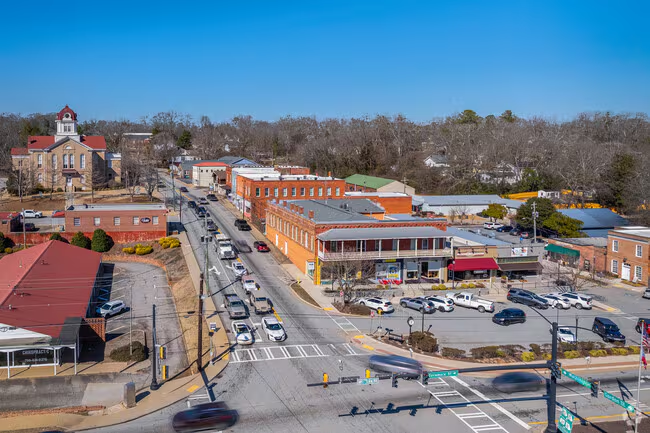
- Jefferson - the county seat, including downtown around the Jackson County Courthouse on Washington Street, Jefferson City Schools attendance areas, medical offices and industrial parks along Highway 129
- Commerce - older mill-era homes plus newer construction near the I-85 corridor
- Braselton and Hoschton - master-planned subdivisions, townhomes and golf communities
- Pendergrass, Talmo, Nicholson, Maysville and Arcade - rural properties, farmhouses and septic-served homes
- Statham and Bogart edges - shared service areas along the Barrow and Oconee lines
Work also extends into Athens, Gwinnett County and Barrow County for property managers with holdings across multiple jurisdictions.
Seasonal Damage Patterns in Jackson County
Each season brings its own call volume mix.
- December through February - frozen and burst pipes drive water damage restoration calls; heating equipment, fireplaces and space heaters raise fire and smoke damage risk
- March through May - spring thunderstorms and saturated clay soil produce flooded basements, crawl space intrusion and sewer backups
- June through August - high humidity and heavy afternoon storms make mold removal the dominant request; air conditioning condensate line clogs cause ceiling and closet water damage
- September through November - tropical remnants deliver sustained rainfall and roof leaks; leaf-clogged gutters and drains redirect water toward foundations, and the first furnace startup often releases dust and smoke odors
Year-Round Constants
- Appliance failures - water heaters, washing machines, dishwashers, refrigerator lines
- Septic and sewer issues in rural areas, worst after multi-day rain
- Hidden crawl space moisture feeding mold growth regardless of season
Housing Characteristics & Restoration Considerations
Jackson County housing spans well over a century of building practices, and each type responds differently to water, fire and mold.
Older Homes (pre-1970)
- Common in downtown Jefferson, Commerce and Maysville
- Plaster walls, wood lath and original hardwood require slower, controlled drying
- Cast iron or clay sewer laterals prone to root intrusion and backups
- Balloon framing allows smoke and soot to travel between floors and into attics
- Possible asbestos-containing materials and lead paint, which affect demolition methods
Mid-Century and 1980s-1990s Homes
- Vented crawl spaces with fiberglass insulation that holds moisture and hosts mold
- Partial or full basements with block walls that wick groundwater
- Aging polybutylene or galvanized supply lines that fail without warning
Newer Subdivisions (2000s to present)
- Concentrated around Braselton, Hoschton and the I-85 commuter corridor
- Tight building envelopes trap humidity, so drying requires managed dehumidification rather than open windows
- Multi-story layouts let a second-floor laundry leak affect three levels at once
- Finished basements with carpet, drywall and media rooms sustain high-value losses in a flood event
- Attached garages and shared attic spaces spread smoke damage rapidly
Manufactured homes and rural outbuildings are also common. Their sensitive floor decking and limited cavity access call for targeted extraction and specialized drying equipment.
Environmental Conditions & Damage Implications
Local soil, water and climate conditions shape nearly every restoration plan in the county.
Soil and Drainage
- Red Piedmont clay drains slowly, holding water against foundation walls after storms
- Clay expands when wet and shrinks when dry, stressing foundations and creating new seepage paths
- Rolling terrain channels runoff toward walkout basements and daylight crawl spaces
Climate and Humidity
- Humid subtropical summers keep outdoor dew points high for months, so mold growth needs only a small water source
- Winter freeze-thaw cycles crack exposed piping and hose bibs
- Severe thunderstorms, occasional tornadoes and tropical remnants bring wind-driven rain through roof and siding penetrations
Water and Air Considerations
- Septic systems serve much of rural Jackson County; saturated drain fields raise the odds of sewage backing into lower levels
- Municipal sewer surcharges during heavy rain can push contaminated water into basement fixtures
- Well water systems mean pump failures and pressure tank leaks are additional water loss sources
- Smoke particulate and mold spores circulate quickly through central HVAC systems, which is why ductwork is evaluated during fire, smoke and mold projects
Because of these conditions, containment barriers, negative air machines and HEPA filtration are standard on contaminated jobs to keep unaffected rooms clean.
Emergency Response and the Restoration Process in Jackson County
Proximity to Interstate 85 and Highway 129 allows crews to reach most of the county quickly, with dispatch available 24/7/365 - a meaningful advantage when a basement is filling or a sewage line has backed up overnight.
What Happens After You Call
- Emergency dispatch - a technician gathers details, advises on immediate safety steps such as shutting off water or power, and a crew heads out
- Assessment - visual inspection paired with moisture meters, thermal imaging and surface testing to map affected areas and contamination category
- Containment and safety - barriers, air scrubbers and protective equipment isolate the work zone, particularly for sewage and mold projects
- Water extraction or debris removal - truck-mounted extraction for flooding; controlled removal of charred and soot-covered materials after a fire
- Controlled demolition - only unsalvageable porous materials are removed, keeping intact finishes in place wherever possible
- Drying and cleaning - air movers and dehumidifiers with daily moisture readings, plus soot removal, deodorization and antimicrobial application as needed
- Verification and reconstruction - documented dry standards and post-remediation checks before drywall, flooring, paint and trim go back in
Working With Your Insurance
- Photo and moisture documentation from the first visit forward
- Detailed scope notes and drying logs adjusters can review
- Direct communication with carriers to reduce back-and-forth for the property owner
Who We Help
- Homeowners in Jefferson, Commerce, Braselton and rural county areas
- Property managers overseeing rentals and multi-family buildings
- Businesses along the Highway 129 industrial corridor, medical offices and schools
Call (678) 235-9436 for emergency service anywhere in Jackson County.