
Damage Restoration in Morgan City, LA
- Damage Restoration Services Overview
- Common Damage Restoration Issues in Morgan City, Louisiana
- Neighborhoods We Serve in Morgan City
- Seasonal Damage Patterns in Morgan City
- Housing Characteristics & Restoration Considerations
- Environmental Conditions & Damage Implications
- Category 3 Sewage Backups and Flood Water in Morgan City Homes
Damage Restoration Services Overview
When water pours through a ceiling or smoke settles into every room, the fastest path back to normal is a trained crew with the right equipment already on the truck. Professional restoration in Morgan City means the damage stops spreading within hours, not days - and that difference protects both your structure and your belongings.
Our restoration work covers the full range of losses that St. Mary Parish homeowners and business owners face:
- Water Damage Restoration - emergency extraction, structural drying, moisture mapping, and repairs after pipe breaks, appliance failures, and roof leaks
- Flooded Basement and below-grade cleanup - pump-outs, sanitation, and dehumidification for crawl spaces, sunken slabs, and lower levels
- Sewage Cleanup - Category 3 contaminated water removal, antimicrobial treatment, and safe disposal of porous materials
- Fire Damage Restoration - debris removal, soot cleanup, structural stabilization, and content recovery
- Smoke Damage Restoration - odor neutralization, HVAC cleaning, and surface treatment for lingering residue
- Mold Removal - containment, removal of affected materials, and correction of the moisture source feeding growth
The benefit for Morgan City residents is a single team from emergency response through final repairs. That start-to-finish approach keeps documentation consistent for insurance, prevents handoff delays, and returns the property to pre-loss condition without gaps in the process.
Common Damage Restoration Issues in Morgan City, Louisiana
Morgan City sits low along the Atchafalaya River, surrounded by levees and high groundwater - a setting that makes water intrusion the leading cause of property damage here. Add year-round humidity and mold becomes the follow-up problem whenever drying is delayed.
Frequent causes of loss
- Tropical storms and hurricane rainfall overwhelming drainage and pushing water into homes
- Sewer backups during heavy rain events, producing Category 3 contaminated water that requires full sanitation
- Burst or corroded supply lines in older plumbing, releasing large volumes quickly
- Ceiling leaks from wind-damaged roofing that soak insulation, drywall, and electrical components
- Sump pump failures and power outages that leave lower levels and crawl spaces standing in water
- Electrical fires and kitchen fires that leave soot and smoke residue throughout the structure
Warning signs worth acting on
- Musty or earthy odor that intensifies when the air conditioning runs
- Bubbling paint, warped baseboards, or soft spots in flooring
- Brown rings or sagging areas on ceilings after a storm
- Slow drains or gurgling fixtures that signal a developing sewer issue
- Persistent smoke smell weeks after a small fire, usually trapped in ductwork and soft goods
- Condensation on interior walls or visible growth behind furniture
Left alone, a minor leak in this climate can produce visible mold in a matter of days, turning a straightforward drying job into a containment and removal project.
Neighborhoods We Serve in Morgan City
Our crews respond throughout Morgan City and the surrounding St. Mary Parish communities, including:
- Downtown Morgan City and the historic Front Street district
- Lake End and neighborhoods near Lake Palourde
- Brashear and residential streets off Highway 182
- Siracusaville and Tiger Drive area homes
- Amelia and Bayou Vista
- Berwick and Patterson across the river
- Stephensville, Belle River, and surrounding Assumption Parish edges
- Franklin, Baldwin, and Charenton in western St. Mary Parish
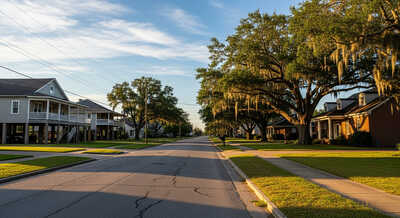
Familiarity with these areas matters. Homes near the lake and bayou frontage tend toward elevated pier construction with vulnerable crawl spaces, while downtown properties often have older masonry and slab foundations that hold moisture differently. We stage drying equipment and extraction gear based on what we expect to find in each part of the parish.
Seasonal Damage Patterns in Morgan City
Damage types shift predictably through the year in south Louisiana, and knowing the pattern helps homeowners prepare before the call becomes an emergency.
- January - February: Occasional hard freezes crack exposed pipes and hose bibs. Burst pipe cleanup and flooded lower levels spike after a thaw. Heating equipment and space heaters raise fire risk.
- March - May: Spring thunderstorms bring roof leaks, ceiling damage, and sewer backups when systems surcharge. Rising humidity starts the mold clock on any unaddressed moisture.
- June - August: Peak humidity and early hurricane season. Mold removal calls climb sharply, along with air conditioning condensate line overflows that soak ceilings and closets.
- September - October: Highest tropical storm activity. Flooding, storm dry-out, sewage contamination, and wind-driven rain intrusion dominate this window.
- November - December: Cooking and holiday lighting increase kitchen fire and smoke damage calls. Cooler air trapped against warm surfaces creates condensation problems in poorly ventilated spaces.
Mold remains a year-round concern here because indoor humidity rarely drops low enough for long enough to halt growth on its own.
Housing Characteristics & Restoration Considerations
Morgan City's housing stock skews older than the national average, with a large share of homes built between the 1940s and 1980s during the offshore oil boom. That age profile shapes nearly every restoration decision we make.
Common construction types
- Raised pier-and-beam homes - open crawl spaces that trap humid air, insulation that holds water after flooding, and floor joists prone to rot and mold
- Slab-on-grade ranch homes - moisture wicks laterally under flooring, requiring specialty mats and negative-pressure drying rather than surface fans alone
- Older masonry and brick downtown structures - porous materials that absorb both water and smoke residue deep into the substrate
- Mobile and manufactured housing - tight cavities and belly wrap that hold water invisibly after a plumbing loss
What this means for restoration
- Plaster and lath walls in older homes dry far more slowly than modern drywall and often need cavity drying access points
- Original wood flooring can frequently be saved with in-place drying if extraction starts quickly
- Homes predating the late 1970s may contain asbestos-bearing materials or lead paint, requiring careful testing before demolition
- Aging cast iron and galvanized plumbing raises the likelihood of sewage backups and sudden line failures
- Retrofitted ductwork spreads smoke odor and mold spores throughout the house, so HVAC cleaning is often part of the scope
Morgan City also enforces substantial improvement rules tied to flood damage, so documentation of the loss and repair scope matters for permitting on repeat-flood properties.
Environmental Conditions & Damage Implications
Few places in the country create harder drying conditions than coastal Louisiana. Morgan City averages high humidity nearly every month, sits near sea level, and rests on saturated alluvial soil - a combination that works against natural evaporation.
Local conditions that drive restoration strategy
- Relative humidity frequently above 75 percent, meaning outside air cannot be used to dry a structure - commercial dehumidifiers must create the drying gradient
- High water table across the Atchafalaya basin, which pushes moisture up through slabs and keeps crawl space soil damp
- Clay-heavy alluvial soil that drains slowly, holds surface water against foundations, and shifts with moisture cycles
- Warm temperatures year-round that accelerate microbial growth and bacterial multiplication in sewage losses
- Salt-laden coastal air that combines with soot residue after fires to corrode metal fixtures, wiring, and appliances
How we adapt
- Closed drying systems with high-capacity dehumidification rather than open-window ventilation
- Moisture meters and thermal imaging to confirm dryness inside wall cavities, not just at the surface
- Antimicrobial application on all Category 3 losses given the speed of bacterial growth in warm conditions
- Prompt soot removal after fires to limit corrosion before it becomes permanent
- Crawl space vapor barriers and drainage recommendations to stop repeat mold problems at the source
Category 3 Sewage Backups and Flood Water in Morgan City Homes
Sewage backups rank among the most serious losses we handle in Morgan City, and heavy rain is usually the trigger. When the system surcharges, contaminated water enters through floor drains, tubs, and lowest-level fixtures - carrying bacteria, viruses, and organic waste into flooring, drywall, and cabinetry. This is Category 3 water, and it cannot be treated like a clean supply-line leak.
Our sewage and flood water process
- Containment and safety setup - isolate the affected zone, establish negative air pressure, and shut down HVAC to stop cross-contamination
- Emergency extraction - pump out standing water and remove contaminated sludge and debris
- Controlled removal - discard porous materials that cannot be sanitized, including carpet, pad, affected drywall, and insulation
- Cleaning and sanitation - pressure wash and scrub structural surfaces, then apply EPA-registered antimicrobial treatment
- Structural drying - place air movers and dehumidifiers, monitor moisture readings daily until materials reach dry standard
- Clearance and rebuild - verify sanitation and dryness, then restore flooring, drywall, trim, and cabinetry
A recent Morgan City project followed exactly this path: a home with Category 3 backup received emergency extraction, full sanitation, structural drying, and complete restoration of the kitchen and flooring back to pre-loss condition.
Custom solutions we build into the scope
- Crawl space encapsulation and vapor barrier replacement where contaminated water reached the sub-structure
- Backflow prevention recommendations for homes with repeat backup history
- Duct cleaning when contaminated water or smoke reached the return system
- Mold prevention monitoring in the weeks following the loss, given local humidity
- Detailed photo and moisture documentation for insurance and parish permitting needs





