
Damage Restoration in Laplace, LA
- Damage Restoration Services Overview
- Common Damage Restoration Issues in Laplace, Louisiana
- Neighborhoods We Serve in Laplace
- Seasonal Damage Patterns in Laplace
- Housing Characteristics & Restoration Considerations
- Environmental Conditions & Damage Implications
- Storm Season Readiness and Modern Restoration Technology in Laplace
Damage Restoration Services Overview
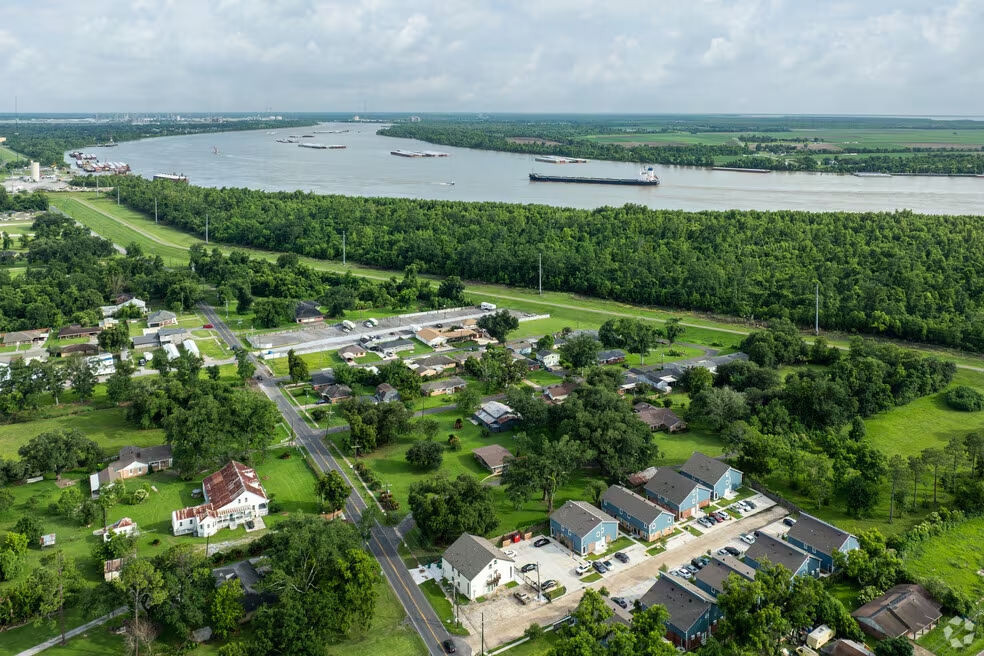
When water pushes through your door during a Gulf storm or smoke settles into every room after a kitchen fire, knowing that a trained restoration crew is on the way changes everything. Property owners in Laplace deal with conditions that few other places match - subtropical humidity, hurricane exposure, and a water table that sits uncomfortably close to the surface.
Professional restoration covers the full arc of recovery, from the first extraction hose to the final coat of paint. Services available to Laplace homes and businesses include:
- Water Damage Restoration - extraction, structural drying, moisture mapping, and repair of saturated materials
- Flooded Basement - pump-out of below-grade spaces, crawlspaces, and sunken utility rooms, followed by controlled drying
- Sewage Cleanup - removal of contaminated water, disinfection, and safe disposal of porous materials
- Fire Damage Restoration - debris removal, structural stabilization, soot cleaning, and rebuilding
- Smoke Damage Restoration - odor neutralization, HVAC cleaning, and treatment of walls, fabrics, and contents
- Mold Removal - containment, HEPA filtration, antimicrobial treatment, and correction of the moisture source
The benefit of moving quickly is measurable. Mold colonies can begin forming within 24 to 48 hours in Laplace humidity, soot turns acidic and etches surfaces within days, and sewage contamination spreads with every hour of delay. Fast, methodical work protects both the structure and the people inside it.
Common Damage Restoration Issues in Laplace, Louisiana
Laplace sits between Lake Pontchartrain and the Mississippi River in St. John the Baptist Parish, a location that brings water from several directions at once. Hurricane Isaac in 2012 flooded more than 7,000 area homes, and that event still shapes how residents think about storm preparation.
Local Causes of Damage
- Storm surge and rainfall flooding from tropical systems moving up from the Gulf
- Flash flooding when drainage canals and pump stations reach capacity during heavy downpours
- Plumbing failures in older supply lines, water heaters, and washing machine hoses
- Sewer backups when parish lines are overwhelmed by stormwater infiltration
- Roof damage from wind-driven rain, allowing slow attic and ceiling saturation
- Electrical fires tied to storm surges, generator misuse, and aging wiring
- Persistent condensation on ductwork and cool surfaces in high-humidity months
Warning Signs Worth Acting On
- Musty odors in closets, laundry rooms, or along exterior walls
- Buckling or cupping in laminate and hardwood flooring
- Tape seams lifting on drywall or paint bubbling near baseboards
- Dark staining on ceiling tiles or around window frames
- Gurgling drains or slow toilets, often an early signal of a sewer issue
- Lingering smoke odor that returns whenever the air conditioning runs
- Increased allergy symptoms among household members with no outdoor trigger
Small problems rarely stay small here. A pinhole leak behind a vanity can feed mold growth across an entire wall cavity in a matter of days when indoor humidity stays elevated.
Neighborhoods We Serve in Laplace
Restoration crews respond throughout Laplace and the surrounding St. John the Baptist Parish communities, including:
- Belle Terre and the neighborhoods surrounding Belle Terre Boulevard
- Cambridge, Woodland, and Riverlands subdivisions
- Areas along Airline Highway (US 61) and West Airline
- Neighborhoods bordering Lake Pontchartrain and the Bayou Steel corridor
- Central Laplace near Main Street and the Highway 51 corridor
- Nearby Reserve, Garyville, and Mount Airy
- Across the river in Edgard, Wallace, and Vacherie
- Neighboring LaBranche, Norco, and Destrehan in St. Charles Parish
Each pocket of the parish drains differently. Homes near the lakefront and the Interstate 10 corridor face different surge exposure than properties tucked behind the levee system, and crews adjust extraction and drying plans accordingly.
Seasonal Damage Patterns in Laplace
Restoration demand in Laplace follows a predictable rhythm shaped by Gulf weather.
- January - February: Occasional hard freezes crack exposed pipes and outdoor spigots. Space heaters and fireplaces drive a seasonal rise in fire and smoke damage calls.
- March - May: Spring thunderstorm season brings heavy rain bursts, roof leaks, flooded crawlspaces, and the first serious mold complaints as humidity climbs.
- June - August: Peak humidity and daily afternoon storms. Air conditioning condensate line clogs, attic sweating, and widespread mold growth dominate. Early tropical activity begins.
- August - October: The heart of hurricane season. Storm surge, sustained flooding, sewage backups, and power-related electrical fires cluster here. Generator-related fires spike after outages.
- November - December: Cooler air meets warm interiors, producing condensation problems. Holiday cooking, candles, and decorative lighting raise kitchen fire and smoke damage frequency.
Mold never truly takes a season off in Laplace. Any month with unaddressed moisture can produce growth, which is why drying verification matters year-round.
Housing Characteristics & Restoration Considerations
Laplace grew quickly through the 1960s, 70s, and 80s as families moved out from the New Orleans metro, and much of the housing stock reflects that era. Slab-on-grade construction dominates, with a mix of brick veneer, vinyl siding, and wood frame homes.
How Local Construction Shapes Restoration Work
- Slab foundations: Water spreads laterally across slabs and wicks up drywall. Flooring often has to be removed to dry the substrate properly.
- Limited true basements: Below-grade flooding usually means crawlspaces, sunken dens, garages, or utility pits - all of which trap standing water and require dedicated pumping.
- Raised and pier homes: Older elevated houses have vented underfloor areas where humid air condenses on subflooring and insulation, feeding mold.
- Aging galvanized and polybutylene plumbing: A common source of sudden supply-line failures in mid-century homes.
- Post-Isaac elevations and additions: Many properties were raised or remodeled after 2012, creating transition points between old and new materials that dry at different rates.
- Attic ductwork: Smoke and soot travel through HVAC systems quickly, so fire cleanup nearly always includes duct decontamination.
- Dense insulation and vapor barriers: Modern tighter envelopes hold moisture longer once water gets behind them.
Restoration plans account for these details before equipment is ever placed. Moisture meters and thermal imaging reveal where water has traveled inside wall cavities, under cabinets, and beneath flooring, so drying targets the actual saturated materials rather than just the visible surface.
Environmental Conditions & Damage Implications
The environment around Laplace works against fast drying and in favor of microbial growth. Understanding those conditions shapes every restoration decision.
- Humidity: Relative humidity frequently sits above 75 percent, slowing evaporation and extending equipment runtime. Dehumidification, not just airflow, does the heavy lifting.
- Soil composition: Alluvial clay and silt soils hold water, drain slowly, and shift with moisture changes - contributing to slab cracks and foundation seepage.
- High water table: Groundwater sits close to the surface, keeping crawlspaces damp and making below-grade spaces prone to hydrostatic pressure intrusion.
- Storm surge exposure: Proximity to Lake Pontchartrain and the Gulf means floodwater often carries silt, bacteria, and sewage, pushing cleanup into a contaminated-water category.
- Warm temperatures: Extended heat accelerates mold, bacterial growth, and odor development in wet materials.
- Industrial corridor air: The River Parishes industrial belt adds particulates that combine with post-fire soot, complicating surface cleaning and air scrubbing.
These factors explain why drying timelines here run longer than national averages. Simple pipe leaks typically need three to five days of drying, storm flooding can require one to two weeks, and full restoration with reconstruction often spans several weeks. Daily moisture readings confirm progress rather than guessing when equipment can come down.
Storm Season Readiness and Modern Restoration Technology in Laplace
Living in St. John the Baptist Parish means treating hurricane season as a planning event rather than a surprise. The 2012 Isaac flooding demonstrated how fast thousands of homes can be affected simultaneously, and how much difference preparation makes in the recovery that follows.
Steps to Take Before the Next Storm
- Photograph each room, including inside closets and cabinets, and store images in cloud storage.
- Locate and label your main water shutoff, breaker panel, and gas valve.
- Move irreplaceable documents and electronics off floor level and into sealed containers.
- Clear gutters, downspouts, and nearby drainage ditches ahead of forecasted rain.
- Service the sump pump and backup battery if your property has one.
- Confirm what your policy covers for flood, sewer backup, and mold - these are often separate.
- Save a restoration contact number before you need it, so the call takes seconds.
Equipment and Methods Used on Local Jobs
- Truck-mounted and submersible pumps for rapid removal of standing water from flooded rooms and crawlspaces
- Low-grain refrigerant dehumidifiers engineered to pull moisture in high-humidity Louisiana conditions
- Thermal imaging cameras and penetrating moisture meters to trace hidden water behind walls and under flooring
- Injectidry and cavity drying systems that dry wall assemblies and hardwood without full demolition
- HEPA air scrubbers and negative air machines for mold containment and post-fire particulate control
- Hydroxyl and ozone treatment for stubborn smoke odor in structures and contents
- Hospital-grade antimicrobials and EPA-registered disinfectants for sewage and Category 3 water losses
- Ultrasonic cleaning for restoring soot-covered belongings, hardware, and fixtures
Documentation runs alongside the physical work. Daily moisture logs, photo records, and drying charts give insurers a clear picture of the loss and support a smoother claim for Laplace property owners.





