
Damage Restoration in Muskegon, MI
- Damage Restoration Services Overview
- Common Damage Restoration Issues in Muskegon, Michigan
- Neighborhoods We Serve in Muskegon
- Seasonal Damage Patterns in Muskegon
- Housing Characteristics & Restoration Considerations
- Environmental Conditions & Damage Implications
- Protecting Muskegon Basements from Groundwater, Backups, and Mold
Damage Restoration Services Overview
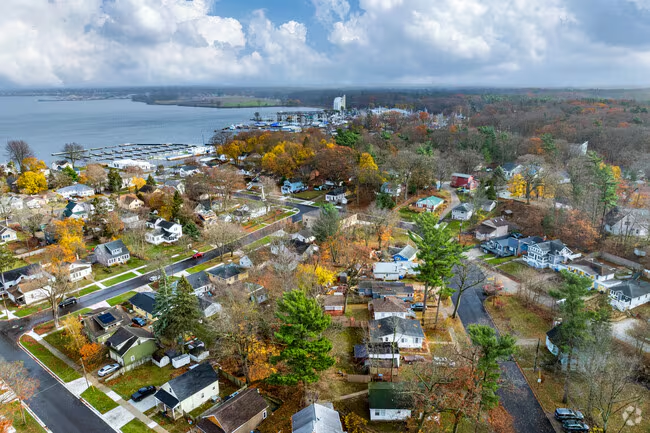
When water pours across a basement floor or smoke settles into every room, knowing a trained restoration crew is on the way changes everything. Professional restoration protects the structure of your Muskegon property, the belongings inside it, and the health of everyone who lives or works there.
Property owners along the West Michigan lakeshore face a mix of lake-effect moisture, aging plumbing, and severe storm activity. A full-service restoration team handles each of those outcomes with the right equipment and documented procedures.
- Water Damage Restoration - extraction, structural drying, dehumidification, and rebuild after burst pipes, appliance failures, roof leaks, or storm intrusion.
- Flooded Basement Service - pump-out, sump and drain assessment, content removal, and moisture mapping below grade.
- Sewage Cleanup - containment, waste removal, disinfection, and disposal of porous materials contaminated by Category 3 water.
- Fire Damage Restoration - emergency board-up, roof tarping, debris removal, structural cleaning, and reconstruction.
- Smoke Damage Restoration - soot removal from surfaces and HVAC systems, odor neutralization, and air scrubbing.
- Mold Removal - containment barriers, HEPA filtration, affected material removal, and moisture-source correction.
Key benefits for Muskegon residents include faster drying times, reduced secondary damage, cleaner indoor air, and thorough documentation that supports insurance claims.
Common Damage Restoration Issues in Muskegon, Michigan
Muskegon sits on the eastern shore of Lake Michigan, and the lake shapes nearly every damage pattern local crews respond to. Lake-effect snow, wind-driven rain, and elevated humidity all push moisture into buildings that were never sealed against it.
Severe weather compounds the problem. The June 2024 thunderstorm line that crossed Western Lower Michigan brought winds of 70 mph or more, downing trees and power lines across Muskegon County and Whitehall - and leaving behind punctured roofs, broken windows, and saturated interiors.
Frequent Causes of Damage
- Rapid spring snowmelt combined with saturated ground, sending water through foundation walls
- Sump pump failure during power outages caused by high-wind events
- Sanitary sewer backups when heavy rain overwhelms older municipal lines
- Burst supply lines in unheated crawl spaces and vacation properties during deep freezes
- Space heater, wood stove, and chimney fires during long lakeshore winters
- Persistent summer humidity feeding mold growth in basements and attics
Warning Signs Worth Acting On
- Efflorescence, chalky white staining, or dark tide lines on block foundation walls
- Musty odor that intensifies after rainfall or when the furnace runs
- Buckled laminate, cupping hardwood, or soft spots in subfloor near exterior walls
- Gurgling floor drains or slow-draining fixtures on the lowest level
- Yellow-brown soot ghosting above baseboards, outlets, and door frames
- Recurring allergy or asthma symptoms that ease when occupants leave the building
Neighborhoods We Serve in Muskegon
Restoration response covers the city of Muskegon and the surrounding lakeshore communities, including older urban districts and newer suburban subdivisions.
- City neighborhoods: Nelson, Jackson Hill, McLaughlin, Angell, Marsh Field, Glenside, Beachwood-Bluffton, and Lakeside
- Adjacent cities and townships: Muskegon Heights, North Muskegon, Norton Shores, Roosevelt Park, Fruitport, and Muskegon Township
- Northern lakeshore: Whitehall, Montague, Twin Lake, and the White Lake corridor
- Surrounding counties: Oceana, Newaygo, and Ottawa
Each area brings different challenges. Bluffton and Lakeside properties near the channel deal with high water tables and wind-driven rain, while Muskegon Heights and Nelson feature century-old homes with knob-and-tube remnants and stone foundations. Norton Shores and Fruitport subdivisions more often see finished-basement flooding and sump failures.
Seasonal Damage Patterns in Muskegon
Damage calls follow a predictable rhythm along the lakeshore. Knowing the pattern helps property owners prepare before the phone call becomes necessary.
- December through February: Frozen and burst pipes, ice damming from lake-effect snow, chimney and heating-equipment fires, and smoke damage from furnace puffbacks.
- March and April: Peak flooded basement season as snowmelt meets frozen ground, plus sump pump overload and foundation seepage.
- May and June: Severe thunderstorm and straight-line wind season - roof damage, emergency board-ups, and wind-driven rain intrusion.
- July and August: High humidity drives mold growth in basements, crawl spaces, and attics; heavy downpours trigger sewer backups.
- September and October: Clogged gutters and falling leaves push water toward foundations; first furnace startups reveal soot and combustion issues.
- November: Gale-force lakeshore winds, early freeze events, and unwinterized outdoor plumbing failures.
Sewage cleanup requests spike whenever intense rainfall follows an already-saturated period, most often in spring and late summer.
Housing Characteristics & Restoration Considerations
Muskegon's housing stock skews older than the Michigan average, with large concentrations of homes built between the 1890s and the 1960s during the lumber and foundry eras. Newer construction clusters in Norton Shores, Fruitport, and outlying township developments.
Common Construction Types
- Pre-1940 wood-frame homes with plaster-and-lath walls and fieldstone or brick foundations
- Post-war ranches and bungalows with poured concrete or block basements
- Mid-century split-levels with partially finished lower levels
- Lakeshore cottages and seasonal properties on crawl spaces or piers
- Modern subdivisions with engineered lumber, drywall, and egress-window basements
How Age and Materials Affect Restoration
- Plaster and lath hold water far longer than drywall, requiring extended drying and often injection-style airflow behind walls.
- Stone and block foundations wick groundwater, making flooded basement work a moisture-control project rather than a simple pump-out.
- Cast iron and clay sewer laterals in older neighborhoods crack and root-intrude, raising sewage backup risk.
- Balloon framing in pre-1930 homes lets smoke and fire travel vertically inside wall cavities, so smoke damage often extends beyond the visible burn area.
- Blown-in and batt insulation traps moisture and must be removed rather than dried during mold remediation.
- Finished basements in newer homes involve carpet pad, drywall bottom plates, and cabinetry that frequently require controlled demolition.
Restoration plans are built around what a specific structure is made of, not a one-size template.
Environmental Conditions & Damage Implications
Proximity to Lake Michigan gives Muskegon a moderated but moisture-heavy climate. That single factor drives most restoration outcomes in the area.
Climate and Moisture
- Lake-effect snowfall well above the statewide average, loading roofs and creating ice dams
- Summer dew points that keep basement relative humidity high without mechanical dehumidification
- Strong onshore winds that drive rain horizontally into siding, window frames, and soffits
- Freeze-thaw cycling that opens cracks in foundations, masonry, and driveways
Soil and Groundwater
- Sandy dune and glacial outwash soils that drain quickly but shift and settle around foundations
- Pockets of clay and hardpan in inland townships that trap water against basement walls
- Shallow water tables near Muskegon Lake, Mona Lake, and the channel, keeping hydrostatic pressure constant
- Seasonal high groundwater that overwhelms sump systems during spring melt
Air Quality and Indoor Health
- Elevated humidity supports mold colonization within a short window after water intrusion
- Industrial-legacy dust and older building materials require careful handling during fire and smoke cleanup
- Soot particles bind to cool surfaces and recirculate through ductwork until the system is cleaned
- Sewage-contaminated water introduces bacteria and endotoxins that demand antimicrobial treatment and HEPA air scrubbing
Controlling humidity and groundwater is the foundation of durable restoration work in this region.
Protecting Muskegon Basements from Groundwater, Backups, and Mold
The basement is where most Muskegon restoration projects begin. Between spring melt, lakeshore groundwater, and aging sewer laterals, lower levels absorb the brunt of the damage.
How a Basement Project Typically Progresses
- Safety and source control - power isolation, water category identification, and stopping the intrusion at its origin.
- Extraction - submersible pumps and truck-mounted units clear standing water quickly.
- Content handling - salvageable items are moved and inventoried; contaminated porous goods are documented for disposal.
- Controlled demolition - wet drywall, insulation, carpet pad, and damaged cabinetry are removed to expose framing.
- Sanitizing - antimicrobial application after any sewage or Category 3 event, with containment to protect the rest of the home.
- Structural drying - air movers, low-grain refrigerant dehumidifiers, and daily moisture readings tracked to dry standard.
- Reconstruction - framing, insulation, drywall, flooring, and finish work to return the space to use.
Custom Solutions for Recurring Problems
- Sump pit evaluation with backup power recommendations for storm-related outages
- Backwater valve discussion for homes on older clay or cast iron laterals
- Exterior grading and downspout redirection to move water away from block walls
- Crawl space encapsulation for lakeshore cottages with persistent ground moisture
- Dedicated dehumidification sizing for finished lower levels prone to summer condensation
- Moisture-resistant materials specified during rebuild in flood-prone locations
What to Do Before Help Arrives
- Keep people and pets out of standing water, especially where sewage is suspected
- Shut off the water supply or main breaker if it can be reached safely
- Photograph conditions and damaged contents for the insurance file
- Avoid running HVAC if smoke, soot, or mold spores may be circulating
Every Muskegon property has its own combination of soil, elevation, foundation type, and plumbing age - and the restoration plan should reflect that.





