Damage Restoration in McKinley County, NM
- Damage Restoration Services Overview
- Common Damage Restoration Issues in McKinley County, New Mexico
- Neighborhoods We Serve in McKinley County
- Seasonal Damage Patterns in McKinley County
- Housing Characteristics & Restoration Considerations
- Environmental Conditions & Damage Implications
- Rural Septic Backups and Well Water Contamination in McKinley County
Damage Restoration Services Overview
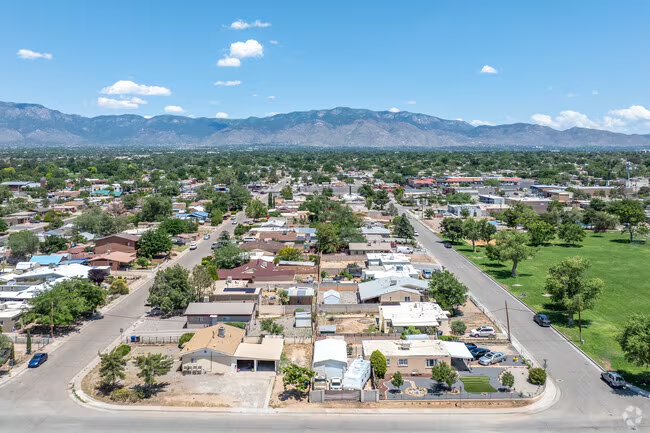
You come home to your Gallup ranch house after a July monsoon cell parks over the neighborhood, and the crawl space smells like a pond. Or a supply line lets go behind the washer while you're at work in Church Rock. Either way, the clock starts immediately - water spreads through subfloors and drywall within hours, and microbial growth follows within days.
Property damage in McKinley County rarely arrives politely. Restoration work here covers a full spectrum of emergencies, and each one demands different equipment, containment, and drying strategy.
- Water Damage Restoration - extraction, structural drying, moisture mapping, and repair after pipe breaks, roof leaks, and appliance failures
- Flooded Basement - pumping standing water, drying foundation walls, and addressing the drainage issue that let water in
- Sewage Cleanup - contaminated water removal, disinfection, and safe disposal of porous materials after septic or main line backups
- Fire Damage Restoration - debris removal, structural stabilization, and rebuilding from framing through finishes
- Smoke Damage Restoration - soot removal, thermal fogging, HVAC cleaning, and odor neutralization
- Mold Removal - containment, HEPA filtration, affected material removal, and moisture source correction
The benefit of one team handling assessment, mitigation, and reconstruction is simple: fewer handoffs, less waiting, and a single point of accountability from the first phone call to the final walkthrough.
Common Damage Restoration Issues in McKinley County, New Mexico
High desert conditions create a specific damage profile. Long dry stretches lull property owners into thinking water is not a threat - then the monsoon arrives and arroyos run within minutes.
Local Causes of Property Damage
- Monsoon runoff - hard-baked soil around Gallup and Thoreau sheds water rather than absorbing it, pushing sheet flow toward foundations, window wells, and basement stairwells
- Frozen and burst pipes - elevations above 6,000 feet bring hard freezes, and uninsulated lines in crawl spaces or exterior walls split during cold snaps
- Septic and leach field failures - rural properties outside city sewer service face backups when saturated soil prevents drainage
- Wildfire and wood smoke - grass and juniper fires plus heavy winter wood-stove use drive soot infiltration and lingering odor
- Roof and flashing failures - flat and low-slope roofs common on older homes pond water and leak at parapets
- Hail and wind - spring storms strip shingles and crack stucco, opening paths for moisture
Warning Signs Worth Acting On
- Bubbling or peeling paint on stucco interiors and drywall seams
- A musty smell that intensifies when the swamp cooler runs
- Staining along the base of exterior walls or at the bottom of basement stairs
- Slow drains or gurgling fixtures - often the first hint of a sewer or septic problem
- Soot film on window glass, light switches, or the tops of door casings after a fire
- Unexplained increases in water usage with no visible leak
Neighborhoods We Serve in McKinley County
Coverage spans the county's population centers and the outlying communities where response time matters most.
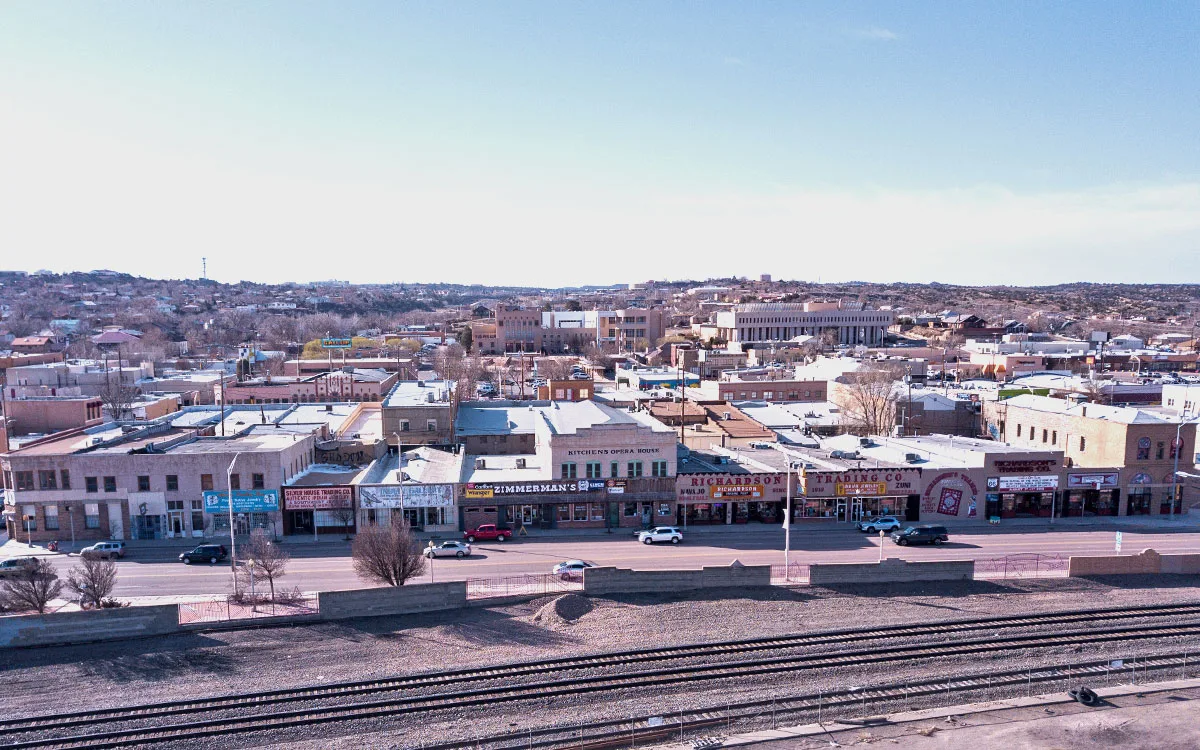
- Gallup - including Indian Hills, Mentmore Road corridor, downtown historic district, and neighborhoods along Nizhoni Boulevard and East Highway 66
- Church Rock and Fort Wingate - residential and tribal housing near the Highway 566 corridor
- Thoreau, Prewitt, and Bluewater areas - along the I-40 corridor east of Gallup
- Tohatchi, Naschitti, and Twin Lakes - communities north along Highway 491
- Zuni Pueblo and Black Rock - southwestern McKinley County
- Yah-Ta-Hey, Mexican Springs, Crownpoint, and Pinedale
- Ramah, Vanderwagen, and surrounding rural parcels
Properties on unpaved county roads and remote parcels are served with equipment configured for limited access and off-grid power situations.
Seasonal Damage Patterns in McKinley County
Winter (December - February)
- Burst pipes in crawl spaces, garages, and exterior walls during overnight lows well below freezing
- Fire and smoke damage from wood stoves, kerosene heaters, and creosote-lined chimneys
- Ice damming on north-facing roof slopes
Spring (March - May)
- Wind-driven rain and hail exploiting cracked stucco and lifted shingles
- Snowmelt saturating soil at foundation lines, leading to basement seepage
- Grass and brush fires during the dry, windy pre-monsoon stretch
Summer (June - September)
- Monsoon flash flooding - the peak season for flooded basements and arroyo overflow
- Sewage backups where saturated ground overwhelms septic leach fields
- Mold growth accelerating in humid, poorly ventilated crawl spaces
- Lightning-ignited structure and wildland fires
Fall (October - November)
- Hidden moisture from monsoon season surfacing as visible mold and odor
- First-use heating system failures producing puffback soot through ductwork
- Irrigation and hose bib freezes during early cold snaps
Housing Characteristics & Restoration Considerations
McKinley County's building stock is a mix of pre-1960 masonry and adobe, mid-century frame construction, manufactured housing, and newer stucco-over-frame builds. Each responds to water and fire differently.
Construction Types and What They Mean for Restoration
- Adobe and mud-plaster walls - absorb water readily and lose structural integrity if dried too aggressively; require slow, controlled dehumidification rather than high-heat drying
- Stucco over wood frame - traps moisture behind the exterior skin, so leaks often go undetected until interior drywall stains appear
- Older plaster-and-lath interiors - hold moisture in the lath cavity and need moisture meters and thermal imaging to verify true dryness
- Manufactured and modular homes - vinyl-backed drywall and particleboard subfloors rarely survive saturation and typically require removal
- Crawl space foundations - common countywide, and a frequent source of mold when vapor barriers are missing or torn
- Partial and full basements - less common than in other regions, but the ones that exist often lack perimeter drainage or sump systems
Age-Related Factors
- Galvanized and polybutylene supply lines in homes built before the 1980s corrode and fail without warning
- Clay or cast iron sewer laterals crack and allow root intrusion, causing repeat backups
- Pre-1980 materials may contain asbestos or lead paint, requiring testing before demolition
- Knob-and-tube or aluminum branch wiring raises electrical fire risk in the oldest Gallup housing
- Original single-pane windows and minimal wall insulation increase condensation and interior mold on cold walls
Environmental Conditions & Damage Implications
Sitting between roughly 6,400 and 7,000 feet, McKinley County has thin, dry air most of the year and violent moisture swings during monsoon season. Both extremes complicate restoration.
Climate Effects
- Low ambient humidity - helps drying but can cause rapid surface drying that traps moisture deeper in adobe, plaster, and framing
- Wide daily temperature swings - drive condensation inside wall cavities and on cold-water lines
- Intense monsoon bursts - deliver an inch or more of rain in under an hour, overwhelming gutters and grading
- High UV and wind exposure - degrade sealants, stucco, and roofing faster than in lower-elevation regions
Soil, Water, and Air Factors
- Clay-heavy and caliche soils - shed water toward foundations and expand and contract, cracking slabs and footings
- Shallow bedrock in places - limits infiltration and increases surface pooling near structures
- Hard, mineral-rich water - scales fixtures and water heaters, contributing to premature leaks and tank failures
- Private wells and septic systems - a contaminated water event on a well-served property calls for testing before the system is returned to use
- Blowing dust and wildfire smoke - load HVAC systems and settle into porous materials, compounding smoke odor problems
These conditions shape the drying plan, dehumidifier selection, containment approach, and post-remediation verification used on every job.
Rural Septic Backups and Well Water Contamination in McKinley County
A large share of McKinley County homes sit outside municipal sewer and water service. Properties around Tohatchi, Vanderwagen, Ramah, Pinedale, and the parcels off unpaved county roads depend on septic tanks, leach fields, and private wells - and that changes how a sewage or flooding event has to be handled.
Why Rural Systems Fail Here
- Clay and caliche soils drain slowly, so leach fields saturate during monsoon rains and push wastewater back toward the house
- Tanks on older properties may be undersized for added bedrooms or bathrooms
- Freeze-thaw movement cracks tank lids and inlet lines
- Long service intervals between pumpings allow solids to migrate into the field
- Surface flooding can submerge wellheads, introducing bacteria into drinking water
How a Category 3 Cleanup Proceeds
- Power and gas isolation, then an assessment of contamination spread using moisture meters and thermal imaging
- Containment barriers and negative air machines with HEPA filtration to keep aerosolized contaminants from moving through the home
- Extraction of contaminated water and removal of porous materials - carpet, pad, insulation, and affected drywall
- Cleaning and antimicrobial application on salvageable framing, subfloor, and hard surfaces
- Structural drying with dehumidifiers and air movers sized to the actual cubic footage and material type
- Moisture verification and clearance documentation before reconstruction begins
Protecting Your Property Between Storms
- Regrade soil so it slopes away from the foundation on all sides
- Extend downspouts several feet from the structure and clear debris before monsoon season
- Have the septic tank inspected and pumped on a regular schedule
- Seal and elevate wellheads above expected surface water levels
- Install a backwater valve on the main line where local code permits
- Keep a vapor barrier intact across the full crawl space floor
When contamination reaches drinking water or occupied living space, documentation matters as much as the cleanup itself - detailed moisture logs, photos, and clearance results support your insurance claim and give you confidence the home is genuinely safe again.