
Damage Restoration in Clewiston, FL
- Damage Restoration Services Overview
- Common Damage Restoration Issues in Clewiston, Florida
- Neighborhoods We Serve in Clewiston
- Seasonal Damage Patterns in Clewiston
- Housing Characteristics & Restoration Considerations
- Environmental Conditions & Damage Implications
- Lake Okeechobee, the Herbert Hoover Dike, and Flood-Response Standards in Clewiston
Damage Restoration Services Overview
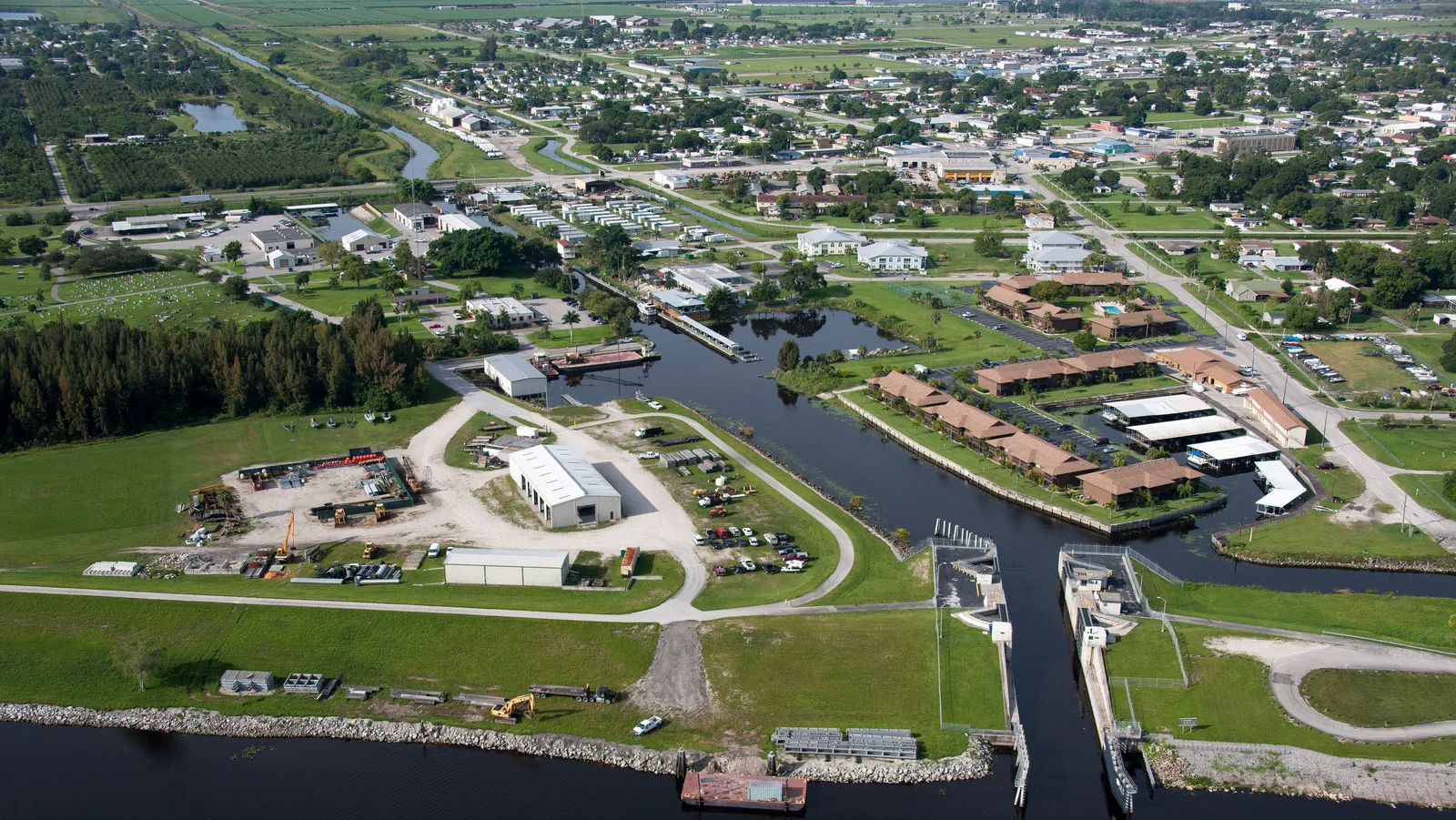
Clewiston sits at roughly 20 feet above sea level on the southern rim of Lake Okeechobee, protected by the Herbert Hoover Dike - which means nearly every property in town depends on engineered flood control rather than natural elevation. That single geographic fact shapes how water, sewage, fire, smoke, and mold damage behave in "America's Sweetest Town."
Property owners here face a distinct combination of pressures: a shallow water table, muck and marl soils, sugarcane field burning, and a hurricane season that regularly pushes rainfall totals past what local drainage can absorb.
- Water Damage Restoration - extraction, structural drying, and moisture mapping after roof leaks, supply line failures, and storm intrusion
- Flooded Basement - pump-out and drying for below-grade utility rooms, sunken slabs, elevator pits, and crawl spaces
- Sewage Cleanup - containment and disinfection after septic backups, lift station failures, and stormwater surcharge
- Fire Damage Restoration - stabilization, debris removal, and reconstruction of fire-affected structures
- Smoke Damage Restoration - soot removal, odor neutralization, and HVAC decontamination
- Mold Removal - containment, controlled remediation, and moisture-source correction
From emergency stabilization to final repairs, calling (239) 310-2638 connects you with controlled restoration procedures designed to prevent secondary damage and mold growth. Fast action protects framing, drywall, flooring, and indoor air quality - and keeps a manageable loss from becoming a full rebuild.
Common Damage Restoration Issues in Clewiston, Florida
Most Clewiston losses trace back to three sources: tropical weather, aging plumbing and septic infrastructure, and the region's persistent humidity.
Leading Causes of Damage
- Tropical storm and hurricane rainfall driving water through roof seams, ridge vents, soffits, and window flanges
- Saturated ground and high groundwater pushing moisture up through slabs and into below-grade utility spaces
- Septic system and drain field saturation during the wet season, causing backups into tubs, showers, and floor drains
- Aging galvanized and polybutylene supply lines in mid-century housing stock
- Electrical fires in older panels and generator misuse during outages
- Kitchen grease fires and outdoor burning that spreads to structures during the dry season
- Sugarcane harvest smoke and ash infiltrating attics, HVAC systems, and soft furnishings
Warning Signs Worth Acting On
- Musty odor that intensifies when the air conditioning cycles on
- Baseboards separating, tile grout darkening, or flooring cupping
- Brown ceiling rings that reappear after being painted over
- Gurgling drains or slow fixtures across multiple rooms - often the first sign of a septic problem
- Gray film on windows and horizontal surfaces after a fire or heavy burn season
- Persistent allergy-like symptoms that ease when occupants leave the building
Water spreads within minutes, soot bonds to surfaces within hours, and mold colonies can establish in a day or two under Clewiston's humidity. Delay is what turns a contained problem into a whole-structure project.
Neighborhoods We Serve in Clewiston
Restoration crews respond throughout the City of Clewiston and across Hendry, Glades, and eastern Palm Beach county communities.
- Downtown Clewiston, Central Avenue, and the Royal Palm Avenue corridor
- Sugarland Park and the neighborhoods surrounding Clewiston Golf Course
- Harlem and the East Clewiston residential blocks
- Montura Ranch Estates and Pioneer Plantation
- Hooker's Point, Lake Shore Drive, and properties along the rim canal
- Flaghole Road, Sears Road, and outlying agricultural parcels
- Nearby communities including Moore Haven, LaBelle, Lakeport, South Bay, Belle Glade, and Felda
Coverage spans single-family homes, mobile and manufactured housing, agricultural outbuildings, packing facilities, schools, churches, and commercial storefronts. Rural properties with long private drives, well systems, and septic tanks receive the same containment and drying standards as in-town structures.
Seasonal Damage Patterns in Clewiston
Clewiston runs on two seasons, and each brings a different mix of restoration work.
- June through September - peak water season. Daily convective storms, tropical systems, and saturated soils drive roof leaks, flooded low-lying rooms, and septic backups. Sewage cleanup calls climb sharply when drain fields cannot accept additional water.
- August through October - hurricane window. Wind-driven rain, power surges, and lengthy outages produce combined water, fire, and generator-related losses. Standing water plus heat creates ideal conditions for rapid mold growth.
- October through April - sugarcane burn season. Field burning sends ash and fine particulate across the region, loading attic insulation and HVAC filters and prompting smoke damage cleaning requests.
- November through February - fire season. Heating equipment, space heaters, holiday cooking, and dry vegetation raise structure fire risk.
- March through May - dry season wildfire risk. Brush and muck fires near agricultural land produce exterior smoke intrusion and occasional structural involvement.
- Year-round - mold pressure. Average humidity rarely drops low enough to halt microbial growth, so any unresolved moisture becomes a mold issue in short order.
Housing Characteristics & Restoration Considerations
Clewiston's housing stock leans older than the Florida average, with a large share built between the 1940s and 1980s during the sugar industry's expansion - and that age directly affects restoration methods.
Common Construction Types
- Concrete block with stucco (CBS) - durable against wind, but block cores wick water upward and hold moisture behind furring strips and drywall
- Wood-frame homes from the mid-century era - vulnerable to rot, and often insulated with materials that must be removed rather than dried
- Slab-on-grade foundations - true basements are rare, so "flooded basement" work here usually means sunken living areas, below-grade mechanical rooms, storm shelters, and crawl spaces
- Manufactured and mobile homes - common in Montura and rural parcels, with belly wrap that traps water beneath floor decking
- Agricultural and commercial metal buildings - condensation-prone with large open volumes that demand high-capacity drying equipment
How Age and Materials Shape the Work
- Pre-1980 homes may contain asbestos-bearing materials and lead paint, requiring testing before demolition
- Original cast iron and clay sewer laterals crack and root-intrude, contributing to repeat sewage backups
- Older electrical panels influence how quickly power can be restored after fire or flooding
- Multiple layers of flooring over slab trap moisture and hide developing mold
- Undersized or aging HVAC systems circulate soot and spores throughout the structure
Temporary repairs may be installed first to restore habitability, with permanent reconstruction following once the structure is verified dry.
Environmental Conditions & Damage Implications
The environment around Clewiston is one of the most moisture-loaded in the continental United States, and every restoration decision has to account for it.
Climate and Air
- Annual rainfall commonly exceeds 50 inches, with the majority falling between June and October
- Relative humidity frequently sits above 70 percent, slowing evaporation and lengthening drying times
- Agricultural particulate, field burning smoke, and pollen add to indoor air loading, especially in homes with fire or water history
Soil, Water, and Terrain
- Everglades muck and peat soils hold water, shift as they dry, and stress slabs and foundations
- Shallow water table means excavation and below-grade drying require careful pumping and vapor control
- Flat terrain offers almost no natural drainage - water pools and stays put
- Hard well water with high mineral content accelerates plumbing corrosion and appliance failures
- Canal and lake proximity introduces contaminated water risk, meaning many flood events are handled as Category 2 or 3 losses
Practical Implications
- Dehumidification, not just air movement, drives drying in this climate - equipment must be sized for the humidity load.
- Moisture readings are documented at intervals until materials reach dry standard, rather than assumed dry by appearance.
- Porous materials touched by canal, storm, or sewage water are removed under containment instead of cleaned in place.
- Smoke and soot residues are cleaned by surface type, since acidic soot etches metal, glass, and finishes over time.
Lake Okeechobee, the Herbert Hoover Dike, and Flood-Response Standards in Clewiston
Living beside the second-largest freshwater lake entirely within the United States creates a flood profile unlike anywhere else in Florida. The Herbert Hoover Dike protects Clewiston from lake surge, but the surrounding pump stations, rim canals, and drainage laterals still have finite capacity during extended tropical rainfall. When those systems reach capacity, water backs up into streets, yards, garages, and low-lying interior spaces.
What a Properly Sequenced Flood Response Looks Like
- Safety and stabilization - utilities evaluated, standing water hazards identified, structural risks flagged, and tarping or board-up installed where needed
- Water category determination - classifying the water as clean, gray, or contaminated dictates whether materials can be dried or must be removed
- Extraction - submersible pumps and truck-mounted units clear bulk water from slabs, sunken rooms, and mechanical spaces
- Controlled demolition - saturated drywall, wet insulation, and unsalvageable flooring removed under containment with negative air pressure
- Antimicrobial application and disinfection - especially critical after septic or canal water intrusion
- Structural drying - air movers, dehumidifiers, and targeted systems for wall cavities, block cores, and under-floor assemblies
- Daily monitoring and documentation - moisture logs and photos supporting the insurance claim
- Reconstruction - drywall, trim, paint, flooring, and cabinetry restored once dry standard is verified
Why Local Experience Matters
- Flood zone designations and elevation certificates influence how repairs must be performed on substantially damaged structures
- Hendry County permitting and inspection requirements affect reconstruction scheduling
- Rural properties with well and septic systems need those systems evaluated before reoccupancy
- Agricultural and commercial buildings often require after-hours work to limit operational downtime
Timelines vary with the scope of loss - some projects wrap up in days, while complex fire or flood restorations extend over weeks. The goal stays the same: do the job right, as fast as possible, without cutting corners. Call (239) 310-2638 for emergency response in Clewiston.





