
Damage Restoration in Alma, MI
- Damage Restoration Services Overview
- Common Damage Restoration Issues in Alma, Michigan
- Neighborhoods We Serve in Alma
- Seasonal Damage Patterns in Alma
- Housing Characteristics & Restoration Considerations
- Environmental Conditions & Damage Implications
- Why Basement Water and Sewer Backups Dominate Restoration Calls in Alma
Damage Restoration Services Overview
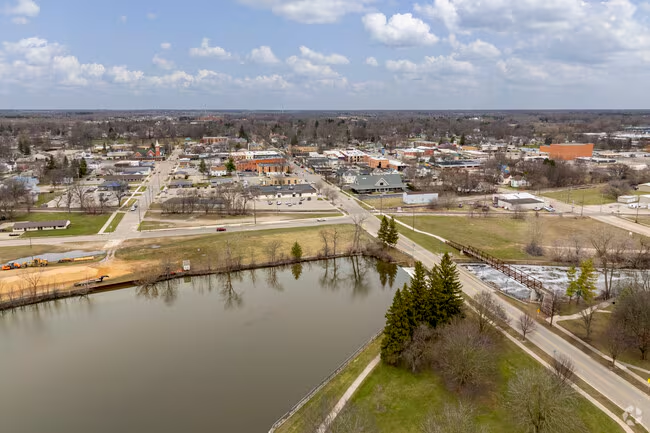
Alma sits along the Pine River in Gratiot County, and that river has shaped the city's flood story for more than a century. Homes within a few blocks of the water often carry basement moisture histories that stretch back generations.
Restoration work in a mid-Michigan city like Alma means handling everything from a burst supply line in a College Avenue rental to smoke residue coating a farmhouse kitchen outside town. Paul Davis provides around the clock restoration services for problems resulting from water, fire, smoke, mold, storms or other damages.
- Water Damage Restoration - rapid extraction, moisture mapping, and structural drying after pipe breaks, appliance failures, and roof leaks
- Flooded Basement - pump-out, contents handling, and drying for below-grade spaces after heavy rain or sump pump failure
- Sewage Cleanup - removal of contaminated material, antimicrobial treatment, and full sanitization after backups
- Fire Damage Restoration - debris removal, board-up, soot cleaning, and reconstruction of damaged framing and finishes
- Smoke Damage Restoration - odor neutralization, HVAC cleaning, and surface treatment for homes with no visible burn damage
- Mold Removal - containment, source correction, and removal of affected building materials
Free estimates are available, insurance is billed direct, and response times run about 60 minutes. Call 616-648-7775 or 269-312-1689.
Common Damage Restoration Issues in Alma, Michigan
Alma's mix of older housing stock, clay-heavy soils, and hard freeze-thaw cycles creates a predictable set of restoration calls. Knowing the warning signs early keeps a small problem from becoming a reconstruction project.
What Causes Damage Locally
- Frozen and split supply lines in unheated crawl spaces and attached garages during January and February
- Pine River backwater and flash flooding after spring snowmelt or summer downpours
- Sump pump failures during multi-day rain events or power outages from high winds
- Aging clay and cast iron sewer laterals in older neighborhoods, prone to root intrusion and collapse
- Chimney, wood stove, and space heater fires during long heating seasons
- Kitchen grease fires that spread smoke and soot through entire floor plans
- Roof and flashing failures from ice dams that push meltwater into wall cavities
Warning Signs Worth Acting On
- Musty odor in the basement or lower level that intensifies after rain
- Efflorescence, white chalky streaking, or bubbling paint on foundation walls
- Cupping hardwood, soft spots underfoot, or stained baseboards
- Gurgling floor drains or slow-draining fixtures on the lowest level
- Persistent smoke odor that returns when the furnace or AC runs
- Dark spotting on drywall behind furniture or inside closets on exterior walls
- Condensation on ductwork or windows during humid summer stretches
Southeast and mid-Michigan storms frequently involve high winds, flash flooding, and seasonal weather extremes. Local experience allows restoration professionals to respond quickly and address region-specific damage patterns.
Neighborhoods We Serve in Alma
Crews cover the full city plus the surrounding Gratiot County communities and rural townships.
- Downtown Alma and the Superior Street corridor - older commercial buildings and upper-floor apartments
- Alma College area and Wright Avenue - student rentals and historic single-family homes
- Riverside and Pine River neighborhoods - properties with the highest basement flooding exposure
- Republic Road and north-side subdivisions - post-war and later ranch construction
- Luce Township and Arcada Township - rural farmsteads, pole barns, and well-served properties
Surrounding service areas include St. Louis, Ithaca, Riverdale, Elwell, Shepherd, Mount Pleasant, Breckenridge, Ashley, Middleton, and communities along US-127 and M-46. Rural response includes properties on private drives and gravel roads where standard utility access may be limited.
Seasonal Damage Patterns in Alma
Restoration demand in Gratiot County follows a fairly reliable annual rhythm.
- December through February - frozen pipe breaks, ice dam water intrusion, and heating-related fire and smoke damage peak. Vacant properties and seasonal cabins are especially vulnerable.
- March and April - snowmelt combined with saturated ground drives flooded basement calls and sump pump overload. Sewer backups rise as systems take on infiltration.
- May through July - thunderstorms bring high winds, downed limbs, roof damage, and flash flooding. Power outages knock out sump pumps at the worst moment.
- July through September - humidity keeps dew points high, and mold removal calls climb in basements, crawl spaces, and behind vinyl wall coverings.
- October and November - furnaces fire up for the first time, releasing puff-back soot and smoke odor. Leaf-clogged gutters send water into foundations.
Any water event left untreated for more than a couple of days can shift into a mold problem regardless of season.
Housing Characteristics & Restoration Considerations
Alma's housing stock skews older than the Michigan average, with a large share of homes built before 1960 and a meaningful number dating to the early 1900s near the college and downtown.
Common Construction Types
- Early 1900s two-story frame homes - balloon framing lets water and smoke travel vertically inside wall cavities, which changes drying and cleaning strategy
- Fieldstone and block foundations - porous, prone to seepage, and slow to release moisture during structural drying
- Post-war ranches with poured basements - finished lower levels where drywall, carpet pad, and paneling hold water
- Rural farmhouses - additions layered over decades, crawl spaces with dirt floors, and septic systems that complicate sewage cleanup
- Newer subdivision builds - engineered flooring and tight envelopes that trap humidity if drying is incomplete
How Age Shapes the Work
- Homes built before 1980 may contain asbestos in floor tile, mastic, or pipe wrap, requiring testing before demolition
- Lead paint protocols apply to pre-1978 properties during reconstruction
- Plaster and lath dries far differently than modern drywall and often needs targeted cavity drying rather than removal
- Original hardwood can frequently be saved with specialty floor drying mats if extraction happens quickly
- Knob-and-tube or aging wiring found during fire damage restoration may need updating before rebuild
- Undersized or absent drain tile in older basements makes repeat flooding likely without exterior correction
Environmental Conditions & Damage Implications
Mid-Michigan's climate and soil profile push moisture toward foundations for much of the year.
Climate and Moisture
- Roughly 32 inches of annual precipitation, with a summer thunderstorm peak and heavy spring melt
- Winter temperatures well below freezing for extended stretches, creating hard freeze-thaw cycling
- Summer dew points in the 60s and low 70s that keep basements above safe humidity thresholds
- Occasional derecho-style wind events that strip shingles and open the envelope to rain
Soil and Groundwater
- Clay-rich glacial till drains slowly and holds hydrostatic pressure against foundation walls
- Low-lying parcels near the Pine River have shallow water tables that stress sump systems
- Expansive clay contributes to foundation cracking, which becomes a water entry point
- Agricultural drainage and tile systems in surrounding townships can redirect runoff toward rural homes
Air and Water Quality Effects
- Hard water is common and leaves mineral scale that shortens water heater and supply line life
- Well-served rural homes need sewage cleanup handled with septic and groundwater protection in mind
- Tight winter homes concentrate smoke odor and combustion byproducts, making HVAC cleaning part of smoke damage restoration
- Seasonal agricultural dust and pollen add to particulate load, which complicates post-fire air scrubbing
These conditions mean drying targets and mold prevention steps are set for local humidity, not generic national benchmarks.
Why Basement Water and Sewer Backups Dominate Restoration Calls in Alma
If there is one restoration theme that defines Alma, it is the below-grade water problem. Clay soil, older foundations, an aging sewer network, and a river running through town combine into a recurring pattern that local crews see week after week.
What Typically Happens
- Heavy rain or rapid snowmelt saturates clay soil that cannot absorb more water
- Hydrostatic pressure forces water through foundation cracks, cove joints, and window wells
- The sump pump runs continuously, then fails, loses power, or gets outpaced
- Municipal sewer capacity is stressed, and backup pressure pushes wastewater up floor drains
- Standing water contacts carpet pad, drywall, stored contents, and framing
- Within 24 to 48 hours, microbial growth begins in the finished portions of the space
How Local Crews Approach It
- Categorize the water first - clean supply water, gray water, and sewage each require different handling and disposal
- Extract standing water, then remove non-salvageable porous materials such as carpet pad, particleboard, and saturated insulation
- Flood-cut drywall above the water line to open cavities for drying rather than blind-replacing full walls
- Apply antimicrobial treatment across all affected hard surfaces after sewage exposure
- Set air movers and dehumidifiers sized to the cubic footage and monitor moisture readings daily until materials hit dry standard
- Document readings, photos, and scope for the insurance file, with billing sent direct to the carrier
- Recommend correction of the source - grading, downspout extensions, backflow prevention, or a battery backup sump
Local knowledge matters here. Crews who have worked riverside Alma basements, college-area rentals, and township farmhouses know which foundations dry slowly and where hidden moisture usually hides. Free estimates are available and phones are answered around the clock at 616-648-7775 or 269-312-1689.





