Damage Restoration in Monongalia County, WV
- Damage Restoration Services Overview
- Common Damage Restoration Issues in Monongalia County, West Virginia
- Neighborhoods We Serve in Monongalia County
- Seasonal Damage Patterns in Monongalia County
- Seasonal Damage Patterns in Monongalia County
- Housing Characteristics & Restoration Considerations
- Environmental Conditions & Damage Implications
- Emergency Response Across Monongalia County's Mountain Terrain
Damage Restoration Services Overview
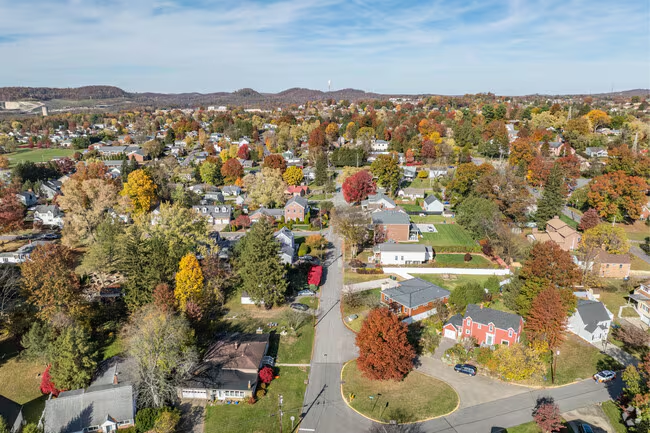
You come home to a Cheat Lake split-level after a long weekend and hear water running where no faucet is open. A supply line behind the washer let go on Friday, and the finished basement has been soaking ever since.
That single failure can touch every service category at once - saturated drywall, a flooded lower level, and mold spores waking up in warm, still air. Fast, coordinated work keeps a bad day from becoming a gut-and-rebuild.
Monongalia County property owners rely on a full slate of restoration work:
- Water damage restoration - extraction, structural drying, and moisture mapping after burst pipes, appliance failures, and roof leaks
- Flooded basement recovery - pump-out, content handling, and drying of below-grade spaces built into hillside lots
- Sewage cleanup - containment, removal of contaminated porous materials, and antimicrobial treatment after backups
- Fire damage restoration - board-up, debris removal, structural cleaning, and rebuild coordination
- Smoke damage restoration - soot removal, odor neutralization, HVAC cleaning, and content deodorizing
- Mold removal - containment barriers, HEPA filtration, controlled removal, and moisture source correction
Benefits for local homeowners include documented drying logs for insurance carriers, direct adjuster communication, and one contractor carrying the job from first extraction through final trim - no second company to chase down.
Common Damage Restoration Issues in Monongalia County, West Virginia
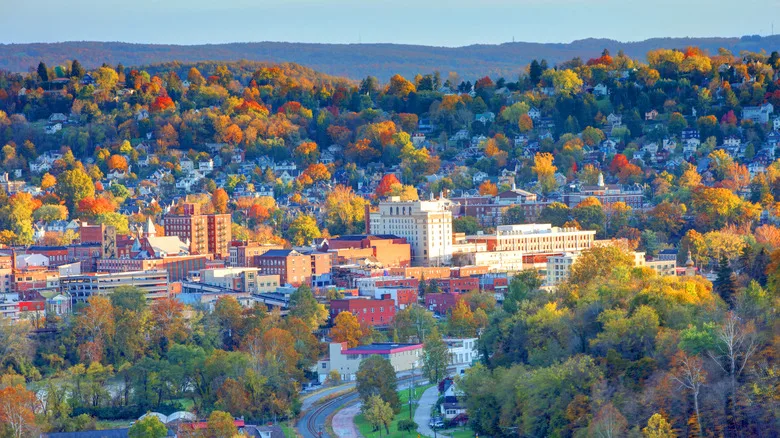
Appalachian terrain changes how water behaves. Runoff moves fast down slopes toward Deckers Creek, the Monongahela River, and hundreds of unnamed hollows, and it arrives at foundations with force that lowland communities rarely see.
Frequent causes of loss
- Hillside runoff overwhelming footer drains and window wells during summer thunderstorms
- Frozen and burst supply lines in crawl spaces and unheated garages during January cold snaps
- Sump pump failure during power outages caused by ice storms and high wind
- Aging clay or cast iron sewer laterals in older Morgantown neighborhoods backing up into basements
- Combined storm and sanitary loading during heavy rain, pushing sewage into floor drains
- Chimney, woodstove, and space heater fires in rural homes heated through long winters
- Kitchen grease fires that push smoke and soot through every level of an open floor plan
Warning signs worth acting on
- Musty odor that strengthens when the HVAC system cycles on
- Efflorescence, chalky white staining, or blistering paint on block foundation walls
- Cupped hardwood or soft spots in subfloor near exterior walls
- Gurgling floor drains or slow tub drains after rainfall
- Ceiling stains that reappear after being painted over
- Persistent smoke odor weeks after a small fire was extinguished
Student rental housing near campus adds another layer - vacant units over winter break go unnoticed when a pipe fails, letting damage spread for days.
Neighborhoods We Serve in Monongalia County
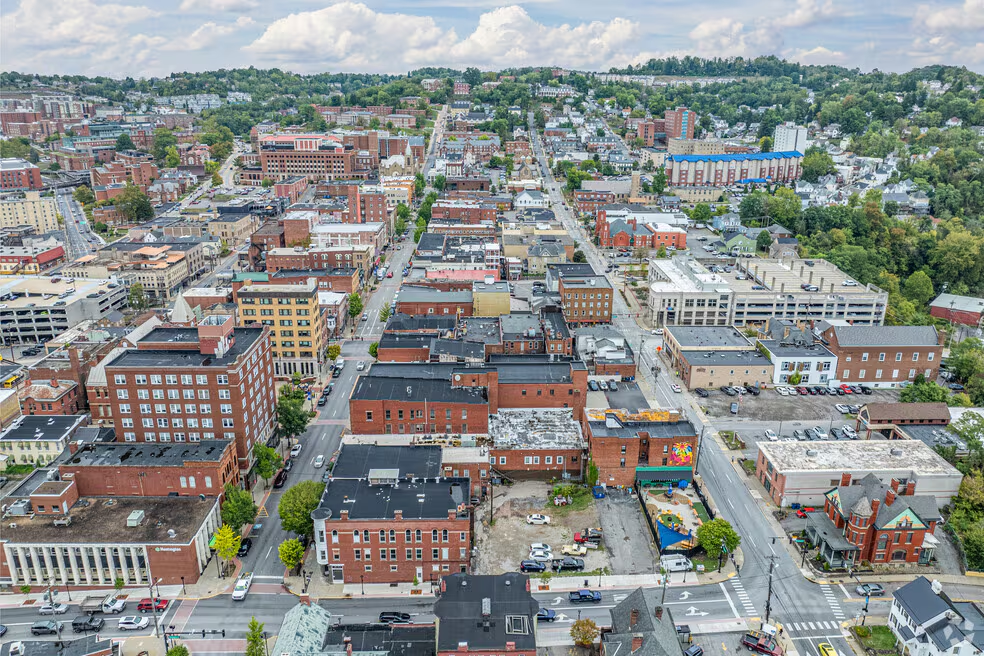
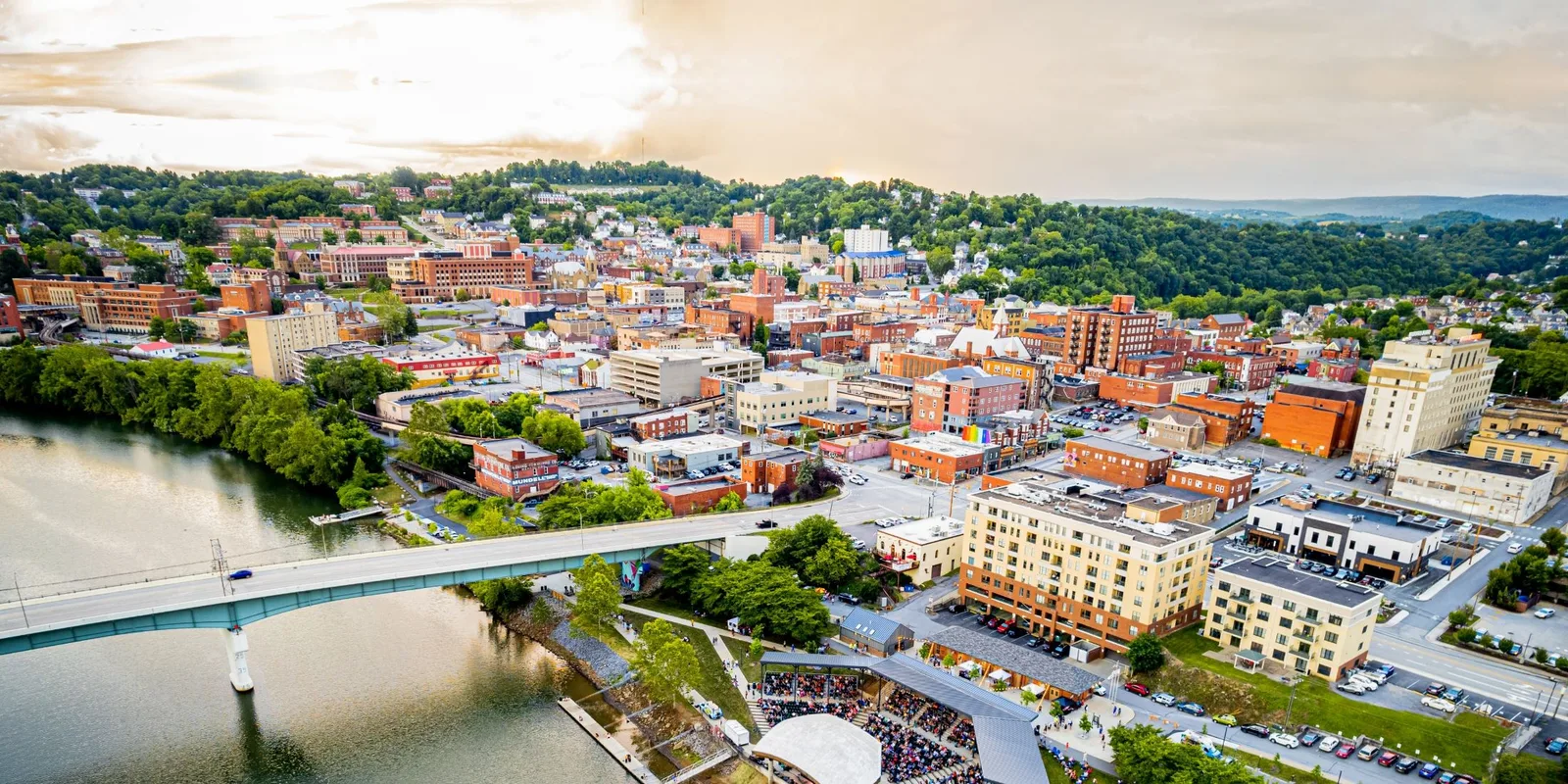
Crews cover the county's urban core, its river towns, and the ridgetop communities in between.
- Downtown Morgantown, Wharf District, and the South Park historic neighborhood
- Suncrest, Evansdale, and the Sabraton corridor
- Cheat Lake and Point Marion Road properties along the reservoir
- Star City, Westover, and Granville
- Blacksville, Wadestown, and western Monongalia County farms
- Cassville, Core, and the Mason-Dixon Highway communities
- Osage, Brookhaven, and Pierpont
- Rural hollows along Dents Run, Scotts Run, and Deckers Creek
Nearby service extends to Fairmont, Terra Alta, Bridgeport, and surrounding north-central West Virginia towns. Steep private drives, gravel access roads, and narrow historic streets are routine here, and equipment is staged accordingly.
Seasonal Damage Patterns in Monongalia County
Seasonal Damage Patterns in Monongalia County
Damage types rotate through the calendar with fairly predictable timing.
- December through February - frozen pipe breaks, ice dam leaks along north-facing roof edges, and heating-related fires from woodstoves, flues, and portable heaters
- March and April - snowmelt combined with spring rain saturates hillside soil, driving groundwater through block walls and flooding basements
- May and June - sustained humidity begins mold colonization in basements and crawl spaces that never fully dried out
- July and August - fast-moving thunderstorms produce flash runoff, sewer surcharge, and sump overload; lightning strikes cause attic fires
- September and October - remnants of tropical systems track through the Appalachians, delivering multi-inch rainfall in a single day
- November - first hard freezes catch outdoor spigots and unwinterized lines; chimneys fired up without inspection cause smoke damage
Mold is the year-round constant. A summer water loss left undried becomes a fall mold job, and a winter pipe break becomes a spring odor complaint.
Housing Characteristics & Restoration Considerations
Monongalia County housing spans more than a century of construction styles, and each era brings its own restoration wrinkle.
Pre-1978 homes
- Common in South Park, downtown Morgantown, Westover, and older village centers
- Lead-based paint likely on trim and plaster - EPA Lead-Safe certified work practices apply during demolition and rebuild
- Plaster-and-lath walls hold moisture far longer than drywall and need specialized drying approaches
- Knob-and-tube or early wiring raises safety concerns after fire and water events
- Stone or rubble foundations wick groundwater continuously
Mid-century and later construction
- Block basements with poured slabs, often finished as living space or rental units
- Crawl space foundations on sloped lots with limited ventilation and vapor barrier gaps
- Attached garages and walkout basements that channel exterior water inside
Student rentals and multi-unit properties
- Converted single-family homes with added bathrooms and stacked plumbing runs
- Shared walls that let smoke and odor migrate between units
- Extended vacancies that delay leak discovery
Practical result: drying plans differ house to house. A plaster-walled 1920s home near campus needs different equipment placement, dwell time, and containment than a 2005 subdivision home in Suncrest.
Environmental Conditions & Damage Implications
Local climate and geology shape both how damage starts and how long it takes to correct.
Climate
- Roughly 44 inches of annual precipitation, spread across all twelve months
- Summer relative humidity that regularly sits above 70 percent, slowing evaporation without dehumidification
- Freeze-thaw cycling that opens hairline foundation cracks a little wider each winter
- Snowfall totals that climb sharply toward the Preston County line and higher elevations
Soil and geology
- Clay-heavy soils over shale and sandstone hold water against foundation walls rather than draining
- Steep grades deliver concentrated sheet flow to downhill structures
- Legacy mining and reclaimed ground in parts of the county affect subsurface drainage patterns
- Shallow bedrock limits how deep drainage improvements can go
Water and air quality factors
- Iron and mineral content in some well water leaves staining that complicates post-loss cleaning
- Rural septic systems can surcharge during saturated ground conditions, creating category three cleanup situations
- Valley inversions trap smoke and particulate, extending odor problems after a fire
- High indoor humidity in tight, newer homes accelerates mold growth after even modest water intrusion
Each of these conditions gets factored into drying targets, dehumidifier sizing, and clearance verification before rebuild begins.
Emergency Response Across Monongalia County's Mountain Terrain
Response speed decides outcomes. Clean water becomes contaminated within roughly two days, and mold colonies begin establishing in the same window - faster in a humid Monongalia County basement.
What happens when you call
- Immediate dispatch - a crew is routed with terrain, access, and weather conditions in mind
- Safety assessment - electrical hazards, structural concerns, and contamination category are established before work starts
- Source control - the water is stopped, the sewage flow contained, or the fire-damaged structure boarded and secured
- Extraction and stabilization - standing water removed, contents relocated, containment barriers erected where mold or sewage is present
- Drying and monitoring - air movers and dehumidifiers placed, with daily moisture readings logged
- Cleaning and deodorizing - soot removal, antimicrobial application, HVAC cleaning, and odor treatment
- Rebuild - drywall, flooring, trim, and paint by the same team that handled mitigation
Steps to take before crews arrive
- Shut off the main water valve if a supply line failed
- Cut power to affected areas at the breaker when it is safe to reach
- Stay out of any space with standing sewage or lingering smoke
- Photograph conditions widely before anything is moved
- Lift furniture legs onto blocks or foil to prevent stain transfer
- Leave fire-damaged surfaces alone - wiping soot can drive it into finishes permanently
Insurance documentation
Losses are documented to support a clean claim with your West Virginia carrier: moisture maps, photo sets, daily drying logs, and diagrams of roof or plumbing failure points. Direct billing is available to every major West Virginia homeowners insurance carrier, and adjusters get answers directly from the crew that did the work.