
Damage Restoration in Morgantown, WV
- Damage Restoration Services Overview
- Common Damage Restoration Issues in Morgantown, West Virginia
- Neighborhoods We Serve in Morgantown
- Seasonal Damage Patterns in Morgantown
- Seasonal Damage Patterns in Morgantown
- Housing Characteristics & Restoration Considerations
- Environmental Conditions & Damage Implications
- Protecting Below-Grade Spaces on Morgantown's Hillside Lots
Damage Restoration Services Overview
Damage left untreated rarely stays contained. A slow supply-line leak behind a Suncrest kitchen wall becomes warped subfloor, sagging drywall, and colonized framing within days. Smoke residue that sits on painted surfaces after a small kitchen fire etches into finishes and leaves odor locked in insulation and ductwork. Sewage that backs up into a basement drain leaves bacteria in porous materials long after the water recedes.
Morgantown property owners have access to a full range of restoration disciplines, each addressing a different failure point:
- Water Damage Restoration - extraction, structural drying, moisture mapping, and documentation from first response through reconstruction
- Flooded Basement - pump-out, sump and drain evaluation, contents handling, and dehumidification of below-grade spaces
- Sewage Cleanup - containment, removal of contaminated porous materials, antimicrobial treatment, and disinfection
- Fire Damage Restoration - board-up, debris removal, soot cleaning, and rebuild of damaged assemblies
- Smoke Damage Restoration - residue removal from hard and soft surfaces, HVAC cleaning, and thermal odor treatment
- Mold Removal - containment barriers, negative air, source correction, and clearance-focused cleaning
The benefit of acting quickly is straightforward: fewer materials are lost, insurance documentation is cleaner, and families return to normal routines sooner.
Common Damage Restoration Issues in Morgantown, West Virginia
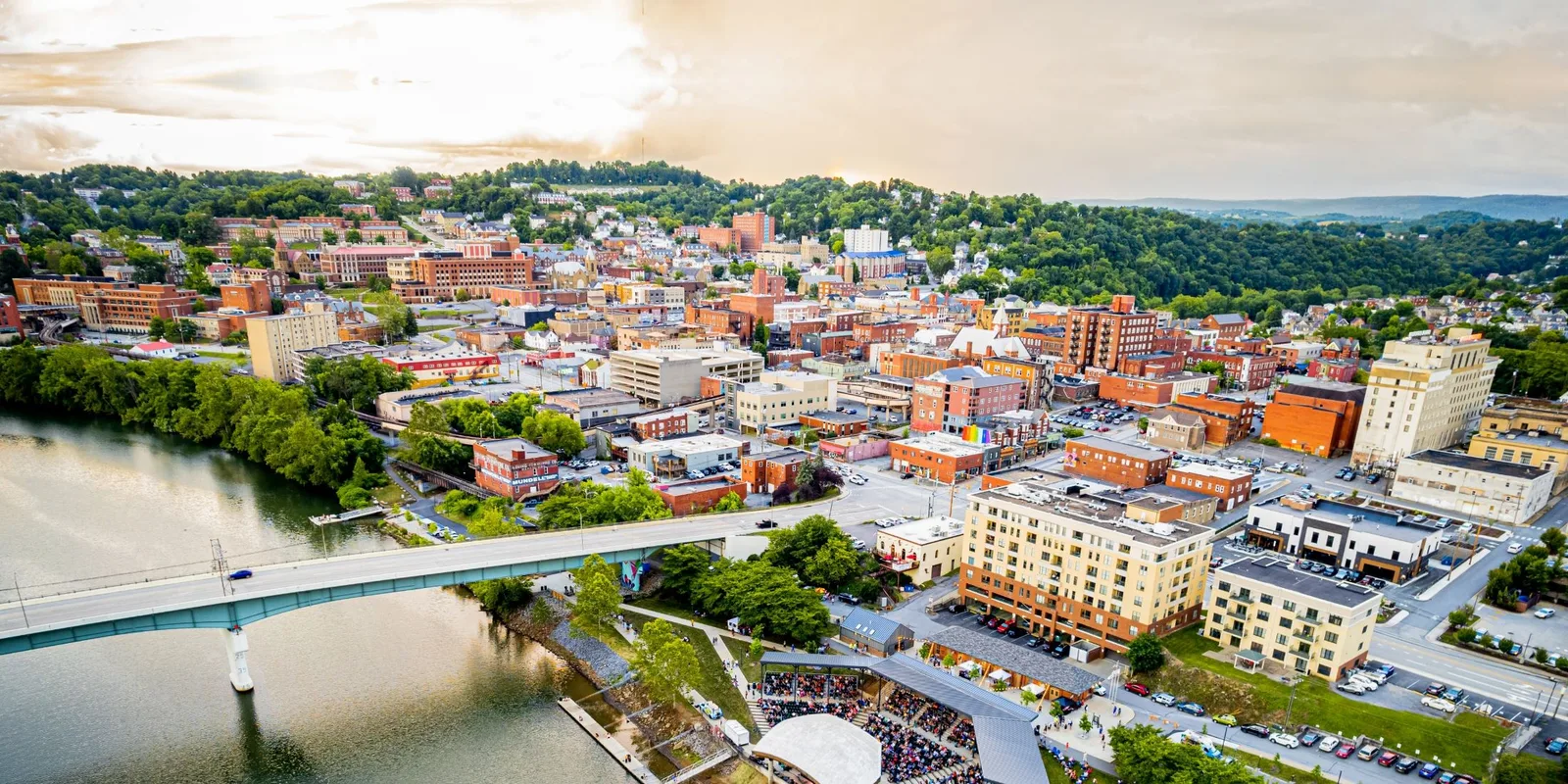
Morgantown sits in steep terrain along the Monongahela River, and topography drives much of the damage local crews respond to. Runoff funnels downhill toward basements, older neighborhoods carry aging plumbing, and the region's freeze-thaw cycles stress pipes and roofing every winter.
Frequent Causes of Loss
- Heavy summer thunderstorms and remnants of tropical systems overwhelming gutters, window wells, and hillside drainage
- Frozen and burst supply lines in unheated crawl spaces, garages, and vacant student rentals over winter break
- Sanitary sewer backups during high-volume rain events, especially in older combined-drainage areas
- Tree falls during wind and ice storms that open roofs to rain intrusion
- Kitchen and heating-appliance fires, plus chimney and wood-stove issues in outlying areas
- Chronic condensation and humidity in below-grade finished spaces
Warning Signs Worth Investigating
- Musty odor that intensifies when the HVAC system runs
- Efflorescence, chalky white staining, or dark blotches on block foundation walls
- Buckled hardwood, cupped laminate, or tack strips lifting near exterior walls
- Gurgling floor drains or slow basement fixtures during rainfall
- Yellow-brown ceiling rings beneath upstairs bathrooms
- Persistent smoke odor weeks after a small fire, particularly in closets and upholstery
- Recurring allergy-like symptoms that ease when occupants leave the house
Any of these signals warrants moisture testing before finishes are repaired, since cosmetic patching over wet framing simply delays a larger loss.
Neighborhoods We Serve in Morgantown
Restoration crews cover Morgantown proper and the surrounding Monongalia County communities, with response geared to each area's housing stock and drainage conditions:
- Suncrest and Suncrest Park - mid-century ranches and split-levels with finished basements
- South Park and Wiles Hill - historic homes with stone and block foundations
- First Ward, Woodburn, and Jerome Park - dense older housing and student rentals
- Sabraton and Greenmont - riverside and low-lying parcels prone to runoff
- Cheat Lake and Ridgedale - larger newer builds on sloped lots
- Van Voorhis, Evansdale, and Star City
- Westover, Granville, and Cassville
- Downtown Morgantown commercial corridors and High Street properties
Service also extends outward to Core, Blacksville, Pursglove, Osage, Dellslow, and nearby Preston and Marion County communities.
Seasonal Damage Patterns in Morgantown
Seasonal Damage Patterns in Morgantown
Each season brings a distinct pattern of loss across north-central West Virginia.
- December through February: Frozen and ruptured pipes, ice damming along north-facing eaves, and heating-related fire calls. Space heaters, fireplaces, and wood stoves drive both fire and smoke damage restoration work.
- March and April: Snowmelt combined with spring rain saturates hillside soils, producing flooded basement calls, seepage through block walls, and sump pump failures.
- May through August: Severe thunderstorms bring wind, hail, and roof breaches. Sudden downpours overwhelm municipal lines, triggering sewage cleanup requests. Humidity climbs, and mold removal jobs rise sharply in basements and crawl spaces.
- September and October: Remnant tropical moisture can stall over the ridges, causing flash flooding. Cooling weather also brings the first furnace start-ups, when dust burn-off and neglected systems cause smoke incidents.
- November: Cooking-related kitchen fires spike around the holidays, and early freezes catch unprotected hose bibs and vacant properties.
Year-round, university-area rentals see loss spikes during breaks when unoccupied units go unnoticed for days.
Housing Characteristics & Restoration Considerations
Morgantown's building stock spans more than a century, and the age of a structure shapes nearly every restoration decision.
Common Construction Types
- Pre-1940 homes in South Park, Wiles Hill, and the First Ward - balloon framing, plaster-over-lath walls, stone or brick foundations, and original wood floors
- Post-war ranches and split-levels in Suncrest and Westover - block foundations, finished basement rec rooms, and paneled walls
- Converted multi-unit student rentals - retrofitted plumbing stacks and shared drain lines
- Newer subdivisions near Cheat Lake and Dellslow - poured concrete foundations, engineered flooring, and tighter building envelopes
How Construction Affects the Work
- Balloon-framed walls let water and smoke travel vertically between floors, so drying and odor treatment must reach cavities far from the visible damage.
- Plaster holds moisture longer than drywall and needs targeted airflow rather than quick demolition, preserving original character where possible.
- Block foundations wick groundwater through mortar joints, making flooded basement work as much about drainage correction as extraction.
- Paneling and carpet in below-grade rec rooms trap humidity, creating ideal conditions for mold growth behind finished surfaces.
- Tightly sealed newer homes hold smoke odor and moisture indoors, requiring mechanical dehumidification and full HVAC cleaning.
- Older cast-iron and clay laterals crack and root-intrude, increasing sewage backup risk in established neighborhoods.
Environmental Conditions & Damage Implications
Local climate and geology shape how quickly damage escalates in Morgantown properties.
Climate and Moisture
- Humid continental climate with roughly 40-plus inches of annual precipitation spread across all seasons
- Summer relative humidity that regularly supports mold growth in unconditioned basements and crawl spaces
- Repeated winter freeze-thaw cycles that crack mortar, foundation parging, and exterior plumbing
- Valley fog and river-corridor moisture along the Monongahela that slows natural drying
Soil, Water, and Air
- Clay-heavy Appalachian soils on steep grades drain slowly and push hydrostatic pressure against basement walls
- Shallow bedrock in hillside neighborhoods sends runoff laterally toward foundations rather than downward
- Historic mining activity in parts of the county contributes to groundwater quality concerns and occasional acidic seepage
- Moderately hard water leaves scale that shortens the life of water heaters and supply connections
- Valley topography can trap smoke and particulates, prolonging indoor air quality problems after a fire
Restoration Implications
These conditions mean drying targets set for a dry climate simply do not apply here. Structural drying plans account for elevated ambient humidity, dehumidification runs longer, and moisture readings are verified in framing and concrete rather than surfaces alone. After sewage or fire events, containment and air scrubbing matter more in tight valley air where contaminants linger indoors.
Protecting Below-Grade Spaces on Morgantown's Hillside Lots
More restoration calls in Morgantown begin in the basement than anywhere else in the house. Homes built into hillsides in Suncrest, Ridgedale, and Wiles Hill sit with two or three foundation walls fully below grade, absorbing water that travels downslope during every heavy rain.
Why Basements Fail Here
- Downspouts discharging within a few feet of the foundation instead of well beyond it
- Window wells without covers or functioning drains filling during downpours
- Sump pumps without battery backup during storm-related power outages
- Original block walls with deteriorated mortar joints and no exterior waterproofing membrane
- Floor drains tied into aging laterals that surcharge when municipal lines run full
- Negative grading created by decades of settling and landscaping changes
What Response Looks Like
- Water is categorized first - clean supply water, gray water, or sewage - because that determines what can be saved and what must be removed.
- Standing water is extracted with truck-mounted or portable equipment, and contents are inventoried and relocated.
- Saturated carpet pad, base trim, and the lower portion of drywall or paneling are removed to open wall cavities.
- Contaminated materials from sewage events are bagged under containment, and hard surfaces receive antimicrobial treatment.
- Air movers and low-grain refrigerant dehumidifiers run until framing, block, and slab reach documented dry standards.
- Moisture readings are logged daily to support the insurance claim and confirm progress.
- Reconstruction restores flooring, walls, and finishes once the structure is verified dry.
Prevention Between Storms
- Extend downspouts at least six feet from the foundation and keep gutters clear of leaf debris
- Test the sump pump quarterly and add a backup power source
- Install a backwater valve if the property has a history of sewer backups
- Regrade soil to slope away from the house and reseal window well drains
- Keep basement humidity controlled with a dedicated dehumidifier through summer





