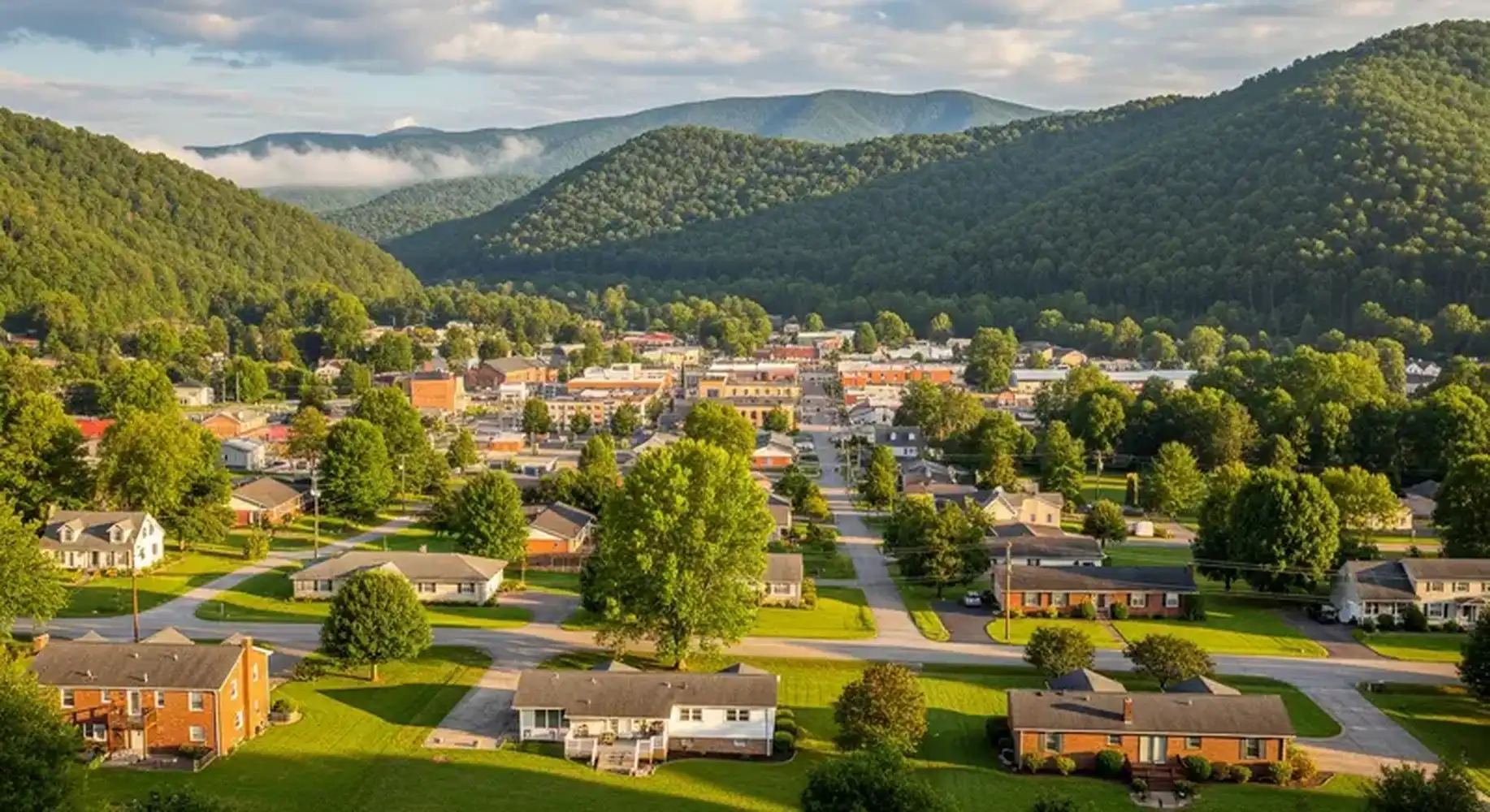
Damage Restoration in Putnam County, WV
- Damage Restoration Services Overview
- Common Damage Restoration Issues in Putnam County, West Virginia
- Neighborhoods We Serve in Putnam County
- Seasonal Damage Patterns in Putnam County
- Housing Characteristics & Restoration Considerations
- Environmental Conditions & Damage Implications
- Modern Drying and Remediation Technology for Kanawha Valley Homes
Damage Restoration Services Overview
Damage spreads on a clock. Water migrates through subfloors within hours, smoke residues etch into finishes overnight, and mold colonies can establish themselves in a damp Putnam County basement in a matter of days. Fast, correctly sequenced response is what separates a repairable structure from a gut-and-rebuild project.
Property owners across Hurricane, Winfield, Teays Valley and the surrounding Kanawha Valley corridor rely on a full range of restoration work handled under one roof:
- Water Damage Restoration - extraction, structural drying and moisture mapping after pipe breaks, appliance failures and roof leaks.
- Flooded Basement Recovery - pump-out, contents handling and drying of below-grade spaces after storm surge or sump pump failure.
- Sewage Cleanup - containment, removal of contaminated porous materials and antimicrobial treatment of Category 3 losses.
- Fire Damage Restoration - stabilization, debris removal, soot cleaning and salvage of structure and contents.
- Smoke Damage Restoration - residue-specific cleaning, thermal fogging, HEPA filtration and odor neutralization.
- Mold Removal - containment barriers, negative air, safe removal of affected materials and correction of the moisture source.
The benefit for local homeowners is simple: fewer materials lost, shorter displacement, cleaner indoor air and documentation that supports an insurance claim from the first day forward.
Common Damage Restoration Issues in Putnam County, West Virginia
Putnam County sits in the Kanawha Valley between river bottomland and steep hollows, and that geography drives most of the damage calls received here. Runoff has nowhere to go but downhill into basements and crawlspaces.
Local causes seen most often
- River and creek flooding - properties near the Kanawha River, Hurricane Creek, Poca River and Mud River take on water during heavy rain events.
- Hillside runoff - homes cut into slopes around Teays Valley and Scott Depot get hydrostatic pressure against foundation walls.
- Severe wind and storm damage - high winds have taken down large oak trees, outbuilding roofs and front porch roofs in local neighborhoods, opening structures to rain intrusion.
- Aging sewer laterals and septic systems - clay tile lines and root intrusion cause backups into floor drains and basement fixtures.
- Frozen and burst supply lines - unheated crawlspaces and garage walls are the usual failure points in January and February.
- Chimney, wood stove and space heater fires - common in older rural homes heated supplementally through winter.
Warning signs not to ignore
- Musty odor in a basement or closet that returns after rain
- Cupping or darkening at the edges of hardwood planks
- Efflorescence, chalky white residue or blistering paint on block walls
- Staining on ceiling tiles or a soft spot under carpet padding
- Persistent smoke odor that intensifies with humidity after a small kitchen or furnace puff-back
- Gurgling floor drains, slow tubs or sewer gas smell near the lowest fixtures
Neighborhoods We Serve in Putnam County
Service covers the full county plus the adjacent Kanawha Valley communities that share the same weather systems and river drainage.
- Hurricane - Main Street corridor, Lynn Street area and the surrounding hilltop subdivisions
- Teays Valley and Scott Depot - newer subdivisions, Route 34 businesses and Corridor G-adjacent properties
- Winfield - riverfront homes, county seat neighborhoods and Red House
- Poca, Nitro and Bancroft - older river-bottom housing stock and industrial-adjacent properties
- Eleanor, Buffalo and Fraziers Bottom - rural and agricultural properties along the Kanawha
- Culloden, Milton line and Mount Vernon - western county communities near the Cabell line
- Saint Albans, Cross Lanes and Charleston - neighboring Kanawha County areas served on the same call rotation
Crews know which back roads flood first, which older streets have sewer capacity limits, and where hillside access requires smaller equipment.
Seasonal Damage Patterns in Putnam County
Each season brings a distinct mix of losses, and knowing the pattern helps homeowners prepare before the call becomes an emergency.
- December through February - frozen and burst pipes, ice dam leaks, and the highest concentration of heating-related fire and smoke damage from furnaces, wood stoves and chimneys.
- March and April - snowmelt combined with spring rain produces the peak season for flooded basements, sump pump overload and sewer backups.
- May through July - thunderstorm season brings wind-driven rain, downed trees breaching roofs, lightning fires and flash flooding in creek drainages.
- July through September - high humidity turns any lingering moisture into visible mold growth; condensation in crawlspaces and HVAC-related water damage climb sharply.
- September and October - remnants of tropical systems moving inland cause sustained heavy rain and river rise along the Kanawha and Poca.
- November - first hard freezes catch unwinterized outdoor spigots and vacant properties; first furnace runs push soot and odor through duct systems.
Housing Characteristics & Restoration Considerations
Putnam County has one of the more varied housing mixes in the region - century-old river-bottom farmhouses, mid-century block ranches, 1970s split-levels and large post-2000 subdivisions in Teays Valley. Each construction type fails differently under water, fire and mold conditions.
How local construction shapes the work
- Older homes with plaster and lath - hold moisture longer than drywall and require slower, monitored drying to avoid delamination; soot penetrates deeply into porous plaster after a fire.
- Concrete block and stone foundations - wick groundwater through mortar joints, making basement drying a multi-day process with targeted airflow and dehumidification.
- Vented crawlspaces - extremely common here and the leading source of hidden mold under subfloors and insulation.
- Finished basements - carpet, pad, paneling and studs behind them all trap water; contaminated sewage losses require full removal of porous materials.
- Knob-and-tube or aluminum wiring in older stock - contributes to electrical fires and requires assessment before power is restored.
- Newer subdivision homes - engineered flooring, OSB subfloor and tight building envelopes dry slowly and hold smoke odor in HVAC systems.
- Manufactured and modular homes - belly wrap traps water beneath the floor and must be opened and dried rather than surface-treated.
Restoration plans account for these differences from the start, so demolition stays limited to what genuinely cannot be dried or cleaned in place.
Environmental Conditions & Damage Implications
The valley's humid subtropical climate, roughly 40-45 inches of annual rainfall, and dense clay soils combine into near-perfect conditions for moisture problems. Summer dew points frequently sit in the upper 60s and low 70s, which means indoor air alone can sustain mold growth on damp materials.
Conditions that influence restoration
- Heavy clay and shale soils - drain poorly, hold water against foundations and increase hydrostatic pressure after storms.
- Steep terrain and narrow hollows - concentrate runoff quickly, producing flash flooding well away from mapped floodplains.
- High summer humidity - requires commercial dehumidification rather than fans alone; open windows worsen drying in July and August.
- Valley air inversions - trap smoke and combustion odors close to the ground and inside structures, extending odor removal work after a fire.
- Iron and mineral content in well water - leaves staining that can be mistaken for mold and requires proper identification before treatment.
- Mature oak and maple canopy - falling limbs during wind events open roofs, while root systems damage sewer laterals and cause backups.
- Aging municipal infrastructure and rough roadways - contribute to line breaks and drainage overflow during peak rain.
Every drying and remediation plan is built around measured conditions on site - temperature, relative humidity, grain depression and material moisture content - not assumptions.
Modern Drying and Remediation Technology for Kanawha Valley Homes
Equipment has changed what can be saved. Techniques that once meant tearing out every wet wall now allow targeted, in-place drying that preserves flooring, cabinetry and framing throughout Hurricane, Winfield and Teays Valley homes.
Tools used on local losses
- Thermal imaging cameras - reveal moisture behind block walls and under flooring without opening finishes.
- Penetrating and non-penetrating moisture meters - establish dry standards from unaffected areas and track daily progress.
- Low-grain refrigerant and desiccant dehumidifiers - pull moisture from dense materials such as plaster, hardwood and concrete block.
- Axial and centrifugal air movers - direct high-velocity airflow across surfaces to accelerate evaporation.
- Injectidry and wall-cavity drying systems - dry inside insulated walls and under hardwood without full removal.
- Truck-mounted and portable extraction units - clear standing water from flooded basements before drying begins.
- HEPA air scrubbers and negative air machines - capture mold spores and smoke particulate while maintaining containment.
- Hydroxyl generators, ozone and thermal fogging - neutralize smoke odor at the molecular level instead of masking it.
- Ultrasonic contents cleaning - restores soot-covered hardware, fixtures and household items.
How a typical project runs
- Emergency response, safety assessment and source control.
- Full documentation with photos, moisture mapping and scope notes for the insurance carrier.
- Extraction, containment setup and removal of unsalvageable porous materials.
- Antimicrobial application on affected surfaces where contamination is present.
- Structural drying with daily monitoring readings until dry standard is verified.
- Odor treatment, HVAC cleaning and clearance testing where mold or sewage was involved.
- Reconstruction and final walkthrough with the homeowner.
Reach the Putnam County team any hour at (304) 766-6201 or (304) 552-1597 for flood, fire, smoke and mold response across Putnam and Kanawha counties.