Damage Restoration in Mendocino County, CA
- Damage Restoration Services Overview
- Common Damage Restoration Issues in Mendocino County, California
- Neighborhoods We Serve in Mendocino County
- Seasonal Damage Patterns in Mendocino County
- Housing Characteristics & Restoration Considerations
- Environmental Conditions & Damage Implications
- Storm Response and Emergency Board-Up Along the Mendocino Coast
Damage Restoration Services Overview
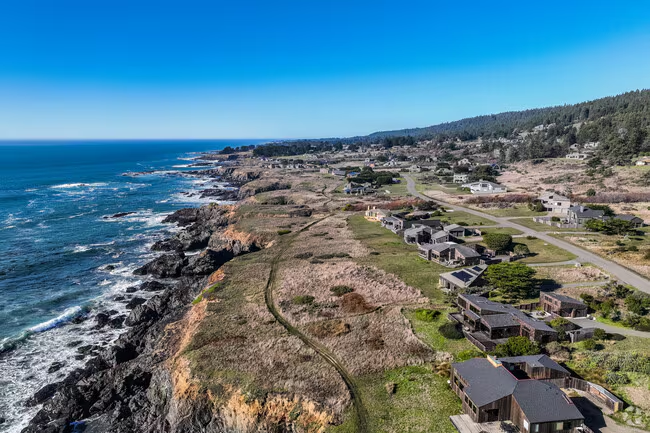
What happens to a coastal home when a Pacific storm pushes rain sideways for three days straight and the power goes out on night two? In Mendocino County, that scenario plays out most winters - and the aftermath rarely stops at a wet carpet.
Restoration work here spans the full range of property emergencies, from saturated crawl spaces in Fort Bragg to smoke-stained interiors inland near Ukiah and Willits. Each service addresses a different failure point, but they often overlap on the same job.
- Water Damage Restoration - extraction, structural drying, and moisture mapping after roof leaks, pipe failures, or storm intrusion.
- Flooded Basement - pump-out, sump troubleshooting, and drying of below-grade rooms and daylight basements.
- Sewage Cleanup - removal of contaminated materials, antimicrobial treatment, and safe disposal after septic backups or main line failures.
- Fire Damage Restoration - emergency board-up, debris removal, structural cleaning, and content recovery.
- Smoke Damage Restoration - soot removal, thermal fogging, HVAC cleaning, and odor neutralization.
- Mold Removal - containment, air filtration, material removal, and correction of the moisture source.
Benefits for property owners across the county include faster reoccupancy, reduced secondary damage, documentation that supports insurance claims, and a healthier indoor environment for families living in older coastal housing stock.
Common Damage Restoration Issues in Mendocino County, California
Geography drives most of the damage patterns here. The coastal strip from Gualala to Westport absorbs marine moisture year-round, while inland valleys around Ukiah, Hopland, and Covelo swing between summer heat and winter saturation.
Local Causes of Property Damage
- Winter storm systems - wind-driven rain, roof damage, fallen trees, and downed limbs that puncture roofing and siding.
- Redwood and fir canopy - shaded roofs stay damp, allowing moss and needle buildup that traps water at flashing and valleys.
- Septic and rural sewer systems - saturated leach fields backing up into homes during heavy rain.
- Wildfire and smoke drift - inland burns pushing soot and odor into structures far from the flame front.
- Seismic activity - regional earthquakes loosening pipe joints, water heater connections, and chimney flues.
- Power outages - failed sump pumps and dead dehumidifiers during multi-day PG&E interruptions.
Warning Signs Worth Acting On
- Musty odor in crawl spaces, closets, or under-stair storage
- Cupping or darkening hardwood near exterior walls
- Peeling paint, chalky staining, or bubbling drywall tape
- Gurgling drains or slow toilets after heavy rainfall
- Persistent smoke odor that returns when the heat runs
- Condensation on single-pane windows well into the afternoon
- Visible discoloration behind furniture placed against north-facing walls
Early response matters most with water and sewage, where contamination categories worsen by the hour and porous materials lose salvageability quickly.
Neighborhoods We Serve in Mendocino County
Coverage extends across the coast, the inland valleys, and the rural corridors in between - including the properties reached only by county roads that themselves need resurfacing and storm repair.
- Coastal communities - Fort Bragg, Mendocino village, Caspar, Little River, Albion, Elk, Point Arena, Gualala, Westport, and the Noyo Harbor area
- Inland cities and towns - Ukiah, Willits, Hopland, Redwood Valley, Calpella, and Talmage
- Northern and remote areas - Laytonville, Covelo and Round Valley, Leggett, and Piercy
- Anderson Valley - Boonville, Philo, Navarro, and Yorkville
- Surrounding regions - Highway 1 and Highway 128 corridors, Highway 20 between the coast and Willits, and outlying ranch and vineyard properties
Response planning accounts for travel time on winding routes, seasonal road closures, and the reality that some driveways require careful equipment staging.
Seasonal Damage Patterns in Mendocino County
Restoration demand shifts predictably through the year, which helps property owners plan preventive work before the busy stretches.
- November through February - peak water damage restoration and flooded basement calls. Atmospheric river events, wind-driven rain, roof damage, and emergency board-up dominate. Septic saturation drives sewage cleanup volume.
- March through May - mold removal season. Trapped winter moisture in crawl spaces and wall cavities begins producing visible growth and odor as temperatures rise.
- June through August - inland heat raises fire risk. Fire damage restoration and smoke damage restoration requests increase, including odor work in homes miles from any burn.
- September through October - the highest wildfire and smoke-intrusion window, paired with early-season rain testing gutters, flashing, and drainage that failed last winter.
- Year-round on the coast - marine humidity and fog keep mold and condensation issues active in every month.
Late-summer inspections of roofs, sump pumps, and septic systems consistently reduce winter emergency volume.
Housing Characteristics & Restoration Considerations
Mendocino County housing stock is unusually varied for a rural county - Victorian-era coastal homes, mid-century ranch construction, redwood cabins, and modern builds all sit within a few miles of one another.
Common Construction Types
- Pre-1940 coastal homes - old-growth redwood framing and siding, lath and plaster walls, minimal or no vapor barriers
- Post-and-pier foundations with vented crawl spaces - common on the coast and in the valleys, highly exposed to ground moisture
- Daylight and partial basements - built into hillsides, prone to lateral water entry
- 1950s-1970s ranch homes - inland Ukiah and Willits neighborhoods, often with original galvanized or early copper plumbing
- Cabins, ADUs, and off-grid builds - rural parcels with septic systems, propane heat, and wood stoves
How Age and Construction Shape Restoration
- Plaster and dense old-growth wood dry slowly, requiring extended drying setups and careful moisture monitoring rather than quick surface fixes.
- Homes built before 1980 may contain asbestos-bearing materials and lead paint, so testing precedes demolition on fire and water jobs.
- Wood stoves and older chimneys are frequent sources of smoke damage and puffback-style soot deposits.
- Unsealed crawl spaces under older homes are the single most common origin point for whole-house mold and musty odor.
- Septic-served properties need drain field evaluation before sewage cleanup is considered finished.
- Additions built over decades often hide layered flooring and mismatched framing that trap water at transitions.
Environmental Conditions & Damage Implications
The county's environment sets the terms for how damage develops and how drying has to be approached. Coastal fog, heavy winter rainfall, and dense forest cover create conditions that favor microbial growth almost year-round.
Climate and Air
- Persistent marine layer and high relative humidity along the coast slow natural evaporation, making mechanical dehumidification necessary rather than optional.
- Inland valleys experience temperature inversions that hold wildfire smoke and fine particulate near ground level, pushing soot into attics and HVAC systems.
- Salt-laden coastal air accelerates corrosion on fasteners, flashing, and appliance components already stressed by water exposure.
Water and Soil
- Winter rainfall totals are among the highest in California, saturating soils to the point where hydrostatic pressure pushes water through foundation cracks.
- Clay-heavy inland soils drain slowly and expand when wet, stressing slabs, footings, and buried drain lines.
- Coastal sandy and loam soils shift under sustained runoff, undermining perimeter drains and downspout discharge points.
- Well water and septic systems on rural parcels mean groundwater contamination is a real consideration during sewage cleanup.
- Rivers and creeks - the Noyo, Big, Navarro, Russian, and Eel drainages - rise fast, affecting low-lying properties.
These conditions influence equipment selection, containment strategy, and how long drying must continue before clearance readings hold steady.
Storm Response and Emergency Board-Up Along the Mendocino Coast
When a winter system parks over the coast, damage arrives in combinations - a tree drops on a roof, rain enters the opening for six hours, the power fails, and the sump pump stops. Handling that requires sequencing, not a single service.
How Storm Response Typically Proceeds
- Safety and hazard assessment - electrical, structural, and gas hazards identified before anyone enters the affected area.
- Emergency board-up and tarping - openings in roofs, windows, and walls sealed to stop ongoing intrusion.
- Water extraction - standing water pumped from basements, crawl spaces, and living areas.
- Contamination categorization - clean, gray, or black water classified to determine what can be dried versus removed.
- Controlled demolition - saturated drywall, insulation, and flooring removed where drying in place is not viable.
- Structural drying - air movers and dehumidifiers positioned according to load calculations, with daily moisture readings logged.
- Antimicrobial application - surfaces treated to prevent mold colonization during the drying window.
- Verification and documentation - readings confirmed against dry standards, with photo and data records supplied for insurance.
Standards That Guide the Work
- IICRC S500 protocols for water damage and structural drying
- IICRC S520 protocols for mold remediation, including containment and negative air pressure
- IICRC S700 practices for fire and smoke odor control
- Thermal imaging and penetrating moisture meters to locate hidden saturation behind plaster and paneling
- HEPA filtration and air scrubbing throughout smoke and mold projects
- Proper handling and disposal of contaminated materials under county health guidance
Local crews familiar with Highway 1 access, harbor-area properties, and rural driveway constraints can stage equipment and begin mitigation without the delays that come with out-of-area response.