
Damage Restoration in Piney Green, NC
- Damage Restoration Services Overview
- Common Damage Restoration Issues in Piney Green, North Carolina
- Neighborhoods We Serve in Piney Green
- Seasonal Damage Patterns in Piney Green
- Housing Characteristics & Restoration Considerations
- Environmental Conditions & Damage Implications
- Hurricane Season Preparation and Post-Storm Response for Piney Green Homeowners
Damage Restoration Services Overview
Water that sits for a weekend rarely stays a weekend problem. In Piney Green's humid coastal climate, moisture trapped inside subflooring, drywall cavities, and crawl space insulation can seed mold colonies, warp framing, corrode HVAC components, and drive down a home's resale value long after the visible puddle is gone. Fire and smoke residues behave the same way - acidic soot keeps etching metal, glass, and finishes every day it remains untouched.
Restoration work in Onslow County covers a connected set of services, and most jobs involve more than one:
- Water Damage Restoration - extraction, structural drying, and moisture mapping after pipe breaks, roof leaks, and appliance failures
- Flooded Basement - pump-out and dry-down for below-grade spaces, sunken utility rooms, and crawl spaces holding standing water
- Sewage Cleanup - safe removal of Category 3 contamination from septic backups, sewer line failures, and toilet overflows
- Fire Damage Restoration - debris removal, structural stabilization, and rebuild of burned areas
- Smoke Damage Restoration - soot removal, thermal fogging, HVAC cleaning, and odor neutralization
- Mold Removal - containment, HEPA filtration, affected material removal, and antimicrobial treatment
The benefit for Piney Green households is straightforward: faster stabilization means fewer materials thrown away, lower repair scope, cleaner indoor air, and stronger documentation when an insurance adjuster asks what happened and when.
Common Damage Restoration Issues in Piney Green, North Carolina
Piney Green sits between Jacksonville and Camp Lejeune on flat coastal plain terrain, where the water table runs high and drainage moves slowly. That geography shapes nearly every restoration call in the area.
Frequent Causes of Loss
- Tropical systems and hurricanes - Florence remains the reference point locally, with apartment complexes and single-family homes taking on feet of water and residents facing evacuation orders before they could protect belongings
- Wind-driven rain - shingle loss and ridge vent failure let water into attics without any roof "hole" being visible from the ground
- Septic and sewer backups - saturated drain fields after heavy rain push wastewater back into tubs and floor drains
- HVAC condensate line clogs - a common summer cause of ceiling stains and hidden wall cavity moisture
- Kitchen and grill fires - along with electrical faults in older panels and space heater use during cold snaps
- Crawl space moisture - torn vapor barriers and standing groundwater feeding mold in floor joists
Warning Signs Worth Acting On
- Musty odor that strengthens when the air handler runs
- Baseboards that feel soft, or flooring that cups and lifts at seams
- Dark speckling on closet walls, especially on exterior-facing sides
- Sewer gas smell near floor drains or in a hall bathroom
- Yellow-brown staining on ceilings below attic spaces
- Soot film returning on walls after cleaning - a sign residues remain in the HVAC system
Neighborhoods We Serve in Piney Green
Coverage spans the Piney Green corridor and the surrounding Onslow County communities where storm and plumbing losses cluster.
- Piney Green Road corridor - including subdivisions off Rocky Run Road and Gum Branch connections
- Hunters Creek - where shingle loss and localized flooding have hit repeatedly during tropical systems
- Brynn Marr, Northwoods, and Jacksonville proper
- Half Moon and Richlands - rural properties on septic systems
- Midway Park, Tarawa Terrace, and Camp Lejeune housing areas
- Hubert, Swansboro, and Sneads Ferry - coastal properties exposed to surge and salt air
- Verona, Holly Ridge, and Dixon
Apartment and rental communities receive the same attention as owner-occupied homes. Tenants displaced by flooding often face disputes over debris removal and belonging disposal, and clear documentation of affected materials helps both renters and property owners resolve those questions.
Seasonal Damage Patterns in Piney Green
- January - February: Frozen or burst supply lines during brief hard freezes, plus fire and smoke damage from space heaters, fireplaces, and overloaded circuits. Slab-on-grade homes with exposed exterior spigots are common failure points.
- March - May: Spring storm bands bring roof leaks and flooded crawl spaces. Rising humidity reactivates dormant mold in poorly ventilated spaces.
- June - August: Peak mold season. Air conditioning runs constantly, condensate lines clog, and afternoon thunderstorms overwhelm yard drainage. Sewage backups increase as saturated septic fields lose capacity.
- September - October: Hurricane and tropical storm season at full strength. Expect wind-driven rain intrusion, storm surge in low-lying areas, extended power outages, and widespread flooded basement and crawl space calls.
- November - December: Cooler air meets warm interior surfaces, producing condensation behind furniture and inside closets. Holiday cooking and candle fires drive a seasonal rise in smoke damage work.
Mold remediation demand never fully drops in this climate - it simply shifts location, moving from crawl spaces in summer to exterior wall cavities in winter.
Housing Characteristics & Restoration Considerations
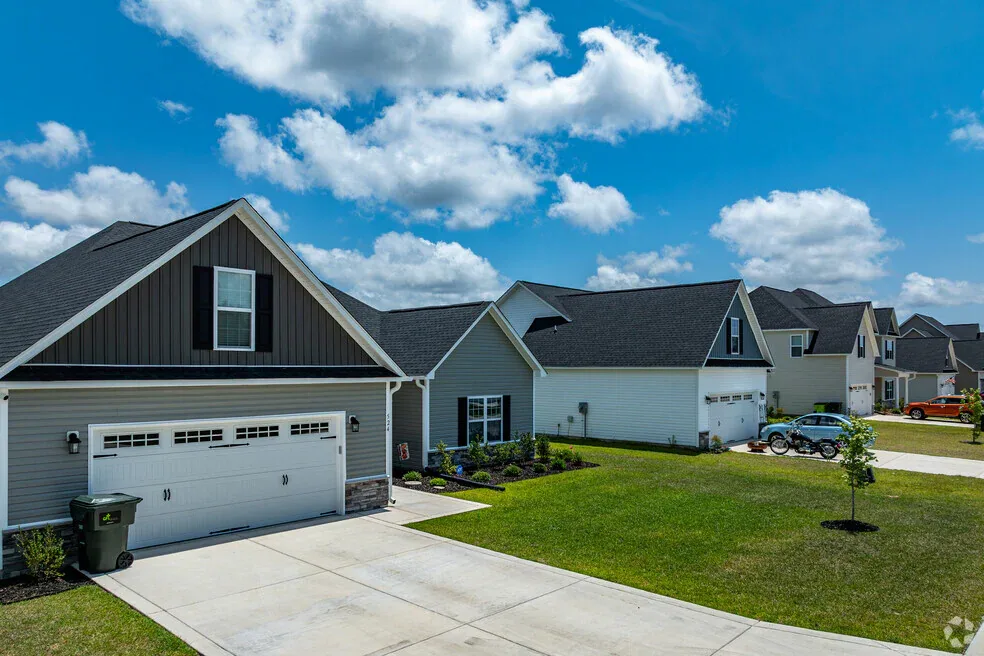
Piney Green's housing stock grew largely alongside Camp Lejeune expansion, producing a mix of 1970s-1990s ranch homes, newer subdivisions built after 2000, and a substantial share of rental and multifamily units.
Construction Types and What They Mean
- Slab-on-grade ranches - water spreads laterally under vinyl plank and carpet padding; drying often requires mat systems and baseboard removal rather than simple extraction
- Vented crawl space homes - the most common source of chronic mold; sagging insulation and torn vapor barriers hold moisture against joists
- Below-grade utility rooms and partial basements - rare here but present in older properties, and among the hardest spaces to dry due to hydrostatic pressure
- Vinyl siding over OSB sheathing - traps wind-driven rain, hiding decay behind an intact-looking exterior
- Older multifamily buildings - shared wall cavities allow water and smoke odor to travel between units
Restoration Implications
- Homes built before the late 1980s may contain asbestos-backed flooring or textured ceilings requiring testing before demolition
- Popcorn ceilings absorb smoke residue and frequently need removal rather than cleaning
- Ductwork routed through crawl spaces spreads mold spores and soot throughout the living space
- Manufactured homes with belly wrap hold water for weeks and need targeted access points for drying
- Sewage intrusion into porous slab flooring usually means full removal - cleaning alone will not resolve contamination
Environmental Conditions & Damage Implications
Onslow County's environment works against drying and in favor of microbial growth almost year-round.
Climate and Humidity
- Relative humidity regularly sits above 70 percent from May through September
- Summer dew points create condensation on ductwork, toilet tanks, and uninsulated crawl space piping
- Open-window drying is counterproductive here - controlled dehumidification is required to reach safe moisture content
Soil and Groundwater
- Sandy loam over dense clay subsoil drains quickly at the surface, then perches water just below grade
- High water table pushes moisture upward through slabs and into crawl spaces
- Flat topography means stormwater ponds rather than running off, extending saturation after heavy rain
- Saturated soil reduces septic drain field function, raising backup risk
Air and Water Quality Factors
- Salt-laden coastal air accelerates corrosion on soot-coated metal, making prompt fire cleanup more urgent
- Well water on rural properties may carry iron and sulfur that stain materials during flooding events
- Floodwater from storm systems is treated as contaminated - it mixes with yard chemicals, septic overflow, and roadway runoff
- Pollen and coastal dust load HVAC filters, worsening indoor air quality once mold or smoke particulate enters the system
Hurricane Season Preparation and Post-Storm Response for Piney Green Homeowners
Florence taught Onslow County a hard lesson: the damage that follows a storm is often decided in the first 48 hours after the water recedes. Residents who returned from mandatory evacuation to soaked apartments and no clear guidance on debris removal faced weeks of uncertainty, disputed charges, and worsening mold. A plan set before the storm changes that outcome.
Before a Storm Approaches
- Photograph every room, including closets, appliances, and the crawl space entry - date-stamped images become your baseline for any claim
- Move electronics, documents, and irreplaceable items to interior upper shelves or take them with you
- Clear gutters, extend downspouts away from the foundation, and check that crawl space vents are unobstructed
- Record your policy number, agent contact, and a restoration provider's phone number somewhere accessible without power
- Confirm whether your coverage includes flood - standard homeowner policies exclude rising water
After You Return Home
- Check for structural hazards, downed lines, and gas odors before entering
- Photograph standing water and damaged contents before moving anything
- Treat all floodwater as contaminated - wear boots, gloves, and an N95 respirator
- Call for professional extraction rather than waiting; drying delayed past a couple of days multiplies material loss
- Keep a written inventory of items removed, since local debris pickup policies and charges have caused friction for renters in the past
- Do not run the HVAC system if the air handler or ductwork was submerged
Restoration crews serving Piney Green work through the same storm conditions residents do, prioritizing calls by contamination level and structural risk. Reaching out early - even before the water is fully out - puts your property in the queue rather than at the back of it, which matters when an entire county is filing claims in the same week.





