
Damage Restoration in Selma, NC
- Damage Restoration Services Overview
- Common Damage Restoration Issues in Selma, North Carolina
- Neighborhoods We Serve in Selma
- Seasonal Damage Patterns in Selma
- Housing Characteristics & Restoration Considerations
- Environmental Conditions & Damage Implications
- Hurricane Season Preparedness and Storm Response in Johnston County
Damage Restoration Services Overview
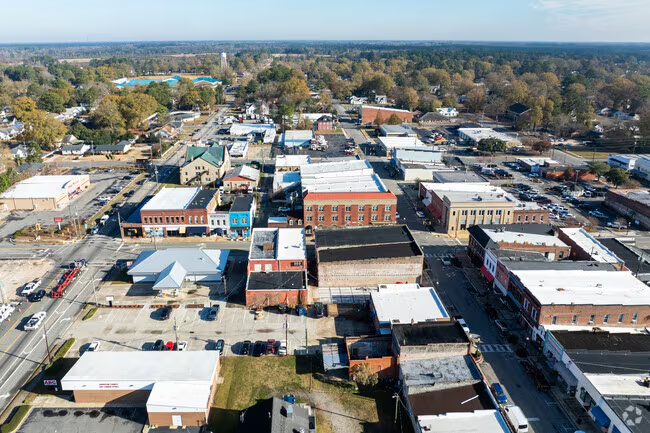
Few things rattle a homeowner like walking into a basement full of water or opening the door to the smell of smoke. In Selma, where older homes sit alongside newer subdivisions and the Neuse River basin shapes the water table, damage can move fast and spread further than it first appears.
Restoration work covers a wide span of emergencies, and each one calls for different equipment, containment, and drying strategy:
- Water Damage Restoration - burst supply lines, failed water heaters, roof leaks, and appliance overflows that saturate drywall, subfloor, and insulation.
- Flooded Basement - groundwater intrusion, sump pump failure, and foundation seepage after heavy rainfall along Johnston County's low-lying areas.
- Sewage Cleanup - backflow from municipal lines or septic systems, requiring biohazard protocols and full material removal.
- Fire Damage Restoration - structural stabilization, debris removal, and rebuilding of charred framing and finishes.
- Smoke Damage Restoration - soot removal from HVAC systems, textiles, and porous surfaces, plus odor neutralization that lasts.
- Mold Removal - containment, remediation, and correction of the moisture source behind the growth.
The benefit of addressing these quickly is straightforward: less demolition, fewer replaced materials, better indoor air quality, and a cleaner insurance claim file. Documented moisture readings and photographs from the first visit often make the difference in how smoothly a claim moves forward.
Common Damage Restoration Issues in Selma, North Carolina
Selma sits in the coastal plain transition zone, and that geography drives most of what damages homes here. Humidity stays high much of the year, storm systems track inland off the Atlantic, and clay-heavy soils hold water against foundations rather than letting it drain away.
Frequent Causes of Property Damage
- Tropical systems and remnant rainfall - hurricanes weakening inland still drop enough rain to overwhelm yard drainage and flood crawl spaces.
- Sump pump and drainage failures - power outages during storms disable pumps exactly when they are needed most.
- Sewer and septic backups - saturated ground and overloaded lines push contaminated water into lowest-level fixtures.
- Winter pipe bursts - uninsulated lines in crawl spaces and exterior walls split during January and February cold snaps.
- Kitchen and heating fires - space heaters, fireplaces, and cooking incidents cluster in colder months.
- Chronic humidity - HVAC systems that cycle too quickly leave moisture behind, feeding mold in closets, attics, and behind furniture.
Warning Signs Worth Acting On
- Musty odor that intensifies when the air handler runs
- Bubbling paint, cupping hardwood, or soft spots in flooring
- Efflorescence or white powder on basement and foundation walls
- Slow drains or gurgling fixtures preceding a sewage backup
- Soot film on window glass, light switches, or return-air vents after a small fire
- Unexplained allergy symptoms that improve when family members leave the house
Small signals rarely stay small in this climate. Mold colonies can establish within a day or two of sustained moisture, and smoke residues become acidic as they age, etching metal fixtures and permanently staining grout and stone.
Neighborhoods We Serve in Selma
Coverage extends across Selma proper and the surrounding Johnston County communities, from historic downtown blocks near the railroad corridor to newer construction on the outskirts.
- Downtown Selma and the historic district near Raiford Street
- Residential streets off Pollock Street, Anderson Street, and Webb Street
- Neighborhoods bordering Interstate 95 and US 70 Business
- Rural properties on septic systems outside the city limits
- Adjacent communities including Archer Lodge, Nashville, Ayden, and Creedmoor
- Regional service reaching Unionville, Locust, Midland, Midway, Trinity, and Silver Lake
- Additional coverage across Pleasant Garden, Stokesdale, Walkertown, Mocksville, and Hamlet
Every neighborhood presents different challenges. Downtown properties often have older plumbing and limited crawl space clearance, while subdivision homes on graded lots may struggle with surface runoff directed toward the foundation.
Seasonal Damage Patterns in Selma
Restoration calls follow a predictable rhythm through the year, and knowing the pattern helps homeowners prepare before the phone call becomes necessary.
- December through February - frozen and burst pipes lead the list, along with heating-related fire and smoke damage from fireplaces, wood stoves, and portable heaters.
- March through May - spring rains raise the water table, producing flooded basements, crawl space saturation, and the first mold growth of the season as temperatures climb.
- June through August - peak humidity means mold removal calls surge. Afternoon thunderstorms cause roof leaks and flash flooding, while lightning strikes occasionally start attic fires.
- September through October - hurricane and tropical storm season brings the heaviest water damage volume. Sewage backups spike when saturated ground overloads septic fields and municipal lines.
- November - the transition month, with early cold snaps catching unprotected plumbing and holiday cooking increasing kitchen fire incidents.
Mold remediation requests never truly stop in Selma. Warm, damp conditions persist enough of the year that a hidden leak discovered in February may have been growing since the previous summer.
Housing Characteristics & Restoration Considerations
Selma's housing stock spans well over a century, and the construction era of a home shapes nearly every restoration decision made on site.
Older Homes and Historic Properties
- Pre-1945 homes often feature plaster over wood lath, which absorbs water deeply and holds smoke odor in ways drywall does not.
- Balloon framing allows fire, smoke, and moisture to travel vertically through wall cavities without obstruction.
- Original hardwood floors may be salvageable with controlled drying, but only if work begins before cupping becomes permanent.
- Homes built before 1980 may contain asbestos-bearing materials or lead paint, requiring testing before demolition.
- Cast iron and galvanized plumbing corrodes from the inside, producing slow leaks that go unnoticed for months.
Mid-Century and Modern Construction
- Crawl space foundations dominate the area and are the most common location for hidden mold, wood rot, and standing water.
- Slab-on-grade homes concentrate water damage at the flooring layer, where moisture wicks under vinyl and laminate.
- Manufactured and modular homes have tight cavities and pressed-wood substrates that degrade quickly once wet.
- Newer, tighter envelopes trap humidity and smoke particulate, making mechanical dehumidification and air scrubbing essential.
- Finished basements and bonus rooms add carpet, padding, and drywall - all materials that must be evaluated fast after a flood.
Restoration crews adjust drying targets to the material at hand. Old-growth framing and modern engineered lumber react differently to moisture, and treating them identically leads to either incomplete drying or unnecessary tear-out.
Environmental Conditions & Damage Implications
The local environment works against dry buildings much of the year. Selma's humid subtropical climate, its position in the Neuse River watershed, and the region's soil composition all influence how damage develops and how remediation must be handled.
Climate and Air
- Summer relative humidity frequently sits high enough that outdoor air alone cannot dry a wet structure - refrigerant and desiccant dehumidifiers do the work instead.
- Warm, moist conditions accelerate microbial growth on cellulose materials like drywall paper, cardboard, and framing.
- Pollen loads in spring compound indoor air quality problems after fire or mold events, making HEPA filtration a priority during cleanup.
- Smoke particulate settles into HVAC ductwork and recirculates for months if the system is not cleaned and sealed.
Soil, Water, and Drainage
- Clay-rich subsoil drains slowly, holding hydrostatic pressure against foundation walls and pushing water through hairline cracks.
- A relatively shallow water table in low-lying areas keeps crawl spaces damp even without a specific leak event.
- Septic systems on saturated ground fail to percolate, raising the risk of sewage backing into the home.
- Storm runoff from paved corridors overwhelms yard grading, sending water toward basement window wells and door thresholds.
- Hard water mineral content leaves scale in supply lines and water heaters, contributing to failures that cause sudden interior flooding.
These conditions mean drying is only half the job. Vapor barriers, crawl space encapsulation, grading corrections, and improved drainage often accompany restoration so the same room does not need the same repair next season.
Hurricane Season Preparedness and Storm Response in Johnston County
Selma sits far enough inland to avoid storm surge but squarely in the path of tropical systems that stall and dump rain across the coastal plain. Storms that made landfall near Wilmington or Carolina Beach have repeatedly delivered their heaviest inland flooding to communities like Selma days after the winds died down.
Before the Storm
- Test the sump pump and confirm the backup battery holds a charge.
- Clear gutters, downspouts, and yard drains so runoff moves away from the foundation.
- Photograph each room and store the images off-site for insurance documentation.
- Move stored items off basement and crawl space floors onto shelving or pallets.
- Locate the main water shutoff and electrical panel, and make sure everyone in the household knows where they are.
After Water Enters the Home
- Treat all floodwater as contaminated - storm and sewage water carry bacteria regardless of appearance.
- Do not run the HVAC system if ductwork has been submerged or exposed to smoke.
- Avoid standing water near outlets or panels until power has been safely disconnected.
- Document damage with photos and video before removing anything.
- Contact a restoration provider before the claim adjuster, so moisture readings are captured while conditions are fresh.
Why Response Time Matters Locally
When a tropical system hits Johnston County, restoration demand spikes across the region at once - from Nashville and Ayden to Archer Lodge and Creedmoor. Equipment availability tightens, and homes that sit wet for days require far more demolition than those addressed immediately. Extraction, controlled drying, antimicrobial treatment, and containment done early routinely save flooring, cabinetry, and framing that would otherwise be discarded. For rental properties, North Carolina's repair obligations under the Residential Rental Agreements Act add another reason landlords benefit from moving quickly rather than waiting out the queue.





