
Damage Restoration in Creedmoor, NC
- Damage Restoration Services Overview
- Common Damage Restoration Issues in Creedmoor, North Carolina
- Neighborhoods We Serve in Creedmoor
- Seasonal Damage Patterns in Creedmoor
- Housing Characteristics & Restoration Considerations
- Environmental Conditions & Damage Implications
- The Creedmoor Restoration Process: From First Call to Final Clearance
Damage Restoration Services Overview
Few things rattle a homeowner like walking into a basement with standing water, or opening the door to the smell of smoke settling into drywall and fabric. Property damage in Creedmoor rarely announces itself politely - it shows up after a storm, during a holiday weekend, or in the middle of the night when a supply line lets go.
Restoration work covers a connected set of problems, and most Granville County properties end up needing more than one service at once:
- Water Damage Restoration - extraction, structural drying, and moisture verification after burst pipes, appliance failures, roof leaks, and storm intrusion.
- Flooded Basement Cleanup - pump-out, content triage, and drying of below-grade spaces where groundwater and hydrostatic pressure push moisture through slabs and block walls.
- Sewage Cleanup - containment and decontamination of Category 3 water carrying bacteria, viruses, and parasites that pose real health risk.
- Fire Damage Restoration - debris removal, structural stabilization, and rebuilding after flame and heat damage.
- Smoke Damage Restoration - soot removal, thermal fogging, HVAC cleaning, and odor neutralization in areas the fire never touched.
- Mold Removal - containment, HEPA filtration, affected material removal, and antimicrobial treatment.
The benefit of acting quickly is measurable. In North Carolina's humidity, water left in a structure becomes an active mold problem within 24 to 48 hours - and remediation stacked on top of water damage consistently runs two to three times the cost of the original loss alone.
Common Damage Restoration Issues in Creedmoor, North Carolina
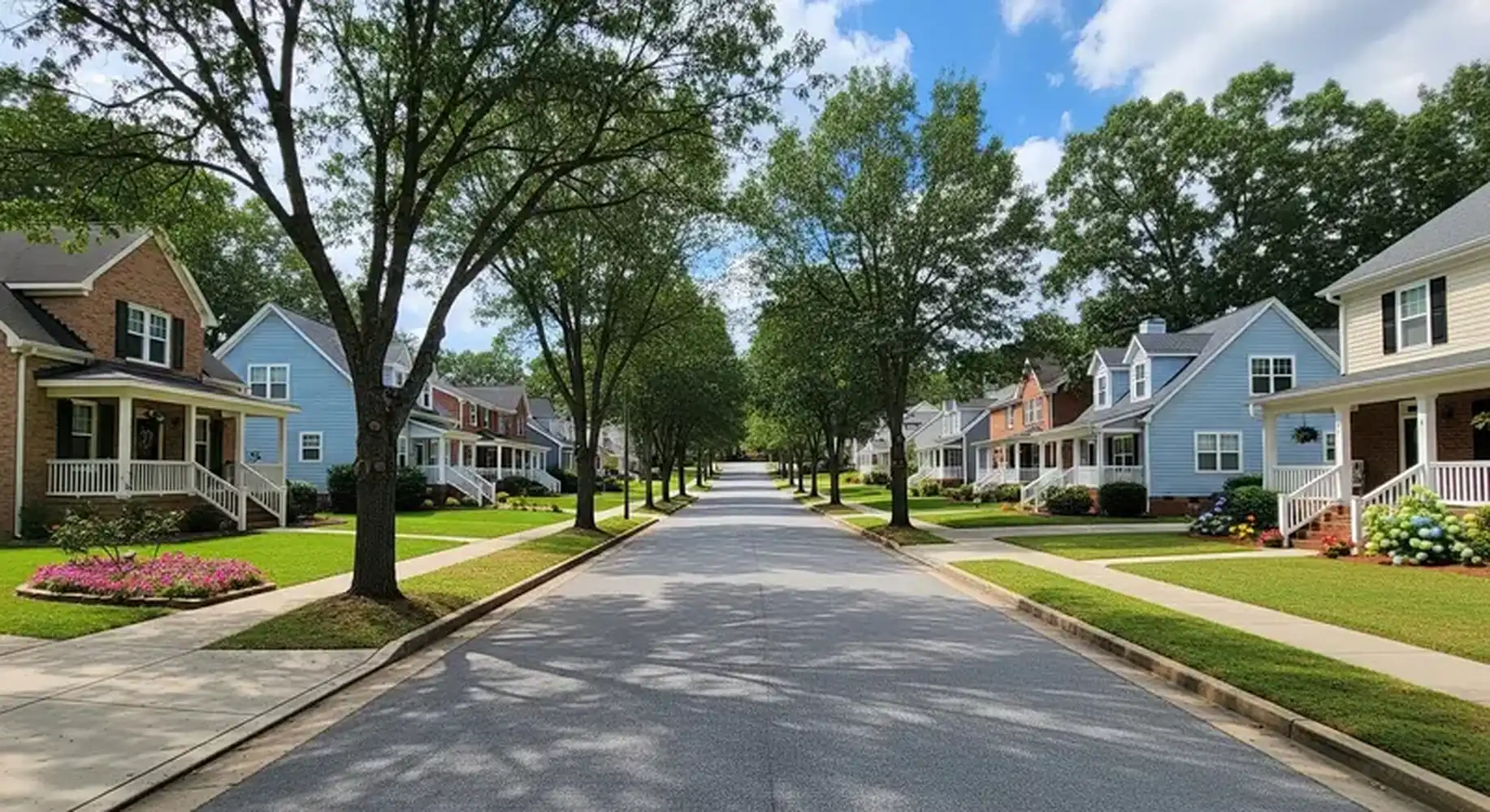
Creedmoor sits in the northern Piedmont near Falls Lake, where clay-heavy soil, rolling terrain, and a mix of older farmhouses and newer subdivisions create a distinct damage profile.
What Causes Most Losses Here
- Tropical remnants and stalled fronts dropping heavy rainfall over saturated Piedmont clay that sheds water rather than absorbing it.
- Basement and crawl space intrusion from grading issues, clogged gutters, and failed sump pumps during multi-day rain events.
- Sewer and septic backups when saturated drain fields and overloaded municipal lines push wastewater back into fixtures.
- Frozen or aging supply lines during January and February cold snaps, especially in unconditioned crawl spaces.
- Kitchen and electrical fires, plus space heater and fireplace incidents through the heating months.
- Chronic humidity - roughly 70% average - feeding mold growth in crawl spaces, attics, and behind vinyl wallpaper.
Warning Signs Worth Acting On
- Musty or earthy odor that gets stronger in humid weather or when the HVAC runs.
- Cupping hardwood, bubbling paint, or drywall that feels cool and soft to the touch.
- Rust staining at the base of water heaters, washing machine boxes, or crawl space piers.
- Gurgling drains or slow fixtures on the lowest level - often the first hint of a sewer backup.
- Soot filming on window glass, light switch plates, or the tops of door casings after a small fire.
- Allergy-type symptoms that improve when occupants leave the house.
Any of these deserve a moisture reading before they become a demolition project.
Neighborhoods We Serve in Creedmoor
Response coverage spans the city limits and the surrounding Granville County countryside, including subdivisions, rural acreage, and lakeside properties.
- Downtown Creedmoor and the Main Street corridor
- Neighborhoods along NC-56, NC-50, and US-15
- Lake Rogers and Camp Kanata area properties
- Falls Lake shoreline communities and adjacent rural tracts
- Butner, Stem, Wilton, and Bullock
- Oxford and the greater Granville County area
- Northern Wake communities including Wake Forest, Rolesville, and Youngsville
- Rural properties on septic systems and private wells outside city service lines
Coverage extends to single-family homes, manufactured housing, churches, small commercial buildings, and light industrial space along the Butner-Creedmoor corridor. Crews stage equipment locally so drying gear reaches a property while extraction is still the priority - not a day later.
Seasonal Damage Patterns in Creedmoor
North Carolina flood risk follows a two-peak pattern, and restoration call volume tracks it closely.
Spring (March - May)
- Frontal systems raise creeks and rivers across the Piedmont, driving basement flooding.
- Rising humidity activates mold in structures that were never fully dried over winter.
- Septic drain fields saturate, increasing sewage backup calls.
Summer (June - August)
- Afternoon thunderstorms bring wind-driven rain, roof leaks, and lightning-related fires.
- Peak humidity means crawl space mold and condensation damage in ductwork.
- Air conditioning condensate line clogs flood closets and ceilings below air handlers.
Fall (August - October)
- The primary catastrophic window - Atlantic and Gulf tropical systems can deliver 10 to 25 inches of rain over a few days.
- Widespread flooded basements, storm damage, and sewer surcharging.
- Chimneys and fireplaces return to service, raising fire and smoke damage risk.
Winter (November - February)
- Frozen and burst supply lines in crawl spaces, garages, and exterior walls.
- Heating equipment, space heater, and holiday cooking fires.
- Puffback events from oil and gas furnaces coating interiors with oily soot.
Housing Characteristics & Restoration Considerations
Creedmoor's housing stock spans more than a century, and each construction era responds to water and fire differently.
Older Homes (Pre-1980)
- Vented crawl spaces with minimal or degraded vapor barriers - a constant mold source in humid months.
- Plaster, board sheathing, and dimensional lumber that hold moisture longer than modern materials.
- Galvanized and early copper plumbing prone to pinhole leaks behind walls.
- Potential asbestos-containing floor tile and mastic requiring careful handling during demolition.
- Knob-and-tube or aluminum branch wiring raising electrical fire risk.
Newer Subdivision Construction (1990s - Present)
- Tight building envelopes that trap moisture once water gets past the vapor barrier.
- Engineered joists and OSB subfloor that lose structural integrity faster when saturated.
- Finished basements and bonus rooms with carpet pad, drywall, and cabinetry that wick water upward.
- Second-floor laundry rooms and refrigerator supply lines that can flood three levels before anyone notices.
Rural and Manufactured Housing
- Septic systems that back up under sustained rainfall, creating Category 3 contamination indoors.
- Belly board insulation in manufactured homes that holds water and hides mold growth.
- Well systems that can be compromised by surface flooding.
Restoration planning accounts for all of it - what dries in place, what has to be removed, and what needs testing before rebuild begins.
Environmental Conditions & Damage Implications
Local climate and geology shape how damage behaves inside a Creedmoor structure long after the water stops rising.
Humidity and Climate
- Average relative humidity near 70% keeps ambient moisture high year-round, slowing natural drying to a crawl.
- Warm, humid summers create ideal conditions for Aspergillus, Penicillium, and Stachybotrys colonization.
- Winter temperature swings drive condensation on cold surfaces inside walls and crawl spaces.
Soil and Groundwater
- Piedmont red clay drains poorly and expands when wet, pressing against foundation walls.
- Hydrostatic pressure forces water through block joints, cracks, and cove seams into basements.
- Proximity to Falls Lake and area creeks raises water tables during extended rain.
Air Quality Considerations
- Smoke particulate migrates through HVAC systems, contaminating rooms far from the fire.
- Soot is acidic and continues etching metal, glass, and finishes until cleaned.
- Sewage backups aerosolize bacteria and endotoxins - containment and negative air are non-negotiable.
- Mold spores circulate through return ducts, which is why duct cleaning is often part of remediation.
Because the environment works against drying, equipment sizing matters. Air movers and commercial dehumidifiers typically run continuously for three to seven days until documented target moisture content is reached - not until surfaces simply feel dry.
The Creedmoor Restoration Process: From First Call to Final Clearance
Water damage claims in Creedmoor and Granville County follow a predictable pattern - the smaller the initial response, the larger the eventual claim. A structured process keeps a manageable loss from turning into a gut-and-rebuild.
Step-by-Step Sequence
- Emergency dispatch - a certified technician arrives within hours, 24 hours a day, to stop the source and prevent further spread.
- Moisture assessment - thermal imaging and penetrating moisture meters map every affected area, including hidden zones behind cabinetry, under flooring, and inside wall cavities.
- Water extraction - truck-mounted and portable industrial equipment removes standing water and moisture trapped in carpet, pad, and subfloor.
- Structural drying - air movers and dehumidifiers run continuously, with daily moisture logs, until target readings are documented - typically three to seven days.
- Antimicrobial treatment - EPA-registered products applied to affected surfaces to prevent bacterial and fungal growth.
- Reconstruction - drywall, flooring, trim, and paint restored to pre-loss condition.
How the Process Shifts by Damage Type
- Sewage cleanup adds containment barriers, PPE protocols, removal of all porous materials contacted by Category 3 water, and post-cleaning verification. Raw sewage carries bacteria, viruses, and disease organisms that cause real illness when handled improperly.
- Fire and smoke damage adds board-up, soot removal by surface type, HVAC decontamination, thermal fogging or hydroxyl treatment for odor, and sealing of framing before rebuild.
- Mold removal adds negative air containment, HEPA filtration, controlled demolition of colonized materials, and post-remediation verification before reconstruction.
Documentation for Your Claim
- Photo and video records of pre-existing conditions and progress
- Daily moisture and psychrometric readings
- Itemized scope written to industry-standard estimating platforms
- Direct communication with your adjuster throughout the project
IICRC-certified crews serving Creedmoor and Granville County are available around the clock - the soundest financial response to any water intrusion is a call placed the same day it happens.





