
Damage Restoration in Artesia, NM
- Damage Restoration Services Overview
- Common Damage Restoration Issues in Artesia, New Mexico
- Neighborhoods We Serve in Artesia
- Seasonal Damage Patterns in Artesia
- Housing Characteristics & Restoration Considerations
- Environmental Conditions & Damage Implications
- The First 24 Hours: Emergency Response and Insurance Documentation in Artesia
Damage Restoration Services Overview
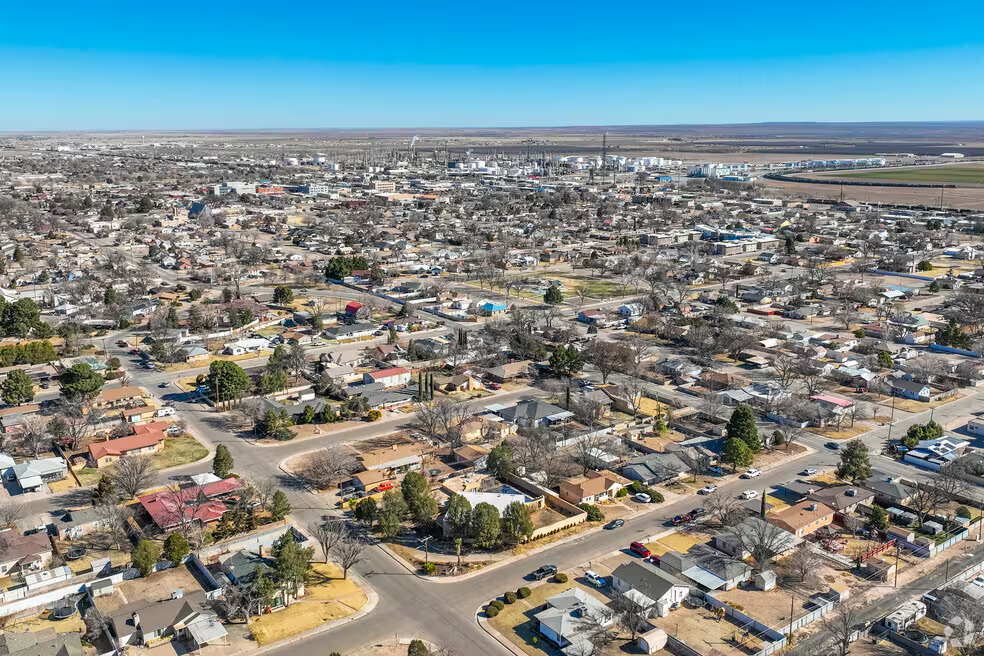
Artesia sits in a semi-arid pocket of the Pecos Valley that averages roughly 13 inches of rain a year - yet a single monsoon cell can drop a third of that total in one afternoon. That contrast is exactly why property damage here catches homeowners off guard: the ground is dry and compacted, water has nowhere to go, and it finds its way into slabs, crawl spaces, and basements within minutes.
A full-service restoration team handles every stage of recovery, from the first emergency call through the final walkthrough, so you are not coordinating three separate contractors while your floors are still wet.
- Water Damage Restoration - extraction, structural drying, and moisture mapping after burst pipes, supply line failures, and appliance leaks.
- Flooded Basement - pump-out, contents handling, and dehumidification for below-grade spaces and sunken utility rooms.
- Sewage Cleanup - containment, removal of contaminated materials, and antimicrobial treatment after backups from municipal lines or septic systems.
- Fire Damage Restoration - board-up, debris removal, structural cleaning, and reconstruction.
- Smoke Damage Restoration - soot removal from surfaces and HVAC systems plus odor neutralization.
- Mold Removal - containment barriers, HEPA filtration, and removal of colonized building materials.
Working with an IICRC-certified, licensed, bonded, and insured crew means documentation your insurance adjuster will accept and drying results verified with meters rather than guesswork.
Common Damage Restoration Issues in Artesia, New Mexico
Eddy County properties face a mix of desert extremes, aging infrastructure, and oilfield-area construction that produces some very predictable damage patterns.
What Typically Causes Damage Here
- Monsoon downpours - July through September storms overwhelm caliche hardpan and street drainage, pushing sheet flow toward garages and low door thresholds.
- Winter pipe failures - hard freezes in December and January split uninsulated lines in unheated garages, attics, and exterior walls.
- Hard water damage - Pecos Valley mineral content shortens the life of water heaters, supply hoses, and valve seals.
- Sewer backups - older clay laterals under mature neighborhoods crack and take on root intrusion, sending wastewater back through floor drains and tubs.
- Dry-season fires - brush ignition, electrical faults in older panels, and kitchen fires during high-wind spring months.
- Hidden mold - swamp cooler overflow and slow slab leaks feed colonies behind baseboards long before anyone smells them.
Warning Signs Worth Acting On
- A water bill that climbs with no change in household use.
- Warm or discolored spots on a slab floor.
- Gurgling toilets or slow drains in more than one fixture at once.
- Musty odor that intensifies when the evaporative cooler runs.
- Blistering paint, cupping wood, or drywall that feels soft to the touch.
- Lingering smoke odor that returns on hot days after a small kitchen fire.
Neighborhoods We Serve in Artesia
Response teams cover the full city footprint plus the surrounding Eddy County communities and rural properties along the Pecos.
- Central and Historic Artesia - older homes near Main Street and the Richard Street corridor with original plumbing and plaster walls.
- North Artesia - subdivisions off North 13th and Hermosa Drive with slab-on-grade construction.
- Southwest and Country Club areas - larger lots where irrigation and landscape grading affect drainage.
- Yucca and Bulldog Boulevard neighborhoods - mid-century ranch homes near the schools.
- Rural Eddy County - properties on septic systems and private wells outside city limits.
Service extends to Loco Hills, Lakewood, Hope, Cottonwood, Atoka, Dayton, and north toward Roswell and south toward Carlsbad, along with commercial accounts serving the refinery and oilfield support sector.
Seasonal Damage Patterns in Artesia
Damage calls here follow the weather calendar closely, and knowing the pattern helps homeowners prepare before the phone call becomes an emergency.
- December - February: Frozen and burst pipes lead the season. Space heater and fireplace incidents drive fire and smoke damage restoration calls.
- March - May: High winds and blowing dust push soot and debris through attics; wildfire risk peaks in dry, gusty stretches. Swamp cooler startup produces the year's first water leaks.
- June: Extreme heat stresses supply lines, water heaters, and washing machine hoses while homes sit empty during vacations.
- July - September: Monsoon season brings flooded basements, storm intrusion through roofs, and sewage backups when the system takes on stormwater.
- October - November: Mold discovered from summer moisture surfaces as homes close up. Heating system startup releases smoke odor and puff-back soot.
Mold removal calls trail water events by two to six weeks, which is why fast professional drying matters more than any single follow-up treatment.
Housing Characteristics & Restoration Considerations
Artesia's housing stock is a mix of pre-1960 homes near the city core and newer construction built during oilfield expansion periods. Each type reacts differently to water, fire, and microbial growth.
Older Homes (pre-1970)
- Plaster and lath walls hold moisture longer than drywall and require careful cavity drying rather than surface treatment.
- Galvanized supply lines and clay sewer laterals raise the odds of both leaks and backups.
- Original wood flooring over pier-and-beam framing needs crawl space drying and joist moisture readings.
- Knob-and-tube or early wiring increases electrical fire risk and complicates post-fire rebuild scope.
Mid-Century and Modern Homes
- Slab-on-grade construction hides supply line leaks until flooring warps or a warm spot appears.
- Stucco and adobe-style exteriors trap moisture behind the finish if flashing fails.
- Tighter building envelopes hold smoke odor and humidity, making HVAC cleaning part of nearly every fire job.
- Attic-mounted HVAC units and water heaters create ceiling-collapse risk when pans overflow.
Below-Grade Spaces
True basements are uncommon in the Pecos Valley, but sunken dens, storm shelters, cellars, and below-grade storage rooms exist across older properties. These spaces sit in expansive caliche soil that pushes water inward through cold joints and floor cracks, so flooded basement work usually pairs extraction with exterior grading recommendations and sealed containment during drying.
Environmental Conditions & Damage Implications
Local climate and soil shape both how damage happens and how restoration has to be performed.
Climate Factors
- Relative humidity often drops below 20 percent, which fools homeowners into believing wet materials dried on their own - surfaces feel dry while framing and subfloor stay saturated.
- Summer highs above 100 degrees accelerate mold growth in enclosed wet cavities even when indoor air seems dry.
- Wide day-to-night temperature swings cause condensation inside walls and around ductwork.
- Persistent spring wind drives fine dust into every structure, combining with soot after a fire to create a stubborn abrasive residue.
Water and Soil
- Hard, mineral-heavy water scales fixtures and shortens appliance life, contributing to sudden supply failures.
- Caliche and clay soils shed water rather than absorb it, sending runoff toward foundations during monsoon storms.
- Soil movement during wet-dry cycles cracks slabs and sewer laterals, a common precursor to sewage cleanup jobs.
- High alkalinity can react with fire residues, requiring pH-matched cleaning agents on masonry and stucco.
Air Quality Considerations
Dust events, agricultural activity, and industrial neighbors mean HVAC systems already carry a heavy particulate load. After smoke damage, that existing buildup binds with soot and recirculates odor for months unless ducts, coils, and returns are cleaned as part of the restoration scope. HEPA filtration and negative air machines are standard during both mold removal and post-fire cleaning for this reason.
The First 24 Hours: Emergency Response and Insurance Documentation in Artesia
What happens in the first day after a loss usually determines whether a job stays a cleanup or turns into a full rebuild. Because Artesia sits some distance from larger metro areas, having a crew that responds around the clock - typically within a short window of the call - keeps water from wicking into new materials and keeps smoke residue from setting permanently.
What a Proper Emergency Response Looks Like
- Stabilize the source - shut off water, secure the structure, board openings, and tarp compromised roofing.
- Assess and categorize - clean water, gray water, or contaminated sewage determines whether materials can be dried or must be removed.
- Document before touching anything - photographs, moisture readings, and a written scope your adjuster can review.
- Extract and demo selectively - remove saturated carpet pad, wet insulation, and unsalvageable drywall while preserving what can be dried.
- Set drying equipment - air movers and dehumidifiers positioned by calculation, not by habit.
- Monitor daily - readings logged until materials return to dry standard.
- Rebuild - flooring, drywall, texture, paint, and trim finished by the same team that handled mitigation.
Working With Your Insurance Carrier
- Free inspections give you a documented starting point before you file.
- Moisture logs and photo records support the claim and reduce disputes over scope.
- Sewage and mold claims often hinge on proving the cause of loss was sudden rather than long-term neglect - early documentation protects you.
- You choose the restoration contractor, not the carrier, even when a preferred vendor is suggested.
Homeowners across New Mexico consistently mention the same things in reviews: technicians who arrive when promised, explain each step in plain language, and follow up afterward. That combination of certified technical work and clear communication is what turns a stressful week in Artesia into a manageable one.





