
Damage Restoration in Waterloo, IA
- Damage Restoration Services Overview
- Common Damage Restoration Issues in Waterloo, Iowa
- Neighborhoods We Serve in Waterloo
- Seasonal Damage Patterns in Waterloo
- Seasonal Damage Patterns in Waterloo
- Housing Characteristics & Restoration Considerations
- Environmental Conditions & Damage Implications
- Cedar River Flooding, Sewer Backups, and IICRC Standards in the Cedar Valley
Damage Restoration Services Overview
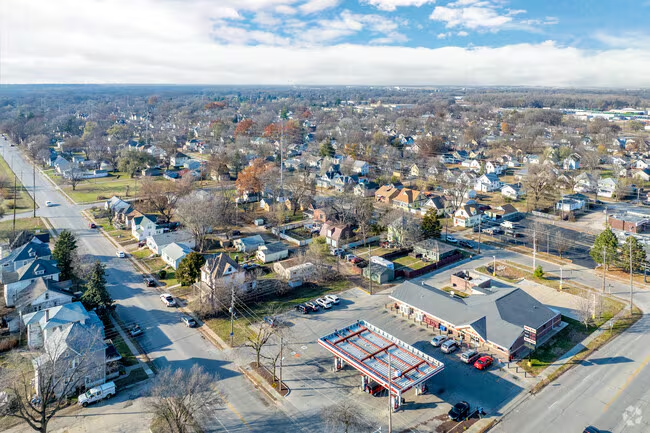
When water, sewage, fire, or mold reaches your Waterloo property, the clock starts immediately. Porous building materials - drywall, subfloor, insulation, and framing - absorb moisture within hours, and smoke residues become acidic as they sit on surfaces. Fast, correctly sequenced action limits how much of your home has to be removed and replaced.
Restoration teams serving Waterloo and the wider Cedar Valley handle a connected set of services:
- Water Damage Restoration - extraction, structural drying, dehumidification, and moisture mapping after supply line breaks, appliance failures, and roof leaks.
- Flooded Basement - pumping standing water, drying foundation walls and slabs, and addressing the drainage issue that let water in.
- Sewage Cleanup - Category 3 water response with containment, removal of contaminated materials, and antimicrobial treatment.
- Fire Damage Restoration - debris removal, structural stabilization, and repair of walls, floors, ceilings, and building systems compromised by fire.
- Smoke Damage Restoration - soot removal, thermal fogging, HVAC cleaning, and odor neutralization throughout affected areas.
- Mold Removal - inspection, containment, controlled removal, and correction of the moisture source feeding growth.
Crews respond around the clock, including weekends and holidays, and document conditions for insurance from the first walkthrough.
Common Damage Restoration Issues in Waterloo, Iowa
Waterloo sits along the Cedar River, and that geography shapes nearly every restoration call in the area. Riverine flooding, flash storms, aging sewer infrastructure, and hard Iowa winters combine to create predictable damage patterns.
Frequent Causes of Damage
- Cedar River rise and backwater flooding affecting low-lying neighborhoods and basements
- Frozen and burst supply lines during January and February cold snaps
- Sump pump failure or power loss during severe thunderstorms
- Sanitary sewer backups when heavy rain overwhelms combined drainage capacity
- Hail and straight-line wind damage to roofs, leading to slow interior leaks
- Kitchen fires, furnace malfunctions, and space heater incidents during heating season
- Chronic humidity in unconditioned basements and crawl spaces feeding mold colonies
Warning Signs Waterloo Homeowners Should Watch For
- Efflorescence - white chalky residue - on block foundation walls
- Musty odors that intensify after rain or when the furnace runs
- Cupping or darkening at the edges of hardwood flooring
- Staining around floor drains, laundry standpipes, or basement toilets
- Yellowed film on windows and light fixtures after a small fire
- Recurring allergy or respiratory symptoms that ease when you leave the house
- Peeling paint, soft baseboards, or drywall that feels cool to the touch
Any of these signs suggests hidden moisture or residue behind finished surfaces. Moisture meters and thermal imaging confirm the extent before demolition begins.
Neighborhoods We Serve in Waterloo
Coverage extends across Waterloo and the surrounding Cedar Valley communities, with response prioritized by severity and safety.
- Downtown Waterloo and the Riverfront - older commercial buildings, basements, and mixed-use structures near the Cedar River
- Highland and Prospect Hills - established homes with mature trees and original plaster
- Walnut, Church Row, and Lincoln Park - historic districts with distinctive millwork requiring careful cleaning
- Kingsley, Elk Run Heights, and Evansdale - postwar and mid-century housing stock
- West Waterloo and Crossroads area - newer subdivisions with finished lower levels
- North Cedar and Logan Avenue corridor
- Surrounding communities - Cedar Falls, Hudson, Raymond, Dunkerton, Gilbertville, Waterloo's rural townships in Black Hawk County
Local familiarity matters: crews know which streets flood first, which neighborhoods still have clay sewer laterals, and which building departments require permits for structural repairs after fire damage.
Seasonal Damage Patterns in Waterloo
Seasonal Damage Patterns in Waterloo
Damage in Black Hawk County follows a rhythm tied to Iowa's temperature swings and rainfall cycle.
- December through February - Frozen pipes, burst supply lines in unheated crawl spaces, and ice dams pushing meltwater under shingles. Heating equipment and holiday cooking drive the year's highest fire and smoke damage call volume.
- March and April - Snowmelt plus spring rain raises groundwater and the Cedar River. Flooded basements, sump pump overload, and foundation seepage peak here.
- May through July - Severe thunderstorms, hail, and tornado-producing systems. Wind-damaged roofs create water intrusion, and power outages disable sump pumps. Sewer backups follow intense downpours.
- July through September - Humid stretches with dew points in the 70s. Mold growth accelerates in basements, attics, and behind vinyl wallpaper. Air conditioning condensate line clogs cause ceiling leaks.
- October and November - Furnace startups reveal cracked heat exchangers and produce puff-back soot events. Leaf-clogged gutters send water against foundations before the ground freezes.
Preventive steps - pump testing in March, gutter clearing in October, and furnace service before first use - reduce a large share of these losses.
Housing Characteristics & Restoration Considerations
Waterloo's housing stock skews older than the national average, with a large share of homes built between the 1890s and the 1960s during the city's manufacturing growth. That age profile changes how restoration is planned and executed.
Construction Types and What They Mean
- Limestone and rubble foundations (pre-1920 homes) - porous, prone to lateral seepage, and slow to dry; often require extended dehumidification and negative-pressure drying.
- Concrete block basements (1920s-1960s) - hollow cores trap water that must be released or dried through controlled drilling at the base course.
- Plaster over wood lath - holds moisture longer than drywall and absorbs smoke odor deeply; salvage decisions depend on moisture readings and key integrity.
- Balloon framing in older two-stories - allows fire, smoke, and moisture to travel vertically inside wall cavities between floors.
- Cast iron and clay drain lines - vulnerable to root intrusion and collapse, a common source of sewage backups.
- Finished lower levels in 1990s-2000s subdivisions - carpet, pad, and paper-faced drywall that fail quickly after basement flooding.
Restoration Adjustments for Older Waterloo Homes
- Asbestos and lead-paint screening before demolition on pre-1980 structures
- Knob-and-tube or ungrounded wiring checks before energizing drying equipment
- Careful documentation and cleaning of original trim, doors, and hardwood rather than automatic replacement
- Attention to insulation gaps in attics where ice dams and condensation feed mold
Environmental Conditions & Damage Implications
Waterloo's humid continental climate produces extremes in both directions - subzero winters and muggy summers - and the local soil and water conditions compound restoration challenges.
Climate Factors
- Roughly 34 inches of annual precipitation, concentrated in spring and early summer storms
- Winter lows regularly below zero, driving pipe freeze and ice dam formation
- Summer dew points frequently above 65 degrees, keeping indoor relative humidity high without dehumidification
- Rapid freeze-thaw cycling that cracks foundations, mortar joints, and driveway slabs
Soil and Water Conditions
- Heavy glacial till and clay-rich soils that hold water against foundation walls and drain slowly
- Cedar River floodplain deposits with high seasonal water tables in low-lying neighborhoods
- Hard groundwater with elevated mineral content, which scales water heaters and accelerates fixture and supply-line failure
- Agricultural runoff nearby, meaning floodwater may carry fertilizers, fuel, and bacteria requiring Category 3 handling
Air Quality Implications
- Seasonal pollen and agricultural dust that combine with mold spores to worsen indoor air after a water loss
- Tight modern envelopes that trap smoke residue and VOCs after a fire, making HVAC cleaning and air scrubbing necessary
- Basement humidity that supports Aspergillus, Penicillium, and Stachybotrys growth when materials stay damp past 48 hours
Drying plans account for these conditions by targeting specific moisture content goals rather than a fixed schedule.
Cedar River Flooding, Sewer Backups, and IICRC Standards in the Cedar Valley
Waterloo's relationship with the Cedar River defines much of the region's restoration work. Major flood events have reshaped how the city handles stormwater, yet many properties still sit in areas where groundwater rises fast and municipal lines surcharge during heavy rain. Understanding whether water entered as clean supply water, groundwater, or sewage determines everything that follows.
Water Categories and Response Protocol
- Category 1 - clean water from a broken supply line or water heater. Materials are often dried in place with air movers and dehumidifiers if addressed quickly.
- Category 2 - gray water from washing machines, dishwashers, or sump overflow. Requires antimicrobial treatment and removal of carpet pad and saturated porous goods.
- Category 3 - black water from sewer backups, toilet overflows beyond the trap, or river flooding. Contaminated porous materials are removed, containment is established, and workers use full PPE.
How Professional Crews Work the Job
- Safety assessment first - electrical hazards, structural stability, and contamination screening
- Moisture mapping with meters and thermal imaging to define the true affected area
- Extraction and controlled demolition limited to what cannot be dried or cleaned
- Placement of air movers, LGR dehumidifiers, and HEPA air scrubbers sized to the space
- Daily monitoring of temperature, humidity, and material moisture content until drying goals are met
- Antimicrobial application and post-remediation verification for mold and sewage jobs
- Reconstruction of walls, floors, ceilings, and affected building systems once the structure is dry
These steps follow IICRC S500 water damage and S520 mold remediation standards, along with fire and smoke restoration practices for soot removal and odor control. Documented readings, photos, and scope notes support insurance claims and give homeowners a clear record of what was done and why - which matters when a Waterloo property has weathered more than one flood season.





