
Damage Restoration in North Augusta, SC
- Damage Restoration Services Overview
- Common Damage Restoration Issues in North Augusta, South Carolina
- Neighborhoods We Serve in North Augusta
- Seasonal Damage Patterns in North Augusta
- Housing Characteristics & Restoration Considerations
- Environmental Conditions & Damage Implications
- Crawl Space Moisture and Foundation Drainage: The North Augusta Pattern
Damage Restoration Services Overview
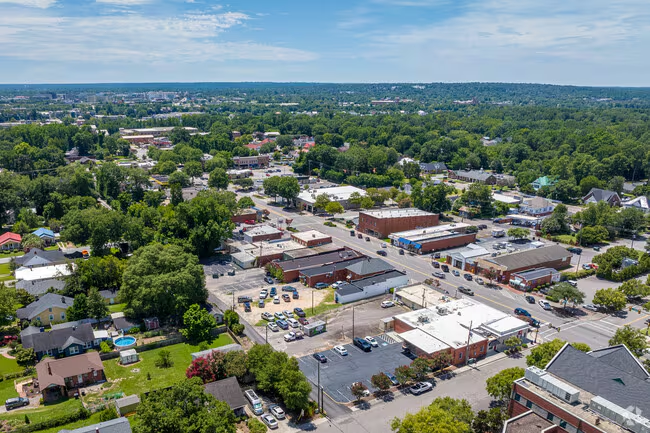
Water spreads through a North Augusta home faster than most owners expect. Within hours, drywall wicks moisture upward, hardwood cups, and insulation in crawl spaces turns into a saturated sponge. Fire and smoke behave the same way - soot residues become more corrosive and harder to remove the longer they sit on surfaces.
Restoration work across the Savannah River corridor covers a connected set of services, and most jobs involve more than one:
- Water damage restoration - extraction, structural drying, moisture mapping, and repair after supply line breaks, water heater failures, appliance leaks, and roof intrusion.
- Flooded basement and crawl space response - pumping standing water, drying framing and subfloor, and addressing the drainage failure that allowed it.
- Sewage cleanup - containment, removal of contaminated porous materials, and antimicrobial treatment after backups or septic failures.
- Fire damage restoration - securing the structure, removing charred materials, and coordinating rebuild of affected assemblies.
- Smoke damage restoration - soot removal from surfaces and contents, HVAC cleaning, and odor neutralization.
- Mold removal - containment, controlled removal of colonized materials, and correction of the moisture source.
The benefit of fast action for North Augusta property owners is straightforward: fewer materials removed, shorter drying cycles, less disruption, and cleaner insurance documentation from the first day forward.
Common Damage Restoration Issues in North Augusta, South Carolina
Aiken County's heavy clay soils drain slowly and push surface runoff toward foundation perimeters during and after every significant rain event. That single characteristic drives a large share of local restoration calls.
Frequent causes of damage locally
- Poor perimeter grading and clogged gutters directing water against foundation walls
- Crawl spaces without vapor barriers collecting groundwater and humidity
- Supply line, ice maker, dishwasher, and water heater failures in newer construction
- Aging galvanized and polybutylene plumbing in older mill-village housing
- Sewer and septic backups during saturated ground conditions
- Kitchen fires, electrical faults in older panels, and chimney or space heater incidents in winter
- HVAC condensate line clogs producing slow, hidden ceiling and closet leaks
Warning signs worth acting on
- Musty odor that intensifies when the HVAC cycles on
- Cupping or crowning hardwood, or soft spots underfoot near exterior walls
- Staining along baseboards, ceiling seams, or the underside of subfloor in the crawl space
- Efflorescence or white powder on basement and foundation walls
- Gurgling drains or slow floor drains after heavy rain - an early indicator of sewer issues
- Smoke odor that returns on humid days after a small fire was cleaned up superficially
- Persistent allergy-like symptoms that improve when occupants leave the house
Humidity is the constant multiplier here. A leak that would dry passively in a drier climate will instead feed mold growth in a matter of days across the CSRA.
Neighborhoods We Serve in North Augusta
Restoration crews work throughout North Augusta and the surrounding Aiken County and CSRA communities, adapting methods to the construction style of each area.
- Hammond's Ferry and Riverside Village - newer riverfront townhomes and mixed-use residences where appliance and supply line failures dominate, along with drainage challenges at lower elevations
- Downtown North Augusta and the Georgia Avenue corridor - older homes with basements, original plumbing, and layered finishes
- Belvedere and Clearwater - established residential areas with crawl space foundations
- Langley, Bath, and Burnettown - mill-village housing with aging systems and older roofing
- Martintown Road and Knobcone/Mount Vintage areas - suburban subdivisions on clay-heavy lots
- Beech Island and Jackson - rural properties often on septic systems and well water
Work in the older mill communities frequently requires separating pre-existing conditions - deteriorated plumbing, missing vapor barriers, worn roofing - from the immediate event damage, documented individually for the insurance file.
Seasonal Damage Patterns in North Augusta
Damage types rotate predictably through the year in the Central Savannah River Area.
- December through February - hard freezes crack exposed crawl space and hose bib plumbing. Space heaters, fireplaces, and overloaded circuits drive the annual peak in fire and smoke damage calls.
- March through May - spring storm systems saturate clay soils. Flooded basements, crawl space intrusion, and roof leaks climb sharply, followed within weeks by the first mold complaints.
- June through August - heat and humidity dominate. Condensate line backups, air conditioning overflow, and mold growth in unconditioned spaces are routine. Afternoon thunderstorms produce sudden localized flooding and lightning-related fires.
- September through October - tropical systems tracking inland from the Atlantic or Gulf bring wind-driven rain, downed limbs, and sewer surcharge events.
- November - leaf fall clogs gutters and downspouts, quietly redirecting roof runoff to foundation perimeters just before the wet season.
Mold removal calls follow water events by roughly two to six weeks, which is why post-storm inspection matters even when the visible water disappeared quickly.
Housing Characteristics & Restoration Considerations
North Augusta's housing stock spans well over a century, and the restoration approach shifts substantially between eras.
Pre-1950 homes and mill-village housing
- Wood framing over open or partially enclosed crawl spaces, frequently without vapor barriers
- Plaster over lath that holds moisture and complicates drying compared to modern drywall
- Potential for lead paint and asbestos-containing materials requiring careful handling during fire and water repairs
- Original cast iron and galvanized drain lines prone to backup and sewage release
Mid-century ranch homes
- Slab and crawl space foundations with limited under-house clearance for drying equipment
- Ductwork routed through crawl spaces, which spreads mold spores and smoke odor throughout the home
- Original single-pane windows and minimal insulation contributing to condensation issues
Newer construction at Hammond's Ferry, Riverside Village, and outlying subdivisions
- Tight building envelopes that trap moisture once water intrudes, extending drying times
- Engineered wood products and OSB subfloor that degrade quickly under sustained saturation
- Multi-story townhome layouts where an upper-floor leak affects three levels of finishes
- Shared walls that require coordination with neighbors and HOA management during containment
Older basements in the downtown area add a further variable - block or stone walls that absorb water and require extended dehumidification before finishes can be rebuilt.
Environmental Conditions & Damage Implications
The local climate and soil profile shape nearly every restoration decision made in North Augusta.
Climate
- Humid subtropical conditions with long, hot summers and mild winters punctuated by occasional hard freezes
- Ambient humidity that regularly exceeds the threshold supporting mold growth on organic materials
- Substantial annual rainfall distributed across all seasons rather than concentrated in one wet period
- Tropical remnants that can deliver several inches of rain over a short window
Soil and drainage
- Dense clay that resists infiltration and channels runoff laterally toward foundations
- Seasonal shrink-swell movement that opens hairline cracks in slabs and foundation walls
- Proximity to the Savannah River and its tributaries raising groundwater tables in low-lying parcels
- Sandier pockets in outlying areas that behave differently and require site-specific drainage design
Effects on restoration work
- Drying plans must account for high outdoor dew points - open-window drying is often counterproductive here
- Desiccant or refrigerant dehumidification is selected based on material type and target moisture content
- Crawl space encapsulation and vapor barrier installation frequently accompany mold removal to prevent recurrence
- Sewage cleanup on septic properties requires evaluation of drain field saturation, not just the interior contamination
- Smoke odor bonds more stubbornly to surfaces in humid conditions, making thermal fogging and HVAC cleaning standard steps
Crawl Space Moisture and Foundation Drainage: The North Augusta Pattern
A large share of local mold removal work traces back to a crawl space that was never designed for this soil. Clay holds water against the foundation, the crawl space vents pull in humid summer air, and the framing above stays damp month after month. Owners often notice nothing until an odor reaches the living space or a floor begins to feel spongy.
How the problem develops
- Runoff collects at the foundation perimeter because grading is flat or slopes inward.
- Gutters overflow or downspouts discharge within a few feet of the wall, concentrating water at specific points.
- Moisture migrates through block or brick piers and evaporates into the crawl space.
- Exposed soil without a vapor barrier releases additional moisture continuously.
- Joists, subfloor, and insulation reach moisture levels that support fungal growth.
- Ductwork and air leakage carry spores and odor into occupied rooms above.
What a durable solution involves
- Moisture readings across framing, subfloor, and soil to establish the actual scope rather than guessing from visible growth
- Containment and controlled removal of colonized insulation, wood, and debris
- Antimicrobial treatment of remaining structural wood
- Vapor barrier installation or full encapsulation matched to the crawl space configuration
- Dedicated dehumidification sized to the space rather than relying on vents
- Exterior corrections - regrading, downspout extensions, French drains, or sump installation where the water table demands it
- Follow-up verification that materials have reached and held acceptable moisture content
The same logic applies to flooded basements downtown and to lower-elevation lots near the river corridor. Removing water and treating growth solves today's problem; correcting the drainage path is what keeps the crew from coming back next spring. Documentation of both the event damage and any pre-existing drainage deficiency gives owners a clearer position with their insurance carrier.





