
Damage Restoration in Belvedere, SC
- Damage Restoration Services Overview
- Common Damage Restoration Issues in Belvedere, South Carolina
- Neighborhoods We Serve in Belvedere
- Seasonal Damage Patterns in Belvedere
- Housing Characteristics & Restoration Considerations
- Environmental Conditions & Damage Implications
- Emergency Response Timelines for Belvedere Properties
Damage Restoration Services Overview
Property damage rarely gives notice. A supply line lets go behind a laundry wall at 2 a.m., a summer thunderstorm pushes runoff into a basement, or a kitchen fire fills every room with acrid smoke residue. For Belvedere homeowners and business operators, the hours immediately following that discovery determine how much of the structure and how many belongings can be saved.
Restoration work in this part of Aiken County covers a connected set of services, each addressing a different stage or category of loss:
- Water damage restoration - extraction, structural drying, and moisture mapping after plumbing failures, roof leaks, or appliance overflows
- Flooded basement recovery - pumping standing water, drying below-grade walls and slabs, and addressing the drainage cause
- Sewage cleanup - Category 3 contaminated water handling, disinfection, and safe removal of porous materials
- Fire damage restoration - stabilization, debris removal, and rebuilding of charred framing and finishes
- Smoke damage restoration - soot removal, thermal fogging, HVAC and duct cleaning, and odor neutralization
- Mold removal - containment, HEPA filtration, antimicrobial treatment, and correction of the moisture source
IICRC-certified crews respond around the clock, document conditions for insurance claims, and phase the work so occupants return to usable space as quickly as safety allows.
Common Damage Restoration Issues in Belvedere, South Carolina
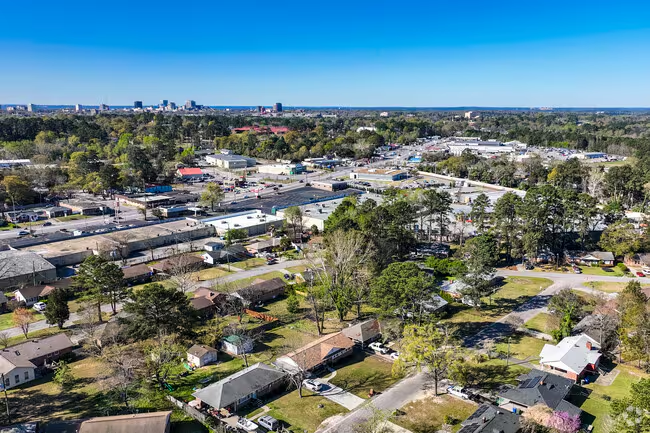
Belvedere sits in the Savannah River corridor between North Augusta and Clearwater, where heavy clay soils, humid summers, and older housing stock combine to create predictable damage patterns.
Local Causes Behind Most Calls
- Slow-draining clay soil that channels runoff toward foundation perimeters instead of absorbing it
- Crawl space moisture from ground vapor, poor grading, and missing or torn vapor barriers
- Aging cast iron and clay sewer laterals prone to root intrusion and backup during heavy rain
- Undersized or clogged gutters dumping water directly against block foundation walls
- Wildfire and brush fire activity across South Carolina, plus cooking and electrical fires in residential settings
- Aged water heaters, washing machine hoses, and HVAC condensate lines in homes built decades ago
Warning Signs Worth Acting On
- Musty odor in a hallway, closet, or crawl space access that never fully clears
- Buckled or cupped hardwood, or vinyl plank lifting at the seams
- Discolored rings on ceilings or drywall that darken after rainfall
- Gurgling floor drains or slow tub drainage during storms - an early backup signal
- Peeling paint or efflorescence on basement or foundation walls
- Lingering smoke smell that reappears when the HVAC system cycles on
- Increased allergy or asthma symptoms indoors that ease when occupants leave the house
Left alone, a small leak becomes visible mold growth within a couple of days in Belvedere's humidity, and a minor sewer backup contaminates subfloor and framing well beyond the visible wet area.
Neighborhoods We Serve in Belvedere
Response crews cover Belvedere proper and the surrounding Aiken and Edgefield County communities along the Savannah River corridor.
- Belvedere and Murphys Estates - established residential streets with a mix of slab and crawl space homes
- North Augusta - including Hammond's Ferry, Riverside Village, and the greenway corridor neighborhoods
- Clearwater, Burnettown, and Langley - older mill-era housing with legacy plumbing
- Graniteville, Warrenville, and Vaucluse - properties along Horse Creek and its tributaries
- Gloverville, Bath, and Beech Island
- Aiken, New Ellenton, and Jackson
- Edgefield, Johnston, and Trenton
- Williston, Blackville, and Barnwell to the southeast
Because crews stage locally rather than dispatching from Columbia or Charleston, arrival times to Belvedere addresses stay short - which matters most in the first hours of a water or sewage loss.
Seasonal Damage Patterns in Belvedere
Each season brings a different dominant loss type, and knowing the pattern helps homeowners prepare before the call becomes an emergency.
- December through February: Pipe freezes during brief hard-freeze snaps, especially in uninsulated crawl spaces and exterior walls. Heating equipment, fireplaces, and space heaters drive fire and smoke damage calls.
- March through May: Spring storm systems saturate clay soils, producing flooded basements, crawl space standing water, and sewer backups when laterals surcharge. Rising humidity restarts dormant mold colonies.
- June through August: Peak mold season. Dew points stay high, air conditioning systems shed condensate, and any unaddressed leak becomes visible growth quickly. Afternoon thunderstorms bring wind-driven rain and roof intrusion.
- September through November: Tropical remnants reaching the Midlands from the Atlantic or Gulf deliver the season's heaviest rainfall totals. Dry autumn stretches raise brush and wildfire risk across the region.
Year-round, appliance and supply-line failures remain the single most common source of interior water damage - they follow no calendar at all.
Housing Characteristics & Restoration Considerations
Belvedere's housing mix spans mid-century ranch homes near the older commercial corridors, brick and vinyl subdivisions from the 1970s through the 1990s, and newer construction pushing outward toward North Augusta. Each type restores differently.
Construction Types and What They Mean
- Crawl space foundations - dominant in older Belvedere neighborhoods. Water pools on the ground surface, saturating joists, subfloor, and insulation. Restoration typically requires insulation removal, antimicrobial treatment of framing, and vapor barrier replacement.
- Slab-on-grade homes - water spreads laterally under flooring and wicks up drywall. Requires flood cuts, cavity drying, and careful subfloor moisture verification.
- Partial and full basements - less common but present in older sections. Block walls hold moisture long after standing water is pumped out.
- Homes built before the late 1970s - may contain asbestos-bearing flooring, mastic, or textured ceilings, plus lead-based paint. Testing precedes demolition.
- Newer construction - tighter envelopes trap moisture rather than letting it escape, so mold develops faster behind finished surfaces after a leak.
How Age Affects the Work
- Galvanized and polybutylene supply lines in older homes fail without warning and often flood multiple rooms.
- Clay and cast iron sewer laterals crack and admit roots, creating repeat backups until the line is replaced.
- Plaster and lath assemblies dry more slowly than modern drywall and need extended monitoring.
- Original ductwork spreads smoke residue and mold spores building-wide, so HVAC cleaning is usually part of the scope.
Environmental Conditions & Damage Implications
The environment around Belvedere works against drying and in favor of microbial growth for much of the year.
Climate
- Hot, humid subtropical summers with dew points regularly in the 70s
- Annual rainfall in the mid-40-inch range, often delivered in intense bursts
- Mild winters punctuated by short freeze events that catch exposed plumbing unprepared
- Tropical system remnants reaching inland Aiken County in late summer and fall
Soil and Drainage
- Aiken County's characteristic heavy clay drains slowly and channels surface runoff toward foundation perimeters
- Sandy Savannah River terrace soils in some pockets shift and undermine drainage lines
- Clay expansion and contraction stresses foundation walls, opening seepage paths over time
- Properties lacking perimeter grading, working gutters, or French drains accumulate water against foundations during routine storms
Air and Water Quality Effects
- High ambient humidity extends structural drying and requires commercial dehumidification rather than fans alone
- Pollen-heavy spring air combines with mold spores to worsen indoor air quality after a water loss
- Regional wildfire smoke can infiltrate homes and settle in ductwork, insulation, and soft goods
- River flooding events involve Category 2 or 3 water requiring contaminated-water protocols distinct from clean-water plumbing failures
These conditions shape the equipment plan: more dehumidification capacity, longer monitoring, and containment where mold or contaminated water is involved.
Emergency Response Timelines for Belvedere Properties
Speed is the single largest variable in restoration outcomes. In Belvedere's humidity, the window between a clean-water loss and a mold problem is measured in hours, not days.
What Happens on the Clock
- First 1 - 2 hours: Crew dispatch, source identification, and water shutoff. Standing water extraction begins immediately with truck-mounted or portable units.
- Hours 2 - 8: Moisture mapping with meters and thermal imaging to find water inside wall cavities, under flooring, and in crawl space framing. Air movers and dehumidifiers are placed and documented.
- Hours 8 - 24: Controlled demolition of unsalvageable materials, antimicrobial application, and containment setup if contamination or existing mold is present.
- Days 2 - 5: Daily moisture readings until framing and subfloor reach dry standard. Equipment is adjusted rather than left running blindly.
- After drying: Clearance verification, then reconstruction scoping - drywall, flooring, trim, paint, and cabinetry.
What Belvedere Property Owners Can Do Before Crews Arrive
- Shut off the water at the main or the fixture supply valve if the source is plumbing
- Cut power to affected areas at the breaker when it can be done safely from a dry position
- Stay out of any area touched by sewage - Category 3 water carries pathogens that require protective equipment
- Photograph everything before moving items, for the insurance file
- Lift furniture legs onto foil or blocks to prevent finish transfer onto wet carpet
- Leave fire-damaged rooms undisturbed - soot smears permanently when wiped incorrectly
Sewage backups and fire losses both call for immediate professional handling. Contaminated water saturates porous materials fast, and smoke residue turns acidic within hours, etching metal, glass, and finished surfaces. Twenty-four-hour dispatch keeps that damage curve as flat as possible for Belvedere, Clearwater, North Augusta, and surrounding Aiken County properties.





