
Damage Restoration in Aiken, SC
- Damage Restoration Services Overview
- Common Damage Restoration Issues in Aiken, South Carolina
- Neighborhoods We Serve in Aiken
- Seasonal Damage Patterns in Aiken
- Housing Characteristics & Restoration Considerations
- Environmental Conditions & Damage Implications
- Restoring Equestrian and Historic Properties in Aiken
Damage Restoration Services Overview
You come home from a weekend in Charleston, open the door, and hear water running somewhere it shouldn't be. The hallway carpet squishes underfoot. A supply line behind the washing machine let go two days ago, and every hour since has pushed moisture deeper into subfloor, baseboards, and wall cavities.
That scenario plays out across Aiken more often than most homeowners expect - and it rarely stays a single problem. Water becomes mold. A kitchen fire becomes a smoke odor issue in every room. A backed-up sewer line becomes a health hazard.
Our restoration work in Aiken covers the full range of property emergencies:
- Water damage restoration - extraction, structural drying, and moisture mapping after leaks, appliance failures, and storm intrusion
- Flooded basement recovery - pumping, dehumidification, and treatment of below-grade spaces and crawl areas
- Sewage cleanup - containment, removal of contaminated materials, and antimicrobial treatment
- Fire damage restoration - structural stabilization, debris removal, and content recovery
- Smoke damage restoration - soot removal from surfaces and HVAC systems plus deep odor neutralization
- Mold removal - containment, controlled remediation, and correction of the moisture source behind the growth
Benefits for Aiken property owners include faster reoccupancy, reduced secondary damage, thorough insurance documentation, and scope planning that respects the age and construction of your home.
Common Damage Restoration Issues in Aiken, South Carolina
Aiken's mix of humid subtropical weather, older housing stock, and sandy Sandhills soil creates damage patterns you won't see in every South Carolina market.
What Causes Most Losses Here
- Summer thunderstorms and tropical remnants - wind-driven rain through roof penetrations, chimney flashing, and aging window seals
- Crawl space moisture - many Aiken homes sit on vented crawl spaces with no vapor barrier, allowing ground moisture to migrate into framing and insulation
- Frozen or burst pipes - brief winter cold snaps catch uninsulated lines in crawl spaces and exterior walls
- Sewer and septic backups - heavy rain overwhelms older laterals; rural properties on septic see saturation-related failures
- Cooking, heating, and electrical fires - space heaters and older wiring in mid-century homes remain frequent ignition sources
- Barn and stable water intrusion - equestrian properties see roof leaks, arena footing saturation, and tack room mold
Warning Signs Worth Acting On
- A musty smell that intensifies when the HVAC cycles on
- Cupped hardwood, bubbling paint, or baseboards pulling away from walls
- Unexplained increases in water usage with no visible leak
- Gurgling drains or slow floor drains before a full backup
- Lingering smoke odor weeks after a small fire was extinguished
- Condensation on ductwork, windows, or crawl space piers
Catching any of these early usually means a smaller scope, less demolition, and fewer materials lost.
Neighborhoods We Serve in Aiken
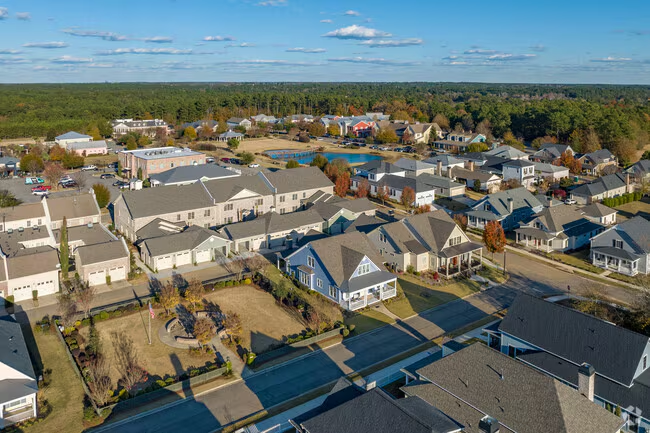
We respond throughout the City of Aiken and across Aiken County, adapting our approach to the housing type and age of each area.
- Downtown and the Historic District - Victorian and antebellum homes along South Boundary, Colleton, and the Winter Colony area
- Houndslake and Woodside Plantation - established golf community homes with finished lower levels and irrigation-related moisture
- Cedar Creek and Gem Lakes - newer construction with slab and crawl space foundations
- Kalmia Hill, Crosland Park, and Northside - mid-century housing with original plumbing and wiring
- Three Runs Plantation and Bridle Creek - equestrian properties with barns, stables, and arenas
- Surrounding communities - New Ellenton, Montmorenci, Beech Island, Graniteville, Warrenville, Wagener, Windsor, and North Augusta
Horse Creek Valley and rural Aiken County properties on well and septic systems receive the same emergency response and documentation standards as in-town addresses.
Seasonal Damage Patterns in Aiken
Restoration demand in Aiken shifts predictably through the year. Knowing what's coming helps you prepare.
Winter (December - February)
- Burst pipes in crawl spaces and exterior walls during cold snaps
- Fire and smoke damage from fireplaces, space heaters, and chimney issues
- Standing water under homes after prolonged rain
Spring (March - May)
- Severe thunderstorms, hail, and wind-driven rain through roofs
- Flooded basements and crawl spaces from saturated ground
- First mold colonies appearing as temperatures and humidity climb
Summer (June - August)
- Peak mold season - dew points stay high for weeks at a time
- HVAC condensate line clogs causing ceiling and closet water damage
- Sewage backups after intense downpours overwhelm lines
- Barn and stable humidity problems on equestrian properties
Fall (September - November)
- Tropical system remnants bringing heavy rainfall and roof leaks
- Clogged gutters directing water toward foundations
- Early-season heating equipment fires and puffback soot from furnaces
Housing Characteristics & Restoration Considerations
Aiken's building stock spans nearly two centuries, and each era brings its own restoration challenges.
Historic Homes (pre-1940)
- Original heart pine flooring, plaster walls, and custom millwork that cannot be swapped for modern equivalents
- Balloon framing that allows smoke and water to travel vertically between floors
- Potential for lead paint and asbestos-containing materials requiring careful handling
- Fire restoration here demands structural stabilization plus scope planning that preserves salvageable original material
Mid-Century Housing (1940s - 1970s)
- Galvanized or early copper supply lines prone to pinhole leaks
- Cast iron drain lines with corrosion and root intrusion driving sewage backups
- Vented crawl spaces with minimal or missing vapor barriers
- Original electrical panels contributing to fire risk
Modern Construction (1990s - present)
- Slab-on-grade foundations where water spreads laterally under flooring before it's visible
- Tighter building envelopes that trap moisture and accelerate mold growth
- Engineered flooring and MDF trim that swell quickly and rarely dry successfully
- Second-floor laundry rooms and attic air handlers creating overhead water risk
Agricultural and Equestrian Structures
- Metal barn roofs where condensation mimics a leak
- Arena footing saturation from grading and drainage failures
- Wood stalls and tack rooms that hold moisture and grow mold quickly
We assess existing conditions before establishing scope so drying and rebuild decisions match the structure you actually have.
Environmental Conditions & Damage Implications
Aiken sits in the Sandhills region along the fall line, and local ground and climate conditions shape how damage develops.
Climate Factors
- Humid subtropical conditions with summer relative humidity frequently above 70 percent
- Roughly 45 - 48 inches of annual rainfall, concentrated in convective summer storms
- Long warm season that keeps mold-friendly temperatures in play most of the year
- Occasional tropical system remnants moving inland from the Atlantic and Gulf
Soil and Drainage
- Sandy Sandhills soils drain quickly at the surface but transmit water readily toward foundations
- Clay lenses beneath sand can perch water under crawl spaces and slabs
- Low-lying pockets near Hitchcock Woods drainages and creek corridors hold moisture longer
- Septic drain fields in rural areas struggle after multi-day rain events, increasing backup risk
What This Means for Restoration
- Drying plans must account for high ambient humidity - open windows make things worse, not better
- Dehumidification often runs longer here than in drier climates to reach dry standard
- Mold containment matters because spores move easily through humid, leaky building envelopes
- Sewage cleanup requires full removal of porous contaminated materials rather than surface cleaning
- Smoke odor bonds to humid surfaces and needs thermal or hydroxyl treatment, not masking agents
Post-remediation verification confirms moisture content and air quality before reconstruction begins.
Restoring Equestrian and Historic Properties in Aiken
Aiken is defined by two property types that demand more than a standard restoration playbook: working equestrian facilities and architecturally significant historic homes.
Equestrian Facility Restoration
Horses have to be stabled. Training schedules continue. A barn cannot shut down for weeks while drying equipment runs.
- Stable flooding - water extraction from aisles and stalls with phased work so horses can be rotated rather than relocated off-site
- Barn roof damage - temporary weather protection followed by permanent repair and interior drying
- Arena footing damage - assessment of water intrusion, base drainage, and footing material recovery
- Tack and feed room mold - containment and remediation in high-humidity spaces holding leather, textiles, and organic feed
- Wash rack and drainage failures - correcting chronic moisture that feeds recurring mold in adjacent structures
Historic District Fire and Smoke Recovery
Victorian and antebellum homes in the Winter Colony and downtown Aiken carry original materials that cannot be replicated at a big box store.
- Emergency board-up and structural stabilization to prevent further loss
- Careful inventory of salvageable millwork, flooring, plaster, and hardware
- Controlled soot removal calibrated to painted, gilded, and unfinished historic surfaces
- Deep odor remediation through balloon-framed cavities where smoke traveled
- Detailed photo and moisture documentation for insurance and any preservation review
Whether the property is a working barn off Banks Mill Road or a 19th-century home on South Boundary, we build scope around the structure's real condition and your operational reality - not a generic template.





