
Damage Restoration in Yuba City, CA
- Damage Restoration Services Overview
- Common Damage Restoration Issues in Yuba City, California
- Neighborhoods We Serve in Yuba City
- Seasonal Damage Patterns in Yuba City
- Housing Characteristics & Restoration Considerations
- Environmental Conditions & Damage Implications
- Flood Risk, Levees, and the Restoration Standards That Protect Yuba City Property
Damage Restoration Services Overview
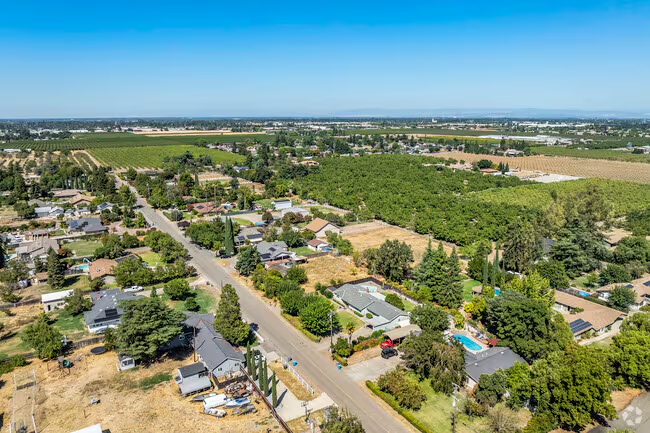
Yuba City sits at the confluence of the Feather River floodplain and one of California's most productive farming regions - a location that brings rich soil and, at times, significant water risk. Properties here face pressure from river-adjacent groundwater, aging plumbing in mid-century neighborhoods, and wildfire smoke that drifts down the Sacramento Valley during fire season.
A single restoration partner handling every phase of property damage keeps the process moving and prevents secondary problems from taking hold. Services available to homes and businesses across Sutter County include:
- Water Damage Restoration - extraction, structural drying, and moisture verification after pipe breaks, roof leaks, and appliance failures
- Flooded Basement Cleanup - pumping, sanitizing, and drying below-grade spaces and crawl spaces
- Sewage Cleanup - containment, removal of contaminated materials, and antimicrobial treatment following backups
- Fire Damage Restoration - debris removal, soot cleaning, content recovery, and structural rebuilding
- Smoke Damage Restoration - odor neutralization, HVAC cleaning, and surface treatment after fires or regional wildfire events
- Mold Removal - containment, remediation, and correction of the moisture source feeding growth
Key benefits for Yuba City property owners include faster reoccupancy, reduced repair costs through early moisture control, documentation that supports insurance claims, and healthier indoor air for families and employees.
Common Damage Restoration Issues in Yuba City, California
Local geography and building stock create a predictable set of damage patterns. Recognizing them early keeps a small problem from becoming a full reconstruction project.
What Causes Damage Here
- Winter storm runoff and levee-adjacent groundwater - saturated soils push moisture into crawl spaces, slab edges, and below-grade rooms
- Aging supply lines and galvanized plumbing - common in older downtown-area homes, prone to pinhole leaks and sudden bursts
- Appliance failures - dishwashers, water heaters, washing machines, and refrigerator ice lines leak slowly into subfloors and cabinet bases
- Sewer line intrusion from mature street trees - roots crack clay laterals, causing backups into tubs, floor drains, and laundry areas
- Wildfire smoke drift - fine particulate settles into attics, ductwork, and soft goods even when flames are miles away
- Electrical and kitchen fires - older panels and worn wiring in mid-century houses remain a frequent ignition source
Warning Signs Worth Acting On
- Musty odor that intensifies when the HVAC system runs
- Cupping or darkening at the edges of wood and laminate flooring
- Discolored drywall seams, bubbling paint, or soft baseboards
- Slow drains in multiple fixtures at once, or gurgling toilets
- Persistent smoke odor returning on warm days after a fire
- Visible growth behind furniture on exterior walls or inside cabinet toe kicks
- Condensation on crawl space ductwork or standing water beneath the home
Addressing these signs quickly limits demolition, protects framing and insulation, and shortens the overall restoration timeline.
Neighborhoods We Serve in Yuba City
Response covers the full Yuba City area along with neighboring communities across Sutter and Yuba counties.
- Historic Downtown and Plumas Street district - older commercial buildings and homes with original plumbing
- Bridge Street and Percy Avenue corridors - established residential blocks with mature trees and clay sewer laterals
- Gray Avenue and Butte House Road neighborhoods - mixed-era single-family housing
- Tierra Buena and Sunsweet areas - suburban tracts and semi-rural parcels
- Rancho Road, Harter, and Lincoln Road areas - newer subdivisions on slab foundations
- Barry, Bogue, and surrounding agricultural properties
Service also reaches Marysville, Live Oak, Olivehurst, Linda, Yuba Gardens, Sutter, Meridian, and Plumas Lake. Crews familiar with these areas know which streets sit lowest during storm season and which neighborhoods carry the oldest sewer infrastructure - knowledge that shapes how each job is scoped.
Seasonal Damage Patterns in Yuba City
Damage types shift predictably through the year in the Sacramento Valley. Planning around that calendar reduces emergency calls.
- December through March - peak water season. Atmospheric river storms saturate soils, overwhelm gutters, and raise groundwater near the Feather River. Flooded basements, crawl space standing water, roof leaks, and sewer backups spike during this window.
- March through May - mold emergence. Rising temperatures combined with moisture left over from winter create ideal conditions inside walls, under flooring, and in poorly ventilated crawl spaces.
- June through August - plumbing and appliance stress. Heavy irrigation demand, high supply pressure, and constant air conditioning condensate lead to line failures, water heater ruptures, and drain pan overflows.
- July through October - fire and smoke season. Regional wildfires push smoke into the valley, depositing soot in attics and duct systems. Structure fires from electrical loads and outdoor equipment also increase.
- October through November - transition period. First rains find summer-worn roof flashing and clogged drains, producing early-season water intrusion.
Seasonal maintenance - gutter clearing, supply hose replacement, sewer camera inspection, and attic ventilation checks - reduces the odds of an emergency at the worst possible moment.
Housing Characteristics & Restoration Considerations
Yuba City's housing mix spans nearly a century of construction, and each era responds differently to water, fire, and mold.
Common Construction Types
- Pre-1960 homes near downtown - raised foundations, wood lath or early drywall, original galvanized supply lines, and clay sewer laterals
- 1960s-1980s tracts - stucco exteriors, engineered trusses, aluminum or early copper wiring, and limited crawl space ventilation
- 1990s-present subdivisions - post-tension or standard slab foundations, engineered wood flooring, tightly sealed envelopes, and attic-mounted HVAC
- Agricultural and rural properties - well and septic systems, outbuildings, and detached structures with distinct drying needs
How Construction Shapes Restoration
- Raised foundations hold water and humidity under the home, so crawl space drying, vapor barrier replacement, and insulation removal often accompany interior work.
- Slab-on-grade homes wick moisture through concrete into baseboards and wall cavities, requiring targeted cavity drying rather than surface fans alone.
- Older plaster and lath traps moisture behind the finish and demands careful controlled demolition to preserve character features.
- Tight modern envelopes hold smoke odor and humidity longer, making HVAC cleaning and air scrubbing central to fire and mold projects.
- Two-story layouts spread upstairs leaks across ceilings, light fixtures, and stairwells, expanding the drying footprint significantly.
Scoping the job around the building's actual assembly - not a generic checklist - protects finishes and keeps demolition to what is genuinely necessary.
Environmental Conditions & Damage Implications
The valley climate creates a distinct restoration environment: hot dry summers, cool damp winters, and long stretches of stagnant air.
Local Conditions That Matter
- Heavy clay and alluvial soils - drain slowly, hold water against foundations, and expand and contract with seasonal moisture, stressing slabs and below-grade walls
- High winter water table near the Feather River - pushes moisture into crawl spaces and basements even without surface flooding
- Tule fog and elevated winter humidity - slows natural drying and extends the window for mold colonization
- Summer heat above 100 degrees - accelerates microbial growth in any wet material and drives odor molecules deeper into porous surfaces
- Wildfire smoke and agricultural particulate - degrades indoor air quality and coats attic insulation, duct interiors, and HVAC coils
- Mineral-rich water supply - contributes to scale buildup and pinhole corrosion in older copper and galvanized lines
What This Means for Restoration Work
- Drying plans account for ambient humidity, using dehumidification rather than airflow alone during damp months.
- Crawl space and slab-edge moisture is verified with meters and thermal imaging before equipment is removed.
- Smoke and soot cleanup includes duct systems and attic spaces, not just visible surfaces.
- Mold remediation always pairs with correcting the underlying moisture source - drainage, ventilation, or plumbing.
- Sewage work follows containment protocols appropriate to contaminated water categories.
Flood Risk, Levees, and the Restoration Standards That Protect Yuba City Property
Living behind levee systems along the Feather and Yuba rivers shapes how restoration is approached in this community. Even routine plumbing failures in a levee-protected area can involve groundwater intrusion, contaminated floodwater, and building materials that were never designed to stay wet. Meeting recognized industry standards is what separates a durable repair from a recurring problem.
The Standards-Based Process
- Assessment and safety check - identify electrical hazards, structural concerns, and the water category, from clean supply water to contaminated sewage.
- Containment - isolate affected zones with barriers and negative air pressure so contaminants and spores do not migrate into clean areas.
- Extraction and removal - pump standing water, then remove unsalvageable materials such as carpet, pad, saturated drywall, paneling, cabinetry, and insulation.
- Cleaning and disinfection - apply antimicrobial and disinfecting agents to all affected surfaces, with additional protocols for sewage-impacted areas.
- Structural drying - position air movers and dehumidifiers based on the size and material composition of the space, adjusting daily as readings change.
- Verification - confirm with moisture meters and thermal imaging that framing, subfloor, and wall cavities have returned to documented dry standards.
- Deodorization and rebuild - neutralize odors at the source, then repair or reconstruct flooring, drywall, trim, and finishes.
Why the Details Matter Locally
- Clay soils keep exterior moisture pressing against foundations long after the storm passes, so drying targets must be verified rather than assumed.
- Sewage backups from root-damaged laterals require full removal of porous materials - surface cleaning is not sufficient.
- Wildfire soot is acidic and etches glass, metal, and finishes if cleaning is delayed.
- Documented moisture readings and photo records strengthen insurance claim files.
- Correcting drainage, ventilation, or plumbing during the rebuild prevents a repeat loss next winter.
The result is a property that is genuinely dry, clean, and safe - restored in a way that holds up through the next Sacramento Valley storm or fire season.





