
Damage Restoration in Live Oak, CA
- Damage Restoration Services Overview
- Common Damage Restoration Issues in Live Oak, California
- Neighborhoods We Serve in Live Oak
- Seasonal Damage Patterns in Live Oak
- Housing Characteristics & Restoration Considerations
- Environmental Conditions & Damage Implications
- Wildfire Smoke Recovery for Valley Homes
Damage Restoration Services Overview
You come home from a weekend in the Sierra foothills, open the door, and the air feels wrong - heavy, humid, and faintly sour. A supply line behind the washer let go sometime Saturday, and now the hallway carpet squelches underfoot. Situations like this unfold every week in Live Oak, and the difference between a manageable repair and a gutted house usually comes down to how fast the drying begins.
Property owners across Sutter County rely on a connected set of restoration services, each addressing a different failure point:
- Water damage restoration - extraction, structural drying, and moisture mapping after leaks, burst pipes, or appliance failures
- Flooded basement recovery - pumping standing water from below-grade areas, crawlspaces, and sunken utility rooms
- Sewage cleanup - containment and decontamination after backups from septic systems or municipal lines
- Fire damage restoration - structural stabilization, debris removal, and rebuilding after flame and heat exposure
- Smoke damage restoration - soot removal from walls, ductwork, textiles, and contents
- Mold removal - containment, remediation, and correction of the moisture source feeding growth
The benefit of addressing these together is continuity. Water problems become mold problems, and fire problems become water problems once hoses come out. One coordinated response keeps small damage from multiplying.
Common Damage Restoration Issues in Live Oak, California
Live Oak sits on the Sacramento Valley floor between the Feather River and the Sutter Buttes, and that geography shapes nearly every restoration call in town.
What Drives Damage Locally
- Winter atmospheric rivers - concentrated rainfall overwhelms yard drainage, and flat lots push water toward foundations rather than away from them
- High groundwater - saturated valley soils raise the water table, forcing seepage through slab cracks and basement walls
- Wildfire smoke intrusion - smoke from fires burning in the Sierra Nevada foothills east of Live Oak regularly drifts across the valley, embedding soot in walls, flooring, HVAC systems, and stored belongings even when no flames come near the property
- Septic and lateral line failures - older rural properties outside the city core experience backups when heavy rain saturates leach fields
- Irrigation and agricultural runoff - orchard and rice-field water management around town can raise soil moisture near residential parcels
Warning Signs Worth Acting On
- Baseboards that feel cool or swollen, or paint that bubbles low on a wall
- A musty smell that intensifies when the HVAC system cycles on
- Slow drains throughout the house at once - often the first hint of a main line problem
- Yellow-brown staining on ceilings below bathrooms or roof valleys
- A persistent campfire odor indoors weeks after smoke season passes
- Visible dark speckling on drywall behind furniture or inside closets
Catching any of these early narrows the scope of work considerably and often keeps demolition to a minimum.
Neighborhoods We Serve in Live Oak
Service extends throughout the city and the surrounding agricultural communities of Sutter and Butte counties.
- Downtown Live Oak - older commercial buildings and early-century homes along Broadway and the Highway 99 corridor
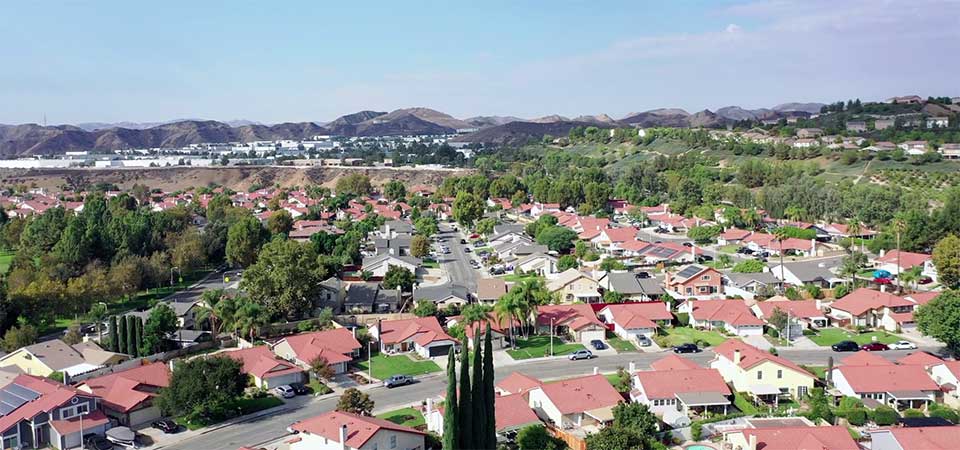
- North and East Live Oak residential tracts - postwar and newer subdivision housing on concrete slabs
- Pennington and Encinal areas - rural parcels with septic systems and detached outbuildings
- Kirkville and Nuestro - farm properties, ranch homes, and equipment storage structures
- Surrounding communities - Gridley, Biggs, Yuba City, Sutter, Meridian, Tierra Buena, and Marysville
Crews familiar with these areas know which streets pond during heavy rain, which older neighborhoods have clay sewer laterals, and where orchard access roads slow equipment delivery. That familiarity shortens the gap between the call and the first extraction pass.
Seasonal Damage Patterns in Live Oak
Winter (December - February)
- Peak season for flooded basements, crawlspace saturation, and roof leaks
- Tule fog holds humidity high, slowing natural drying and accelerating mold growth
- Sewage backups spike when saturated ground pressures septic systems and sewer mains
Spring (March - May)
- Mold discoveries surge as homeowners open closets and storage areas after wet months
- Late storms combine with rising groundwater to produce seepage in below-grade spaces
Summer (June - August)
- Air conditioning condensate lines clog and overflow into ceilings and walls
- Fire risk climbs sharply with triple-digit heat and dry grass
- Irrigation line breaks flood side yards and crawlspaces
Fall (September - November)
- Wildfire season peaks - smoke damage restoration calls dominate
- Heating systems restart, circulating settled soot and dust through duct networks
- First rains reveal roof and gutter failures that developed over summer
Housing Characteristics & Restoration Considerations
Live Oak's housing stock spans more than a century, and each era brings its own restoration challenges.
Older Homes (pre-1960)
- Raised foundations with vented crawlspaces that trap moisture and breed mold
- Lath-and-plaster walls that absorb water deeply and hold smoke odor stubbornly
- Original cast iron or clay sewer laterals prone to root intrusion and collapse
- Possible asbestos-containing materials and lead paint requiring careful handling during demolition
Mid-Century and Postwar Housing
- Slab-on-grade construction where water wicks upward into wall cavities
- Original ductwork buried in slabs or attics that captures soot during smoke events
- Minimal insulation, which speeds drying but offers little protection against temperature swings
Newer Subdivisions and Manufactured Homes
- Tight building envelopes that hold humidity in when ventilation fails
- Engineered wood products that swell and delaminate quickly with water contact
- Underfloor cavities in manufactured housing that hide standing water for weeks
Agricultural outbuildings, barns, and equipment sheds add another layer. These structures often lack conditioned air, so smoke residue and moisture linger far longer than in a home. Restoration planning accounts for construction type before any equipment is placed, because the drying strategy for a plaster wall over a raised foundation looks nothing like the approach for slab-mounted drywall.
Environmental Conditions & Damage Implications
The Sacramento Valley climate creates a distinct set of restoration variables.
Climate and Air Quality
- Hot, dry summers push interior humidity low, then winter fog swings it high - repeated cycling stresses wood and adhesives
- Wildfire smoke episodes degrade air quality for days at a time, depositing fine particulate throughout occupied space
- Agricultural dust and burning add to the particulate load carried into HVAC systems
Soil and Water
- Alluvial and clay-heavy valley soils drain slowly, holding water against foundations after storms
- Expansive clay shifts seasonally, opening hairline foundation cracks that become seepage paths
- High seasonal water tables push moisture up through slabs, a process no surface repair alone corrects
- Hard, mineral-rich groundwater leaves deposits that complicate cleaning of surfaces after water intrusion
Regional Restoration Context
Environmental restoration is a familiar concept in this region. Projects that remove native trees and shrubs, affect streams or wetlands, or disturb sensitive resources are frequently required to restore or replace what was lost - and those revegetation programs are monitored for success. Blue oak, valley oak, and Engelmann oak have been repeatedly identified as species with regeneration too weak to sustain current stand densities, partly because grazing changes affect vole and ground squirrel populations that damage seedlings. The parallel to building restoration holds: outcomes depend on addressing the underlying condition, not just the visible loss.
Wildfire Smoke Recovery for Valley Homes
Smoke from foothill fires does not respect property lines. Homes in Live Oak that never saw a flame can still hold measurable soot inside wall cavities, on attic insulation, and throughout duct runs months after the fire is contained. Homeowners often notice it first as an odor that returns whenever the furnace or air conditioner starts.
Why Smoke Residue Persists
- Combustion particles are microscopic and travel with air currents into every cavity
- Acidic residues etch glass, corrode metal fixtures, and stain painted surfaces over time
- Porous materials - carpet, upholstery, drywall, attic insulation - hold odor compounds that surface cleaning cannot reach
- HVAC systems act as distribution networks, redepositing residue after every cleaning attempt
The Restoration Sequence
- Assessment and testing - identify residue type, affected zones, and material porosity throughout the structure
- Containment - isolate affected areas with barriers and negative air pressure to prevent cross-contamination
- Air filtration - run HEPA scrubbers continuously to capture airborne particulate during work
- Surface cleaning - match method to material using dry sponge, wet cleaning, or abrasive techniques as appropriate
- HVAC decontamination - clean or replace ductwork, coils, and filters so the system stops reintroducing residue
- Contents processing - clean, deodorize, or inventory textiles, electronics, and personal belongings
- Deodorization - apply thermal fogging, hydroxyl treatment, or sealing to neutralize embedded odor at the source
- Verification - confirm results before rebuilding or reoccupying affected areas
Technicians follow IICRC standards for fire and smoke restoration, documenting each stage for insurance purposes. The same disciplined approach applies to water losses and mold projects, where moisture readings and clearance testing replace soot swabs. Systematic work produces results that hold up - clean air, sound structure, and a home that smells like a home again.





