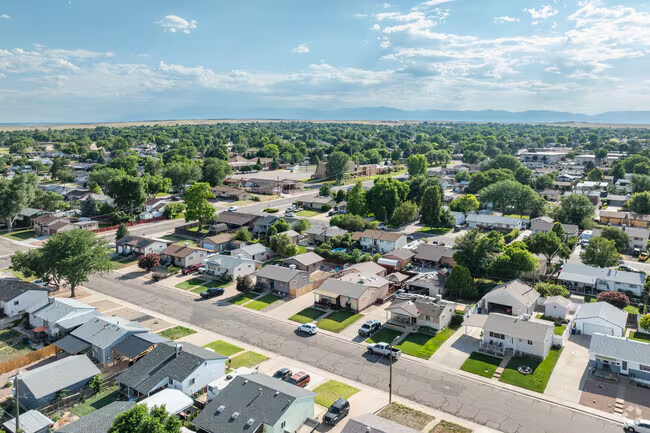
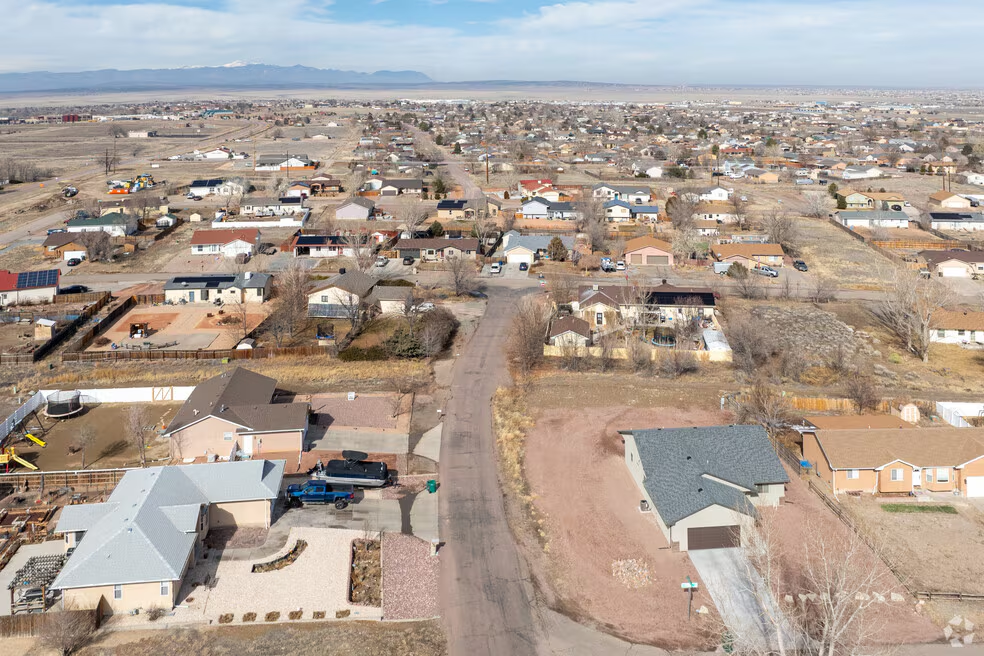
Damage Restoration in Pueblo County, CO
- Damage Restoration Services Overview
- Common Damage Restoration Issues in Pueblo County, Colorado
- Neighborhoods We Serve in Pueblo County
- Seasonal Damage Patterns in Pueblo County
- Housing Characteristics & Restoration Considerations
- Environmental Conditions & Damage Implications
- Why 24/7 Emergency Response Matters in Pueblo County
Damage Restoration Services Overview
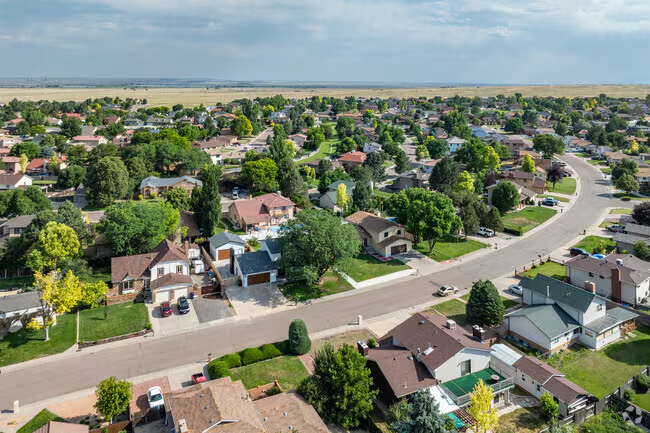
What would you do if you walked into your basement tomorrow morning and found three inches of water covering the floor? For property owners across Pueblo County, that scenario plays out more often than most people expect - and the first few hours shape everything that follows.
Damage restoration covers a broad range of emergencies that strike homes and businesses from Pueblo's historic Northside to the wide-open lots of Pueblo West. Whether the source is a burst supply line, a monsoon downpour, a kitchen fire, or a hidden roof leak feeding mold behind drywall, the response follows the same principle: stabilize fast, dry thoroughly, and rebuild correctly.
- Water Damage Restoration - extraction, structural drying, moisture mapping, and repair of affected materials
- Flooded Basement Cleanup - pump-out, sump and drainage assessment, content recovery, and dehumidification
- Sewage Cleanup - containment, removal of contaminated porous materials, antimicrobial treatment, and sanitizing
- Fire Damage Restoration - debris removal, board-up, soot cleaning, and full reconstruction including drywall, paint, and flooring
- Smoke Damage Restoration - odor neutralization, HVAC cleaning, and treatment of surfaces well beyond the burn area
- Mold Removal - containment barriers, HEPA filtration, safe removal, and correction of the moisture source
The benefit for Pueblo County residents is straightforward: faster response means less material loss, cleaner insurance documentation, and a quicker return to normal life.
Common Damage Restoration Issues in Pueblo County, Colorado
Pueblo County sits at the meeting point of the Arkansas River, Fountain Creek, and the semi-arid steppe of southern Colorado. That geography creates a distinct damage profile that differs sharply from the Front Range corridor to the north.
Local Causes of Property Damage
- Flash flooding along arroyos, dry washes, and creek beds after intense summer thunderstorms - Pueblo West and rural county properties are especially exposed
- Burn-scar runoff from wildfire-affected terrain that sends sediment-heavy water toward low-lying structures
- Freeze-thaw pipe failures in unheated crawlspaces, detached garages, and exterior hose bibs during sharp overnight temperature swings
- Aging clay and cast-iron sewer laterals in older Pueblo neighborhoods that crack, back up, and discharge contaminated water into basements
- Septic system overload on rural acreage where saturated leach fields push wastewater back toward the house
- Grass and brush fires that spread quickly across dry ground and leave smoke residue on structures never touched by flame
- Swamp cooler leaks - evaporative cooling is common here, and a failed pan or supply line can soak ceilings for days before anyone notices
Warning Signs Worth Acting On
- Musty odors that intensify when the HVAC system cycles on
- Bubbling paint, warped baseboards, or tile that has lost its bond to the subfloor
- Slow floor drains or gurgling toilets - early indicators of a lateral line problem
- Yellow or brown staining on ceilings beneath a swamp cooler or bathroom
- Persistent smoke odor weeks after a small kitchen or fireplace incident
- Unexplained increases in water usage suggesting a slab or supply-line leak
Neighborhoods We Serve in Pueblo County
Coverage extends across the entire county, from dense urban blocks to isolated rural parcels where response access itself is part of the job.
- City of Pueblo - Downtown, Union Avenue Historic District, Bessemer, the Northside, Belmont, Highland Park, Aberdeen, Eastwood, Sunset Park, and the Mesa Junction area
- Pueblo West - including large-lot properties, McCulloch Boulevard corridor homes, and newer subdivisions near Lake Pueblo
- South Side and Blende - along the Santa Fe Drive and Highway 50 business corridors
- Salt Creek, Vineland, and Avondale - agricultural and semi-rural communities along the Arkansas River valley
- Boone, Colorado City, Rye, Beulah, and Pueblo Pines - foothill and eastern plains communities
- Surrounding areas - Fowler, Penrose, and unincorporated county land toward the Greenhorn Mountains
Crews familiar with local street layouts, well systems, and septic configurations arrive prepared for what each area typically presents.
Seasonal Damage Patterns in Pueblo County
Restoration demand in southern Colorado follows a predictable rhythm, and knowing the pattern helps property owners prepare before trouble arrives.
- December through February - Frozen and burst pipes dominate. Cold snaps following mild afternoons catch exterior plumbing unprotected. Fireplace, wood stove, and space heater incidents drive fire and smoke damage calls.
- March and April - Heavy wet spring snow melts fast, saturating soil and pushing water through foundation cracks and window wells into basements.
- May and June - Rising temperatures activate mold colonies that grew quietly over winter. Swamp cooler startup exposes leaks that developed during the off season.
- July and August - Monsoon season brings flash flooding, roof leaks, hail-driven water intrusion, and sewer surcharges when storm volume overwhelms drainage.
- September and October - Grass fire season peaks on dry ground. Smoke damage claims rise, including from distant wildfire smoke infiltrating homes.
- November - Holiday cooking fires, first freeze events, and irrigation lines left charged when they should have been blown out.
Housing Characteristics & Restoration Considerations
Pueblo County's building stock spans well over a century, and each construction era brings its own restoration challenges.
Older Pueblo Housing (pre-1950)
- Brick, adobe, and stucco exteriors with plaster-and-lath interior walls that hold moisture far longer than modern drywall
- Unfinished stone or poured foundations with limited waterproofing, making flooded basements common
- Galvanized supply lines and clay sewer laterals prone to corrosion and root intrusion
- Potential for asbestos-containing materials and lead paint, which require careful handling during fire and water repairs
- Balloon-frame construction that allows smoke and fire to travel vertically inside wall cavities
Mid-Century and Modern Homes
- Slab-on-grade ranch homes where leaks migrate under flooring before surfacing
- Finished basements with carpet, pad, and drywall - all highly vulnerable to sewage and groundwater intrusion
- Pueblo West properties on wells and septic, where power outages affect both water supply and wastewater removal
- Tighter newer construction that traps humidity and accelerates mold growth after any water event
- Crawlspaces with exposed soil that feed persistent moisture into the structure above
Restoration work accounts for these differences directly - drying plaster requires different equipment settings than drying drywall, and reconstruction on historic properties demands materials that match the original character. Full repair capability matters here, covering drywall, texture matching, paint, trim, and flooring so the finished result blends with what surrounds it.
Environmental Conditions & Damage Implications
Pueblo's semi-arid climate creates a false sense of security. Low humidity does not prevent mold - it simply hides it until conditions inside a wall cavity turn favorable.
Climate and Air
- Roughly 12 inches of annual precipitation, much of it delivered in short, intense monsoon bursts
- Wide daily temperature swings that stress plumbing and building envelopes
- Abundant sunshine and dry air that can mislead owners into assuming a wet area dried on its own
- Seasonal smoke and dust events that load HVAC systems and settle particulate throughout interiors
- High wind that drives rain sideways into siding, window frames, and roof penetrations
Soil and Water Conditions
- Expansive clay soils that swell when wet and shrink when dry, stressing foundations and creating entry paths for groundwater
- Caliche and hardpan layers that slow percolation and channel runoff toward structures rather than away
- Hard, mineral-rich water that scales fixtures, water heaters, and supply lines, contributing to premature failures
- Arkansas River and Fountain Creek floodplain properties with elevated groundwater during wet cycles
- Rural septic drainage that struggles in saturated or compacted soil
These conditions influence every phase of the work. Dehumidification targets are set against actual local dew points, drying is verified with meters rather than assumed, and mold remediation always addresses the moisture source - not just the visible growth.
Why 24/7 Emergency Response Matters in Pueblo County
Damage does not schedule itself around business hours. A sewer backup at 2 a.m. or a pipe rupture during a holiday weekend needs the same immediate attention as a weekday call, and round-the-clock availability is the difference between a contained loss and a gutted home.
What Happens in the First 24 Hours
- Immediate contact and dispatch - crews mobilize with extraction units, air movers, and dehumidifiers already loaded
- Safety assessment - electrical hazards, structural stability, and contamination category are evaluated before anyone enters
- Source control - water shut off, roof tarped, or affected area boarded up to stop ongoing damage
- Bulk water extraction - standing water removed from basements, crawlspaces, and finished living areas
- Moisture mapping - thermal imaging and penetrating meters locate hidden saturation behind walls and beneath flooring
- Containment - barriers and negative air machines installed for sewage and mold work to protect unaffected rooms
- Documentation - photos, readings, and inventory recorded for the insurance claim from the very first hour
The Value of Thoroughness
Cutting corners in Pueblo's dry climate is tempting because surfaces feel dry quickly. The materials underneath tell a different story.
- Daily moisture readings logged until every material reaches a documented dry standard
- Subfloor, sill plate, and wall cavity checks rather than surface-only inspections
- Soot and smoke residue tracked through HVAC ductwork and into adjacent rooms, not just the fire origin
- Odor treated at the molecular level with appropriate equipment, since surface cleaning alone rarely resolves smoke smell
- Contaminated porous materials from sewage events removed and replaced rather than cleaned in place
- Reconstruction handled through to finished drywall, paint, and flooring so there is no gap between mitigation and repair
That level of attention protects the structure, the indoor air, and the long-term value of the property.