
Damage Restoration in Pueblo, CO
- Damage Restoration Services Overview
- Common Damage Restoration Issues in Pueblo, Colorado
- Neighborhoods We Serve in Pueblo
- Seasonal Damage Patterns in Pueblo
- Housing Characteristics & Restoration Considerations
- Environmental Conditions & Damage Implications
- From Emergency Response to Rebuild: How Restoration Works in Pueblo
Damage Restoration Services Overview
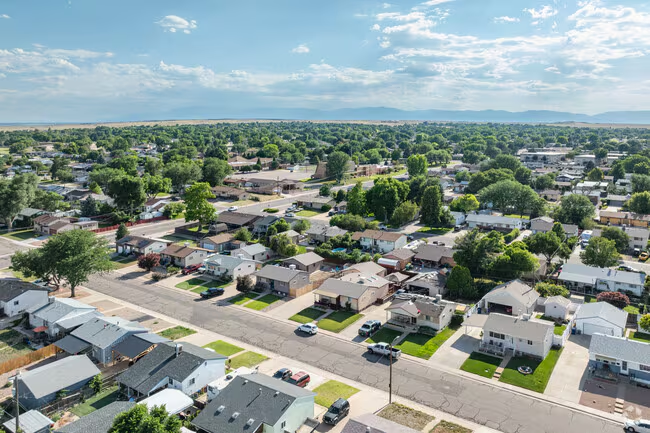
Few things rattle a homeowner like walking downstairs to standing water, or opening the door to the smell of smoke after a kitchen fire. Property damage in Pueblo rarely announces itself in advance - it arrives with a monsoon downpour, a failed water heater, or a sewer line that finally gives out.
Restoration work covers the full arc of recovery, from the first extraction pump to the final coat of paint. Pueblo and Pueblo West properties benefit from a single team handling every stage, because damage types overlap constantly - fire suppression water leads to mold, and a sewage backup turns a flooded basement into a health hazard.
- Water Damage Restoration - extraction, structural drying, moisture mapping, and repair of affected materials
- Flooded Basement Recovery - pump-out, content removal, subfloor drying, and foundation moisture control
- Sewage Cleanup - removal of contaminated material, antimicrobial treatment, and sanitizing of affected areas
- Fire Damage Restoration - debris removal, structural stabilization, board-up, and rebuild coordination
- Smoke Damage Restoration - soot removal from surfaces, HVAC cleaning, and odor neutralization
- Mold Removal - containment, air filtration, affected material removal, and moisture source correction
The benefit of coordinated service is simple: less time in limbo, fewer contractors to manage, and a property returned to a safe, dry, breathable condition.
Common Damage Restoration Issues in Pueblo, Colorado
Pueblo sits at the confluence of the Arkansas River and Fountain Creek, in a semi-arid climate that swings from bone-dry to torrential within an afternoon. That combination produces a distinct set of restoration problems.
Local Causes of Property Damage
- Monsoon downpours - late-summer storms drop heavy rain on dry, compacted ground that sheds water toward foundations
- Expansive clay soils - Pueblo County's bentonite-rich soils swell and shrink, stressing foundation walls and buried pipes
- Freeze-thaw pipe failures - overnight lows in unheated crawlspaces and garages split supply lines
- Aging sewer laterals - older clay and cast-iron lines in central Pueblo crack under root intrusion and soil movement
- Wildfire and grass fire smoke - dry seasons bring smoke infiltration even to homes far from the flames
- Swamp cooler leaks - evaporative coolers, common across the region, drip through roofs and ceilings when seals fail
Warning Signs Worth Acting On
- Musty odors in a basement or near baseboards, especially after a storm
- Discolored rings or bubbling paint on drywall and ceilings
- Gurgling drains or slow floor drains - often the first sign of a sewer backup
- Warped hardwood, buckled laminate, or carpet that stays damp underfoot
- Lingering smoke odor that returns when the furnace or AC runs
- Visible dark spotting on drywall, subfloor, or the underside of vanities
Catching these early usually means drying rather than demolition, and containment rather than whole-room mold remediation.
Neighborhoods We Serve in Pueblo
Coverage extends across the city and out into the surrounding county, including the wide-spread subdivisions west of town.
- Downtown and the Historic Arkansas Riverwalk - older masonry buildings and converted commercial spaces
- Bessemer and the East Side - early-1900s housing stock with basements and original sewer laterals
- Belmont and University Park - mid-century homes near CSU Pueblo
- Highland Park, Aberdeen, and Mesa Junction - established neighborhoods with mature trees and root-prone sewer lines
- Pueblo West - one of Colorado's largest unincorporated communities, mixing newer builds with 1970s-era construction
- Blende, Salt Creek, Vineland, and Avondale - rural and agricultural properties east of the city
- Rye, Colorado City, and Beulah - foothill properties with wildfire and runoff exposure
- St. Charles Mesa and Pueblo Boulevard corridor - a mix of residential and light commercial buildings
Seasonal Damage Patterns in Pueblo
Restoration demand in Pueblo follows a predictable rhythm tied to the region's weather swings.
Winter (December - February)
- Frozen and burst supply lines in crawlspaces, garages, and exterior walls
- Flooded basements from failed pipes discovered hours or days later
- Fire and smoke damage from furnaces, space heaters, wood stoves, and fireplaces
Spring (March - May)
- Snowmelt and spring rain saturating soil against foundations
- Roof leaks revealed by wet, heavy spring snowstorms
- Mold growth surfacing from winter leaks that went unnoticed
Summer (June - August)
- Monsoon flash flooding along Fountain Creek and low-lying streets
- Sewer backups when heavy rain overwhelms aging lines
- Grass and wildfire smoke infiltration during dry stretches
- Swamp cooler and AC condensate leaks through ceilings
Fall (September - November)
- Late-season storms and the first hard freezes catching outdoor spigots
- Heating system startup fires and puff-back soot from furnaces
- Mold discovered during seasonal cleaning and storage rotation
Housing Characteristics & Restoration Considerations
Pueblo's building stock spans well over a century, and the age of a structure shapes nearly every restoration decision made inside it.
Older Homes in Central Pueblo, Bessemer, and the East Side
- Brick and adobe-influenced masonry that absorbs and holds moisture, requiring extended drying
- Plaster over wood lath, which delaminates when saturated and hides moisture behind the surface
- Original hardwood floors that cup and crown but can often be saved with controlled drying
- Full basements with clay tile or cast-iron drains prone to sewage backup
- Potential for asbestos-containing materials and lead paint, which changes demolition protocols
- Balloon framing that lets smoke and soot travel between floors through wall cavities
Mid-Century and Newer Construction in Belmont and Pueblo West
- Slab-on-grade and crawlspace foundations where water spreads laterally under flooring
- Tighter building envelopes that trap humidity and accelerate mold growth after a leak
- Engineered wood, laminate, and MDF cabinetry that swells irreversibly and typically needs replacement
- Larger lots in Pueblo West with septic systems and private wells that complicate sewage cleanup
- Attached garages and open floor plans that let smoke odor reach the whole house quickly
Matching the drying strategy to the construction type prevents two common outcomes: tearing out material that could have been saved, and leaving hidden moisture that becomes a mold problem weeks later.
Environmental Conditions & Damage Implications
Pueblo's environment cuts both ways during restoration - low humidity helps drying, while soil and water conditions work against the building.
Climate
- Semi-arid conditions with roughly a foot of annual precipitation, much of it concentrated in short, intense summer storms
- Wide daily temperature swings that drive condensation inside wall cavities and around ductwork
- Dry ambient air that speeds structural drying when equipment is placed correctly
- Elevation near 4,700 feet, which affects dehumidifier performance and drying calculations
Soil and Groundwater
- Clay-heavy, expansive soils that shift with moisture and crack foundation walls and pipes
- Poor infiltration rates, so stormwater pools around foundations rather than soaking in
- Proximity to the Arkansas River and Fountain Creek raising groundwater in low-lying areas
Air and Water Quality
- Hard water with high mineral content that leaves scale and stresses appliance supply lines
- Seasonal dust and wildfire smoke that settles into HVAC systems and compounds post-fire cleanup
- Dry indoor air masking mold problems - growth hides in damp cavities while surfaces look and feel dry
Because of that last point, moisture meters and thermal imaging matter more here than in humid climates. A wall that feels dry to the hand can hold enough moisture behind it to support mold colonization for months.
From Emergency Response to Rebuild: How Restoration Works in Pueblo
The gap between "the water stopped" and "my house is back to normal" is where most homeowners get stuck. Handling every phase under one roof closes that gap and keeps responsibility in one place.
The Restoration Sequence
- Emergency response - crews arrive to stop the source, whether that means shutting off water, boarding openings after a fire, or isolating a sewage backup
- Assessment and documentation - moisture mapping, thermal imaging, and photo documentation to establish the full scope for insurance
- Extraction and removal - standing water pumped out, contaminated or unsalvageable materials removed and disposed of properly
- Cleaning and decontamination - antimicrobial application for sewage and mold, soot removal and HVAC cleaning for fire and smoke
- Structural drying - air movers and dehumidifiers positioned and monitored daily until materials reach dry standard
- Odor neutralization - thermal fogging, hydroxyl or ozone treatment, and sealing where smoke odor has penetrated
- Reconstruction - drywall, flooring, cabinetry, trim, and paint returning the space to pre-loss condition
Why an Integrated Approach Helps Pueblo Property Owners
- No handoff gaps between mitigation and rebuild, which is where mold problems typically start
- One documentation file supporting the insurance claim from first call through final walkthrough
- Certified technicians trained in water, fire, sewage, and mold protocols working the same job
- Containment and negative air pressure used during mold and sewage work to protect unaffected rooms
- Contents handled alongside the structure - furniture, documents, electronics, and personal items evaluated for cleaning
- Familiarity with Pueblo County construction, from Bessemer brick to Pueblo West slab builds
The result is a property that is genuinely dry, clean, and safe to occupy - not one that simply looks finished.





